
How the Oil and Gas Playbook is Unlocking 24/7 Geothermal Energy
By repurposing horizontal drilling and hydraulic fracturing, next-generation geothermal startups are turning the earth's crust into a ubiquitous, carbon-free battery for the AI era.

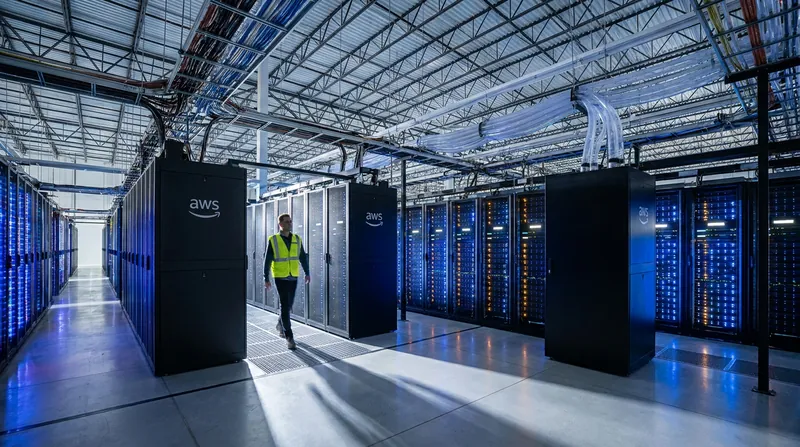
The explosive growth of artificial intelligence has created a profound energy dilemma for the world's largest technology companies. As hyperscale data centers multiply, their electricity demands are straining regional grids and threatening corporate climate pledges. While wind and solar power have expanded rapidly, their inherent intermittency—producing power only when the wind blows or the sun shines—makes them ill-suited to power AI facilities that run relentlessly around the clock.[1][2]
For decades, geothermal energy offered a theoretical solution: a clean, renewable power source that runs twenty-four hours a day, seven days a week. However, traditional hydrothermal power was severely geographically constrained. It required a rare natural alignment of underground heat, water, and highly permeable rock, limiting its deployment to volcanic regions like Iceland or specific fault lines in California. For most of the world, the immense heat beneath our feet remained entirely inaccessible.
That geographic barrier is now collapsing due to a technology known as Enhanced Geothermal Systems (EGS). Rather than hunting for naturally occurring underground reservoirs, engineers are now creating their own. By drilling deep into hot, dry, impermeable rock—often granite—and injecting fluid under high pressure, developers can artificially fracture the rock to create a highly permeable reservoir. Water is then circulated through these microscopic fractures, absorbing the earth's heat before returning to the surface to drive steam turbines.
The breakthrough relies heavily on techniques pioneered and perfected by the oil and gas industry during the shale revolution. Horizontal drilling and hydraulic fracturing, once synonymous with fossil fuel extraction, have been entirely repurposed for zero-carbon energy. By drilling horizontally through hot rock layers, developers maximize the surface area exposed to the working fluid, dramatically increasing the thermal output of a single well compared to traditional vertical drilling.
The undisputed leader of this new era is Houston-based Fervo Energy. Founded by a former oil and gas engineer, the company proved the commercial viability of enhanced systems in 2023 with a pilot project in Nevada that successfully powered local Google data centers. That proof-of-concept triggered a massive influx of capital and corporate interest, transforming the startup into a heavyweight energy developer and earning it the top spot on TIME's 2026 list of America's Top GreenTech Companies.[1]
In May 2026, Fervo Energy cemented the industry's arrival by going public on the Nasdaq. The initial public offering raised $1.89 billion, pricing well above expectations and giving the company an opening-day market capitalization approaching $10 billion. Financial analysts noted that the IPO marked a critical transition: next-generation geothermal was no longer a speculative venture capital play, but a mature infrastructure asset capable of attracting massive institutional public market investors.
The capital from the public offering and a preceding $421 million non-recourse debt facility is actively funding the company's flagship project: Cape Station in Beaver County, Utah. Designed to be the world's largest next-generation geothermal development, the facility is currently under construction and is expected to deliver its first 100 megawatts of power by early 2027, eventually scaling to a massive 500 megawatts of continuous clean energy.
The economics of these enhanced systems are improving at a staggering rate, mirroring the early cost-curve declines of solar photovoltaics a decade ago. Between the 2023 pilot and the ongoing drilling at Cape Station, drilling speeds have increased by roughly seventy percent—reaching thirty meters per hour in some sections—while well costs have plummeted by nearly seventy-five percent. The industry is aggressively marching toward a target cost of $3,000 per kilowatt for mature plants, a threshold that would make the technology highly competitive with fossil fuels.
Big Tech is not just watching from the sidelines; they are actively bankrolling the deployment. In March 2026, Google signed an unprecedented framework agreement to develop up to three gigawatts of geothermal capacity. This massive procurement deal provides the guaranteed, long-term revenue streams necessary to secure project financing, effectively de-risking the construction of multi-hundred-million-dollar power plants before ground is even broken.[1]
Google is not alone in its aggressive geothermal ambitions. Meta has partnered with Sage Geosystems, another Texas-based startup, to develop a 150-megawatt geothermal project using advanced fracturing technology. The approach also incorporates built-in energy storage, utilizing the pressurized underground fractures like a massive mechanical battery to dispatch power exactly when the grid needs it most, smoothing out the peaks and valleys of daily electricity demand.[1][2]
Beyond enhanced systems, a parallel technology known as closed-loop geothermal is also reaching critical commercial milestones. Companies like Canada's Eavor Technologies circulate a proprietary working fluid through a sealed underground radiator network. Because the fluid never touches the surrounding rock, this approach eliminates the need for hydraulic fracturing and avoids the risk of induced seismicity entirely. Eavor achieved a major milestone in late 2025 when its facility in Germany began delivering commercial power to the grid.
The geothermal boom is creating an unexpected and highly lucrative lifeline for the traditional oil and gas supply chain. Fossil fuel service giants like Baker Hughes and Vallourec are securing massive, multi-year contracts to supply specialized high-temperature drilling equipment, well casings, and turbines for these projects. For roughnecks and petroleum engineers, the transition offers a seamless way to apply their existing skills to the clean energy economy without requiring extensive retraining.
Despite the rapid technological progress, the widespread deployment of enhanced geothermal faces legitimate environmental and regulatory scrutiny. The hydraulic stimulation process requires millions of gallons of water, a significant concern in the arid Western United States where many of the best thermal resources are located. Developers are actively working to recycle working fluids and transition to closed-loop designs or supercritical carbon dioxide to minimize their overall water footprint.
Induced seismicity remains the most sensitive public relations and regulatory hurdle for the industry. Injecting high-pressure fluids into fault-prone rock can trigger micro-earthquakes, which have derailed past geothermal experiments. To mitigate this, modern projects employ extensive subsurface mapping and real-time fiber-optic acoustic monitoring. By analyzing data from inside the wellbore, operators can adjust fluid pressures dynamically, ensuring that fractures propagate safely without triggering noticeable seismic events at the surface.
If the industry can maintain its aggressive cost-reduction trajectory and successfully navigate local permitting challenges, the global impact could be profound. The International Energy Agency projects that advanced geothermal technologies could meet up to fifteen percent of the world's electricity demand growth by 2050. By turning the earth's crust into a ubiquitous, always-on battery, the energy sector is proving that the heavy industrial tools of the fossil fuel era can be precisely the instruments needed to end it.[3]
Key points
- The AI boom is driving massive demand for 24/7 carbon-free energy, exposing the limits of intermittent wind and solar power.
- Enhanced Geothermal Systems (EGS) use oil and gas drilling techniques to unlock geothermal energy anywhere, not just in volcanic regions.
- Fervo Energy's May 2026 IPO raised $1.89 billion, signaling the technology's transition from pilot phase to commercial maturity.
- Tech giants like Google and Meta are anchoring the industry, signing multi-gigawatt procurement deals to power their data centers.
Unanswered questions
- Whether the aggressive cost-reduction targets can be sustained as developers move into more complex and varied geologies.
- How local water scarcity in the American West will constrain the scaling of open-loop EGS projects over the next decade.
- The long-term thermal degradation rate of artificially fractured reservoirs—how quickly the rock cools down after years of heat extraction.
How we got here
2023
Fervo Energy completes 'Project Red,' a 3.5 MW commercial pilot in Nevada powering Google data centers.
Late 2025
Eavor Technologies begins delivering commercial power to the grid from its closed-loop AGS facility in Geretsried, Germany.
March 2026
Fervo secures $421 million in non-recourse debt financing and signs a 3 GW framework agreement with Google.
May 2026
Fervo Energy goes public on the Nasdaq, raising $1.89 billion and signaling Wall Street's confidence in EGS technology.
Early 2027
The first 100 MW phase of Fervo's massive Cape Station project in Utah is expected to come online.
- Geothermal Developers
- Argue that advanced geothermal is the only scalable, 24/7 clean energy source capable of replacing fossil baseload.
- Big Tech Hyperscalers
- View geothermal as a critical tool to meet their aggressive carbon-neutral pledges without throttling AI growth.
- Environmental Monitors
- Support the decarbonization potential but warn of subsurface risks and high water consumption.
Perspectives this story doesn't cover
- Local communities near proposed EGS sites concerned about water usage and seismic activity.
- Traditional utility operators balancing the integration of new baseload power with existing grid infrastructure.
Sources
Source coverage
3 outlets
3 viewpoints surfaced



- [1]Engineering News-RecordBig Tech Hyperscalers
Google Secures Approval for Geothermal to Power Data Centers
Read on Engineering News-Record → - [2]Net Zero Insights
Key Investment Trends Shaping Geothermal Energy in 2025
Read on Net Zero Insights → - [3]RinnovabiliEnvironmental Monitors
Geothermal energy investments surge in next-generation tech
Read on Rinnovabili →
More in Business
See all →AI Regulation
DOJ and FTC Intensify Multi-Front Antitrust War on Big Tech's AI Ecosystems
4 sources

Digital Publishing
How Digital Publishers Are Building 'Proof of Human' Test Kitchens to Combat AI Slop
2 sources

Satellite Internet
How Jio Platforms Plans to Build India's First Sovereign Satellite Internet Constellation
4 sources

Advanced Nuclear
US Nuclear Pilot Program Hits Key Milestone as Valar Atomics Advances Small Modular Reactor Tech
3 sources
Comments
Every angle. Every day.
Get Business stories with full source coverage and perspective breakdowns, free every day.