
How the 2026 World Cup Works: Inside the New 48-Team Format
The 2026 FIFA World Cup introduces the biggest structural change in tournament history, expanding to 48 teams and 104 matches. Here is how the new group stage, the added Round of 32, and the regional travel clusters will operate.
By Factlen Editorial Team
- Global Expansion Advocates
- Supporters who believe the 48-team format is essential for growing the game worldwide.
- Logistics & Fan Experience
- Stakeholders focused on the practical realities of hosting 104 matches across a continent.
- Traditionalists & Player Welfare
- Critics concerned about the physical toll on players and the dilution of tournament quality.
What's not represented
- · Local Host City Residents
- · Traveling Supporters
Why this matters
The 2026 World Cup format fundamentally changes how the world's biggest sporting event is played and consumed. With more teams, more matches, and a new knockout structure, fans will experience a longer, more inclusive tournament that offers unprecedented access and rewrites the strategic playbook for every competing nation.
Key points
- The 2026 World Cup expands to 48 teams, featuring a record 104 matches across 39 days.
- Teams are divided into 12 groups of four, abandoning an earlier proposal for three-team groups.
- The top two teams in each group, plus the eight best third-place teams, advance to the knockouts.
- A newly introduced Round of 32 means the eventual champion must play eight matches to win.
- A regional cluster system will minimize team and fan travel during the group stage.
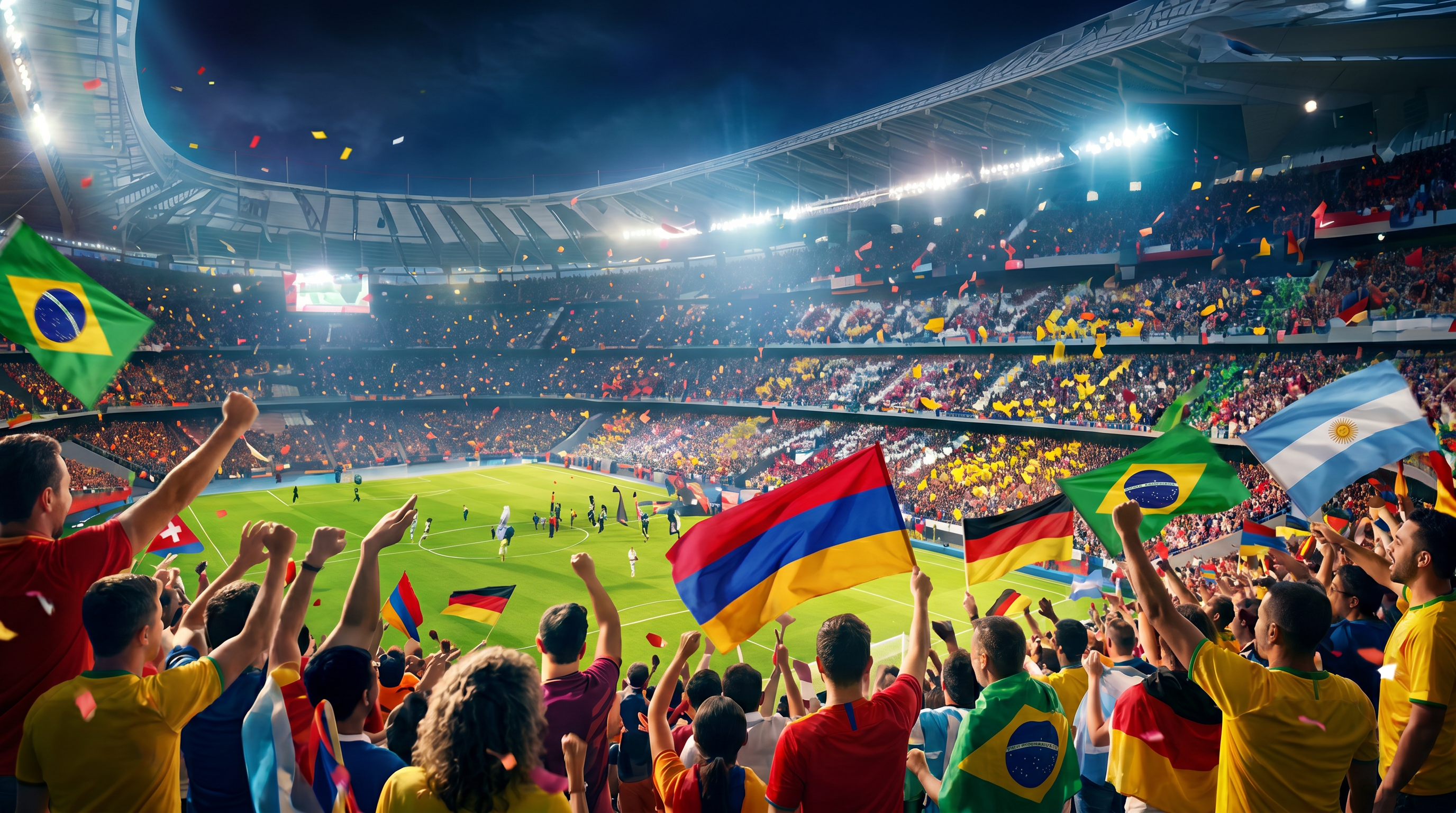
When the opening whistle blows at the Estadio Azteca in Mexico City on June 11, it will signal the start of the most massive sporting event in human history. The 2026 FIFA World Cup has fundamentally rewritten the playbook for international soccer, expanding its borders across three host nations—the United States, Mexico, and Canada—and swelling its ranks to accommodate a record 48 national teams. This marks the first time the tournament field has grown since the shift to 32 teams in 1998, and the sheer scale of the operation is staggering. Over the course of 39 days, fans will witness 104 matches, a dramatic increase from the 64 games that defined the previous quarter-century of World Cups.[1][7][8]
The expansion is rooted in a desire to globalize the sport further, offering a realistic pathway to the world stage for emerging footballing nations. By adding 16 slots to the tournament, FIFA has opened the door for countries that historically struggled to navigate the brutal qualification gauntlets of their respective continents. For the 2026 edition, Africa's guaranteed representation jumped to nine teams, while Asia secured eight spots, ensuring a much wider diversity of playing styles and fan cultures. The result is a month-long festival that promises more underdog stories, more debutants, and a truly global footprint.[2][8]
Accommodating 48 teams required a complete overhaul of the tournament's architecture. Initially, in 2017, FIFA proposed dividing the field into 16 groups of three teams. However, that plan was ultimately scrapped due to widespread concerns over sporting integrity. In a three-team group, the final matchday would only feature two teams playing, opening the door for collusion where both sides could engineer a mutually beneficial result to advance at the expense of the idle third team.[3][4][7]

To preserve the drama and fairness of simultaneous final-day kickoffs, organizers pivoted in 2023 to a more traditional, albeit supersized, structure. The 48 teams are now divided into 12 groups of four, labeled Group A through Group L. During this opening phase, every team plays three matches in a standard round-robin format, earning three points for a win, one for a draw, and zero for a loss.[1][3][7][8]
The mathematics of survival in this new group stage are significantly more forgiving than in past tournaments. The top two finishers in each of the 12 groups automatically punch their tickets to the knockout rounds, accounting for 24 teams. But the drama does not end there. The expanded format introduces a "third-place lifeline," where the eight best third-place teams across all groups also advance.[1][5]
This lifeline fundamentally alters the tension of the opening two weeks. Under the old 32-team system, a single loss could effectively doom a nation's campaign. Now, a team could theoretically lose two of its three matches and still squeeze through on goal difference as one of the lucky third-place finishers. In total, 32 of the 48 teams—exactly two-thirds of the field—will survive the group stage, compared to just 50 percent in previous editions.[5][6][8]
The reward for surviving the group stage is entry into a brand-new phase of the tournament: the Round of 32. This additional knockout round is the primary reason the tournament's match count ballooned from 64 to 104. From this point forward, the safety net is gone, and the tournament reverts to single-elimination, sudden-death football.[1][6][8]

The reward for surviving the group stage is entry into a brand-new phase of the tournament: the Round of 32.
The addition of the Round of 32 means that the eventual champion will have to survive an eight-match gauntlet to lift the trophy, up from the traditional seven. This extra hurdle has sparked conversations about player welfare, as the finalists will be asked to play eight high-intensity matches within a 39-day window, often immediately following grueling European club seasons.[2][3][7]
To mitigate the physical toll of the expanded schedule and the vast geography of North America, organizers implemented a regional cluster system for the group stage. The 16 host cities are divided into Western, Central, and Eastern zones. Teams will play their initial three matches within a single geographic cluster, drastically reducing the need for cross-country flights and minimizing the impact of shifting time zones.[5]
For example, a team drawn into a Western cluster group might bounce between Seattle, Vancouver, and Los Angeles, rather than flying from Boston to Monterrey. This logistical framework not only aids player recovery but also allows traveling supporters to establish a home base without booking prohibitively expensive transcontinental flights every four days.[5][7]

However, once the knockout stage begins, the regional protections dissolve. As the field narrows, teams can be dispatched to any of the host cities across the continent. By the time the tournament reaches the quarter-final stage, all remaining matches will be consolidated within the United States, culminating in the grand finale at the New York New Jersey Stadium on July 19.[1][5]
The commercial implications of this expanded format are as massive as the sporting ones. An additional 40 matches translates to a staggering increase in broadcast inventory, sponsorship activations, and ticketing revenue. Sports business analysts note that the 104-match structure maximizes prime-time viewing windows across global markets, turning the tournament into a daily, month-long television event.[6]
For the fans in the stadiums, the 48-team format means unprecedented access. With 72 matches in the group stage alone, there are simply more opportunities to secure tickets and witness a World Cup fixture in person. The sheer volume of games transforms host cities into extended festival zones, with local economies benefiting from a steady influx of international visitors over a longer duration.[5][6]

While traditionalists may mourn the tight, unforgiving perfection of the 32-team era, the 2026 format reflects the modern reality of a rapidly growing global game. The inclusion of 48 nations ensures that the World Cup truly lives up to its name, bringing the joy, heartbreak, and spectacle of the sport to corners of the globe that have previously only watched from the sidelines.[2][6]
Ultimately, the success of this new format will be judged on the pitch. If the expanded group stage delivers dramatic final-day permutations, and the new Round of 32 provides the chaotic knockout football fans crave, the 104-match marathon will be remembered as a triumphant evolution of the world's most beloved tournament.[1][2]
How we got here
1998
The World Cup expands to 32 teams, a format that would last for seven tournaments.
Jan 2017
FIFA initially approves a 48-team expansion featuring 16 groups of three teams.
Mar 2023
Organizers scrap the three-team group plan over integrity concerns, confirming 12 groups of four.
Dec 2025
The final draw takes place, setting the group stage matchups.
Jun 11, 2026
The opening match kicks off at the Estadio Azteca in Mexico City.
Jul 19, 2026
The World Cup Final is held at the New York New Jersey Stadium.
Viewpoints in depth
Global Expansion Advocates
Supporters who believe the 48-team format is essential for growing the game worldwide.
This camp, which includes FIFA leadership and football associations from emerging regions, argues that the World Cup must reflect a truly global game. By guaranteeing more spots for Africa, Asia, and CONCACAF, the tournament provides smaller nations with the financial windfall and structural motivation to develop their domestic programs. They view the extra matches not as bloat, but as a necessary step to democratize a sport historically dominated by Europe and South America.
Logistics & Fan Experience
Stakeholders focused on the practical realities of hosting 104 matches across a continent.
Ticketing platforms, host city organizers, and tourism boards emphasize the staggering scale of the 2026 event. They highlight the regional cluster system as a vital innovation that prevents teams and fans from enduring exhausting transcontinental flights every few days. For this group, the expanded format is a massive commercial and cultural opportunity, turning 16 cities into month-long festival hubs while dramatically increasing the total number of tickets available to the public.
Traditionalists & Player Welfare
Critics concerned about the physical toll on players and the dilution of tournament quality.
European club managers, players' unions, and football purists have voiced concerns about the 39-day footprint. They argue that requiring finalists to play eight matches—often immediately following a grueling 10-month club season—pushes athletes to their physical breaking point. Additionally, traditionalists worry that allowing 32 out of 48 teams to advance from the group stage removes the sudden-death jeopardy that made the opening weeks of previous World Cups so compelling.
What we don't know
- How the expanded 39-day schedule will impact player fatigue and injury rates in the latter stages.
- Whether the 'third-place lifeline' will lead to more conservative, defensive tactics in the group stage.
- How seamlessly the regional travel clusters will operate given the massive distances between host cities.
Key terms
- Round of 32
- A newly introduced knockout stage that follows the group phase, featuring the 32 surviving teams.
- Regional Clusters
- Geographic zones (West, Central, and East) designed to minimize team travel and time zone changes during the group stage.
- Third-place lifeline
- The qualification mechanism that allows the eight best third-place finishers across the 12 groups to advance to the knockouts.
- Round-robin
- A competition format used in the group stage where each team plays every other team in its group exactly once.
Frequently asked
How many teams advance from each group?
The top two teams from all 12 groups automatically advance, along with the eight best third-place finishers.
Why did FIFA abandon the three-team groups?
Organizers feared that in a three-team group, the two teams playing the final match could collude to engineer a mutually beneficial result, eliminating the idle third team.
How many matches does it take to win the tournament?
A team must now play eight matches to win the World Cup, up from seven in previous editions, due to the new Round of 32.
Where will the knockout matches be played?
While the group stage uses regional clusters, knockout matches can be held anywhere, with the quarter-finals onward played exclusively in the United States.
Sources
Source coverage
8 outlets
3 viewpoints surfaced








[1]FOX SportsTraditionalists & Player Welfare
How does the new 2026 FIFA World Cup format work?
Read on FOX Sports →[2]Al JazeeraGlobal Expansion Advocates
What to expect from the 48-team format at the World Cup 2026
Read on Al Jazeera →[3]The GuardianTraditionalists & Player Welfare
World Cup 2026: four-team groups and 104 game-tournament confirmed by Fifa
Read on The Guardian →[4]Yahoo SportsTraditionalists & Player Welfare
FIFA scraps ill-fated 2026 World Cup format, but new plan presents other pros and cons
Read on Yahoo Sports →[5]SeatGeekLogistics & Fan Experience
How 2026 World Cup Works: Format, Rules and What You Need to Know
Read on SeatGeek →[6]UCFBGlobal Expansion Advocates
The 48-Team World Cup: How the New Group Stage Works
Read on UCFB →[7]FIFAGlobal Expansion Advocates
Unanimous decision expands FIFA World Cup to 48 teams from 2026
Read on FIFA →[8]ToffeeWebLogistics & Fan Experience
World Cup Format and Rules 2026 Explained for India
Read on ToffeeWeb →
More in sports
See all 12 stories →NBA Finals
New York Knicks Win 2026 NBA Finals, Ending 53-Year Championship Drought
0 sources
NBA Finals
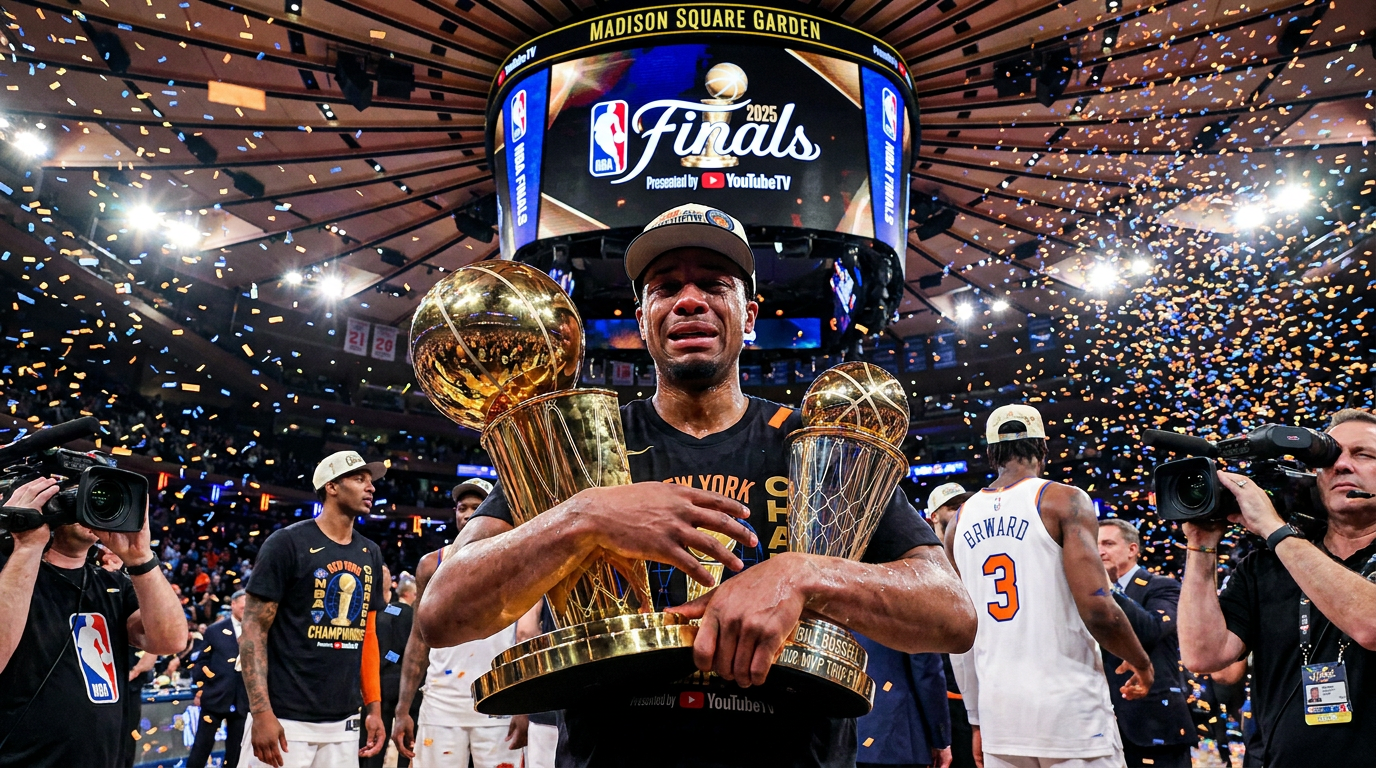
New York Knicks Capture First NBA Championship Since 1973
0 sources

Hockey Strategy
How the PWHL's 'Jailbreak' and 'No Escape' Rules Are Rewriting Hockey Strategy
0 sources
NBA Finals
New York Knicks Win First NBA Championship Since 1973, Defeating San Antonio Spurs
0 sources

Every angle. Every day.
Get sports stories with full source coverage and perspective breakdowns delivered to your inbox.