
How the 2023 Women's World Cup Changed the Global Game Forever
Record-breaking crowds, tactical maturity, and a historic Spanish triumph in 2023 set a towering new standard for the upcoming 2027 tournament in Brazil.
By Xia Wu

As the football world turns its eyes toward Brazil for the 2027 FIFA Women's World Cup, the legacy of the 2023 edition looms large. Hosted jointly by Australia and New Zealand, the previous tournament was a watershed moment that permanently altered the trajectory of women's sports.
It was a competition that defied skeptical projections, shattered attendance records, and introduced a new level of tactical sophistication to the global stage. The 2023 World Cup was the first to feature an expanded 32-team format, mirroring the structure long used by the men's tournament.
Prior to kickoff, critics openly worried that the expansion would lead to lopsided scorelines and a diluted on-field product, fearing that debutant nations would be overwhelmed by traditional powerhouses. Instead, the tournament delivered unprecedented parity and proved that the global footprint of the women's game had deepened significantly. The expanded field allowed eight nations to make their World Cup debuts, bringing fresh tactical approaches and passionate new fanbases into the fold, and setting a highly competitive baseline for the future.[1][3]
The sheer scale of the event was staggering, blowing past all pre-tournament commercial projections. FIFA reported a total attendance of nearly 1.98 million across the 64 matches, obliterating previous benchmarks and setting a new standard for women's sporting events. The final alone, held at Sydney's massive Stadium Australia, drew a capacity crowd of 75,784 fans. Across the board, the average match attendance hovered near 31,000—a massive leap from the 2019 edition in France and a clear indicator that the sport had achieved mainstream cultural saturation in the host nations.
Beyond the sold-out stadiums, the global broadcast numbers reflected a sport reaching true worldwide prominence. China recorded an astonishing 53.9 million viewers for a single group-stage match against England, representing the highest broadcasting audience for a single match in the history of the sport. Meanwhile, host nation Australia saw millions tune in for the Matildas' deep run to the semifinals, effectively bringing the country to a standstill and dominating national television ratings.[2]
On the pitch, the tournament culminated in a historic and emotionally charged victory for Spain. La Roja defeated reigning European champions England 1-0 in a tense, tightly contested final in Sydney, securing their first-ever Women's World Cup title. The victory made Spain only the second nation—after Germany—to win both the men's and women's senior World Cups. Their path to the trophy involved navigating a grueling knockout bracket, showcasing a resilient mentality that allowed them to peak at the exact right moment on the world's biggest stage.
Spain's triumph was built on a foundation of technical brilliance and possession-based dominance, hallmarks of their domestic development system. Midfielder Aitana Bonmatí orchestrated the team's tempo with unparalleled vision, rightfully earning the Golden Ball as the tournament's best overall player. Alongside her, 19-year-old forward Salma Paralluelo provided an electrifying spark off the bench and in the starting lineup, winning the Young Player Award. Their collective ability to control the midfield proved too much for opponents to dismantle.[1][3]
Yet, Spain's victory was achieved against a backdrop of significant institutional turmoil that cast a long shadow over their campaign. The players had spent the previous year locked in a bitter dispute with their federation over professional standards, coaching methods, and internal culture. Their ability to compartmentalize these exhausting off-field battles and deliver a masterclass in team cohesion on the pitch made the triumph even more remarkable. It stood as a powerful testament to the players' sheer willpower and their demand for excellence in the face of systemic adversity.[3]
Tactically, the 2023 tournament represented a massive leap forward for the women's game, driven in part by crucial regulatory changes. For the first time at a Women's World Cup, managers were permitted to make five substitutions during a match. This rule change fundamentally altered game management, allowing coaches to adapt their strategies dynamically, sustain high-pressing systems, and maintain peak physical intensity for the full 90 minutes. The expanded benches gave tacticians the tools to flip momentum late in games, turning the tournament into a fascinating chess match of late-game adjustments.
This tactical evolution was starkly reflected in the tournament's scoring metrics. The average goals per game dropped to 2.56, a 9% decrease from the 2.81 average seen in both the 2015 and 2019 editions. However, technical analysts were quick to note that this decline was not due to a lack of attacking quality or creativity. Rather, it was a direct result of vastly improved defensive structures, highly organized low blocks, and a significant leap in the standard of international goalkeeping.
Teams were simply much harder to break down. The defensive maturity of the expanded field was evident in the sheer number of shutouts. The tournament saw a 14% increase in clean sheets compared to 2015, with ten matches ending in 0-0 draws—more than double the combined total of the previous two World Cups. Debutant nations like Morocco and returning underdogs like Colombia showcased sophisticated defensive blocks and lethal counter-attacking capabilities, proving that with proper coaching and organization, the gap in raw talent could be mitigated.
The shifting global hierarchy was perhaps best illustrated by the shocking early exit of the United States Women's National Team. The traditional powerhouse, chasing an unprecedented third consecutive title, looked disjointed throughout the group stage and was ultimately eliminated by Sweden in the Round of 16 after a dramatic penalty shootout. It marked the earliest exit in the history of the USWNT program, sending shockwaves through the sport and signaling that the era of unchallenged American dominance had definitively come to an end.
The USWNT's stumble highlighted a broader theme of the tournament: the arrival of true global parity. European nations, backed by heavy investments in their domestic club leagues and full-time academies, demonstrated that the developmental gap had closed. Meanwhile, emerging squads from Africa, Asia, and South America proved they could go toe-to-toe with the traditional elite. The 2023 World Cup shattered the notion of a two-tiered sport, replacing it with a deeply competitive landscape where any of the top twenty nations pose a legitimate threat.[1]
Financially, the 2023 tournament also set a new baseline for the sport's economic ecosystem. The total prize money pool was increased to $152 million, a massive jump from previous iterations. While this figure still trailed the men's equivalent, the introduction of guaranteed minimum payouts for individual players—ensuring that every participant received at least $30,000—marked a crucial step toward financial sustainability. For many athletes from developing federations, this direct compensation was life-changing, allowing them to train full-time and further elevating the global standard of play.
As Brazil prepares to host the 2027 edition—the first time the Women's World Cup will be held in South America—the blueprint left by Australia and New Zealand is clear. The host nation will inherit a sport that is no longer a developing product, but a tactical, commercial, and cultural juggernaut. The expectations for attendance, broadcast reach, and on-field quality have been permanently raised, challenging Brazil to match the spectacular infrastructure and vibrant atmosphere that defined the 2023 tournament.
As Brazil prepares to host the 2027 edition—the first time the Women's World Cup will be held in South America—the blueprint left by Australia and New Zealand is clear.
Ultimately, the legacy of 2023 is not just Spain's golden confetti, the record-breaking crowds, or the tactical innovations. It is the undeniable proof that when women's football is given the platform, investment, and respect it deserves, it delivers a sporting spectacle that captivates the globe. The 2023 Women's World Cup proved that the ceiling for the sport is limitless, setting the stage for an even more fiercely contested and globally celebrated tournament when the world gathers in Brazil.[1][2]
Key points
- The 2023 Women's World Cup set all-time attendance records, drawing nearly two million fans across Australia and New Zealand.
- Spain captured their first-ever title, relying on technical dominance despite significant off-field disputes with their federation.
- The expanded 32-team format proved highly competitive, with debutant nations showcasing improved defensive structures and tactical maturity.
- The introduction of the five-substitution rule allowed managers to sustain high physical intensity and adapt late in matches.
- A $152 million prize pool guaranteed minimum payouts for all players, marking a major step toward financial sustainability.
How we got here
July 20, 2023
The tournament opens with co-hosts New Zealand and Australia both securing historic victories in front of record domestic crowds.
August 6, 2023
Defending champions the United States are eliminated by Sweden in the Round of 16, marking their earliest exit in tournament history.
August 20, 2023
Spain defeats England 1-0 at Stadium Australia to claim their first Women's World Cup title.
May 2024
FIFA officially awards the hosting rights for the 2027 Women's World Cup to Brazil, the first South American host.
- Global Growth Advocates
- Emphasizing the commercial success and the vindication of the 32-team expansion.
- Tactical Analysts
- Focusing on the on-field evolution and defensive maturity of the women's game.
- Player Empowerment Advocates
- Highlighting the players' resilience in overcoming institutional hurdles.
Perspectives this story doesn't cover
- Grassroots youth coaches adapting to the new tactical standards
- Domestic league executives capitalizing on the post-World Cup boom
Sources
Source coverage
3 outlets
3 viewpoints surfaced



- [1]FIFAGlobal Growth Advocates
Twelve months after Spain's title triumph
Read on FIFA → - [2]Business StandardGlobal Growth Advocates
Attendance and ticket records keep growing at 2023 Women's World Cup
Read on Business Standard → - [3]WikipediaGlobal Growth Advocates
2023 FIFA Women's World Cup
Read on Wikipedia →

More in Sports
See all →Front Office Move
Vlatko Andonovski Named Chief Soccer Officer of the Chicago Stars
7 sources

Player Safety
Racing Louisville's Savannah DeMelo Sues Team Doctors Over On-Field Cardiac Arrest
6 sources

NWSL Injuries
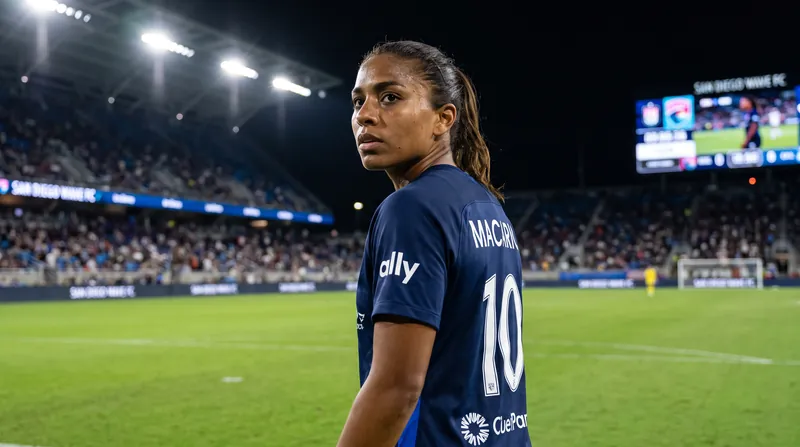
San Diego Wave Place Forward Catarina Macario on Season-Ending Injury List
5 sources
Franchise Reset
Houston Dash Fire Head Coach Fabrice Gautrat and Technical Director Twila Kilgore Amid Poor Run
5 sources

Comments
Every angle. Every day.
Get Sports stories with full source coverage and perspective breakdowns, free every day.