
How SpaceX Built a $2.2 Trillion Business Model
SpaceX's record-breaking Nasdaq debut has minted the world's first trillionaire, driven by a unique business model that combines reusable rockets, global satellite internet, and artificial intelligence.
By Factlen Editorial Team
- Tech Optimists & Retail Investors
- View the valuation as entirely justified by SpaceX's vertical integration, Starlink monopoly, and pace of innovation.
- Corporate Governance Watchdogs
- Express deep concern over the lack of independent board oversight and the fast-tracking of the stock into major indices.
- Aerospace Traditionalists
- Argue the company is being priced as a software monopoly rather than a capital-intensive manufacturing business.
What's not represented
- · Retail investors priced out of early private-market gains
- · Competitors in the traditional terrestrial telecom sector
Why this matters
The $2.2 trillion valuation proves that vertical integration and reusable aerospace technology can generate software-like profit margins, fundamentally altering how future space, tech, and telecommunications companies will be structured and funded.
Key points
- SpaceX debuted on the Nasdaq at a record-breaking $2.2 trillion valuation.
- The IPO elevated founder Elon Musk to the status of the world's first trillionaire.
- The valuation is driven by a vertically integrated model combining reusable rockets, Starlink internet, and xAI.
- Starlink provides the high-margin, recurring revenue that justifies a software-like market multiple.
- Governance watchdogs have raised concerns over Musk's absolute control and the lack of independent board oversight.
- Analysts are already speculating on a future merger between SpaceX and Tesla.
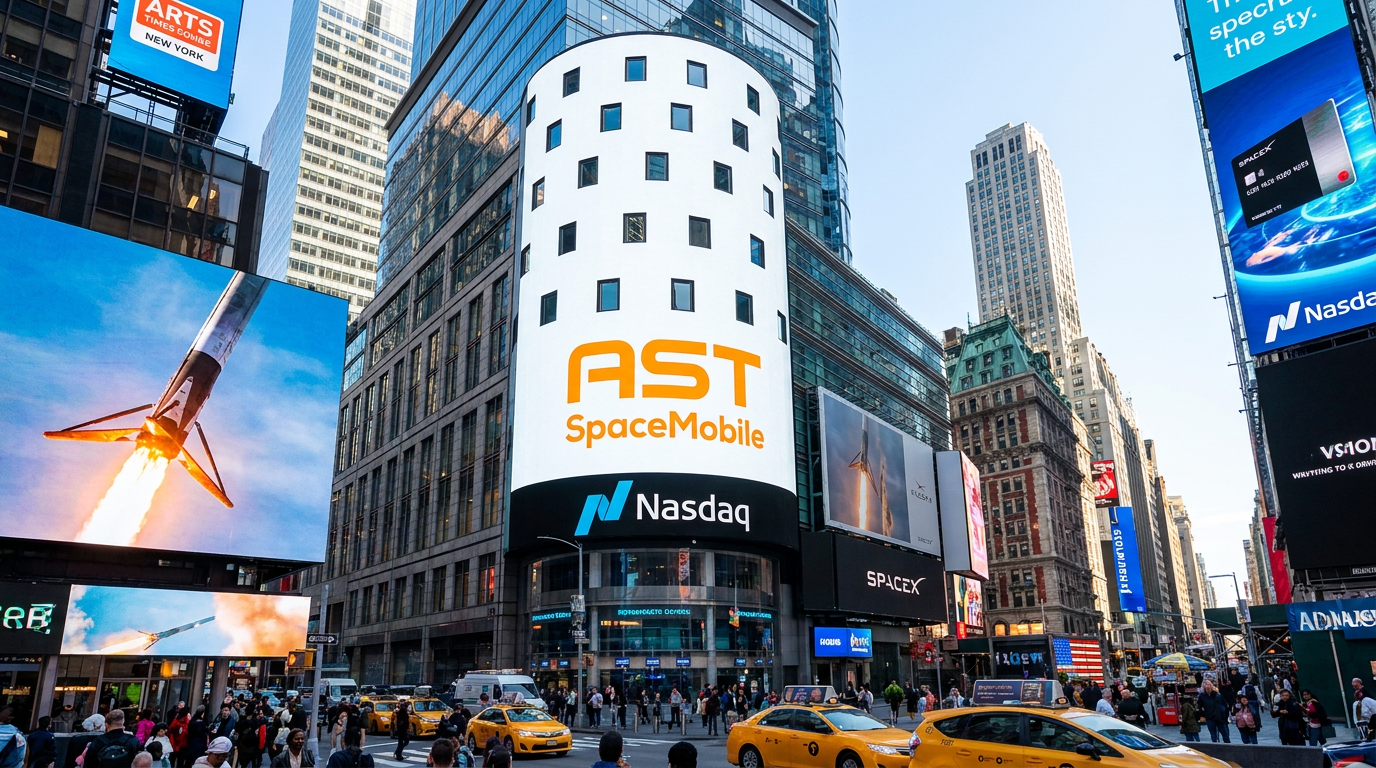
On a historic Friday morning in June 2026, SpaceX officially transitioned from a closely held private enterprise to a publicly traded juggernaut, listing on the Nasdaq exchange and immediately commanding a valuation of $2.2 trillion. The debut shattered previous market capitalization records for initial public offerings, cementing the aerospace manufacturer's status as the most valuable technology debut in history.[3][8]
The sheer scale of the listing had an immediate secondary effect: it elevated founder Elon Musk to the status of the world's first trillionaire. It is a staggering milestone for a company that Musk himself once admitted had less than a 10 percent chance of surviving its early years. Today, the company's financial footprint dwarfs the legacy aerospace contractors that once dominated the industry.[1][3][5]
But the $2.2 trillion valuation is not simply a product of retail investor mania, though market enthusiasm certainly played a role. Rather, it reflects a fundamental rewrite of aerospace economics. To understand how a rocket company achieved a valuation typically reserved for global software monopolies, one must look at the three-pillared business model that SpaceX has quietly assembled over the past decade.[5]

The first pillar is the physical mechanism of reusability. For decades, the aerospace industry operated on an expendable model, discarding tens of millions of dollars worth of advanced machinery into the ocean after a single flight. SpaceX engineered the Falcon 9 to land itself, fundamentally altering the marginal cost of reaching low-Earth orbit.[1][5]
By treating rockets more like commercial airplanes than single-use munitions, SpaceX achieved an unprecedented launch cadence. This operational efficiency is largely credited to President and COO Gwynne Shotwell, who has long been viewed as the steady, pragmatic hand guiding the company's ambitious engineering goals into reliable, repeatable business operations.[9]
However, launching payloads for NASA and commercial clients, while profitable, is a fundamentally limited market. The true engine of SpaceX's $2.2 trillion valuation is its second pillar: Starlink. By leveraging its own cheap, reusable rockets, SpaceX was able to deploy a mega-constellation of thousands of low-Earth orbit satellites at a fraction of the cost any competitor would face.[6]
Starlink transformed SpaceX from a transportation company into a global telecommunications provider. Instead of relying solely on episodic launch contracts, the company now generates high-margin, recurring subscription revenue from millions of users worldwide. Financial analysts note that this software-like revenue stream is what justifies the massive tech-style valuation multiple.[5][6]

Starlink transformed SpaceX from a transportation company into a global telecommunications provider.
The third and most recent pillar of the business model is artificial intelligence. In a move that surprised some traditional market watchers, Musk's artificial intelligence venture, xAI, was folded directly into the SpaceX corporate structure ahead of the public offering.[7][10]
Integrating xAI provides SpaceX with cutting-edge machine learning capabilities necessary to manage the complex, real-time routing of the Starlink network, while also positioning the company to process the massive amounts of data beamed back from orbit. The strategic consolidation also allowed early xAI investors to benefit directly from the SpaceX IPO.[7][10]
Despite the financial triumph, the unprecedented nature of the listing has triggered alarm bells among institutional investors and corporate governance advocates. New York City Comptroller Mark Levine publicly raised concerns regarding the fast-tracking of SpaceX into major indices like the MSCI Global Standard and FTSE Russell.[2]
Levine and other governance watchdogs point out that SpaceX has bypassed traditional seasoning periods and earnings track records typically required for index inclusion. More critically, the company's governance structure remains highly unusual for a public entity of its size, granting Musk dominant control with virtually no independent board oversight and severely limited shareholder rights.[2]

This concentration of power has created a new "retail-risk complex," where the sheer momentum of the stock forces institutional index funds to buy in, regardless of their comfort level with the underlying governance. For many retail investors, however, betting on Musk's absolute control is precisely the point of the investment.[2][8]
Looking ahead, the market is already speculating on the next phase of this corporate empire. Ross Gerber, CEO of Gerber Kawasaki Wealth & Investment Management, recently stated that a formal merger between SpaceX and Tesla is now a "foregone conclusion."[4]
Gerber argues that anticipation of this eventual combination has been propping up Tesla's stock, as investors waited for an opportunity to gain exposure to SpaceX. While a merger of two massive, distinct manufacturing entities would present immense logistical challenges, the shared leadership and overlapping technological goals make it a plausible scenario for Wall Street.[4]
Ultimately, the SpaceX IPO represents more than just a wealth-generation event; it is the validation of a brutally efficient, vertically integrated business model. By owning the rockets, the satellites, and the artificial intelligence that connects them, SpaceX has built an economic moat that traditional competitors may find impossible to cross.[1][5][6]
How we got here
2002
Elon Musk founds SpaceX with the goal of reducing space transportation costs.
2008
Falcon 1 becomes the first privately developed liquid-fueled rocket to reach orbit.
2015
SpaceX successfully lands the first stage of a Falcon 9 rocket, proving the viability of reusability.
2019
The first batch of Starlink satellites is launched, beginning the company's pivot to global telecommunications.
Early 2026
Musk's artificial intelligence venture, xAI, is folded into the SpaceX corporate structure.
June 2026
SpaceX debuts on the Nasdaq at a record $2.2 trillion valuation.
Viewpoints in depth
Tech Optimists & Retail Investors
View the valuation as entirely justified by SpaceX's vertical integration, Starlink monopoly, and pace of innovation.
For technology analysts and the retail investors who eagerly awaited the public offering, the $2.2 trillion price tag is a rational reflection of SpaceX's economic moat. They argue that by mastering reusable rocketry, SpaceX effectively monopolized access to low-Earth orbit. This monopoly allowed them to build Starlink at a cost no competitor could match, transforming a capital-intensive transportation company into a high-margin, global internet service provider. The recent addition of xAI only sweetens the deal, creating an unprecedented conglomerate of space, software, and artificial intelligence.
Institutional Governance Watchdogs
Express deep concern over the lack of independent board oversight and the fast-tracking of the stock into major indices.
Financial regulators and institutional investors look at the SpaceX IPO with significant trepidation. Their primary concern is not the technology, but the corporate structure. By fast-tracking into major indices like MSCI and FTSE, index funds are forced to buy the stock, exposing millions of passive retirement accounts to a company where one individual holds absolute control. Watchdogs argue that the lack of an independent board of directors and traditional shareholder voting rights sets a dangerous precedent for future mega-cap public listings.
Aerospace Traditionalists
Argue the company is being priced as a software monopoly rather than a capital-intensive manufacturing business.
Veterans of the legacy aerospace and defense sectors view the valuation as a product of tech-sector exuberance rather than industrial reality. While acknowledging SpaceX's dominance in launch cadence, they point out that building rockets and satellites remains a fundamentally capital-intensive, hardware-based business subject to physical risks and massive regulatory hurdles. From this perspective, assigning a software-like multiple to a company that still has to bend metal and manage explosive propellants ignores the inherent risks of the aerospace industry.
What we don't know
- How traditional index funds will navigate their required purchases given the unconventional governance structure.
- Whether antitrust regulators will eventually scrutinize the integration of xAI, Starlink, and SpaceX launch services.
- If the speculated merger between Tesla and SpaceX will actually materialize in the coming years.
Key terms
- Vertical Integration
- A business strategy where a company owns its entire supply chain, manufacturing its own components rather than relying on outside contractors.
- Reusable Launch Vehicle (RLV)
- A rocket designed to be recovered and flown multiple times, drastically reducing the cost of reaching orbit compared to traditional expendable rockets.
- Index Inclusion
- The process of adding a publicly traded company to major stock market indices, which forces passive index funds to automatically buy the stock.
Frequently asked
Why is SpaceX valued so highly compared to traditional aerospace?
SpaceX operates more like a tech monopoly than a traditional manufacturer. By using its cheap, reusable rockets to deploy the Starlink network, it generates high-margin, recurring software-like revenue from global internet subscriptions.
What role does xAI play in SpaceX's valuation?
Elon Musk's artificial intelligence company, xAI, was folded into SpaceX prior to the IPO. This integration provides advanced machine learning capabilities to manage the Starlink satellite network and process orbital data.
Why are some investors concerned about the IPO?
Corporate governance advocates are alarmed by SpaceX's unprecedented structure, which grants Elon Musk dominant control with virtually no independent board oversight, while still being fast-tracked into major index funds.
Sources
Source coverage
10 outlets
3 viewpoints surfaced








[1]The New York TimesAerospace Traditionalists
SpaceX’s Unlikely Journey From Far-Out Idea to $2 Trillion Juggernaut
Read on The New York Times →[2]BloombergCorporate Governance Watchdogs
NYC Comptroller Raises Concerns Over SpaceX Index Inclusion and Governance Structure
Read on Bloomberg →[3]BBCTech Optimists & Retail Investors
Elon Musk becomes world's first trillionaire as SpaceX soars in stock market debut
Read on BBC →[4]CNBCTech Optimists & Retail Investors
SpaceX, Tesla Merger A 'Forgone Conclusion,' Says Ross Gerber
Read on CNBC →[5]The Wall Street JournalAerospace Traditionalists
SpaceX's $2.2 Trillion Debut Rewrites the Rules of Aerospace Economics
Read on The Wall Street Journal →[6]Financial TimesAerospace Traditionalists
The Starlink Engine: How Satellite Broadband Justified a $2 Trillion Valuation
Read on Financial Times →[7]TechCrunchTech Optimists & Retail Investors
Folding xAI into SpaceX: The AI Play That Pushed Musk Over the Trillion-Dollar Mark
Read on TechCrunch →[8]ReutersTech Optimists & Retail Investors
SpaceX lists on Nasdaq, opening at record $2.2 trillion valuation
Read on Reuters →The steady hand at SpaceX is not Elon Musk’s.
Read on The New York Times →Top House Republican’s family investment poised to benefit from SpaceX IPO
Read on CNBC →
Every angle. Every day.
Get business stories with full source coverage and perspective breakdowns delivered to your inbox.