
How Precision Fermentation is Engineering the Future of Animal-Free Dairy
The FDA has cleared a major regulatory hurdle for animal-free casein, unlocking the biological key to meltable, stretchy vegan cheese. Precision fermentation is now moving from niche science to commercial reality, promising bioidentical dairy with a fraction of the environmental footprint.
By Factlen Editorial Team
- Food-Tech Innovators
- Argue that precision fermentation is the only way to decouple protein production from environmental degradation while maintaining the exact sensory experience of dairy.
- Environmental Advocates
- Champion the technology for its massive reductions in land use, water consumption, and methane emissions, viewing it as a critical tool for meeting global climate targets.
- Market Analysts
- Focus on the economic hurdles, noting that while the science is proven, achieving price parity with subsidized conventional dairy remains a massive capital challenge.
What's not represented
- · Traditional dairy farmers facing disruption
- · Agricultural policymakers
Why this matters
Traditional dairy farming is a major driver of greenhouse gas emissions and land use, while plant-based alternatives often fail to replicate the taste and texture of real cheese. Precision fermentation solves both problems by brewing exact molecular copies of dairy proteins without the cow, potentially transforming the global food system and the climate.
Key points
- The FDA recently issued a 'no questions' letter for precision-fermented casein, the protein responsible for cheese's ability to melt and stretch.
- Precision fermentation uses genetically programmed microbes to brew dairy proteins that are molecularly identical to those produced by cows.
- The resulting proteins are completely free of lactose, cholesterol, and animal inputs, while functioning exactly like traditional dairy in food manufacturing.
- Life cycle assessments show the process can reduce greenhouse gas emissions by up to 85% and land use by 99% compared to conventional farming.
- Despite the environmental and functional benefits, production costs remain three to five times higher than traditional dairy due to scaling challenges.
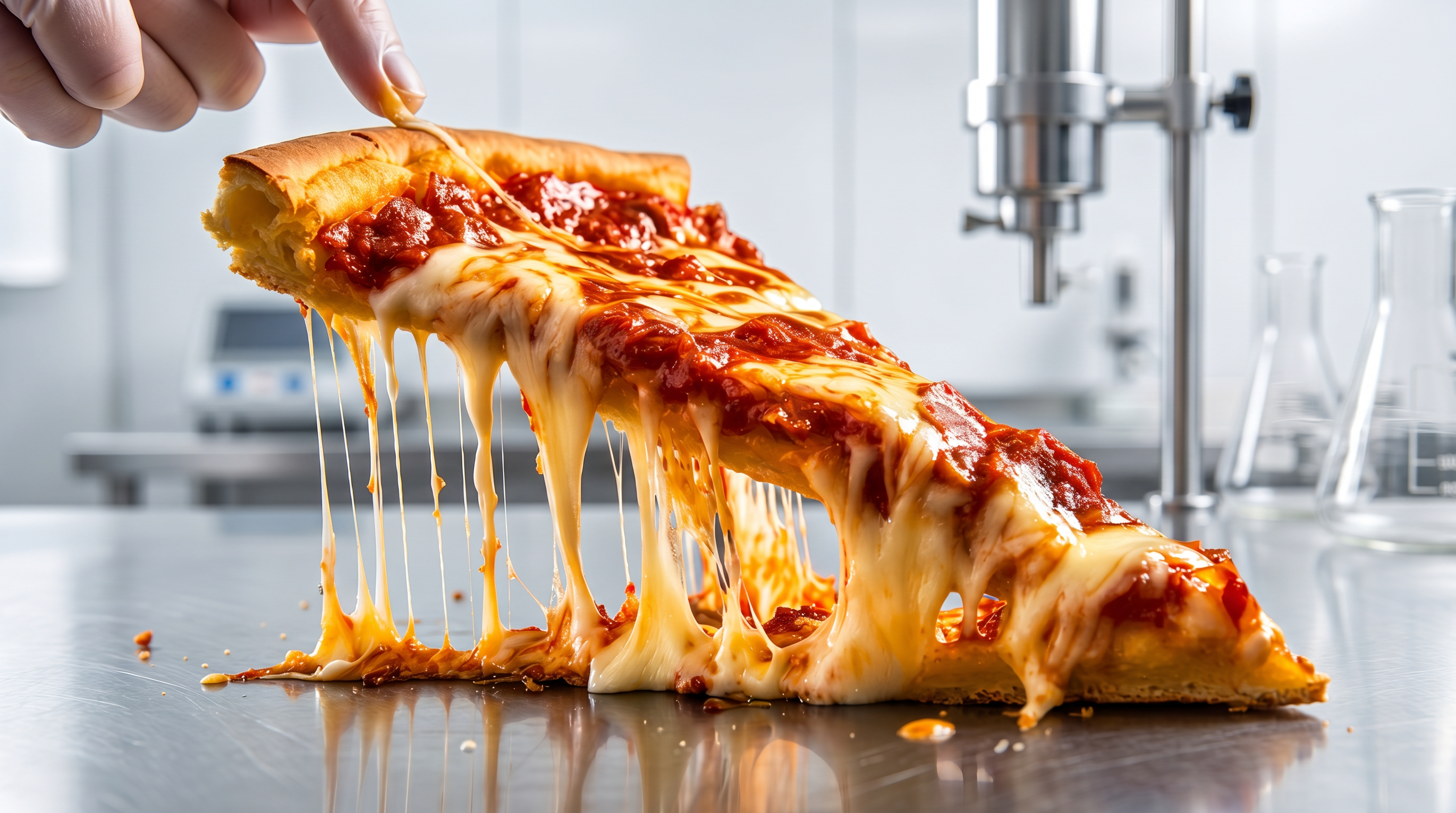
The holy grail of vegan cheese has always been the melt. Plant-based alternatives typically rely on starches and coconut oils that turn to mush or refuse to stretch under heat. But in June 2026, the U.S. Food and Drug Administration cleared a regulatory hurdle that promises to change the dairy aisle forever.[1][3]
Berlin-based food-tech company Formo received a "no questions" letter from the FDA for its precision fermentation-derived casein protein. This green light confirms the ingredient's Generally Recognized As Safe (GRAS) status, paving the way for next-generation, meltable animal-free cheeses to hit American plates.[1][2]
The breakthrough centers on casein, a family of proteins that make up roughly 80% of the protein in cow's milk. Casein provides the structural backbone of dairy—it is the molecular magic that allows cheese to stretch on a pizza, melt on a burger, and deliver a signature creamy mouthfeel.[1][2]
Until recently, creating a convincing vegan cheese that performs identically to its dairy counterpart was biologically impossible without this specific protein. Now, a rapidly maturing technology called precision fermentation is allowing companies to produce bioidentical casein without a single cow.[1][4]

How does it work? The process is fundamentally similar to brewing beer, but instead of using yeast to convert sugars into alcohol, scientists use micro-programmed fungi or yeast to churn out specific dairy proteins.[1][8]
First, researchers identify the exact genetic sequence in a cow's DNA that codes for the desired protein. This sequence is then introduced into a harmless microorganism, effectively turning it into a microscopic protein factory.[1][8]
These programmed microbes are placed in massive fermentation tanks filled with a nutrient-rich broth of simple sugars and minerals. As they multiply, they produce the exact same casein or whey proteins found in traditional milk. Finally, the protein is separated and purified from the microbes, leaving a pure, isolated milk protein ready for food manufacturing.[1]
The resulting ingredient is not a "plant-based alternative." It is molecularly identical to dairy protein, meaning it triggers the same functional properties—emulsification, gelation, and foaming—as conventional milk. However, because it is produced via fermentation, it is entirely free of lactose, cholesterol, and the hormones or antibiotics sometimes associated with animal agriculture.[2][5]
The environmental implications are staggering. Traditional dairy farming is highly emissive and resource-intensive. Life cycle assessments of precision fermentation dairy indicate that the process can reduce greenhouse gas emissions by 70% to 85% compared to conventional dairy.[4][8]

Traditional dairy farming is highly emissive and resource-intensive.
Water and land savings are even more dramatic. Producing dairy proteins in bioreactors requires up to 99% less arable land and 80% to 99% less water, depending on the energy sources and sugar crops used to feed the microbes. By decoupling protein production from animal agriculture, the technology offers a resilient alternative to traditional farming, which is increasingly vulnerable to climate shocks.[7][8]
Formo is not the only company capitalizing on this biological revolution. The precision fermentation dairy sector has split into clear winners who are successfully scaling their technology and generating actual revenue.[6]
California-based Perfect Day led the first wave, successfully commercializing animal-free whey protein. By 2026, Perfect Day has shipped over 50 million servings of its protein, licensing the technology to major consumer packaged goods companies for use in ice creams, protein powders, and milk alternatives.[6]
The industry is now moving beyond basic whey into highly specialized, high-value proteins. In April 2026, Australian startup All G received its own FDA "no questions" letter for a cow-free lactoferrin protein. Lactoferrin is prized for its immunity-boosting and gut-strengthening properties, but extracting it traditionally requires 10,000 liters of cow's milk to yield just one kilogram. All G's fermentation method bypasses this bottleneck entirely.[3]
Despite the scientific triumphs, the industry faces steep economic hurdles. The cost of precision-fermented proteins currently remains three to five times higher than conventional dairy proteins.[7]

This price premium is driven by the high cost of the growth media used in fermentation tanks, complex purification processes, and a global shortage of commercial-scale bioreactor capacity. While the FDA approval process has proven relatively smooth—with regulators accepting terms like "non-animal casein" for food labels—building the physical infrastructure to compete with subsidized traditional dairy is a massive capital challenge.[1][5][7]
Geography also plays a crucial role in the technology's rollout. The United States has emerged as the clear regulatory leader, with the FDA's GRAS pathway providing a predictable route to market.[1][3]

In contrast, the European Union's novel food approval process has lagged significantly. Many European startups, including Berlin's Formo and Belgium's Those Vegan Cowboys, have prioritized launching in the U.S. market first due to the faster regulatory timeline. Meanwhile, Australia and New Zealand are currently reviewing their first precision-fermented dairy applications, with decisions expected by late 2026.[2][3][4]
As production costs slowly fall and bioreactor capacity expands, precision fermentation is poised to transition from a premium niche to a foundational pillar of the global food system. For consumers, it promises a future where enjoying a perfectly melted slice of cheese no longer requires a compromise between taste, health, and the planet.[1][5][8]
How we got here
2019
Impossible Foods popularizes precision fermentation with its FDA-approved 'heme' ingredient for plant-based burgers.
2021
Perfect Day receives FDA clearance for its animal-free whey protein, launching the first commercial precision-fermented ice creams.
April 2026
Australian startup All G receives an FDA 'no questions' letter for its cow-free lactoferrin protein.
June 2026
Formo achieves FDA GRAS status for its recombinant casein, unlocking the ability to produce fully meltable animal-free cheese in the U.S.
Viewpoints in depth
Food-Tech Innovators
Argue that precision fermentation is the only way to decouple protein production from environmental degradation while maintaining the exact sensory experience of dairy.
Startups and biotech firms argue that plant-based alternatives have hit a functional ceiling, particularly in categories like cheese where the molecular structure of casein is required for melting and stretching. By brewing bioidentical proteins, they believe they can win over omnivores who refuse to compromise on taste or texture, ultimately driving a massive reduction in the food system's carbon footprint.
Traditional Dairy Industry
Emphasize the nutritional complexity of whole milk, noting that precision fermentation currently provides isolated proteins rather than the full matrix of vitamins, minerals, and fats found in conventional dairy.
Incumbent dairy producers point out that milk is a complex, whole food containing a matrix of essential nutrients that are difficult to replicate entirely in a lab. While they acknowledge the functional benefits of fermented whey and casein for processed foods, they argue that traditional dairy farming—when optimized for sustainability—still plays a vital role in rural economies and holistic human nutrition.
Environmental Advocates
Champion the technology for its massive reductions in land use, water consumption, and methane emissions, viewing it as a critical tool for meeting global climate targets.
Climate organizations view animal agriculture as one of the hardest sectors to decarbonize due to the inherent methane emissions of ruminant animals. They see precision fermentation as a necessary technological leap, pointing to life cycle assessments that show up to an 85% reduction in greenhouse gases and a 99% reduction in land use, which could free up millions of acres for rewilding and carbon sequestration.
What we don't know
- When precision-fermented casein will reach price parity with heavily subsidized conventional dairy products.
- How traditional dairy conglomerates will respond to the commercial scaling of bioidentical animal-free proteins.
- Whether European regulators will accelerate their novel food approval processes to prevent startups from exclusively launching in the U.S. market.
Key terms
- Precision Fermentation
- A biological engineering process that uses programmed microorganisms, like yeast or fungi, to produce specific complex molecules such as proteins or fats.
- Recombinant Casein
- A dairy protein produced via fermentation that is molecularly identical to the casein found in cow's milk, responsible for the melting and stretching properties of cheese.
- GRAS (Generally Recognized As Safe)
- An FDA regulatory designation indicating that an ingredient is safe for human consumption based on established scientific consensus.
- Bioreactor
- A large, controlled stainless steel vessel where microorganisms are cultivated in a nutrient broth to produce target proteins at scale.
- Lactoferrin
- A highly valuable, immunity-boosting protein naturally found in small quantities in cow and human milk, now being produced efficiently via fermentation.
Frequently asked
Is precision-fermented dairy considered vegan?
Yes, because no animals are involved in the production process. However, because the final product contains real dairy proteins, it is not suitable for people with dairy allergies.
Does animal-free dairy contain lactose?
No. The fermentation process is programmed to produce only specific proteins, like whey or casein, naturally leaving out lactose and cholesterol entirely.
Are these products genetically modified?
The microorganisms used to brew the proteins are genetically engineered, but the final purified protein contains no detectable genetic material from the host microbe.
Why aren't these products in every grocery store yet?
The technology is still scaling. Building massive commercial bioreactors and sourcing the nutrient broth is expensive, keeping current costs three to five times higher than conventional dairy.
Sources
Source coverage
8 outlets
3 viewpoints surfaced








[1]FlavoristFood-Tech Innovators
Animal-Free Dairy Gets a Boost: Precision Fermentation Casein Clears Major FDA Hurdle
Read on Flavorist →[2]FoodNavigator-USAFood-Tech Innovators
FDA's acknowledgment of GRAS notice puts Formo and Those Vegan Cowboys one step away from a no-questions letter
Read on FoodNavigator-USA →[3]Green QueenFood-Tech Innovators
Exclusive: All G Earns FDA Approval to Sell Cow-Free Lactoferrin Protein in US
Read on Green Queen →[4]Dairy ReporterMarket Analysts
Why investors are turning to cow-free dairy
Read on Dairy Reporter →[5]Fact.MRMarket Analysts
Precision Fermentation Dairy Alternatives Market Forecast and Outlook
Read on Fact.MR →[6]Nature Tech MemosFood-Tech Innovators
Perfect Day's precision fermentation approach has generated actual revenue at scale
Read on Nature Tech Memos →[7]Sustainable Nutrition InitiativeEnvironmental Advocates
Environmental impact of precision fermentation
Read on Sustainable Nutrition Initiative →[8]GFI EuropeEnvironmental Advocates
What is the environmental footprint of precision fermentation?
Read on GFI Europe →
Every angle. Every day.
Get food drink stories with full source coverage and perspective breakdowns delivered to your inbox.