
How Open-Source Intelligence and Commercial Satellites Are Democratizing Global Security
The proliferation of high-resolution commercial satellites and open-source data has ended the era of state-monopolized intelligence, empowering civil society to deter conflicts and hold actors accountable.
By Factlen Editorial Team
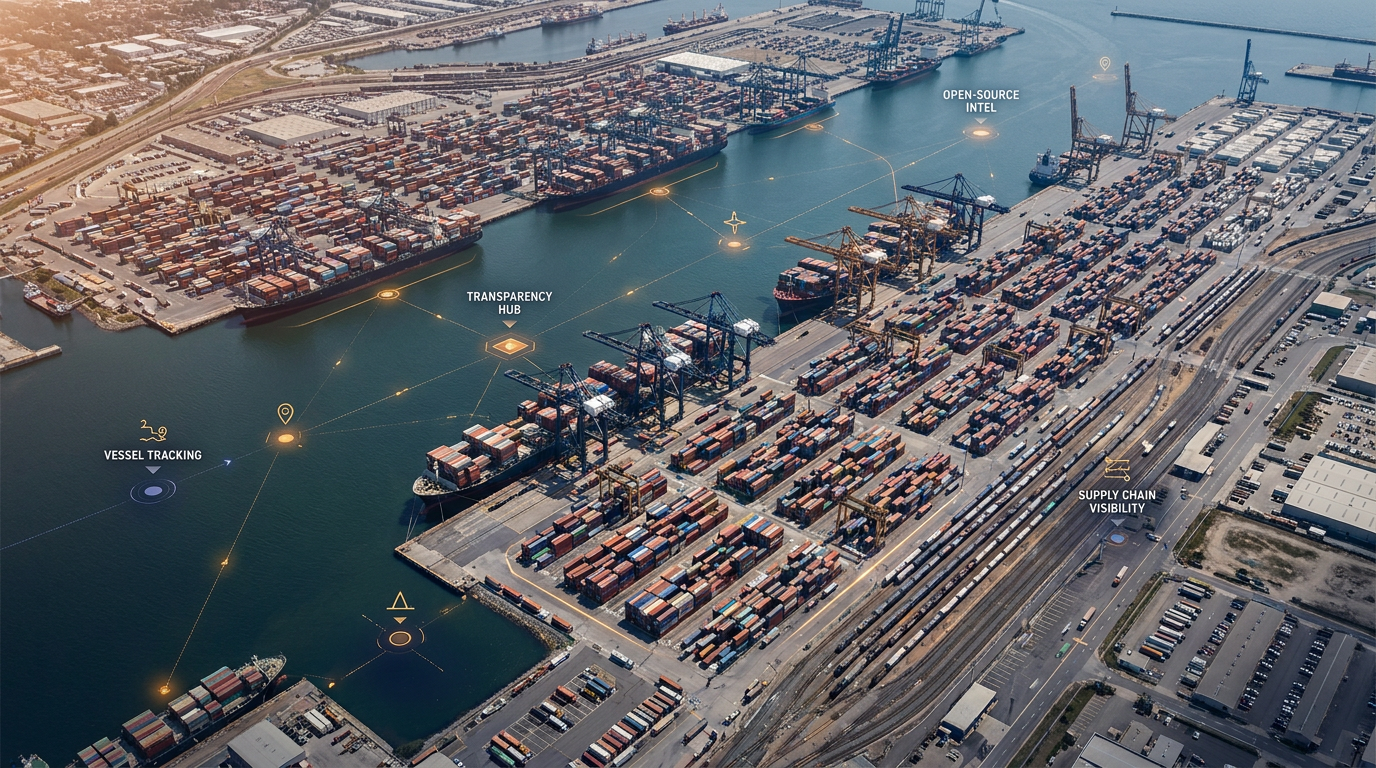
- Transparency Advocates
- Argue that open data prevents atrocities, deters surprise attacks, and democratizes truth by allowing anyone to verify claims.
- Traditional Security Planners
- Acknowledge the utility of open data but worry about the loss of operational security and the exposure of legitimate defense postures.
- Peacebuilding Organizations
- Focus on using spatial data for disaster relief, enforcing resource-sharing agreements, and monitoring civilian harm.
- Information Warfare Analysts
- Warn about the risks of deepfakes, AI-generated false imagery, and the weaponization of open data by non-state actors.
What's not represented
- · Commercial Satellite Providers
- · Privacy Rights Advocates
Why this matters
The ability to monitor troop movements, verify human rights abuses, and track environmental treaties is no longer restricted to superpowers. This planetary transparency reduces the risk of surprise attacks and gives citizens, journalists, and NGOs the hard evidence needed to demand accountability.
Key points
- Commercial satellites now offer 25-centimeter resolution, rivaling historical state-owned spy assets.
- The proliferation of open-source data has effectively eliminated the strategic advantage of military surprise.
- The International Criminal Court now formally endorses OSINT-derived evidence for prosecuting war crimes.
- Environmental organizations use spatial data to track treaties and locate unexploded ordnance.
- Militaries are shifting from enforcing strict secrecy to rapidly fusing and verifying public data.
For decades, the ability to peer across borders and monitor the movements of foreign militaries was the exclusive domain of superpowers. Multibillion-dollar satellite constellations and clandestine networks were required to gather actionable intelligence. Today, that monopoly has collapsed. The proliferation of commercial satellites, smartphones, and open-source data has ushered in an era of radical transparency, fundamentally altering global security dynamics.[2][8]
This transformation is driven by Open-Source Intelligence (OSINT) and Geospatial Intelligence (GEOINT). What was once a niche practice of reading foreign newspapers has evolved into a highly technical discipline. Analysts, journalists, and non-governmental organizations now fuse commercially available satellite imagery with social media posts, flight tracking data, and unencrypted radio transmissions to build real-time pictures of global events.[2][3]
Claim 1: Commercial satellite technology has effectively eliminated the strategic advantage of military surprise. The evidence for this shift is robust and highly visible. In the months leading up to the 2022 invasion of Ukraine, commercial satellite companies and independent researchers published detailed images of Russian troop buildups, logistical hubs, and field hospitals.[3][4]
This unprecedented public disclosure stripped the invasion of its operational secrecy, allowing the international community to preemptively counter false narratives and prepare diplomatic responses. The intelligence advantage has shifted from the ability to hide information to the ability to rapidly analyze and verify publicly available data.[3][4]
The technical capabilities of commercial platforms now rival historical state-owned assets. Companies operate constellations of Synthetic Aperture Radar (SAR) satellites that can penetrate cloud cover and operate in total darkness. These platforms offer resolutions as sharp as 25 centimeters, detailed enough to identify specific vehicle types, radar deployments, and even scorch marks from artillery fire.[5]

Furthermore, the advent of nano CubeSats—miniaturized satellites measuring just 10x10x10 centimeters—has drastically lowered the financial barrier to space-based observation. With dozens of these satellites orbiting the Earth, the revisit rate over specific locations has dropped from days to mere hours, creating a near-continuous stream of planetary observation.[5]
Uncertainty and Limitations: While the visual domain has been democratized, traditional intelligence agencies maintain a significant edge in highly classified Signals Intelligence (SIGINT) and Human Intelligence (HUMINT). Commercial satellites can show that a military unit has moved, but they cannot definitively reveal the commander's intent or the contents of encrypted communications.[2][4]
Claim 2: OSINT has become a foundational tool for legal accountability and the prosecution of human rights violations. The evidence supporting this claim is institutionalized and growing. The International Criminal Court (ICC) has formally endorsed the use of OSINT-derived evidence, including geolocated videos and satellite imagery, for the prosecution of war crimes.[5]
Claim 2: OSINT has become a foundational tool for legal accountability and the prosecution of human rights violations.
Organizations like Bellingcat and the United Nations Satellite Centre (UNOSAT) have pioneered methodologies for documenting atrocities. By combining high-resolution imagery with crowdsourced data, these groups can independently verify damage to civilian infrastructure, track the movement of displaced populations, and expose covert operations.[7][8]

In the Middle East, UNOSAT collaborates with humanitarian agencies to map damage in conflict zones, providing objective data that guides aid distribution and supports civilian protection calls. This visual evidence enhances the credibility of human rights advocacy while avoiding the need to disclose sensitive human sources.[7]
Uncertainty and Limitations: The reliance on digital evidence introduces new vulnerabilities. The rapid advancement of generative artificial intelligence has made it easier to create hyper-realistic false imagery, commonly known as deepfakes. To counter this, OSINT practitioners must employ rigorous verification frameworks, cross-referencing multiple data streams to ensure authenticity.[1][5]
Claim 3: Open spatial data is critical for environmental peacebuilding and the enforcement of international treaties. Beyond active conflict zones, transparency is being leveraged to resolve disputes over natural resources and monitor post-conflict recovery.[6]
The United Nations Environment Programme (UNEP) and the Environmental Peacebuilding Association utilize digital technologies to track the implementation of environmental provisions within peace agreements. By establishing comprehensive spatial data infrastructures, local authorities can transparently manage land tenure rights and resource sharing, reducing the likelihood of renewed hostilities.[6]
In post-conflict regions like Cambodia, researchers have successfully deployed deep learning algorithms to analyze commercial satellite imagery and detect artillery craters. This data is used to estimate the location of unexploded ordnance, guiding de-mining efforts and safely returning agricultural land to local communities.[6]

Claim 4: The democratization of intelligence forces state militaries to fundamentally redesign their operational security. The evidence suggests that traditional methods of concealment are no longer viable. Defense planners must now assume that their installations, logistics corridors, and training exercises are under persistent open observation.[4][7]
Rather than attempting to enforce tighter secrecy, forward-thinking militaries are adopting a strategy of smarter fusion. This involves pairing classified sensors with public data feeds, stress-testing operational plans against commercial satellite capabilities, and training personnel to rapidly validate open-source information.[4]
Resilience in this new era relies less on hiding targets and more on design choices that reduce their strategic value. Militaries are exploring spatial layouts, fortification, and redundancy to mitigate the risks of open-source visibility without undermining the broader benefits of transparency.[7]

Ultimately, the OSINT revolution represents a structural, permanent transformation in global security. As machine learning tools become more accessible and satellite resolutions continue to improve, the capability gap between state institutions and civil society will narrow even further.[1][4]
This shift empowers a broader range of actors—from independent journalists to environmental monitors—to hold powerful entities accountable. By turning radical transparency into a tool for verification and peacebuilding, the democratization of intelligence offers a profound opportunity to reduce miscalculation and build a more stable global order.[2][8]
How we got here
Early 2000s
High-resolution satellite imagery remains largely a monopoly of state intelligence agencies.
2010s
The advent of nano CubeSats drastically lowers the cost of launching earth observation platforms.
2022
Commercial satellite imagery publicly exposes Russian military buildups months before the invasion of Ukraine.
2024
The International Criminal Court increasingly formalizes the use of OSINT for war crime prosecutions.
2026
Commercial SAR satellites routinely provide 25-centimeter resolution imagery to NGOs and civilian analysts.
Viewpoints in depth
Transparency Advocates
Argue that open data prevents atrocities, deters surprise attacks, and democratizes truth.
Human rights lawyers, investigative journalists, and NGOs view the OSINT revolution as a profound equalizing force. By removing the state monopoly on intelligence, civil society can independently verify claims of human rights abuses, track the movement of displaced populations, and expose covert military operations. They argue that planetary transparency acts as a deterrent; when bad actors know their actions will be documented and broadcast globally in near real-time, the political and strategic costs of aggression rise significantly.
Traditional Security Planners
Acknowledge the utility of open data but worry about the loss of operational security.
Military strategists and intelligence officials recognize that OSINT is a powerful force multiplier, but they caution against the severe operational security risks it introduces. The ability of non-state actors and rival nations to purchase high-resolution imagery of logistics hubs and troop deployments complicates legitimate defense postures. These planners argue that militaries must adapt by assuming they are always being watched, shifting their focus toward 'smarter fusion' of classified and public data rather than relying on outdated methods of concealment.
Peacebuilding Organizations
Focus on using spatial data for disaster relief, resource sharing, and monitoring civilian harm.
For the United Nations and environmental groups, commercial satellite imagery is primarily a tool for humanitarian aid and post-conflict recovery. They utilize spatial data infrastructures to monitor compliance with environmental peace agreements, track the equitable sharing of natural resources, and guide de-mining efforts. From their perspective, the true value of democratized intelligence lies in its ability to facilitate safe refugee returns, assess infrastructure damage, and build sustainable peace in fragile regions.
Information Warfare Analysts
Warn about the risks of deepfakes and the weaponization of open data.
Cybersecurity experts and information warfare researchers emphasize the vulnerabilities inherent in a decentralized intelligence landscape. While acknowledging the benefits of OSINT, they warn that the rapid advancement of generative AI makes it increasingly easy to inject hyper-realistic false imagery into the public domain. They argue that without rigorous, standardized verification frameworks, the democratization of intelligence could inadvertently accelerate the spread of disinformation and trigger geopolitical miscalculations based on fabricated evidence.
What we don't know
- How international law will adapt to regulate the sale of highly sensitive commercial satellite data to non-state actors.
- Whether AI verification tools will be able to outpace the development of hyper-realistic deepfakes designed to spoof OSINT analysts.
Key terms
- OSINT (Open-Source Intelligence)
- The collection and analysis of information gathered from public or commercially available sources to produce actionable intelligence.
- GEOINT (Geospatial Intelligence)
- Intelligence derived from the exploitation and analysis of imagery and geospatial information to describe, assess, and visually depict physical features.
- CubeSat
- A class of miniaturized satellite, typically measuring 10x10x10 centimeters, that has drastically lowered the cost of space-based observation.
- Deepfake
- Hyper-realistic, AI-generated false imagery or video designed to deceive viewers, posing a challenge to intelligence verification.
Frequently asked
Can anyone buy high-resolution satellite imagery?
Yes. Commercial providers now sell imagery with resolutions as sharp as 25 centimeters to private citizens, NGOs, and corporations, though the most immediate or highest-resolution data can be expensive.
How does OSINT prevent conflict?
By making troop buildups and military preparations visible to the world, it removes the element of surprise, allowing for diplomatic intervention and public pressure before an attack occurs.
Is OSINT evidence admissible in court?
Yes. International bodies like the International Criminal Court (ICC) increasingly accept rigorously verified OSINT, such as geolocated videos and satellite imagery, to prosecute war crimes.
What is Synthetic Aperture Radar (SAR)?
SAR is a type of active satellite imaging that uses radio waves to create detailed reconstructions of landscapes. Unlike optical cameras, SAR can see through clouds, smoke, and total darkness.
Sources
Source coverage
8 outlets
4 viewpoints surfaced







[1]Centre for International Governance InnovationTraditional Security Planners
The Impact of Artificial Intelligence on Military Defence and Security
Read on Centre for International Governance Innovation →[2]European Journal of International SecurityTransparency Advocates
The rise of open-source intelligence
Read on European Journal of International Security →[3]Modern DiplomacyInformation Warfare Analysts
The Role of Open-Source Intelligence in the War in Ukraine
Read on Modern Diplomacy →[4]Small Wars JournalTraditional Security Planners
The Future of Intelligence Democratization
Read on Small Wars Journal →[5]ETV BharatTransparency Advocates
OSINT and Commercial Satellites: Changing the Game of Intelligence
Read on ETV Bharat →[6]UNEP / NOAAPeacebuilding Organizations
Digital Technologies for Environmental Peacebuilding
Read on UNEP / NOAA →[7]Middle East Council on Global AffairsPeacebuilding Organizations
Open-Source Satellite Imagery in the Middle East
Read on Middle East Council on Global Affairs →[8]Factlen Editorial TeamTransparency Advocates
Synthesis by Factlen editorial team
Read on Factlen Editorial Team →
Every angle. Every day.
Get defense security stories with full source coverage and perspective breakdowns delivered to your inbox.