
Fecal Transplants Restore Youthful Brain Plasticity in Older Mice
A new study reveals that transplanting the gut microbiome of young mice into older adults reactivates brain plasticity, allowing the rodents to overcome a neurological condition similar to lazy eye.
By Factlen Editorial Team
- Neuroplasticity Researchers
- Focusing on the molecular mechanisms that allow the gut to remove the biological brakes on the brain.
- Clinical Translators
- Emphasizing the long road to human therapies and warning against premature, risky interventions.
- Microbiome Biologists
- Viewing the gut flora as an evolutionary developmental partner that shapes mammalian biology.
What's not represented
- · Patients living with adult amblyopia or traumatic brain injuries
- · Bioethicists concerned with the unregulated DIY microbiome treatment space
Why this matters
This research fundamentally challenges the long-held belief that adult brain rigidity is permanent. If scientists can isolate the specific gut molecules that reopen the brain's learning windows, it could lead to revolutionary treatments for stroke recovery, traumatic brain injuries, and neurodevelopmental disorders that are currently considered untreatable in adults.
Key points
- Fecal microbiome transplants from young mice successfully reopened a critical window of brain plasticity in adult mice.
- The procedure allowed adult mice to recover from an induced form of amblyopia (lazy eye), a condition normally untreatable after childhood.
- RNA sequencing revealed that the young microbiome altered the expression of over 1,000 genes in the visual cortex.
- The altered genes primarily govern myelination and the blood-brain barrier, effectively removing the biological brakes on neural rewiring.
- Researchers warn against human fecal transplants for cognitive aging, advocating instead for targeted 'postbiotic' drugs to safely treat brain injuries.
The brain's extraordinary ability to learn, adapt, and physically rewire itself—a phenomenon known as neuroplasticity—reaches its absolute peak during childhood. This heightened state of adaptability is precisely why young children can effortlessly absorb complex new languages, master musical instruments, and recover rapidly from certain neurological setbacks or injuries. However, as mammals transition into adulthood, the brain deliberately locks its neural circuits into place. This biological hardening is an evolutionary feature designed to stabilize long-term memories and cement learned survival behaviors. But this stability comes at a steep cost: once the brain's architecture becomes rigid, it becomes notoriously difficult to treat conditions that require structural rewiring, leaving adult patients with limited options for recovery from brain injuries or developmental deficits.
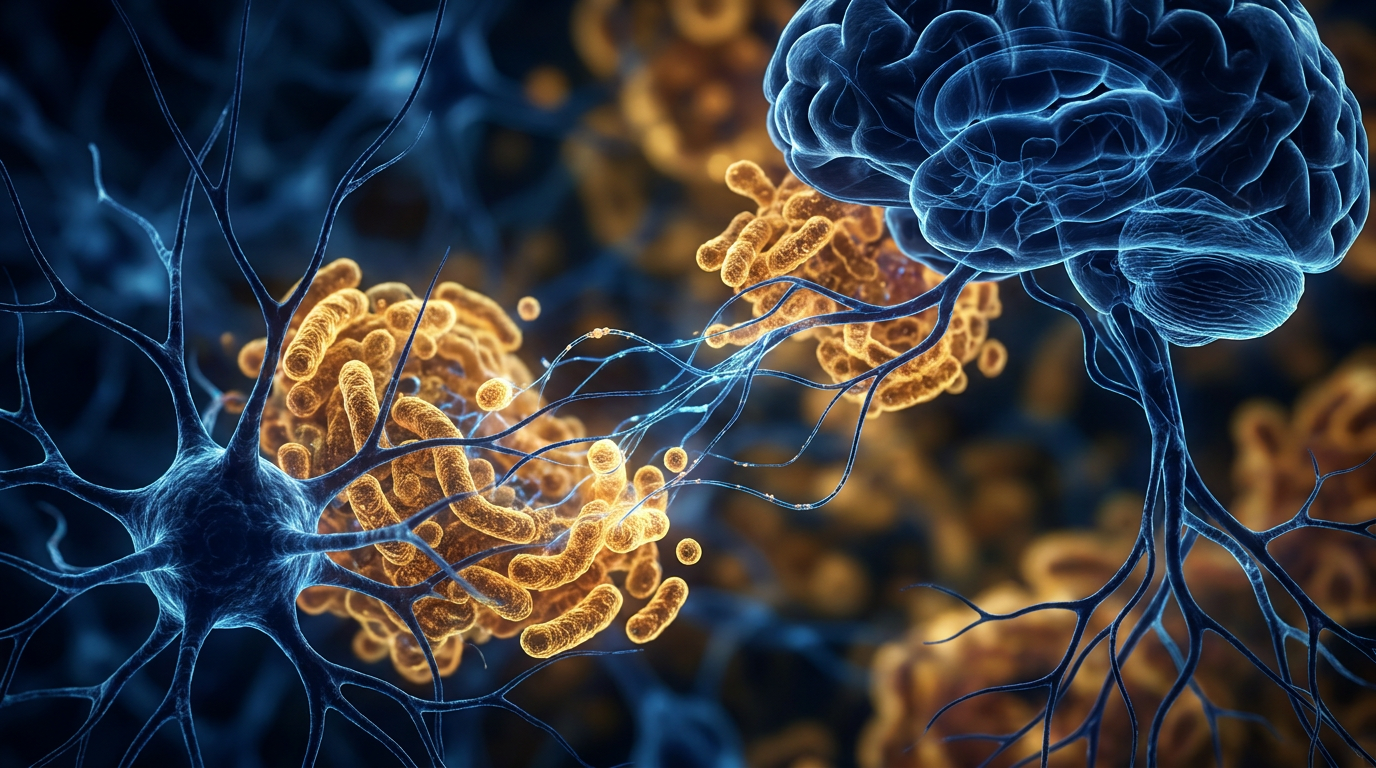
For decades, neuroscientists assumed that the biological clock governing this plasticity resided entirely within the brain itself, dictated by an unalterable genetic timeline. But a groundbreaking new study suggests that the master switch for the brain's adaptability might actually be located in the gut. According to research published this week and highlighted by New Scientist, the trillions of bacteria residing in the digestive tract—collectively known as the gut microbiome—play a central and active role in dictating exactly when the brain's developmental windows open and close. This paradigm-shifting discovery implies that the brain's rigidity is not a permanent, one-way street, but rather a dynamic state that is continuously influenced by the microbial environment of the host.[1]
By transferring the gut microbes of young mice into the digestive tracts of older adults, researchers successfully managed to reopen a critical window of brain plasticity that had long since closed. The experimental procedure allowed the older mice to completely overcome a visual impairment that is typically only treatable during a brief window in infancy. This remarkable reversal offers a radical new perspective on how mammalian brains age, suggesting that cognitive decline and neural rigidity are not purely the result of chronological aging, but are deeply intertwined with the age-related degradation of the gut microbiome.[1][2]
The research, led by neurobiologist Paola Tognini at the Sant'Anna School of Advanced Studies in Pisa, Italy, utilized a classic and well-understood model of neuroplasticity: amblyopia, a condition more commonly known as lazy eye. In human children, amblyopia is routinely and effectively treated by placing an opaque patch over the stronger eye. This sensory deprivation forces the highly adaptable young brain to forge new neural connections to the weaker eye, ultimately restoring balanced binocular vision. The mouse model of this condition relies on the exact same biological principles, making it an ideal testbed for measuring the limits of neural rewiring.[2][6]

Because a juvenile brain is highly plastic and eager to adapt to new sensory inputs, this rewiring process happens quickly and effectively. However, if the condition is left untreated until adulthood, the brain's visual cortex becomes fundamentally rigid. At that point, patching the strong eye no longer yields any therapeutic benefit, as the adult brain simply refuses to build the necessary new connections. Tognini's team wanted to know if manipulating the gut microbiome could somehow remove the biological brakes on adult plasticity, effectively tricking the older brain into behaving as though it were still in its developmental infancy.[2]
To test this hypothesis, the researchers performed a highly controlled fecal microbiome transplant (FMT). They harvested the gut bacteria from 30-day-old mice—an age that roughly corresponds to human adolescence, when plasticity is still relatively high—and transplanted it into the digestive tracts of 4-month-old adult mice, whose plasticity windows had firmly shut. To ensure the validity of their findings, the researchers also maintained a control group of adult mice that received microbiome transplants from other fully grown adults, isolating the specific effects of the youthful bacteria.[2][6]
After allowing sufficient time for the new microbial communities to engraft and colonize the recipients' guts, the researchers temporarily closed one eye of the adult mice to mimic the standard patching therapy used for amblyopia. When they subsequently imaged the neural responses to visual stimulation, the results were nothing short of striking. The adult mice that had received the young microbiome demonstrated profound and robust neuroplasticity, successfully rewiring their visual cortex to favor the open eye just as a juvenile would. In stark contrast, the control group that received adult microbes showed absolutely no such adaptation, remaining locked in their rigid neural state.[2]
To understand exactly how a colony of bacteria residing in the digestive tract could physically alter the architecture of the brain, the scientific team sequenced the RNA in the visual cortex of the experimental mice. They discovered that altering the microbiome had triggered a massive cascading effect on gene expression, fundamentally changing how the brain operated at a molecular level. The gut microbes were not merely improving general health; they were actively sending chemical signals that reprogrammed the brain's genetic operating system.[2][6]
The gut microbes were not merely improving general health; they were actively sending chemical signals that reprogrammed the brain's genetic operating system.
The sequencing data revealed that more than 1,000 distinct genes were expressed differently in the visual cortex of the mice with the rejuvenated microbiomes. Crucially, many of these altered genes were directly responsible for regulating myelination—the biological process by which nerve fibers are wrapped in a protective, insulating sheath. While myelin is essential for speeding up electrical signals across the brain, it also acts as a physical barrier that prevents neurons from forming new connections. By altering the expression of these specific genes, the young microbiome effectively softened the brain's rigid infrastructure, allowing new neural pathways to branch out.[2]

In addition to the changes in myelination, the study found significant alterations in the genes responsible for regulating the blood-brain barrier. This highly selective membrane acts as the brain's security system, strictly dictating which molecules can pass from the bloodstream into sensitive brain tissue. The altered gene expression suggests that the young microbiome may temporarily change the permeability of this barrier, allowing specific plasticity-promoting molecules and metabolites produced by the gut bacteria to cross over and directly interact with the brain's neural networks.[2][6]
This breakthrough out of Italy does not exist in a vacuum; rather, it builds upon a rapidly growing foundation of scientific evidence linking the gut to cognitive aging and brain health. In 2021, a landmark foundational study led by neuroscientist John Cryan at University College Cork demonstrated that fecal transplants from young mice could successfully reverse age-related memory and learning deficits in geriatric rodents, setting the stage for the current wave of microbiome-plasticity research.[3][4]
In Cryan's meticulous experiments, 20-month-old mice—roughly equivalent in biological age to 70-year-old humans—received gut microbes from spry 3-month-old donors. After eight weeks of living with the transplanted flora, the geriatric mice were put through a series of rigorous cognitive tests. The results showed that the older mice could navigate complex water mazes significantly faster and remembered hidden escape routes far better than their untreated peers, demonstrating a clear restoration of youthful cognitive function.[4][5]
The physical changes in Cryan's mice were just as profound as the behavioral ones. The hippocampus—the specific brain region responsible for processing learning and memory—became physically and chemically indistinguishable from that of a young mouse. Specific bacterial strains, such as Enterococcus, which are naturally abundant in youth, flourished in the older guts. This microbial shift correlated directly with a sharp, measurable reduction in brain inflammation, further proving that the gut dictates the neurological health of the aging brain.[3][5]
These compounding discoveries are forcing biologists to fundamentally rethink the evolutionary relationship between the mammalian gut and the brain. Microbiome scientists increasingly view gut flora not just as passive passengers aiding in digestion, but as active, essential developmental partners. In this emerging framework, the microbiome serves as a sophisticated environmental sensor. It signals to the brain when the host body is robust and healthy enough to safely expend the massive amounts of metabolic energy required for large-scale neural rewiring.[2][7]

Despite the profound and exciting implications of this research, clinical experts urge extreme caution regarding any immediate human translation. Laboratory mice are raised in highly controlled, sterile environments with standardized diets, identical genetics, and carefully monitored sleep cycles. This makes their microbiomes vastly simpler and more predictable than the chaotic, highly individualized gut flora of human beings, meaning that a procedure that works flawlessly in a mouse could have vastly different or entirely ineffective results in a human patient.[3]
Furthermore, permanently unlocking brain plasticity is not an inherently safe or desirable goal for an adult human. The brain naturally loses its plasticity for a very good reason: to protect the long-term stability of our memories, our identities, and our learned survival behaviors. If an adult brain becomes too plastic for too long, it risks overwriting vital established information or developing dangerous electrical short circuits, which can easily manifest as debilitating seizures or chronic epilepsy.[6]
Because of these severe risks—and the inherent biological unpredictability of raw fecal transplants—clinical neurologists do not foresee doctors prescribing FMTs for cognitive rejuvenation or adult amblyopia anytime in the near future. The ultimate goal of this research is not to transplant raw feces into human patients, but rather to identify the specific chemical messengers, such as short-chain fatty acids (SCFAs), that the young bacteria produce to signal the brain.[3][6]

Once these specific signaling molecules are isolated and fully understood, they could be synthesized and developed into highly targeted "postbiotic" drugs. Such precision therapies could be administered temporarily in a clinical setting to reopen the brain's plasticity window just long enough to facilitate targeted physical therapy. This could revolutionize recovery protocols for stroke victims, patients with traumatic brain injuries, or adults with neurodevelopmental disorders, before allowing the brain to safely stabilize and lock in the new connections once again.[6][7]
For now, the research provides a powerful, paradigm-shifting proof of concept for the medical community. The biological brakes that lock our adult brains into their rigid configurations are not permanently rusted shut, nor are they entirely controlled by the brain itself. With the right microbial keys, the brain's youthful adaptability can be temporarily and deliberately awakened, offering a highly optimistic glimpse into a future where cognitive decline and rigid neural pathways are no longer strictly permanent conditions.[1][5]
How we got here
2012
Researchers first establish a strong link between microbiome diversity and physical frailty in aging populations.
2017
Studies demonstrate that aging induces changes in both the microbiota and the immune system, correlating with cognitive decline.
August 2021
A landmark study in Nature Aging proves that fecal transplants from young mice can reverse spatial learning and memory deficits in geriatric mice.
June 2026
New research reveals that young microbiomes can reopen critical windows of brain plasticity, allowing adult mice to recover from amblyopia.
Viewpoints in depth
Neuroplasticity Researchers
Focusing on the molecular mechanisms that allow the gut to remove the biological brakes on the brain.
For neurobiologists, the most exciting aspect of this research is the discovery that the brain's rigidity is not a permanent, one-way street. By sequencing the RNA of the visual cortex, researchers found that the microbiome directly influences the expression of over 1,000 genes, particularly those governing myelination and the blood-brain barrier. This suggests that the 'brakes' on adult neuroplasticity are actively maintained by chemical signals, and that changing the gut flora can effectively lift those brakes, allowing the brain to rewire itself as it did in youth.
Clinical Translators
Emphasizing the long road to human therapies and warning against premature, risky interventions.
Clinical neurologists and translational researchers view these findings with cautious optimism, heavily emphasizing the dangers of translating mouse models directly to humans. They warn that permanently unlocking brain plasticity could lead to severe side effects, including epilepsy or the loss of stable memories. Consequently, this camp strongly discourages the idea of using raw fecal transplants for cognitive rejuvenation. Instead, they advocate for identifying the specific 'postbiotic' molecules produced by the young bacteria, which could eventually be administered as temporary, highly controlled drugs for stroke or brain injury recovery.
Microbiome Biologists
Viewing the gut flora as an evolutionary developmental partner that shapes mammalian biology.
Microbiome scientists interpret these results through an evolutionary lens, arguing that gut bacteria are not just passive passengers but active partners in mammalian development. In this view, the microbiome acts as an environmental sensor. When the gut is populated by robust, youthful flora, it signals to the brain that the body has the energy and health required to support the massive metabolic cost of neural rewiring. As the microbiome degrades with age, it signals the brain to conserve energy and lock its existing circuits into place.
What we don't know
- Whether the plasticity-enhancing effects of young microbiomes can be safely replicated in the highly complex and individualized human gut.
- The exact combination of short-chain fatty acids or other bacterial metabolites responsible for signaling the brain to reopen its plasticity windows.
- How long the rejuvenated plasticity lasts after the microbial transplant, and whether the brain eventually reverts to its rigid adult state.
Key terms
- Fecal Microbiome Transplant (FMT)
- The transfer of gut bacteria and other microbes from a healthy donor to a recipient to restore a balanced microbiome.
- Neuroplasticity
- The brain's ability to reorganize its structure, function, and connections in response to learning, experience, or injury.
- Amblyopia
- A neurodevelopmental disorder of the visual cortex, commonly known as lazy eye, where the brain fails to process inputs from one eye properly.
- Myelination
- The process where nerve fibers are coated with a protective myelin sheath, which speeds up electrical signals but also restricts future rewiring.
- Short-Chain Fatty Acids (SCFAs)
- Metabolites produced by gut bacteria during the fermentation of dietary fiber, known to influence brain function and immunity.
- Postbiotics
- Beneficial chemical compounds and byproducts produced by gut bacteria, which researchers hope to isolate and use as targeted drugs.
Frequently asked
What is neuroplasticity?
It is the brain's ability to reorganize its structure, function, and connections in response to learning or injury. This ability peaks in childhood and naturally declines as we age.
What is amblyopia?
Commonly known as lazy eye, it is a condition where the brain favors one eye over the other. It is easily treated in children by patching the strong eye, but is notoriously difficult to treat in adults due to a lack of brain plasticity.
Will doctors prescribe fecal transplants for brain aging?
Not in the near future. Researchers warn that human microbiomes are vastly more complex than those of lab mice, and raw fecal transplants carry unpredictable risks. Future treatments will likely use isolated bacterial compounds.
Why does the brain lose plasticity as we age?
The brain locks its neural circuits into place to protect the stability of our memories and learned survival behaviors. If the brain remained highly plastic forever, it would be prone to short-circuits and memory loss.
Sources
Source coverage
7 outlets
3 viewpoints surfaced







[1]New ScientistNeuroplasticity Researchers
Faecal transplant makes the brains of old mice act young again
Read on New Scientist →[2]SymplexiaMicrobiome Biologists
Faecal transplant makes the brains of old mice act young again
Read on Symplexia →[3]ScienceAlertClinical Translators
Scientists Reversed Aging in Mouse Brains With Poo Transplants From Young Mice
Read on ScienceAlert →[4]Smithsonian MagazineClinical Translators
Fecal Transplants Reverse Signs of Brain Aging in Mice
Read on Smithsonian Magazine →[5]ZME ScienceMicrobiome Biologists
Poop transplants from young mice reverse brain aging in older mice
Read on ZME Science →[6]bioRxivNeuroplasticity Researchers
Searching a causal link between microbiota and cortical plasticity: SCFA administration and the faecal transplant
Read on bioRxiv →[7]Nature AgingNeuroplasticity Researchers
Microbiota from young mice reverses aging-associated immune and brain impairments
Read on Nature Aging →


Every angle. Every day.
Get science stories with full source coverage and perspective breakdowns delivered to your inbox.