
How Next-Generation Geothermal Energy is Unlocking 24/7 Clean Power
By borrowing drilling techniques from the oil and gas industry, Enhanced Geothermal Systems (EGS) are turning hot, dry rock into a limitless source of carbon-free baseload electricity.
By Factlen Editorial Team
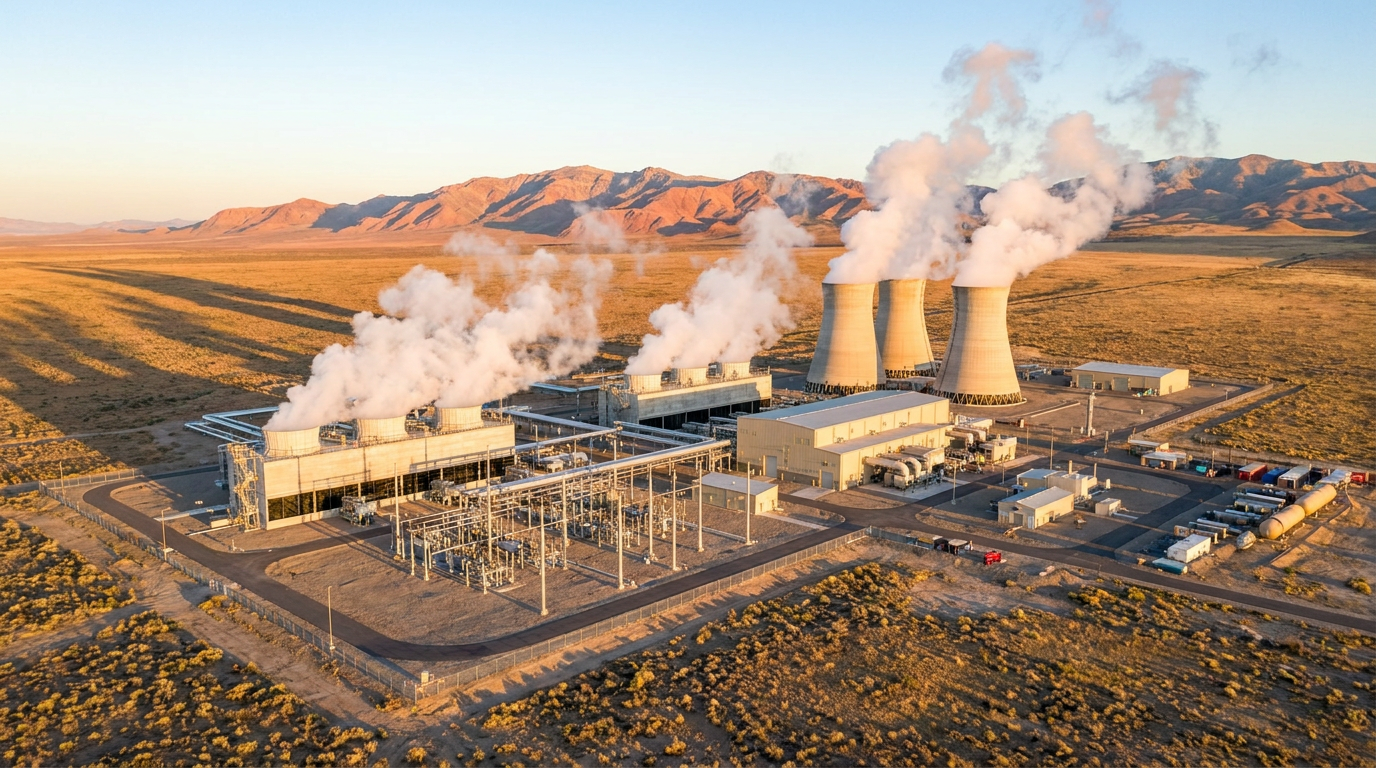
- Geothermal Innovators
- Focus on rapid deployment, scaling, and the success of early commercial projects to prove the technology's viability.
- Energy System Analysts
- Emphasize the macro grid benefits, noting that firm clean power drastically reduces the total cost of decarbonization.
- Federal Policymakers
- View next-generation geothermal as a critical pillar for national energy security and achieving a decarbonized grid.
- Fossil Fuel Transitioners
- Highlight how EGS successfully repurposes oil and gas drilling technologies and workforce for clean energy.
What's not represented
- · Local communities near drilling sites
- · Water conservation advocates in arid regions
Why this matters
As the grid struggles with the intermittent nature of solar and wind, next-generation geothermal provides the 'holy grail' of the energy transition: firm, always-on clean electricity that can be deployed almost anywhere.
Key points
- Enhanced Geothermal Systems (EGS) use oil and gas drilling techniques to unlock clean energy from hot, dry rock.
- Unlike solar and wind, geothermal provides 24/7 firm baseload power.
- The DOE estimates next-generation geothermal could unlock 5.5 terawatts of capacity in the U.S.
- Fervo Energy recently raised $1.89 billion in an IPO to scale its commercial EGS projects.
- The technology provides a direct transition path for the existing fossil fuel workforce.
The global energy transition has a massive, looming blind spot. While solar and wind power have become incredibly cheap and abundant, they are inherently intermittent—they only generate electricity when the sun shines or the wind blows. To maintain a stable grid, utility operators desperately need "firm" clean power that can run 24 hours a day, seven days a week, without relying on fossil fuels or vulnerable supply chains.[2][7]
Enter next-generation geothermal energy. For decades, the heat beneath our feet was viewed as a niche resource, but a wave of recent technological breakthroughs has thrust it into the spotlight. In May 2026, Fervo Energy—a leading geothermal startup—went public at a valuation exceeding $10 billion, shortly after securing $421 million to expand its massive Cape Station project in Utah. This influx of capital signals a turning point for an industry that is finally ready to scale.[1][5]
To understand the breakthrough, it helps to look at the limitations of conventional geothermal energy. Traditional geothermal plants require a rare geological lottery: natural underground reservoirs of hot water and highly permeable rock close to the surface. Because these conditions only exist in specific volcanic regions—like Iceland or California's Geysers—conventional geothermal currently provides less than 0.5 percent of the world's electricity.[2][4]
Enhanced Geothermal Systems (EGS) completely remove this geographic constraint. By engineering the subsurface, EGS technology can theoretically be deployed anywhere with hot rock beneath the surface. And because the Earth's core is a constant 10,000 degrees Fahrenheit, hot rock is everywhere—provided you can drill deep enough to reach it.[4][7]

The mechanism behind EGS is ironically borrowed directly from the fossil fuel industry. Geothermal innovators are utilizing horizontal drilling and hydraulic fracturing—the exact techniques perfected during the shale oil and gas boom over the last two decades—to unlock carbon-free electricity.[1][7]
The process begins by drilling a vertical well thousands of feet into hot, impermeable crystalline rock, such as granite. Once the drill reaches the target depth, engineers steer the bit to drill horizontally for miles. They then pump high-pressure fluids into the well to create a vast network of millimeter-thin fractures in the surrounding hot rock, effectively building an artificial underground reservoir.[4]
A second well, known as the production well, is then drilled to intersect this newly created fracture network. Cold water is pumped down the first well, forced through the labyrinth of hot fractured rock where it absorbs immense amounts of thermal energy, and is pushed up the production well to the surface.[4]
At the surface, this superheated fluid is used to flash steam or heat a secondary working fluid, which spins a turbine to generate electricity. The cooled water is then reinjected back into the ground, creating a continuous, closed-loop cycle of clean energy generation that produces virtually zero emissions.[4]
The scale of the opportunity is staggering. A recent "Pathways to Commercial Liftoff" report published by the U.S. Department of Energy (DOE) estimates that next-generation geothermal could unlock 5.5 terawatts of potential capacity in the United States alone.[2][6]

A recent "Pathways to Commercial Liftoff" report published by the U.S.
That figure represents roughly 14 times the potential of conventional geothermal resources, and it is enough to power the entire country several times over. The DOE projects that with the right policy support and continued cost reductions, the U.S. could reach 90 gigawatts of geothermal capacity by 2050—a twentyfold increase from today.[2]
Independent academic analyses corroborate this optimism. A comprehensive study published by Princeton University researchers in the journal *Joule* found that EGS could supply up to 20 percent of all U.S. electricity by 2050, provided the technology follows the same cost-reduction learning curves previously seen in wind and solar.[3]
Cost, however, remains the primary hurdle. Drilling deep into hard, hot, crystalline rock is significantly more expensive and punishing on equipment than drilling through the softer sedimentary rock typical of oil and gas exploration. The extreme temperatures can melt standard electronics and rapidly degrade drill bits.[3][7]
But learning curves are already taking effect. At the DOE's Utah FORGE field laboratory, researchers and private companies are testing advanced polycrystalline diamond compact (PDC) drill bits that cut through granite faster and last longer. These innovations are driving down capital expenditures and making deep drilling commercially viable.[3][7]

Another challenge is water usage. EGS requires millions of gallons of water for the initial hydraulic stimulation and ongoing circulation. This can be problematic in the arid Western United States, where the hottest rocks are closest to the surface but water resources are already severely strained.[4]
To address water constraints, the industry is also exploring Advanced Geothermal Systems (AGS), often referred to as closed-loop geothermal. Instead of fracturing the rock and pumping water through the cracks, AGS circulates a working fluid through a sealed underground pipe network, acting like a massive subterranean radiator.[4]
While AGS eliminates water loss and the need for hydraulic fracturing, drilling the extensive closed loops required to absorb enough heat at extreme depths remains prohibitively expensive today. EGS is currently the more mature and economically viable pathway for near-term deployment.[4]
Financial markets and major energy consumers are beginning to price in the success of these technologies. Fervo's Cape Station in Utah is currently scaling to 400 megawatts, having secured long-term power purchase agreements with major utilities like Southern California Edison and tech giants seeking carbon-free power for their operations.[1][5]

As the U.S. electrical grid faces surging demand from the rapid expansion of artificial intelligence data centers and the broader electrification of transportation and heating, the premium on 24/7 carbon-free energy has never been higher. Tech companies are increasingly unwilling to rely on natural gas backups.[1][2]
How we got here
2019
Fervo Energy raises its Series A funding, backed by Breakthrough Energy Ventures, to adapt oil and gas technology for geothermal.
2023
The first pilot-scale EGS projects successfully demonstrate continuous, commercial-scale electricity generation.
March 2024
The U.S. Department of Energy releases its Liftoff report, projecting next-generation geothermal could scale to 90 gigawatts by 2050.
May 2026
Fervo Energy goes public at a valuation exceeding $10 billion, signaling Wall Street's validation of scalable geothermal power.
Viewpoints in depth
Geothermal Innovators
Focus on rapid deployment, scaling, and the success of early commercial projects to prove the technology's viability.
Companies like Fervo Energy argue that the technology risk of EGS has largely been retired. By successfully adapting horizontal drilling and hydraulic fracturing from the shale boom, they have proven that artificial geothermal reservoirs can be created predictably and economically. Their focus is now on scaling up operations, securing massive project financing, and signing long-term power purchase agreements with utilities and data centers that are desperate for clean, firm power.
Energy System Analysts
Emphasize the macro grid benefits, noting that firm clean power drastically reduces the total cost of decarbonization.
Grid modelers and academic researchers point out that while wind and solar are cheap, building a grid entirely reliant on them requires massive, expensive overbuilding of generation capacity and battery storage to account for weather lulls. Introducing a firm, 24/7 clean energy source like EGS acts as a force multiplier. Studies from institutions like Princeton suggest that even if EGS remains slightly more expensive per megawatt-hour than solar, its ability to balance the grid makes the overall energy transition significantly cheaper and more reliable.
Federal Policymakers
View next-generation geothermal as a critical pillar for national energy security and achieving a decarbonized grid.
The U.S. Department of Energy views next-generation geothermal as a strategic national asset. Because the U.S. possesses vast tracts of hot rock beneath its surface, unlocking EGS reduces reliance on imported critical minerals needed for batteries and solar panels. Policymakers are aggressively funding field labs like Utah FORGE to accelerate cost reductions, viewing geothermal as essential to meeting the administration's goal of a fully decarbonized electrical grid by 2035.
Fossil Fuel Transitioners
Highlight how EGS successfully repurposes oil and gas drilling technologies and workforce for clean energy.
For the oil and gas industry, EGS represents a lifeline in a decarbonizing world. The exact same rigs, drill bits, seismic imaging software, and roughnecks used to extract hydrocarbons are required to build geothermal plants. Industry advocates argue that EGS is the most practical "just transition" available, allowing fossil fuel workers to seamlessly transfer their highly specialized skills to a zero-carbon industry without needing to retrain for entirely different sectors.
What we don't know
- How quickly the cost of deep drilling in hard crystalline rock will fall as the industry scales.
- Whether Advanced Geothermal Systems (closed-loop) will eventually become cost-competitive with Enhanced Geothermal Systems.
- How state-level water rights and regulations will impact the deployment of EGS in the arid Western United States.
Key terms
- Enhanced Geothermal Systems (EGS)
- A technology that creates artificial underground reservoirs in hot, dry rock by injecting high-pressure fluids to open millimeter-thin fractures.
- Advanced Geothermal Systems (AGS)
- A closed-loop geothermal approach that circulates fluid through sealed underground pipes, acting like a subterranean radiator without fracturing the rock.
- Baseload Power
- The minimum amount of electric power needed to be supplied to the electrical grid at any given time, traditionally provided by coal, nuclear, or natural gas.
- Firm Power
- Electricity generation that can be guaranteed to be available at a given time, regardless of weather conditions.
- Horizontal Drilling
- A technique borrowed from the oil and gas industry where a vertical well is gradually steered to run parallel to the surface, maximizing contact with the target rock layer.
Frequently asked
Can EGS cause earthquakes?
Like any subsurface fluid injection, EGS carries a risk of induced seismicity. However, modern projects use advanced seismic monitoring and careful pressure management to keep micro-earthquakes well below the threshold of human perception.
How deep do these wells go?
Next-generation geothermal wells typically reach depths of 10,000 to 16,000 feet (3 to 5 kilometers), where rock temperatures exceed 300 degrees Fahrenheit.
Does this technology require natural hot springs?
No. Unlike conventional geothermal, EGS can be deployed almost anywhere by drilling deep enough to reach hot, dry rock and creating an artificial reservoir.
How much water does an EGS plant use?
While the initial fracturing process requires millions of gallons of water, the operational phase recirculates the fluid in a closed loop, minimizing ongoing water consumption.
Sources
Source coverage
7 outlets
4 viewpoints surfaced







[1]Fast CompanyFossil Fuel Transitioners
How Fervo Energy is unlocking geothermal power almost anywhere
Read on Fast Company →[2]U.S. Department of EnergyFederal Policymakers
Pathways to Commercial Liftoff: Next-Generation Geothermal Power
Read on U.S. Department of Energy →[3]Princeton UniversityEnergy System Analysts
Enhanced geothermal could supply 20% of US electricity by 2050
Read on Princeton University →[4]McKinsey & CompanyEnergy System Analysts
What is next-generation geothermal energy?
Read on McKinsey & Company →[5]Fervo EnergyGeothermal Innovators
A year of execution, scale, and momentum
Read on Fervo Energy →[6]ThinkGeoEnergyGeothermal Innovators
US DOE publishes report on Commercial Liftoff of geothermal
Read on ThinkGeoEnergy →[7]Wall Street JournalFossil Fuel Transitioners
Geothermal Energy Is Finally Getting Its Moment
Read on Wall Street Journal →


Every angle. Every day.
Get guides stories with full source coverage and perspective breakdowns delivered to your inbox.