
How Mega-IPOs Like SpaceX Fuel Wall Street Bank Revenues
As SpaceX prepares for a historic $75 billion public debut, Wall Street's largest investment banks are bracing for a massive windfall driven by underwriting fees and secondary trading volume.
By Factlen Editorial Team
- Bulge Bracket Banks
- Focus on capturing the massive fee pool and leveraging the IPO for long-term trading revenue.
- Market Analysts
- View the mega-IPO as a catalyst that will boost overall banking sector earnings and unfreeze the broader tech IPO pipeline.
- Syndicate Participants
- Accept minimal fees and distribution roles simply to gain the prestige of being associated with a historic deal.
What's not represented
- · European Investment Banks
- · Pre-IPO Private Investors
Why this matters
Understanding the mechanics of IPO underwriting reveals how the financial sector profits from technological innovation, highlighting the hidden economic engines that drive Wall Street's quarterly earnings.
Key points
- SpaceX is targeting a $75 billion capital raise at a $1.75 trillion valuation, making it the largest IPO in history.
- Wall Street banks are expected to share a fee pool of roughly $500 million, despite SpaceX negotiating an aggressively low rate of less than 0.75%.
- Goldman Sachs holds the prestigious 'lead left' underwriter position, positioning it to capture the largest share of the fees.
- Beyond direct fees, banks anticipate a massive 'multiplier effect' from the secondary trading volume and market volatility the IPO will generate.
- SpaceX has allocated an unusually high 30% of its offering float to retail investors, creating a massive wealth management opportunity for the banks.
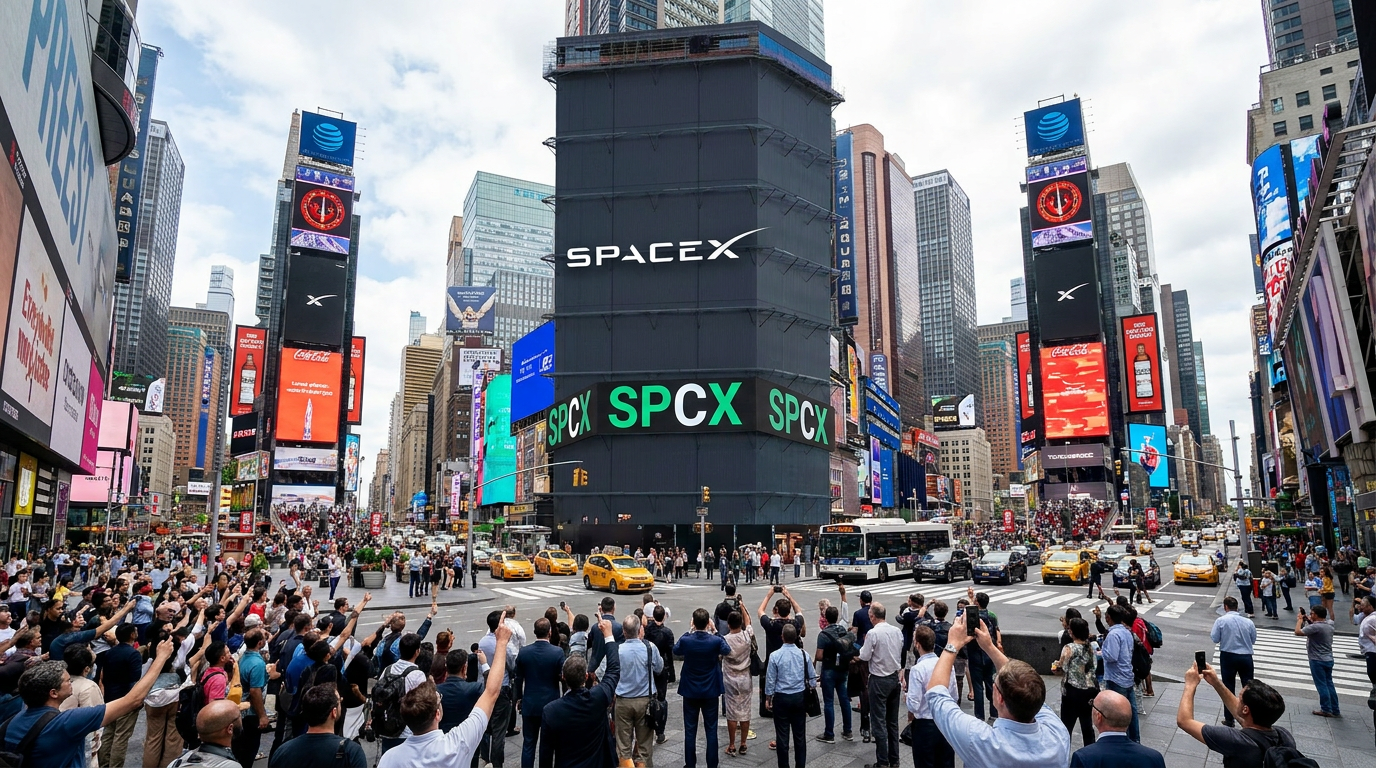
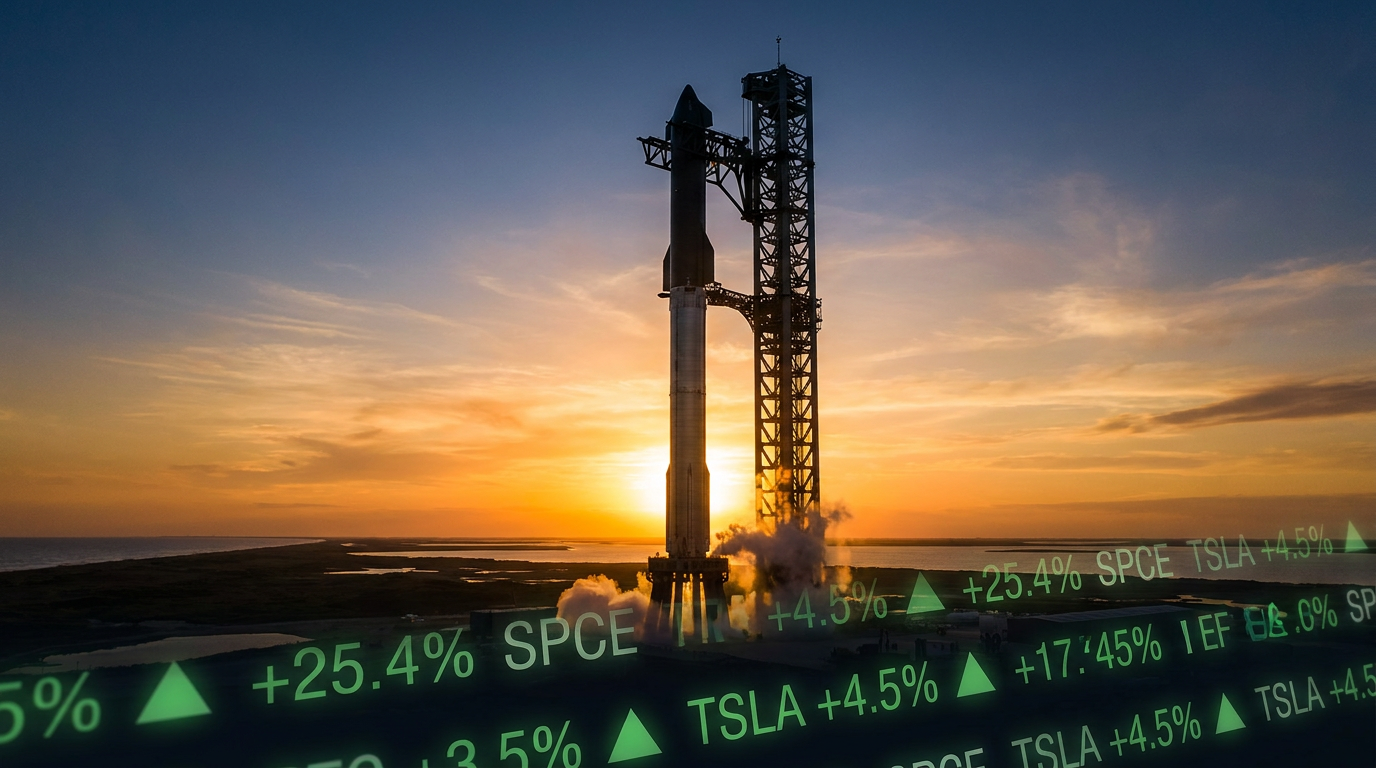
SpaceX is preparing to go public on June 12 in what is widely expected to be the largest initial public offering in history. The aerospace giant is targeting a staggering $75 billion capital raise, which would value the company at approximately $1.75 trillion.[2][4]
While the public focuses on the sheer scale of the valuation and the technological milestones of the rocket company, a quieter celebration is happening in Manhattan. Wall Street's biggest investment banks are preparing for a historic payday that goes far beyond a simple commission check.[2][7]
Analysts at JPMorgan Chase recently issued a note highlighting that the broader market is fundamentally underestimating how much the banking sector stands to gain from this mega-IPO. They argue that the financial windfall will ripple through multiple divisions of the major U.S. banks.[1]
The most direct mechanism for this revenue is the underwriting fee, also known as the gross spread. When a private company decides to go public, it hires a syndicate of investment banks to price the shares, market them to institutional investors, and manage the complex regulatory process.[6]

For a standard mid-sized IPO, banks typically charge a fee ranging from 5% to 7% of the total capital raised. However, for ultra-large offerings, that percentage shrinks significantly as the sheer volume of capital makes up for the lower rate.[2][6]
SpaceX is reportedly using its unprecedented market leverage to squeeze the banks, negotiating an underwriting fee of less than 0.75%. This is an aggressively low rate, matching the historic 0.75% fee the U.S. Treasury negotiated for the General Motors IPO following the 2008 financial crisis.[3][4]
Yet, because SpaceX is aiming to raise $75 billion, even a microscopic 0.75% fee translates to roughly $500 million in direct compensation for the banking syndicate. It is expected to be one of the largest single underwriting paydays in Wall Street history.[2][3]

That $500 million pool is not divided equally. The syndicate consists of 21 banks, structured in a strict hierarchy. Goldman Sachs holds the coveted "lead left" position, meaning it runs the order book, leads the institutional roadshow, and will capture the lion's share of the fees.[3][5]
The syndicate consists of 21 banks, structured in a strict hierarchy.
Morgan Stanley and JPMorgan occupy the next tier as senior co-managers. The smaller banks at the bottom of the syndicate are essentially acting as distribution channels, earning minimal fees but securing the prestige of having their names on the deal's official "tombstone."[3][7]
But the direct underwriting fee is only the beginning. According to JPMorgan's specialist sales team, the real financial engine is the "multiplier effect" that mega-IPOs create across a bank's other divisions.[1]
When a $1.75 trillion company enters the public markets, it generates massive secondary trading volume. Institutional investors constantly buy and sell to adjust their portfolio weightings, generating continuous trading commissions for the banks' equities desks.[1][5]
Furthermore, the sheer size of the SpaceX listing is expected to inject volatility and momentum into the broader equities market. JPMorgan forecasts that trading revenues from stocks will rise 21% year-over-year for the major U.S. banks, driven in part by this new issuance.[1]

There is also a highly lucrative wealth management angle. Banks use allocations of "hot" IPO shares as a tool to reward their most valuable clients, strengthening relationships that lead to future advisory and financing business.[2]
In a unique move to capture this demand, JPMorgan is reportedly broadcasting the SpaceX IPO pitch across its network of 5,000 physical retail branches. This strategy democratizes access for high-net-worth individuals while simultaneously reinforcing the bank's consumer wealth management divisions.[7]
SpaceX has facilitated this by earmarking an unusual 30% of its offering float for retail investors. This is roughly three times the standard retail allocation for a mega-cap technology debut, creating a massive distribution opportunity for the underwriting banks.[5]
This dynamic explains why U.S. investment banks are currently trading at a premium compared to their European counterparts. Firms like Barclays and Deutsche Bank trade at mid-single-digit earnings multiples, while U.S. giants command multiples in the upper teens.[1]

The U.S. players simply have superior earnings momentum. Their balance sheets are growing, and their ability to seamlessly translate IPO advisory roles into long-term financing and secondary trading relationships is unmatched in the global market.[1]
If the SpaceX debut performs well, industry analysts expect it to unfreeze the broader IPO pipeline. A successful launch could encourage other highly valued private tech companies—such as major artificial intelligence labs—to finally test the public markets, creating a sustained pipeline of banking fees.[7]
How we got here
2008
Visa sets a major precedent with a $17.9 billion IPO, paying a 2.8% underwriting spread.
2010
General Motors goes public post-financial crisis, negotiating a rock-bottom 0.75% underwriting fee with Wall Street.
June 2026
SpaceX prepares for a historic $75 billion IPO, pushing underwriting fees below 0.75% while generating massive secondary trading potential.
Viewpoints in depth
Bulge Bracket Banks
Focus on capturing the massive fee pool and leveraging the IPO for long-term trading revenue.
For the largest financial institutions like Goldman Sachs, JPMorgan, and Morgan Stanley, a mega-IPO is about far more than the initial commission. These banks view the offering as a gateway to long-term revenue streams. By securing senior roles in the syndicate, they position themselves to handle the massive secondary trading volume that follows the listing. Furthermore, allocating highly sought-after shares allows them to reward their most lucrative wealth management clients, cementing relationships that drive future advisory and financing business.
Syndicate Participants
Accept minimal fees and distribution roles simply to gain the prestige of being associated with a historic deal.
For the smaller investment banks making up the rest of the 21-member syndicate, the financial calculus is different. Because SpaceX has aggressively negotiated the underwriting fee below 0.75%, the capital that trickles down to the junior banks is relatively minimal. However, these firms willingly accept glorified marketing roles because having their name on the official deal 'tombstone' for the largest IPO in history provides immense reputational value, which they can leverage to win future, more profitable mandates.
Market Analysts
View the mega-IPO as a catalyst that will boost overall banking sector earnings and unfreeze the broader tech IPO pipeline.
Financial analysts tracking the banking sector see the SpaceX IPO as a macro-level catalyst. After a relatively quiet period for public listings, a successful $75 billion debut proves that the market can absorb massive new equity issuance. Analysts argue that this will not only boost the immediate earnings momentum for U.S. investment banks but also encourage other highly valued private companies—such as leading artificial intelligence developers—to finally go public, creating a sustained pipeline of lucrative underwriting work.
What we don't know
- Exactly how the $500 million fee pool will be divided among the 21 banks in the underwriting syndicate.
- Whether the sheer size of the SpaceX IPO will successfully unfreeze the broader technology IPO market for other highly valued private companies.
Key terms
- Underwriting Fee (Gross Spread)
- The commission investment banks earn for managing an IPO, calculated as a percentage of the total capital raised.
- Lead Left Underwriter
- The primary investment bank managing an IPO, responsible for running the order book and taking the largest share of the fees.
- Syndicate
- A temporary group of investment banks formed to share the risk and distribute the shares of a large public offering.
- Secondary Trading
- The buying and selling of a company's shares on the open market after the initial public offering has concluded.
- Float
- The total number of a company's shares that are available for public investors to buy and sell.
Frequently asked
Why is SpaceX paying such a low percentage fee to the banks?
Because of the unprecedented $75 billion size of the offering, SpaceX has immense leverage. Even at less than 0.75%, the total fee pool is around $500 million, making it highly lucrative for the banks.
Which bank is leading the SpaceX IPO?
Goldman Sachs holds the prestigious 'lead left' position, meaning it is the primary underwriter managing the deal, supported by senior co-managers like Morgan Stanley and JPMorgan.
How do banks make money on an IPO besides the direct fee?
Banks generate significant revenue from the 'multiplier effect'—earning commissions on the massive secondary trading volume once the stock goes public, and using IPO share allocations to attract and retain wealthy clients.
Can regular retail investors buy into the SpaceX IPO?
Yes, SpaceX has reportedly allocated 30% of its offering float to retail investors, which is roughly three times the standard allocation for a mega-cap tech debut.
Sources
Source coverage
7 outlets
3 viewpoints surfaced







[1]MarketWatchBulge Bracket Banks
JPMorgan says investors are overlooking the upside to Wall Street banks that comes from SpaceX and other mega IPOs
Read on MarketWatch →[2]MorningstarMarket Analysts
SpaceX's upcoming initial public offering is expected to be out of this world, and some of the biggest beneficiaries will be on Wall Street
Read on Morningstar →[3]Crypto BriefingSyndicate Participants
SpaceX is pushing underwriting fees below 0.75%, squeezing smaller banks into marketing roles
Read on Crypto Briefing →[4]TradingKeyMarket Analysts
SpaceX plans to file updated IPO prospectus documents, aiming for an underwriting fee rate below 0.75%
Read on TradingKey →[5]BitMEX ResearchBulge Bracket Banks
Who is the lead underwriter for the SpaceX IPO? Goldman Sachs is the top underwriter
Read on BitMEX Research →[6]IB Interview QuestionsMarket Analysts
IPO Economics: What Banks Earn
Read on IB Interview Questions →[7]Asia EconomyMarket Analysts
Wall Street's Special Mission: Launching SpaceX
Read on Asia Economy →
Every angle. Every day.
Get finance stories with full source coverage and perspective breakdowns delivered to your inbox.