
How Hydration Testing and Sports Science Are Ending MMA's Dangerous Weight-Cutting Era
Progressive athletic commissions and promotions are dismantling the tradition of extreme dehydration in mixed martial arts, utilizing strict hydration testing to protect fighters from organ failure and severe concussions.
By Factlen Editorial Team
- Medical & Scientific Researchers
- Sports scientists who argue that dehydration actively harms athletic performance and brain health.
- Progressive Regulators & Promoters
- Commissions and promotions implementing hydration testing to force cultural change.
- Industry Analysts
- Observers tracking the cultural and regulatory shifts within the global combat sports landscape.
What's not represented
- · Fighters who still advocate for traditional weight cutting
- · Commissions that refuse to adopt hydration testing
Why this matters
For decades, extreme weight cutting has been the most dangerous aspect of combat sports, leading to organ damage, increased brain trauma, and even death. The shift toward hydration testing ensures that athletes can compete safely at their natural size, extending their careers and improving the quality of the sport.
Key points
- ONE Championship banned extreme weight cutting in 2015, requiring fighters to pass strict urine hydration tests before weighing in.
- The California State Athletic Commission can now cancel fights if an athlete regains more than 15% of their body weight by fight day.
- Sports science reveals that severe dehydration increases concussion severity by 40% due to the depletion of cerebrospinal fluid.
- Biomechanical studies show that cutting water weight reduces a fighter's explosive power, accuracy, and reaction time.
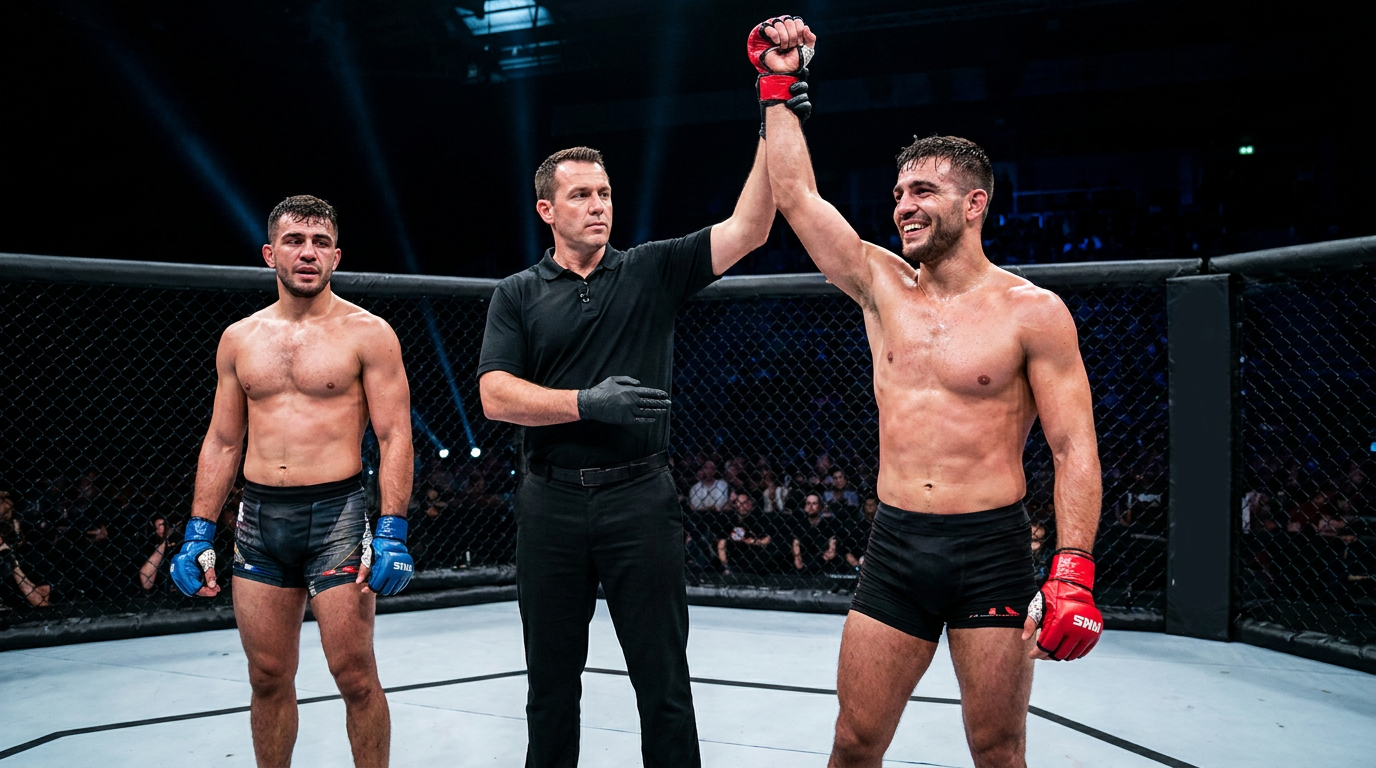
The traditional image of a mixed martial arts weigh-in features a shredded, often gaunt athlete stepping onto a scale, flexing for the cameras, and then immediately reaching for a bottle of electrolyte water. For decades, this ritual of rapid weight loss—shedding 10 to 20 pounds of water in the final 48 hours before a bout—was considered an unavoidable reality of combat sports.[1]
Fighters believed that by dehydrating themselves to make a lower weight class, they would gain a size and strength advantage when they rehydrated for the fight the next day. However, a quiet revolution is reshaping the landscape of mixed martial arts, driven by a growing consensus among sports scientists, medical professionals, and progressive regulatory bodies.[1][7]
The sport is systematically dismantling the culture of extreme weight cutting, replacing it with hydration testing and walking-weight protocols that prioritize athlete longevity over scale-gaming. The catalyst for this paradigm shift was a tragedy that forced the industry to confront the true cost of dehydration.[1][6]
In December 2015, 21-year-old Chinese fighter Yang Jian Bing died from complications related to severe dehydration while attempting to make weight for a bout in the Philippines. In the immediate aftermath, the Singapore-based promotion ONE Championship fundamentally rewrote its rulebook, becoming the first major global promotion to outright ban weight cutting by dehydration.[2][6]
The organization instituted a system that forces athletes to compete at their everyday "walking weight." The cornerstone of the ONE Championship model is the urine specific gravity test, which fundamentally changes how an athlete's eligibility is determined.[2]

Rather than simply measuring mass, medical officials measure the concentration of an athlete's urine to determine their cellular hydration level. To be cleared to compete, a fighter must produce a urine specific gravity reading of 1.025 or lower.[2]
A reading above this threshold indicates clinical dehydration, meaning the kidneys are conserving water and the urine is highly concentrated. If a fighter fails this hydration test, they are not permitted to step on the scale, rendering their actual weight irrelevant until their fluid levels are restored.[2]
This protocol is enforced through multiple tests during fight week, including a final check just hours before the event, effectively eliminating the window for the dangerous dehydrate-and-rehydrate cycle. The impact of these regulations extends far beyond the Asian market, influencing regulatory bodies worldwide.[2]
In North America, the California State Athletic Commission (CSAC), under the leadership of executive officer Andy Foster, has pioneered a comprehensive 10-point plan to combat what Foster has termed "sanctioned cheating." CSAC's most aggressive measure targets the dramatic weight regain that occurs between the official weigh-in and the moment the cage door locks.[3]
The commission tracks fighters' weights on the day of the event, and if an athlete has gained more than 15 percent of their contracted body weight, the fight can be canceled. This 15 percent rule is designed to deter fighters from competing two or three weight classes below their natural size.[3]

This 15 percent rule is designed to deter fighters from competing two or three weight classes below their natural size.
In 2019, CSAC data revealed that 28 fights in California featured athletes who had ballooned past this 15 percent threshold, prompting the commission to pass strict cancellation protocols. The regulatory crackdown is heavily supported by emerging sports science, which has begun to quantify the severe physiological toll of rapid weight loss.[3]
A landmark 2022 study conducted by researchers at St Mary's University, the University of Essex, and Swansea University found a direct link between dehydration and traumatic brain injury. The researchers discovered that MMA athletes who engaged in extreme weight cutting reported concussion severity 40 percent higher than athletes in other sports.[4]
When a fighter dehydrates, the cerebrospinal fluid that cushions the brain inside the skull is depleted, leaving the brain far more vulnerable to concussive impacts from strikes or falls. Furthermore, the symptoms of severe hypohydration—dizziness, lethargy, and headaches—closely mirror the symptoms of a concussion.[4]

This overlap often muddies the waters for ringside physicians, potentially leading to misdiagnoses where a dehydrated fighter is cleared to compete despite underlying neurological distress. Beyond brain health, biomechanical studies have dismantled the myth that cutting water weight provides a competitive advantage.[4][5]
Research published in the Journal of Sports Medicine & Doping Studies shows that rapid weight loss leads to glycogen depletion and muscle catabolism, which actively reduces a fighter's power output and muscular endurance. Researchers found that dehydrated fighters suffer from diminished proprioception—the body's ability to sense its location, movements, and actions.[5]
This disruption in motor control reduces footwork speed and attack accuracy, meaning the perceived size advantage is entirely negated by a loss of explosive strength and reaction time. Despite the clear medical evidence and regulatory progress, eliminating extreme weight cutting entirely remains a complex challenge.[5]

Skeptics point out that athletes can still attempt to game hydration tests by consuming distilled water, which lacks electrolytes and can trick the kidneys into flushing dilute urine even if the body's intracellular hydration is suboptimal. Additionally, the fragmented nature of MMA regulation means enforcement is inconsistent.[1]
Because different states and countries operate under different athletic commissions, a fighter might face strict hydration protocols in California or Singapore, but traditional, easily exploited weigh-in rules in Nevada or Texas. Nevertheless, the cultural tide within the sport is turning rapidly.[1][6]
A growing cohort of elite fighters are voluntarily moving up in weight classes, citing improved energy levels, better punch resistance, and a more sustainable training camp experience when they no longer have to spend their final days in a sauna suit. The data increasingly shows that a progressive, multi-week gradual weight loss phase yields far better performance metrics than aggressive dehydration.[7]
By prioritizing hydration and natural walking weights, the mixed martial arts industry is slowly transforming one of its most dangerous traditions into a relic of the past. This evolution ensures that the battles take place inside the cage, rather than on the scale, ultimately protecting the athletes who make the sport possible.[1]
How we got here
Dec 2015
ONE Championship fighter Yang Jian Bing dies from dehydration complications, prompting the promotion to ban extreme weight cutting.
Jan 2016
ONE Championship officially implements its 'walking weight' and hydration testing program.
May 2017
The California State Athletic Commission (CSAC) introduces a 10-point plan to combat severe dehydration.
Oct 2019
CSAC passes a rule to cancel bouts if a fighter weighs more than 15% above the contracted weight on fight day.
Apr 2022
A landmark study by St Mary's University reveals that dehydrated MMA fighters suffer 40% higher concussion severity.
Viewpoints in depth
Medical & Scientific Consensus
Sports scientists argue that dehydration actively harms athletic performance and brain health.
Researchers emphasize that the perceived size advantage of cutting water weight is a biomechanical illusion. Dehydration depletes glycogen, reduces muscle contractility, and severely impairs proprioception. More critically, the loss of cerebrospinal fluid removes the brain's natural shock absorber, drastically increasing the severity of concussions and the likelihood of long-term neurological damage.
Progressive Regulators
Commissions and promotions implementing hydration testing to force cultural change.
Organizations like ONE Championship and the California State Athletic Commission view extreme weight cutting as a health crisis and a form of 'sanctioned cheating.' By implementing strict urine specific gravity tests and fight-day weight limits, they aim to force athletes to compete at their natural walking weight, arguing that regulatory enforcement is the only way to protect fighters from their own competitive instincts.
Traditionalist Resistance
The lingering belief among some camps that weight cutting is an essential competitive strategy.
Despite new regulations, a subset of the MMA community remains resistant to change. Many coaches and athletes still believe that stepping into the cage significantly heavier than an opponent provides an insurmountable grappling advantage. This camp often attempts to find loopholes in hydration testing, viewing weight manipulation as a fundamental skill of the sport rather than a medical risk.
What we don't know
- Whether major North American promotions like the UFC will ever fully adopt ONE Championship's hydration testing model.
- How frequently athletes successfully 'game' urine specific gravity tests using distilled water or other masking methods.
Key terms
- Rapid Weight Loss (RWL)
- The practice of shedding large amounts of body mass, primarily through severe dehydration, in the final days before a weigh-in.
- Urine Specific Gravity (USG)
- A laboratory measurement of the concentration of particles in urine, used to determine an athlete's hydration level.
- Catchweight
- A custom weight limit agreed upon by both fighters, often utilized when one athlete fails to make the standard divisional weight.
- Proprioception
- The body's subconscious ability to sense its movement, action, and location, which is heavily impaired by dehydration.
- Cerebrospinal Fluid
- The protective liquid surrounding the brain and spinal cord, which depletes during extreme weight cutting, increasing concussion risk.
Frequently asked
Why do MMA fighters cut weight in the first place?
Fighters dehydrate themselves to qualify for a lower weight class, believing that once they rehydrate, they will have a significant size and strength advantage over their opponent during the actual fight.
How does ONE Championship test for hydration?
Medical officials use a refractometer to measure a fighter's urine specific gravity. If the reading is above 1.025, the fighter is deemed dehydrated and is not allowed to weigh in.
What happens if a fighter gains too much weight after weigh-ins in California?
Under CSAC rules, if a fighter regains more than 15 percent of their contracted body weight by the day of the event, the commission has the authority to cancel the fight.
Does cutting water weight actually improve fighting performance?
No. Recent biomechanical studies show that severe dehydration reduces explosive power, slows reaction times, and impairs a fighter's coordination, often negating any perceived size advantage.
Sources
Source coverage
7 outlets
3 viewpoints surfaced






[1]Factlen Editorial TeamIndustry Analysts
Synthesis by Factlen editorial team
Read on Factlen Editorial Team →[2]ONE ChampionshipProgressive Regulators & Promoters
Hydration & Weigh-In System
Read on ONE Championship →[3]California State Athletic CommissionProgressive Regulators & Promoters
CSAC 10-Point Plan to Address Severe Dehydration and Weight Cuts
Read on California State Athletic Commission →[4]St Mary's UniversityMedical & Scientific Researchers
Fighters who rapidly cut weight at higher risk of concussions
Read on St Mary's University →[5]Journal of Sports Medicine & Doping StudiesMedical & Scientific Researchers
Weight Cutting in Mixed Martial Arts Biomechanical Performance Impact
Read on Journal of Sports Medicine & Doping Studies →[6]International Mixed Martial Arts FederationProgressive Regulators & Promoters
The Dangers of Weight Cutting in MMA
Read on International Mixed Martial Arts Federation →[7]Scientific Journal of Sport and PerformanceMedical & Scientific Researchers
Safest weight making strategies in MMA athletes
Read on Scientific Journal of Sport and Performance →

More in sports
See all 8 stories →Thermoregulation
How Elite Athletes Beat Extreme Heat: The Science of Core Cooling and Acclimation
6 sources
Chess960
How Freestyle Chess is Rewriting the Rules of the World's Oldest Game
6 sources
NBA Draft
Yaxel Lendeborg's Unconventional Path to the 2026 NBA Draft Lottery
6 sources
NBA Finals
New York Knicks Win 2026 NBA Finals, Ending 53-Year Championship Drought
8 sources
Every angle. Every day.
Get sports stories with full source coverage and perspective breakdowns delivered to your inbox.