
How GLP-1 Weight-Loss Drugs Work—and Why the New Wegovy Pill is a Breakthrough
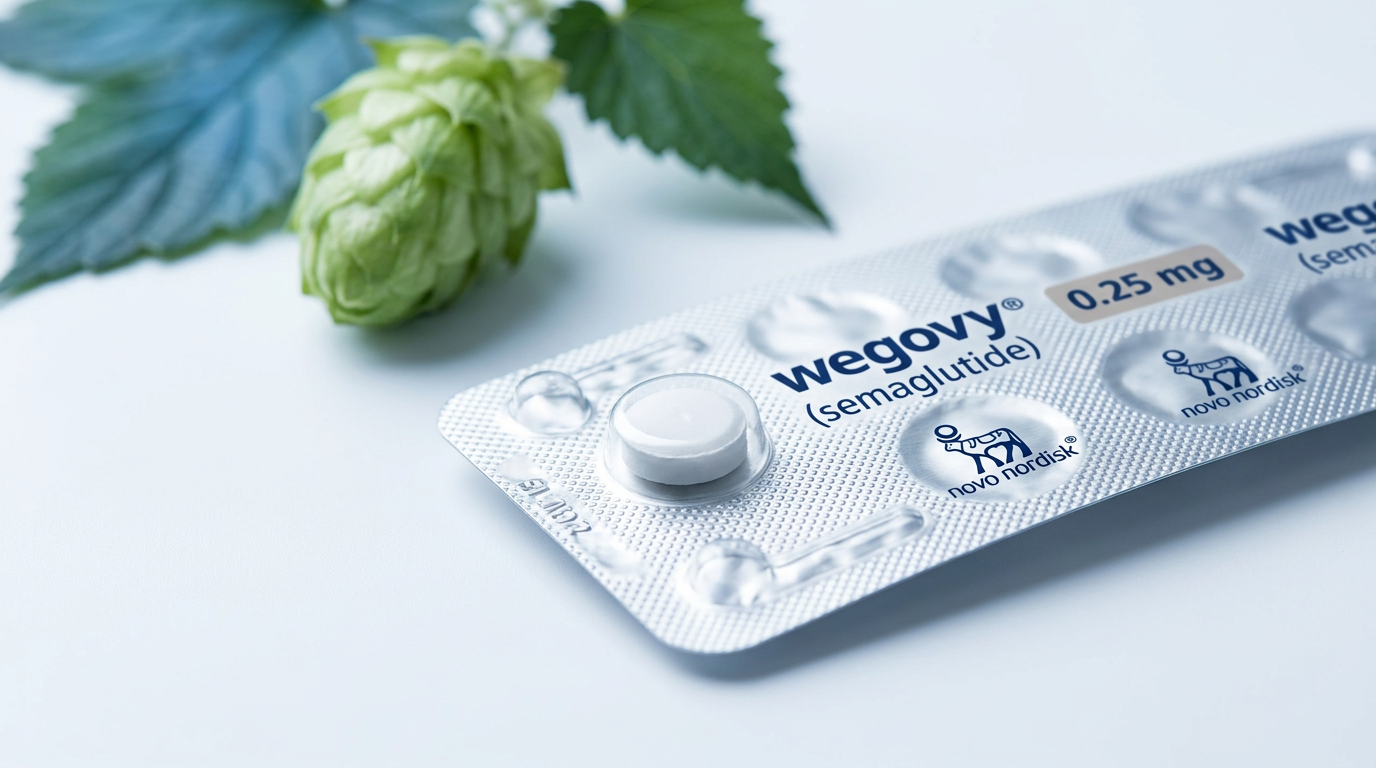
The UK has become the first country in Europe to approve Wegovy as a daily pill, offering a needle-free alternative that matches the weight-loss efficacy of weekly injections.
By Factlen Editorial Team
- Endocrinologists & Obesity Specialists
- Medical professionals focused on the physiological mechanisms of weight loss and metabolic health.
- Pharmaceutical Industry
- Market analysts and drugmakers focused on market access, manufacturing capacity, and competition.
- Patients & Consumers
- Individuals seeking obesity treatment who prioritize convenience, side-effect management, and needle-free options.
What's not represented
- · Dietitians and Nutritionists
- · Eating Disorder Recovery Advocates
Why this matters
For millions of people living with obesity who are averse to weekly injections, the arrival of an oral GLP-1 medication removes a major barrier to treatment. Understanding how these hormones work empowers patients to make informed decisions about their metabolic health.
Key points
- The UK's MHRA has approved Wegovy as a once-daily pill, the first such approval in Europe.
- The pill contains semaglutide, the same active ingredient found in the weekly injection.
- Clinical trials show the 25mg pill delivers 16.6% average weight loss over 64 weeks.
- Because stomach acid destroys peptides, only 1% of the oral dose is absorbed into the bloodstream.
- Patients must take the pill on an empty stomach and wait 30 minutes before eating or drinking.
- The oral option is expected to significantly expand access for patients who are needle-averse.
The era of the weekly weight-loss injection is facing its first major disruption. The United Kingdom's Medicines and Healthcare products Regulatory Agency (MHRA) has officially approved Novo Nordisk's Wegovy as a once-daily pill, making Britain the first country in Europe to greenlight the oral formulation of the blockbuster drug.[1][3]
The approval marks a critical milestone in obesity care, offering a highly effective alternative for patients who are needle-averse or seeking more flexibility in their treatment regimens. Until now, the most potent pharmacological treatments for weight loss—including Wegovy (semaglutide) and Eli Lilly's Mounjaro (tirzepatide)—have only been available as subcutaneous injections.[3][8]
With roughly 15 million people in the UK living with obesity, demand for these therapies has vastly outstripped global supply. The introduction of a daily tablet is expected to broaden access, though it will initially launch via private prescription while awaiting a formal cost-effectiveness review by the National Institute for Health and Care Excellence (NICE) for broader National Health Service (NHS) use.[3][7]
To understand why a pill form of Wegovy is a scientific breakthrough, it is necessary to understand how these medications work in the body. Wegovy belongs to a class of drugs known as GLP-1 receptor agonists, which have revolutionized metabolic medicine over the past decade.[4]
GLP-1, or glucagon-like peptide-1, is an incretin hormone naturally produced by the L-cells in the small intestine immediately after eating. Its primary physiological job is to signal the pancreas to release insulin, which helps clear glucose from the bloodstream and maintain stable blood sugar levels.[6][8]
However, GLP-1 also acts powerfully on the brain and the digestive system. It binds to specific receptors in the hypothalamus and brainstem, directly suppressing hunger signals and increasing feelings of satiety. Simultaneously, it slows gastric emptying—the rate at which food leaves the stomach—meaning patients feel physically fuller for much longer after a meal.[6][8]

While natural GLP-1 is broken down by the body's enzymes in a matter of minutes, synthetic semaglutide is engineered to resist degradation, remaining active in the system for days. This prolonged, artificial activation of the body's satiety signals is what drives the dramatic reduction in caloric intake and subsequent weight loss.[5][6]
Eli Lilly's rival medication, Mounjaro (tirzepatide), takes this mechanism a step further by utilizing a "dual-action" approach. In addition to GLP-1, Mounjaro also mimics a second incretin hormone called GIP (glucose-dependent insulinotropic polypeptide).[3][6]
Eli Lilly's rival medication, Mounjaro (tirzepatide), takes this mechanism a step further by utilizing a "dual-action" approach.
While GIP alone does not significantly suppress appetite or promote weight loss, it acts synergistically when combined with GLP-1. Endocrinologists often compare the relationship to a battery and a flashlight: GIP provides an extra metabolic boost that supercharges the baseline effects of GLP-1.[4]
GIP signaling influences how fat cells store and release energy, improving the body's ability to metabolize lipids efficiently. It also activates distinct but overlapping satiety centers in the brain, creating a complementary fullness signal that often results in slightly higher average weight loss than targeting the GLP-1 pathway alone.[4][6]

Delivering these complex peptide hormones orally has historically been considered impossible. The human stomach is a hostile environment explicitly designed to break down proteins; stomach acid and digestive enzymes typically destroy peptide-based drugs long before they can be absorbed into the bloodstream.[5]
Novo Nordisk solved this biological hurdle by co-formulating semaglutide with a specialized absorption enhancer. This compound temporarily neutralizes stomach acid in a localized area around the dissolving pill, allowing the semaglutide molecule to cross the gastric lining intact.[5]
Even with this chemical armor, oral bioavailability remains incredibly low. Only about 1% of an oral semaglutide dose is actually absorbed into the systemic circulation, compared to nearly 100% absorption from a standard subcutaneous injection.[5]
To compensate for this massive drop in efficiency, the oral version requires vastly higher doses. While the maximum weekly injection of Wegovy is 2.4 milligrams, the newly approved daily pill reaches doses of up to 25 milligrams per day.[5][7]

Despite the biological hurdles, clinical data proves the pill works. In the OASIS 4 phase 3 clinical trial, patients taking the 25mg daily oral dose achieved an average weight loss of 16.6% over 64 weeks when combined with diet and exercise. This efficacy is statistically comparable to the results seen with the injectable version.[7][8]
However, the pill comes with strict administration rules to ensure that the crucial 1% absorption actually happens. Patients must take the tablet on an empty stomach immediately upon waking, with no more than half a glass of water, and wait at least 30 minutes before eating, drinking, or taking other medications.[5]
Side effects for the oral formulation closely mirror those of the injection, primarily centering on gastrointestinal distress. Nausea, diarrhea, vomiting, and constipation are common, particularly as patients titrate up through the 1.5mg, 4mg, and 9mg starting doses over several months to let their bodies adjust.[7]
The UK approval gives Novo Nordisk a crucial head start in the oral weight-loss market. Eli Lilly is currently developing its own once-daily pill, orforglipron, but that therapy remains in clinical trials and is not yet available to the public.[3]
As prescriptions for oral semaglutide surpass three million globally following its earlier launch in the US and UAE, the UK rollout represents a major test of manufacturing capacity. If supply chains hold, the needle-free option could significantly expand the population willing to initiate long-term obesity treatment, fundamentally shifting how metabolic health is managed.[2][8]
How we got here
2021
The US FDA approves injectable Wegovy (semaglutide) for chronic weight management.
2023
Novo Nordisk publishes the OASIS 1 trial results, demonstrating the efficacy of high-dose oral semaglutide for weight loss.
May 2026
The European Medicines Agency's human medicines committee recommends approval for the Wegovy pill.
June 2026
The UK's MHRA becomes the first European regulator to officially approve the Wegovy pill for weight management.
Viewpoints in depth
Obesity Medicine Specialists
Medical professionals focused on the physiological mechanisms of weight loss.
Endocrinologists view the arrival of oral GLP-1s as a critical tool for expanding treatment access. They emphasize that obesity is a chronic metabolic disease, not a failure of willpower, and that medications like semaglutide correct underlying hormonal imbalances. For these specialists, the dual-action mechanism of combining GLP-1 and GIP represents the next frontier, as it addresses multiple metabolic pathways simultaneously to supercharge fat oxidation and insulin sensitivity.
Health Economists & Regulators
Experts analyzing the cost and systemic impact of widespread obesity treatments.
While acknowledging the clinical efficacy of the Wegovy pill, health economists point to the immense financial strain these drugs place on public health systems like the NHS. Because the oral formulation requires significantly more active pharmaceutical ingredient (up to 25mg daily versus 2.4mg weekly) to overcome low bioavailability, manufacturing costs and supply chain demands are intense. Regulators are currently weighing whether the long-term savings from reduced obesity-related comorbidities justify the high upfront cost of widespread prescription access.
Patient Advocacy Groups
Organizations representing individuals living with obesity and metabolic conditions.
Patient advocates celebrate the oral formulation as a victory for accessibility, noting that needle aversion prevents a significant portion of the population from seeking injectable treatments. However, they express frustration over the two-tiered healthcare system that currently restricts access. With the pill initially available only via private prescription in the UK, advocates argue that life-changing metabolic care remains out of reach for lower-income patients who must wait for public health system appraisals.
What we don't know
- When the UK's National Health Service (NHS) will officially cover the cost of the Wegovy pill.
- How strictly patients in real-world settings will adhere to the pill's rigid fasting requirements.
- When Eli Lilly's competing oral weight-loss drug, orforglipron, will complete clinical trials and enter the market.
Key terms
- GLP-1 (Glucagon-like peptide-1)
- A naturally occurring hormone that regulates appetite and blood sugar by signaling fullness to the brain and slowing digestion.
- GIP (Glucose-dependent insulinotropic polypeptide)
- A hormone that complements GLP-1 by improving how the body metabolizes fat and increasing insulin sensitivity.
- Incretins
- A group of metabolic hormones released by the digestive tract after eating that stimulate a decrease in blood glucose levels.
- Bioavailability
- The proportion of a drug that successfully survives digestion to enter the body's bloodstream and have an active effect.
- Receptor Agonist
- A synthetic substance that fully binds to and activates a receptor in the body, mimicking the action of a naturally occurring hormone.
Frequently asked
Is the Wegovy pill as effective as the injection?
Yes. Clinical trials show the 25mg daily pill produces comparable weight loss (averaging 16.6% over 64 weeks) to the weekly injection.
Can I switch from the injection to the pill?
Yes. Patients currently taking the maximum 2.4mg weekly injection can transition directly to the 25mg daily pill, according to UK regulators.
How do you take the Wegovy pill?
It must be taken once daily on an empty stomach with a small amount of water. Patients must then wait at least 30 minutes before eating, drinking, or taking other medications.
Does the pill have different side effects?
The side effects are largely the same as the injection, primarily involving gastrointestinal issues like nausea, diarrhea, and constipation as the body adjusts.
Sources
Source coverage
8 outlets
3 viewpoints surfaced







[1]BBCPatients & Consumers
Weight-loss drug Wegovy to be available in pill form in UK for first time
Read on BBC →[2]MorningstarPharmaceutical Industry
Novo Nordisk's Wegovy Pill Gains U.K. Approval, Its First in Europe
Read on Morningstar →[3]pharmaphorumPharmaceutical Industry
UK approves Novo Nordisk's Wegovy pill
Read on pharmaphorum →[4]Everyday HealthEndocrinologists & Obesity Specialists
Discover How GIP Boosts Weight Loss With GLP-1
Read on Everyday Health →[5]PlexusDxPatients & Consumers
Oral vs Injected Semaglutide: Efficacy, Biomarkers & Evidence
Read on PlexusDx →[6]PEAK WellnessEndocrinologists & Obesity Specialists
GLP-1 vs GIP: How Zepbound's Dual Action Works
Read on PEAK Wellness →[7]VoyPatients & Consumers
Wegovy Pill UK: Cost, Availability and How the Tablets Work
Read on Voy →[8]BioSpacePharmaceutical Industry
Novo Nordisk: Wegovy® pill (semaglutide tablets) becomes first daily GLP-1 weight-loss pill approved in the UK
Read on BioSpace →

More in health
See all 6 stories →Metabolic Health
Muscle as an Organ of Longevity: The Science of Myokines and Metabolic Health
0 sources

Clinical Evidence
The Evidence for Exercise as a First-Line Mental Health Treatment
0 sources

Diabetes Research
FDA Approves First Disease-Modifying Therapy for Newly Diagnosed Stage 3 Type 1 Diabetes in Youth
0 sources

Longevity Science
The Science of 'Exercise Snacks': How 1-Minute Bursts of Movement Can Transform Longevity
0 sources

Every angle. Every day.
Get health stories with full source coverage and perspective breakdowns delivered to your inbox.