
How Fashion's Next-Gen Materials Are Finally Scaling in 2026
After years of lab prototypes, bio-based textiles like mycelium leather and lab-grown cotton are entering mass commercial production, driven by new economic models and consumer demand.
By Lan Xu

Step into a material lab or design studio in 2026, and the shift is immediately palpable: jackets crafted from root structures, sneakers spun from pineapple leaves, and denim reborn from waste cotton are no longer relegated to the realm of science fiction. For years, "next-generation" materials existed primarily as expensive prototypes, conceptual art pieces, or highly limited-run capsule collections designed to generate press rather than revenue.
Today, the global fashion industry is aggressively transitioning these bio-based textiles into mass commercial production. This structural pivot is being driven by a combination of mounting regulatory pressures—such as the European Union's upcoming Digital Product Passport—and a profound cultural shift in consumer expectations regarding sustainability and supply chain transparency.
The ambition behind this transition is massive. A recent joint report published by Fashion for Good and Boston Consulting Group (BCG) forecasts that next-generation materials—defined as novel fibers that offer significantly improved environmental or social outcomes over conventional options—could account for 8% of the total global fiber market by the end of the decade.
This represents a staggering leap to 13 million tons of material annually, up from barely 1% just a few years ago. Achieving this volume requires a fundamental rewiring of how the industry sources, funds, and scales its raw inputs.[1]
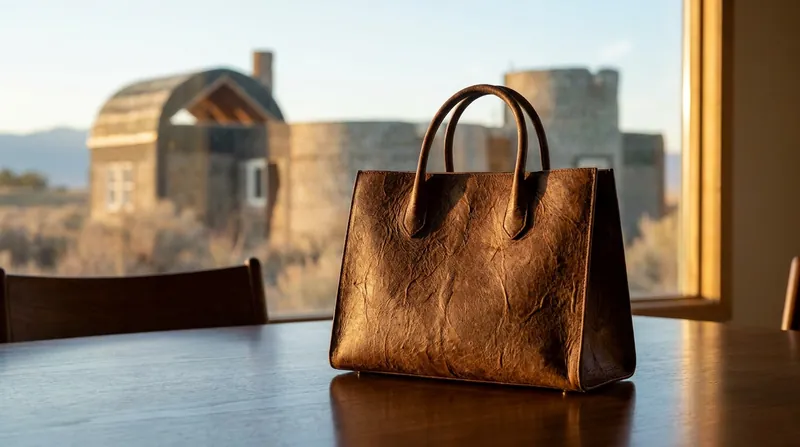
At the forefront of this biological revolution is mycelium leather, a material that has captured the imagination of both luxury houses and sportswear giants. A common misconception among consumers is that this material is made from the visible mushroom cap; in reality, it is cultivated from the underground, root-like network of fungi.
Mycelium consists of microscopic branching threads called hyphae, which naturally bind together as they grow. These threads form dense, interlocking structures that closely mirror the collagen fibers found in animal skin, providing the necessary tensile strength and flexibility required for apparel and accessories.
Unlike traditional textiles that must be spun and woven, or animal hides that require years of resource-intensive livestock rearing, mycelium is grown in highly controlled vertical farming environments. The cultivation process begins with agricultural waste—such as sawdust, hemp hurd, or corn stalks—which serves as a nutrient-rich substrate. Fungal spores are introduced into shallow trays filled with this biomass. Over the course of just two to three weeks, the fungi consume the waste, rapidly expanding and knitting themselves into a thick, uniform mat that is ready for harvest.
Once harvested, these raw mycelium mats must undergo a specialized tanning and finishing process to become usable fabric. Because the cellular structure of the material is inherently different from animal hide, material innovators utilize chromium-free, plant-based dyes and low-impact chemical treatments to achieve the desired texture, color, and durability.
The resulting fabric mimics the luxurious flexibility and strength of premium calfskin, but the environmental math is vastly different: the process requires up to 99% less water than traditional bovine leather and generates significantly fewer carbon emissions, all while remaining fully compostable at the end of its lifecycle.
The ecosystem of next-generation materials extends far beyond fungi, encompassing a wide array of biological and recycled inputs. Piñatex, a material derived from pineapple leaf fibers, utilizes agricultural by-products to create a versatile leather alternative, simultaneously reducing waste and providing secondary income streams for farming communities.
Meanwhile, lab-grown cotton, biofabricated proteins, and recycled cellulose fibers like Circulose are rewriting the rulebook for woven fabrics. These innovations aim to systematically replace virgin synthetics and resource-heavy conventional cotton, offering brands a diversified portfolio of low-impact materials that do not compromise on technical performance.
The fashion industry's push for scale is not purely altruistic; it is increasingly driven by hard economics and risk mitigation. The BCG report highlights a compelling financial incentive: brands that successfully integrate next-generation materials into their core supply chains could see a 4% reduction in their cost of goods sold (COGS) over a five-year period. This cost advantage emerges as legacy materials become increasingly vulnerable to climate-induced supply shocks, fluctuating commodity prices, and the rising costs of carbon compliance in heavily regulated markets.[1][2]
To achieve this economic tipping point, supply chain economists point to three critical levers that must be activated simultaneously: demand, cost, and capital. Consistent, pooled demand from major brands stabilizes the nascent market, giving manufacturers the financial confidence required to build larger, more efficient facilities. Cost engineering and process optimization across the supply chain unlock necessary economies of scale. Finally, targeted capital investment is required to bridge the notorious "valley of death" that exists between successful pilot plants and fully operational commercial-scale factories.[1]
Despite the widespread optimism, significant structural barriers to commercial adoption remain firmly in place. High minimum order quantities (MOQs) set by early-stage suppliers keep many independent designers and mid-sized brands entirely locked out of the market. Because production facilities are still in the process of scaling up their operations, the price of premium bio-leathers remains two to four times higher than conventional animal leather. However, industry analysts project that as capacity expands, price parity with traditional materials could realistically be reached between 2028 and 2030.
Technical hurdles also persist, particularly in the realm of aesthetics and mass manufacturing. While natural mycelium readily accepts earthy, muted tones, achieving bright, vibrant colors without resorting to heavy, toxic chemical dyes requires ongoing scientific innovation. Furthermore, scaling production from thousands of square meters—which is sufficient for limited luxury drops—to the millions of square meters required by global fast-fashion and lifestyle conglomerates presents a monumental logistical challenge that the industry is only just beginning to solve.
Yet, consumer appetite is rapidly accelerating the timeline, forcing brands to adapt faster than they might prefer. Next-generation materials have risen in prominence largely because they address a fundamental shift in how material value is communicated to the public. For modern consumers, particularly Gen-Z and millennials, a material's descriptor—such as "bio-based," "grown," or "recycled"—provides immediate confidence that the product aligns with their ethical and environmental values. In many consumer surveys, this verified sustainability now ranks higher than traditional metrics of heritage craftsmanship or brand prestige.[2]
Ultimately, the future of fashion materials is unlikely to be a zero-sum game where new technologies entirely eradicate the old. Industry experts at global forums emphasize a future of coexistence, where next-generation materials support exploration, progress, and everyday wear, while traditional materials continue to offer established durability and repairability for specific heritage items. By embracing collaboration over competition, brands are finally pooling their resources to meet minimum volumes and unlock supplier scale, turning what was once a laboratory experiment into the everyday fabric of our wardrobes.[2]
Key points
- Next-gen materials are projected to grow from 1% to 8% of the global fiber market by 2030.
- Mycelium leather is grown in vertical farms using agricultural waste in just two to three weeks.
- Strategic adoption of bio-based textiles could reduce a brand's cost of goods sold by 4% over five years.
- High minimum order quantities and price premiums remain the largest barriers to mass adoption.
Open questions
- Whether bio-based leathers can achieve the exact same multi-decade durability and repairability as traditional animal hides.
- How quickly chemical-free dyeing processes can be perfected to offer bright, vibrant colors at scale.
- If the required capital investments will materialize fast enough to meet the 2030 production targets.
Timeline
2021
Early prototypes of mycelium leather bags and garments debut on high-fashion runways.
2024
Next-gen materials account for roughly 1% of the global fiber market.
2025
Major biotechnology facilities open, enabling the first true commercial-scale production of bio-leathers.
2026
Brands begin pooling demand to overcome high minimum order quantities and reduce supply chain costs.
2030 (Projected)
Next-gen materials expected to reach 8% market share and achieve price parity with conventional leather.
- Supply Chain Economists
- Focus on the financial hurdles, minimum order quantities, and the necessity of brand collaboration to de-risk the transition.
- Bio-Material Innovators
- Advocate for rapid scaling and investment to disrupt the petrochemical supply chain and achieve price parity.
- Heritage Craftsmanship Advocates
- Emphasize coexistence, valuing the proven multi-decade durability and repairability of traditional leather alongside new innovations.
Perspectives this story doesn't cover
- Garment workers handling new materials
- Traditional livestock and cotton farmers
Sources
Source coverage
3 outlets
3 viewpoints surfaced



- [1]Boston Consulting GroupSupply Chain Economists
Scaling Next-Gen Materials in Fashion: An Executive Guide
Read on Boston Consulting Group → - [2]APLFHeritage Craftsmanship Advocates
From Product Performance to Value Expression
Read on APLF → - [3]Sustainability17Supply Chain Economists
The New Frontier: Mycelium Leather and Algae Fibers
Read on Sustainability17 →
More in Lifestyle
See all →Circular Fashion
The Resale Tipping Point: Why the Secondhand Market is Now Growing 3x Faster Than Primary Fashion Retail
4 sources
Biomaterials
How Fungi Are Fixing Fashion: The Science of Mycelium Leather
4 sources
Biomaterials
How Mycelium Leather Scaled From Lab to Luxury Fashion in 2026
3 sources
Biomaterials
How Mycelium Leather Reached Commercial Scale in 2026
4 sources
Comments
Every angle. Every day.
Get Lifestyle stories with full source coverage and perspective breakdowns, free every day.