
How Europe's Night Train Renaissance is Reshaping Continental Travel in 2026
Driven by climate consciousness and a demand for premium travel, a new wave of luxury sleeper trains and citizen-funded rail cooperatives is rapidly expanding across Europe.
By Hailey Scott

Just a decade ago, Europe's overnight rail network seemed destined for the scrapyard, steadily outcompeted by the sheer speed and rock-bottom prices of ultra-low-cost airlines. Carriages were aging, routes were being slashed, and the concept of sleeping on a train felt like a nostalgic relic of the twentieth century.
But by mid-2026, the continent is in the throes of a full-blown night train renaissance. Driven by a potent mix of climate consciousness, frustration with aviation infrastructure, and a demand for premium travel experiences, sleeper trains are rapidly reclaiming their status as the most civilized way to cross European borders.
The demographic shift driving this revival is stark. In 2025, only about 5 percent of European travelers under the age of 45 considered booking a sleeper train for their cross-border journeys. By early 2026, that figure had quietly tripled to nearly 15 percent. This surge is not fueled by budget backpackers looking to save on a hostel night; rather, it is being propelled by tech professionals, remote workers, and climate-conscious tourists who view the train as a fundamentally superior product.
For this new cohort of travelers, the calculus of European transit has fundamentally changed. A two-hour short-haul flight often demands six to seven hours of total travel time when factoring in airport commutes, security lines, boarding procedures, and baggage claim. Night trains flip this dynamic entirely. By transforming an 8- to 14-hour journey into a moving hotel, passengers reclaim lost transit time for sleep and productivity, bypassing the airport ecosystem entirely and stepping off the train directly into the heart of a city center.
This resurgence is heavily supported by massive capital investments in modern rolling stock, finally addressing the comfort issues that plagued older trains. Austria's state railway, ÖBB, has led the charge, pouring over €500 million into a fleet of 33 "new generation" Nightjet trains. These state-of-the-art carriages are systematically replacing decades-old equipment across the continent, signaling to the market that state operators view overnight rail as a permanent, high-value fixture of their future networks.[3]
The interior of these new Nightjets represents a paradigm shift in onboard hospitality. They feature industry-first individual "Mini Cabins" designed specifically for solo travelers, offering privacy, secure luggage storage, and dedicated reading lights. For those seeking more luxury, premium sleeping compartments are now equipped with private en-suite showers and toilets. With electronic cabin access, complimentary Wi-Fi, and vastly improved soundproofing, the experience has pivoted sharply from utilitarian transport to premium hospitality.[3][5]
While state-backed giants like ÖBB laid the initial groundwork for the revival, the 2026 expansion is increasingly being driven by agile, citizen-funded cooperatives. The most prominent of these is European Sleeper, a Belgian-Dutch startup that has rapidly become a vital player in connecting Western and Central Europe. Operating as an open-access company, European Sleeper relies on crowdsourced funding and ticket sales rather than government subsidies, allowing it to move quickly to fill gaps left by national operators.[2][6]
The agility of these private cooperatives was severely tested in late 2025. When the French government withdrew critical financial subsidies for the ÖBB Nightjet route connecting Paris to Berlin and Vienna, the state-run service was abruptly slated for cancellation in December 2025. The decision sparked immediate protests from climate advocates and NGOs, who pointed out the hypocrisy of cutting a train service that emits 28 times less greenhouse gas than an equivalent flight.[4]
Stepping into the political and logistical void, European Sleeper announced it would take over the highly symbolic Paris-Berlin route. Relaunching on March 26, 2026, the cooperative's new service accommodates up to 700 passengers per journey. To bypass the bureaucratic hurdles and high track access charges of the French national railway, the new route smartly detours through Brussels, ensuring the connection remains viable for international travelers. By July 2026, the route will be further extended to reach Hamburg.[1][2][3][4][5][6]
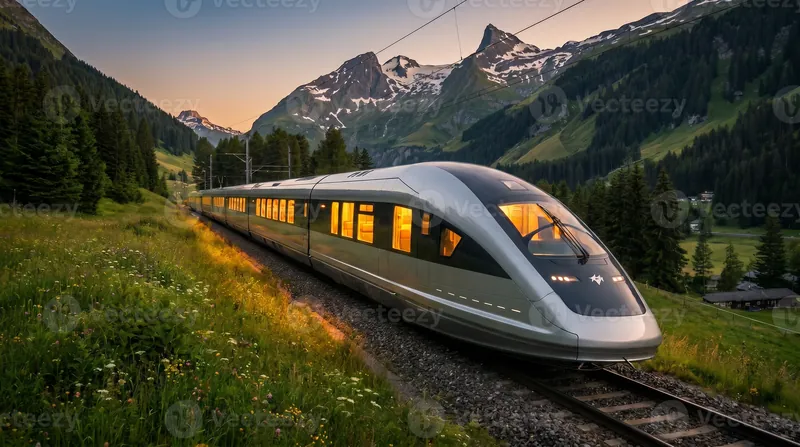
European Sleeper is not stopping at the German border. In September 2026, the cooperative is launching a highly anticipated route connecting Brussels and Amsterdam to Milan. This new north-south artery will wind through the spectacular scenery of the Swiss Alps, stopping in Cologne and Aarau before crossing into Italy. The route marks a major milestone in connecting the Benelux region directly to Southern Europe without requiring passengers to navigate complex daytime transfers.[2][5]
The night train revival is equally potent in Northern Europe, where vast distances make sleeper services highly practical. In April 2026, the Swiss Federal Railways (SBB), in partnership with Germany's RDC, is inaugurating a new 16-hour route from Basel, Switzerland, to Malmö, Sweden, via Copenhagen. This service provides a crucial overland link between Central Europe and Scandinavia, catering heavily to climate-conscious travelers who refuse to fly over the Baltic Sea.[1]
Meanwhile, private operators are pushing the boundaries of the network even further north. The Swedish operator Snälltåget, already successful with its Berlin-Stockholm route, is expanding its reach into Norway in 2026. The company is launching seasonal routes connecting Malmö to Oslo and Trondheim, and is actively exploring an "XXL" route to Narvik, deep above the Arctic Circle, which would become the northernmost overnight rail connection in Europe.[3]
Eastern Europe is also experiencing a surge in overnight connectivity, driven by both state and private operators. The Polish state operator PKP Intercity is cementing its popular Baltic Express route from Prague to Gdynia on the Baltic Coast. Simultaneously, the Czech private operator RegioJet is launching full commercial operations across Poland in April 2026, linking Warsaw and Krakow to Prague and Vienna, bringing low-cost, high-comfort sleeper options to the region.[3]
Despite the booming consumer demand and rapid route expansion, the renaissance faces significant structural and political headwinds. Operating an international night train requires navigating a deeply fragmented patchwork of national rail networks. Each country maintains its own track access charges, safety regulations, locomotive requirements, and nighttime maintenance schedules, making cross-border logistics incredibly complex for operators.[2][4]
Night trains are particularly vulnerable to high track access tolls, as they traverse long distances and cross multiple borders while carrying fewer passengers than high-density commuter trains. Startups and cooperatives often find themselves at a financial disadvantage compared to state-backed giants, prompting widespread calls for the European Union to standardize and drastically reduce these fees to protect and encourage cross-border sleeper services.[4][6]
Nevertheless, the momentum of the 2026 expansion appears unstoppable. With operators planning to introduce entirely new fleets featuring 100 percent personal rooms by 2027, the industry is betting heavily on the premium privacy model. What began a few years ago as a niche environmental movement has rapidly matured into a permanent, luxurious, and highly practical fixture of European transport, proving that the romance of the night train is alive and well.[3]
Key points
- European travelers under 45 considering night trains tripled from 5% in 2025 to 15% in 2026.
- Austria's ÖBB is deploying a €500 million fleet of new Nightjet trains featuring private mini-cabins.
- The citizen-funded cooperative European Sleeper rescued the canceled Paris-Berlin route, relaunching it in March 2026.
- New 2026 routes include connections from Brussels to Milan, and Basel to Malmö.
What we don’t know
- Whether the European Union will intervene to standardize and lower track access charges for cross-border night trains.
- How budget airlines will respond to the growing market share of premium sleeper rail services.
How we got here
May 2023
European Sleeper launches its first route connecting Brussels to Berlin.
December 2025
The state-run ÖBB Nightjet service between Paris and Berlin is canceled due to subsidy disputes.
March 2026
European Sleeper rescues and relaunches the Paris-Berlin route.
April 2026
A new night train connecting Basel, Switzerland, to Malmö, Sweden, begins operations.
September 2026
European Sleeper launches a new north-south route from Brussels to Milan via the Swiss Alps.
- Climate-Conscious Travelers
- Environmental advocates view the sleeper train revival as a critical weapon against aviation emissions.
- Private Rail Cooperatives
- Startups believe that agile, citizen-funded operations are necessary to fill the gaps left by bureaucratic state operators.
- Premium Travel Sector
- The travel industry focuses on the shift toward luxury, privacy, and productivity, viewing trains as moving hotels.
- State Railway Operators
- National operators emphasize the need for massive, centralized infrastructure investments while balancing complex budgets.
Perspectives this story doesn't cover
- Budget Airlines
- National Infrastructure Managers
Sources
Source coverage
6 outlets
4 viewpoints surfaced






- [1]ForbesPremium Travel Sector
These 4 European Night Trains Are Debuting In 2026
Read on Forbes → - [2]HourrailPrivate Rail Cooperatives
European Sleeper: Brussels–Milan, Paris–Berlin, and Prague night trains in 2026
Read on Hourrail → - [3]PixidiaPremium Travel Sector
European Night Trains 2026: 10 New Routes You Need to Know
Read on Pixidia → - [4]Back-on-TrackClimate-Conscious Travelers
Paris night train: rescue possible in a short time window
Read on Back-on-Track → - [5]Night RidePrivate Rail Cooperatives
European Sleeper: Routes, Cabins, Prices
Read on Night Ride → - [6]WikipediaPrivate Rail Cooperatives
European Sleeper
Read on Wikipedia →
More in World
See all →Snap Election
Spanish Prime Minister Pedro Sánchez Calls Snap General Election for November 29 Following Defeat on Housing Decrees
6 sources

Cross-Border Justice
Dropping Double Criminality: How the European Arrest Warrant Replaced Diplomatic Extradition
4 sources

Sanctions Policy
EU Secures Three-Year Russia Sanctions Extension in Exchange for Delisting Two Billionaires
8 sources

AfD Surge
German Chancellor Merz Faces Collapse as Far-Right AfD Takes National Poll Lead Amid Intensifying Crisis
5 sources
Comments
Every angle. Every day.
Get World stories with full source coverage and perspective breakdowns, free every day.