
How Community Solar Replaces Rooftop Panels With Portable Subscriptions
Virtual net metering allows renters and shaded homes to subscribe to off-site solar farms, cutting utility bills by 10% to 20% without installing a single panel.
By Hui Lin

Share this story
In short
- Community solar allows renters and homeowners to benefit from solar energy without installing panels on their property.
- Subscribers receive a financial credit on their standard utility bill for the power generated by their share of the off-site array.
- The model relies on virtual net metering, requiring state-level legislation to force utilities to process the credits.
The standard assumption among homeowners and real estate developers is that benefiting from solar power requires owning a sun-facing roof and $20,000 in upfront capital. The U.S. Department of Energy’s data shows the opposite: a rapidly scaling model called community solar shifts the infrastructure off-site, allowing renters and shaded homes to subscribe to a shared array and cut their utility bills without installing a single panel.[1]
The actionable takeaway for consumers is that solar energy is no longer restricted to property owners. By subscribing to a local solar farm, households purchase a share of the electricity generated. The local utility then credits the subscriber's monthly bill for that power, typically resulting in a 10% to 20% net reduction in electricity costs.[1][3]
The mechanism relies on a regulatory framework known as virtual net metering. Instead of a direct wire running from a solar panel into a residential circuit breaker, the community solar array feeds its power directly into the broader regional utility grid.
The utility tracks exactly how much energy the off-site array produces. It then allocates a proportional financial credit to each subscriber's account based on their share of the project. If a subscriber owns or leases 5 kilowatts of capacity at the solar farm, the energy generated by those specific panels offsets the energy consumed at their apartment across town.[1][3]
This model solves a massive structural bottleneck in renewable energy adoption. According to the National Renewable Energy Laboratory (NREL), 42% of U.S. households and 44% of businesses cannot utilize traditional rooftop solar.
The physical barriers are numerous. Roofs might be too old to support the weight of panels, heavily shaded by mature trees, or face the wrong direction for optimal sun exposure. More fundamentally, millions of Americans rent their homes from landlords who have no financial incentive to upgrade the property's energy infrastructure.[1][2]
By separating the power generation from the point of consumption, community solar expands the addressable market. NREL researchers note that "community solar could theoretically grow to serve all residential electricity customers who are unable to adopt behind-the-meter solar, including low- to moderate-income households."
The financial structure is straightforward and heavily favors the consumer. Most community solar programs operate on a subscription model with zero upfront fees. A customer might pay the solar developer $80 a month for their share of the energy, but receive a $100 credit on their utility bill, netting $20 in direct savings.[3]
For low-to-moderate-income households, these savings are material. Some state-subsidized programs report families saving up to $400 annually on their electricity bills, freeing up capital for other essential expenses. Subscribers also avoid the maintenance liabilities, insurance premiums, and financing hurdles associated with owning hardware.[3]
The market is scaling rapidly to meet this demand. As of mid-2025, NREL tracks over 11 gigawatts of installed community solar capacity across 43 states and Washington, D.C. Four states—Florida, New York, Massachusetts, and Minnesota—currently account for roughly 75% of the total market, driven by aggressive state-level virtual net metering policies.
Caveats exist, though they are specific to local regulations rather than the technology itself. Because community solar relies on utility billing integration, it is only available in states that have passed legislation forcing utilities to process the credits. In regions without these mandates, traditional utilities often block the projects to protect their monopoly on power generation.[2]
Furthermore, if a subscriber moves outside of their current utility's service territory, they typically must cancel their subscription. However, most modern contracts allow early cancellation without severe penalties, or permit the subscriber to transfer the account to a new address within the same grid.[3]
The shift from hardware ownership to energy subscription fundamentally changes the economics of renewable power. As developers continue to build multi-megawatt arrays on brownfields and commercial land, the barrier to entry for clean energy drops to zero. The deciding factor for future growth is no longer consumer demand, but how quickly remaining state legislatures force their local utilities to open the grid to shared generation.
Key terms
- Virtual Net Metering
- A billing arrangement where a utility credits a customer's account for electricity generated by an off-site renewable energy system.
- Community Solar
- A shared solar power installation where multiple customers subscribe to receive the financial benefits of the energy produced.
- Behind-the-meter Solar
- Traditional rooftop solar panels installed directly on a customer's property, generating power that is consumed on-site before reaching the utility grid.
- Kilowatt-hour (kWh)
- A standard unit of energy used by utility companies to measure and bill for electricity consumption.
Frequently asked
Do I have to own my home to join?
No. Community solar is specifically designed for renters, condo owners, and anyone who cannot install panels on their own roof.
Does it cost money to sign up?
Most modern community solar programs use a subscription model with zero upfront costs, though some older models require purchasing a share of the panels outright.
What happens if I move?
If you move within the same utility service territory, you can typically transfer the subscription. If you move out of the area, you can cancel, usually without a penalty.
Will my power go out if the solar farm is shaded?
No. Your home remains connected to the standard utility grid, which provides seamless power 24/7 regardless of the solar farm's real-time output.
Viewpoints in depth
Utility Companies
Traditional power providers concerned about grid maintenance costs and lost revenue.
Many investor-owned utilities argue that virtual net metering forces non-participating customers to subsidize the grid maintenance costs of solar subscribers. They contend that when community solar customers pay lower bills, they contribute less to the fixed costs of poles, wires, and transformers, shifting that burden onto lower-income ratepayers who haven't subscribed. Consequently, utilities frequently lobby state legislatures to reduce the credit rate applied to community solar generation.
Solar Developers
Private companies building the arrays and managing subscriptions.
Developers argue that community solar actually saves all ratepayers money by generating power locally, which reduces the need for utilities to build expensive new transmission lines or fire up costly natural gas peaker plants during high-demand summer months. They maintain that the credits paid to subscribers accurately reflect the wholesale value of the energy provided to the grid, and that utility resistance is primarily about protecting monopoly profits rather than grid reliability.
Energy Equity Advocates
Nonprofits focused on expanding clean energy access to low-income households.
Equity advocates view community solar as the only viable mechanism to democratize renewable energy. They emphasize that traditional rooftop solar disproportionately benefits wealthy homeowners who can afford the upfront capital and claim federal tax credits. By removing the credit barrier and the need for property ownership, these groups argue that community solar is essential for ensuring marginalized communities aren't left behind in the energy transition.
- Government & Research
- Focus on tracking deployment data, technical potential, and establishing baseline definitions.
- Solar Industry & Advocates
- Focus on scaling deployment, removing regulatory barriers, and promoting consumer benefits.
- Independent Analysis
- Focus on synthesizing data and explaining the structural mechanics of the market.
Perspectives this story doesn't cover
- Traditional Utility Companies
- Fossil Fuel Generators
Sources
Source coverage
4 outlets
3 viewpoints surfaced




- [1]U.S. Department of EnergyGovernment & Research
Community Solar Basics
Read on U.S. Department of Energy → - [2]Solar Energy Industries AssociationSolar Industry & Advocates
Community Solar
Read on Solar Energy Industries Association → - [3]EcoWatchSolar Industry & Advocates
What Is Community Solar? (2026 Guide)
Read on EcoWatch → - [4]Factlen Editorial TeamIndependent Analysis
Synthesis by Factlen editorial team
Read on Factlen Editorial Team →
More in Community
See all →Global Governance
Global Mayors Ratify Communiqué Demanding Greater Power and Finance From G20
7 sources

Housing Policy
Bipartisan Bill Reintroduced to Create 250,000 Housing Vouchers for Low-Income Families
6 sources
Surveillance Policy
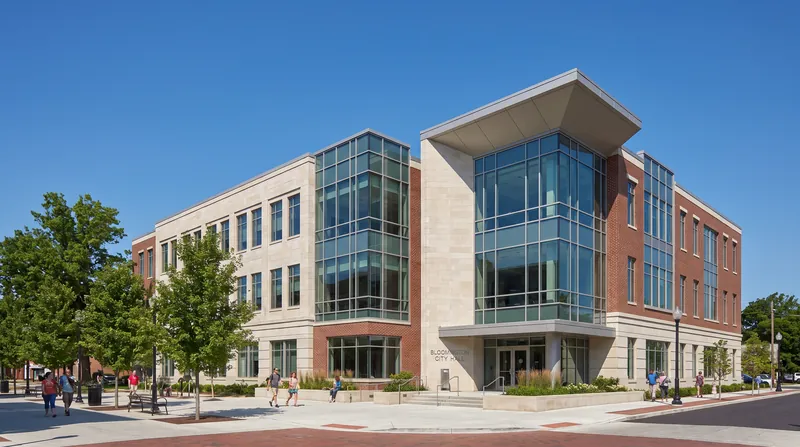
Bloomington City Council Introduces Ordinance to Ban Automated License Plate Readers
6 sources
Social Capital
The Sociological Mechanisms of Bonding and Bridging Ties in Community Networks
7 sources

Comments
Every angle. Every day.
Get Community stories with full source coverage and perspective breakdowns, free every day.