
How AI and Sensor-Fused Drones Are Solving the Global Landmine Crisis
A convergence of artificial intelligence, multi-sensor drones, and autonomous robotics is transforming humanitarian mine clearance from a dangerous manual crawl into a rapid, data-driven operation.
By Hao Li

Share this story
For centuries, the process of clearing landmines has been primitive, painstakingly slow, and inherently dangerous. Human deminers, often crawling on their stomachs, rely on handheld metal detectors and probes to clear contaminated land centimeter by centimeter.
The math of manual clearance is staggering. In Ukraine, currently the world's most heavily mined country, an estimated 23 percent of the territory is contaminated with explosive ordnance. Using traditional tools, experts calculate it would take 757 years and over $37 billion to fully demine the nation.
But a technological breakthrough is fundamentally altering that timeline. A convergence of artificial intelligence, multi-sensor drone platforms, and autonomous ground robotics is transforming mine clearance from a manual crawl into a rapid, data-driven aerial operation.
The core innovation is moving the initial survey from the ground to the air. Researchers at the Rochester Institute of Technology have demonstrated that drone-mounted electromagnetic induction can replace handheld detectors, increasing survey speeds tenfold while keeping operators safely out of the blast radius.
However, a single camera or metal detector is insufficient. Modern systems rely on "sensor fusion"—combining RGB optical cameras, thermal imaging, LiDAR, ground-penetrating radar, and magnetometers into a single cohesive data stream.
This layered approach is critical because different mines have different signatures. A plastic anti-personnel mine might be invisible to a magnetometer but will appear on ground-penetrating radar, while a metal anti-tank mine might vanish thermally in certain soil conditions but trigger electromagnetic sensors.
Once drones collect thousands of high-resolution images, the bottleneck shifts to data analysis. Traditionally, a human analyst might spend three to five days scrutinizing imagery to map a single average-sized minefield.
To solve this, organizations like The HALO Trust have partnered with cloud computing providers to deploy machine learning algorithms. These AI models are trained to identify the visual signatures of tripwires, disturbed earth, and explosive remnants, reducing the analysis time from nearly a week to a matter of hours.[2]
The training datasets powering these models are massive. The U.S. Army recently ordered an AI-powered Threat Analysis Kit from Safe Pro Group, whose edge-computing system was trained on over 2.75 million drone images covering 35,000 acres of active battlefields.
This system has already achieved over 50,000 confirmed detections in real-world conditions, learning to identify more than 150 distinct types of explosive threats, from cluster munitions to camouflaged ambush drones.
Grassroots innovation is also accelerating the software side. During a recent United Nations Development Programme hackathon in Kyiv, local IT engineers developed an AI model called "Mine Watch AI" by processing 30,000 field images containing soil, metal, and vegetation to isolate explosive hazards.[1]
Locating a mine is only half the battle; removing it safely is the other. Excavation is statistically the most dangerous phase of demining, responsible for the majority of accidents in the field.
To mitigate this, robotic platforms are being deployed for physical clearance. A Japanese startup has introduced a specialized mine-clearing support robot that uses proprietary compressed-air technology. Instead of heavy flails that destroy the mine, the robot blows away the surrounding soil, leaving the explosive intact for safe manual retrieval without collateral damage.
Field trials conducted in Cambodia demonstrated that incorporating just one of these compressed-air robots into a clearance team improved overall performance by 20 percent.
For more rugged environments, modular unmanned ground vehicles are being used. Priced at a fraction of traditional Western military clearance vehicles, these expendable robots can carry swappable payloads, including brush-clearing mowers and flails that detonate anti-personnel mines directly.
The success of these systems in post-conflict recovery has caught the attention of active militaries. The British Army recently field-tested an AI-enabled drone system in Essex designed to detect and classify buried hazards.
During the trials, the UK Ministry of Defence proved that the AI models could be rapidly retrained to recognize new threat types and adapt to different environments—a crucial requirement as mine warfare tactics continuously evolve.
Similarly, NATO's Science for Peace and Security Programme is actively funding projects that leverage AI drone intelligence and cable-driven robotic devices to sweep large terrains, ensuring that these emerging disruptive technologies are standardized across allied forces.
Despite these breakthroughs, the technology is not a panacea. AI models are only as good as their training data, and algorithms trained in the forests of Eastern Europe may struggle with the mineral-rich soils or arid deserts of other contaminated regions.
Furthermore, deep-buried explosives, dense jungle canopies, and extreme weather conditions continue to challenge even the most advanced sensor fusion arrays, meaning that while robots and AI can drastically narrow the search grid, the final mile of clearance will likely require human oversight for years to come.
Key points
- Ukraine is currently the world's most heavily mined country, with 23% of its territory contaminated.
- Traditional manual clearance of Ukraine would take an estimated 757 years.
- Drones using 'sensor fusion' combine thermal, radar, and optical data to spot hidden explosives.
- Machine learning algorithms can analyze drone imagery in hours instead of days.
What we don’t know
- How effectively AI models trained on Eastern European soil data will transfer to the arid or jungle environments of other heavily mined regions.
- Whether the global supply chain can produce these specialized multi-sensor drones at a scale and price point accessible to underfunded NGOs.
- How well ground-penetrating radar and thermal sensors will perform against deeply buried legacy mines that have shifted underground over decades.
How we got here
1997
The Ottawa Treaty bans the use of anti-personnel landmines, though millions remain buried globally.
2022
The escalation of the conflict in Ukraine creates the most heavily mined country in the world, accelerating the need for new clearance tech.
Nov 2023
The Geneva International Centre for Humanitarian Demining highlights AI and drone fusion as the next disruptive innovation in mine action.
Jul 2025
Ukrainian IT engineers develop 'Mine Watch AI' during a UNDP hackathon, proving the viability of crowdsourced AI models.
Jun 2026
The U.S. and British militaries begin field-testing and deploying AI-powered threat analysis kits for combat engineering.
- Humanitarian Deminers
- Focused on achieving 100% clearance accuracy to safely return land to civilian populations.
- Defense Technologists
- Focused on advancing sensor fusion, edge computing, and machine learning capabilities.
- Military Engineers
- Focused on speed, force protection, and clearing immediate pathways through contested environments.
- Hardware Innovators
- Focused on developing cost-effective, expendable robotics and specialized excavation tools.
Perspectives this story doesn't cover
- Local farmers in contaminated regions waiting for land clearance
- Survivors of landmine accidents advocating for victim assistance
Sources
Source coverage
2 outlets
4 viewpoints surfaced


- [1]United Nations Development ProgrammeHumanitarian Deminers
AI for demining: Ukrainian innovators train algorithms to detect explosives in drone images
Read on United Nations Development Programme → - [2]WIONHumanitarian Deminers
Ukraine's demining effort is increasingly relying on AI, drones and remote-controlled machinery
More in Defense & Security
See all →Base Infrastructure
Pentagon Selects Indiana Navy Base for First Domestic Nuclear Microreactor
4 sources

Missile Defense
Physics of Ballistic Missile Defense: The Trade-Offs Dictating Boost, Midcourse, and Terminal Interception
6 sources
Acoustic Stealth
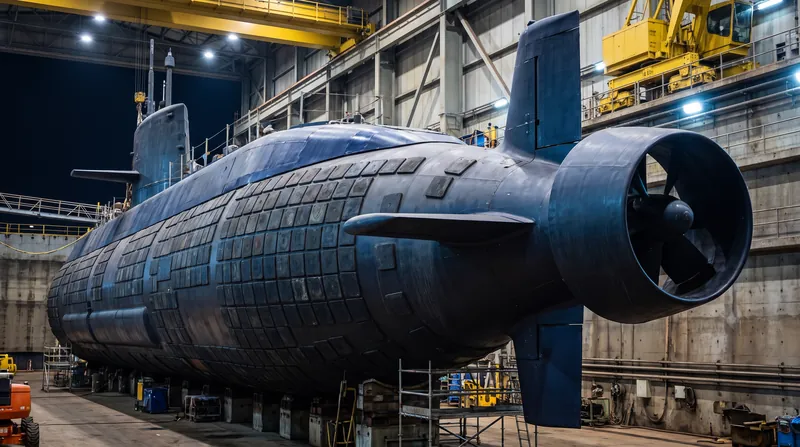
Silencing the Hull: How Anechoic Tiles, Isolation Mounts, and Pump-Jets Suppress Submarine Radiated Noise
9 sources
Directed Energy
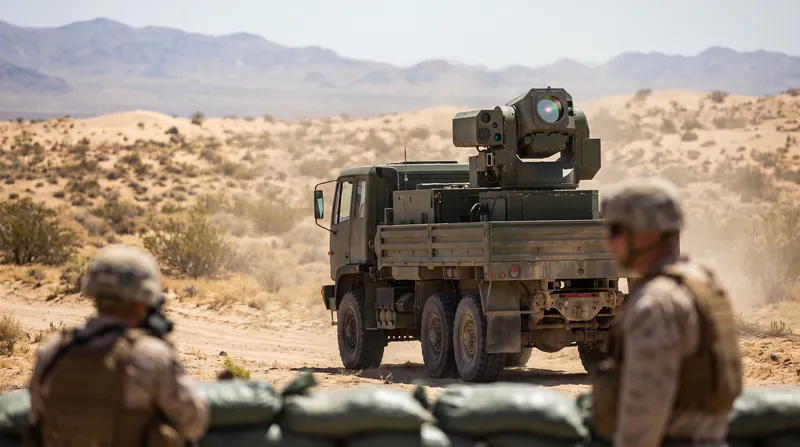
Atmospheric Constraints on Directed Energy: How Thermal Blooming and Jitter Cap Laser Weapon Range
7 sources
Comments
Every angle. Every day.
Get Defense & Security stories with full source coverage and perspective breakdowns, free every day.