
How AI and Precision Viticulture Are Rewriting the Rules of Winemaking
Faced with unpredictable climates and resource scarcity, vineyards are turning to artificial intelligence, drone imaging, and smart sensors to optimize harvests and reduce environmental impact.
By Factlen Editorial Team
- Agri-Tech Innovators
- Technology developers and data scientists pushing the boundaries of what vineyard sensors and algorithms can achieve.
- Climate-Adaptive Producers
- Pragmatic vineyard managers adopting AI primarily as a survival mechanism against extreme weather and resource scarcity.
- Traditionalist Vintners
- Winemakers who prioritize human sensory perception, heritage, and the unmediated expression of terroir.
What's not represented
- · Vineyard manual laborers
- · Small boutique winery owners
Why this matters
As climate change threatens historic wine regions, precision agriculture offers a lifeline. These technologies allow producers to save millions of gallons of water, reduce chemical pesticide use, and maintain the quality of the wine in your glass without losing the human artistry behind it.
Key points
- Precision viticulture uses AI, drones, and sensors to optimize vineyard management and adapt to climate change.
- AI predictive models are helping vineyards reduce water usage by up to 30% through highly targeted irrigation.
- Algorithms analyze weather, sugar levels, and phenolic maturity to recommend the exact optimal day for harvesting.
- Smart fermenters track real-time cellar data to prevent faults and ensure consistency during the winemaking process.
- Despite technological advances, winemakers emphasize that AI cannot replace the human sensory art of tasting and blending.
For centuries, the craft of winemaking has been romanticized as an intuitive, almost mystical dance between the vintner and the land. The image of a winemaker crushing grapes by hand, walking the rows at dawn, or tasting berries to gauge ripeness is deeply ingrained in the cultural fabric of viticulture. But in 2026, a quiet, data-driven revolution is reshaping vineyards across the globe. Alongside the traditional oak barrels and pruning shears, a sophisticated new set of tools has emerged: artificial intelligence, drone imaging, and real-time sensor networks. This technological leap is fundamentally changing how wine is grown, harvested, and fermented, bringing unprecedented precision to an ancient art.[1][2]
This shift is not born out of a desire to replace tradition, but rather to protect it. As climate change accelerates, vineyards worldwide are facing unprecedented and existential challenges. Unpredictable weather patterns, prolonged droughts, sudden devastating frosts, and mounting disease pressures are threatening historic wine regions that have thrived for centuries. In response, the industry is rapidly turning to precision viticulture—a comprehensive, data-driven approach that leverages advanced technology to cultivate healthier vines, optimize yields, and produce higher-quality wines even in the face of environmental hostility.[1][2][3][7]
At the heart of this agricultural transformation is the integration of artificial intelligence. Machine learning algorithms and deep learning models are now capable of processing vast, complex datasets that would easily overwhelm human operators. By continuously analyzing historical weather patterns, intricate soil composition data, grape varietal performance metrics, and fermentation kinetics, AI provides winemakers with highly actionable insights. This predictive power reduces the inherent guesswork of farming and allows producers to mitigate risks before they manifest into crop losses.[4][7][8]
The most visible and immediate application of this technology is happening out in the vines. Modern vineyards are increasingly blanketed with Internet of Things (IoT) sensors, creating a digital nervous system across the estate. These devices continuously monitor critical metrics such as soil moisture, nutrient levels, sun exposure, canopy density, and microclimate variations. This granular, real-time data allows vineyard managers to understand the precise needs of individual blocks of vines, rather than treating an entire sprawling estate uniformly based on broad assumptions.[1][7]

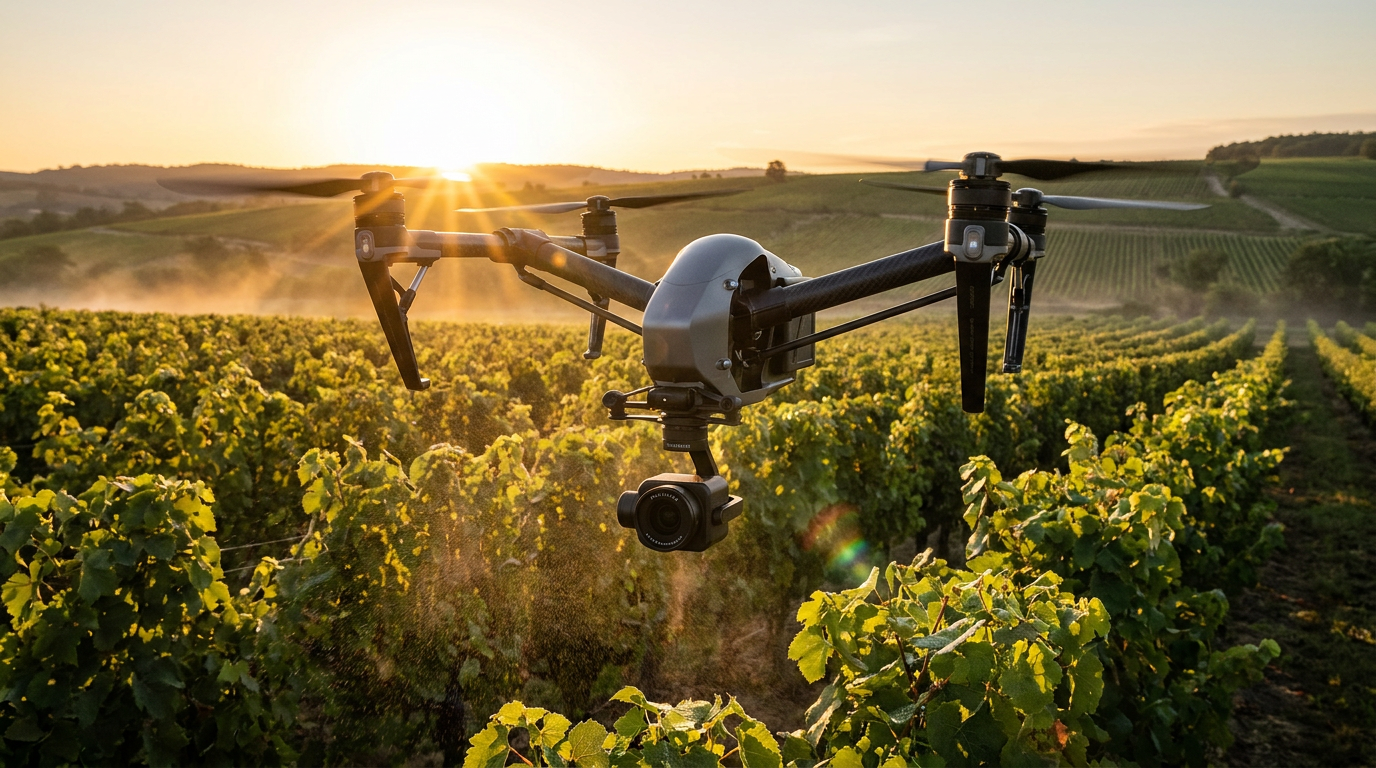
Above the canopy, drones equipped with multispectral and infrared cameras act as an invaluable eye in the sky. These aerial tools capture high-resolution imagery that can detect vine stress, nutrient deficiencies, and disease risk zones long before any physical symptoms become visible to the naked human eye. At pioneering estates like California's Château Montelena, digital vine monitoring systems—adapted from advanced facial recognition software—allow managers to assess vine health and leaf angles directly from their smartphones, correlating the data with sun exposure and water stress.[1][2][7]
Water management has become one of the most critical areas where AI is proving its immense value. With water scarcity becoming a pressing, existential issue in renowned wine regions across California, Spain, and Australia, AI-powered predictive models are stepping in. These systems analyze soil moisture levels, hyper-local weather forecasts, and vine stress indicators to determine exactly where and when to irrigate. Companies specializing in these advanced sensor networks have helped estates achieve remarkable water savings of up to 30%, a crucial metric for the future of sustainable agriculture.[2][4]
Beyond vital water conservation, precision viticulture is significantly reducing the industry's reliance on chemical interventions. In Germany, innovative AI-powered mobile applications have been developed to detect specific vine diseases in their earliest stages, allowing growers to apply highly targeted treatments only where absolutely necessary. This localized, precision approach minimizes the overall use of pesticides and synthetic fertilizers, supporting broader environmental sustainability goals, reducing chemical runoff, and promoting healthier, more resilient soil ecosystems. By moving away from preventative, blanket spraying and toward responsive, data-backed applications, vineyards can protect their crops while maintaining a much lighter ecological footprint.[2][3][4]

Beyond vital water conservation, precision viticulture is significantly reducing the industry's reliance on chemical interventions.
Perhaps the most high-stakes and nerve-wracking decision in the entire winemaking process is harvest timing. Picking grapes even a single day too early or too late can drastically alter the flavor profile, alcohol content, and overall quality of the final vintage. In 2026, AI models are taking much of the anxiety out of this critical window. Algorithms analyze thousands of variables—including real-time sugar development, acidity levels, phenolic maturity, and rapid weather shifts—to recommend the exact optimal harvest window for each specific block of grapes.[1][8]
Once the grapes are harvested and brought into the cellar, the digital revolution continues to guide the process. Fermentation is a highly sensitive, volatile biochemical process, traditionally guided by close human monitoring, frequent sampling, and sensory experience. Today, smart fermenters equipped with internal IoT sensors continuously track temperature, liquid density, pH levels, and volatile compounds in real-time, feeding this data back to a central AI hub. This continuous stream of data provides winemakers with an unprecedented window into the microbial life of their wine, allowing them to monitor the yeast's progress without constantly opening tanks and exposing the juice to oxygen.[7][8]
By comparing current fermentation data with vast historical records of past vintages, AI models can accurately predict how a specific fermentation will progress over the coming days. If the system detects an anomaly—such as a stalled fermentation or an unwanted temperature spike that could produce off-flavors—it can instantly alert the winemaker. In some advanced setups, the system can even suggest or execute automated adjustments to temperature curves to keep the yeast healthy. This level of precise control helps ensure vintage consistency and drastically reduces the risk of costly wine faults.[7][8]
Despite the rapid and highly beneficial adoption of these tools, the integration of artificial intelligence into winemaking is not without its friction. A comprehensive 2025 study of Italian wine professionals found that while 29% were already using AI for operational tasks, logistics, and environmental management, there remains significant skepticism regarding AI's role in the creative process. Many professionals are enthusiastic about using technology to protect crops and optimize supply chains, but they draw a hard line at algorithms attempting to mimic sensory analysis or dictate creative blending decisions.[3]

This hesitation highlights a core philosophy deeply held within the industry: wine is a cultural product and an art form, not just an industrial beverage to be optimized. The ultimate aim of AI in this space is not to replace the instinct, intuition, or refined palate of the master winemaker. Instead, it serves as a powerful, tireless co-pilot, handling the heavy lifting of data analysis and environmental monitoring so that humans can focus on what they do best—sensory perception, artistic judgment, and maintaining a lived, generational connection to the terroir.[2][5][7]
There are also highly practical barriers to the widespread, universal adoption of these technologies. Implementing a comprehensive precision viticulture system requires a significant upfront financial investment in hardware, software subscriptions, and staff training. For large commercial estates and well-funded corporate wineries, the return on investment is clear and often rapid. However, for smaller, family-owned boutique wineries, the initial cost can be prohibitive, creating a potential technological divide within the industry where only the largest players can afford to adapt to climate pressures.[7]
Furthermore, industry experts consistently warn against an over-reliance on automated recommendations. While machine learning algorithms excel at processing large datasets and identifying historical patterns, they cannot fully account for unexpected, hyper-local events or the subtle contextual factors that an experienced vineyard manager might intuitively grasp simply by walking the rows. The most successful and resilient implementations of AI occur when cutting-edge technology is paired with, rather than substituted for, seasoned human oversight. Algorithms may suggest a harvest date based on chemical maturity, but the winemaker must still taste the grapes to ensure the tannins have softened to the desired texture.[7]

The influence of artificial intelligence is also extending far beyond the production side and directly into the consumer experience. AI-powered sommeliers and advanced recommendation engines are fundamentally changing how wine is marketed, discovered, and sold. Digital platforms and mobile apps now analyze individual consumer preferences, historical tasting notes, and broader market trends to provide highly personalized pairing suggestions, effectively taking the intimidation factor out of wine selection for the average buyer. By democratizing wine knowledge, these tools are helping producers connect directly with new demographics who might otherwise feel overwhelmed by traditional wine culture.[5]
Looking ahead, the trajectory is clear. The global market for smart agriculture is projected to exceed $30 billion in 2026, with viticulture playing a significant and highly visible role in that explosive growth. As climate pressures continue to mount globally, the adoption of climate-resilient grape varieties and precision management tools will rapidly transition from being a luxury competitive advantage to an absolute operational necessity. Vineyards that fail to modernize their approach to resource management may find themselves unable to cope with the increasing frequency of extreme weather events and shifting growing seasons.[6][8]
Ultimately, the great wines of the future will be shaped by a careful, deliberate fusion of data and tradition. By embracing smart technologies, vineyards are not abandoning their rich heritage; rather, they are equipping themselves with the precise tools needed to survive and thrive in an increasingly unpredictable world. The result is a more sustainable, efficient, and resilient wine industry—one that honors its past while securing its ability to produce exceptional vintages for generations to come. As long as the final blending decisions remain in human hands, the soul of the wine will endure, supported by a digital framework that ensures every drop is crafted with maximum care and minimal environmental impact.[1][7]
How we got here
Early 2010s
Basic weather stations and rudimentary soil moisture sensors begin appearing in large commercial vineyards.
2019
Drones equipped with multispectral cameras are introduced for commercial canopy analysis, allowing early detection of vine stress.
2023
AI-driven predictive irrigation models gain traction in drought-stricken regions like California and Australia, proving significant water savings.
2025
A comprehensive Italian study reveals nearly a third of wine professionals are actively using AI for environmental management and logistics.
2026
Smart fermenters and AI harvest-prediction algorithms become standard tools for mid-sized and large estates globally.
Viewpoints in depth
Agri-Tech Innovators
Technology developers and data scientists pushing the boundaries of what vineyard sensors and algorithms can achieve.
This camp views the vineyard as a complex, data-rich ecosystem that has historically been undermanaged due to a lack of precise measurement tools. They argue that human intuition, while valuable, is inherently limited by what the eye can see and the palate can taste. By deploying multispectral drones and deep-learning algorithms, innovators believe they can eliminate the guesswork from viticulture, maximizing yields and ensuring consistency regardless of vintage variations.
Traditionalist Vintners
Winemakers who prioritize human sensory perception, heritage, and the unmediated expression of terroir.
Traditionalists are highly skeptical of algorithms encroaching on the 'art' of winemaking. While many are willing to adopt soil sensors or weather-tracking tools for basic crop protection, they draw a hard line at AI dictating harvest times or guiding fermentation and blending. They argue that wine's value lies in its human element—the subtle imperfections and intuitive decisions that give a vintage its unique soul. To this camp, over-reliance on data risks homogenizing wine into a purely industrial product.
Climate-Adaptive Producers
Pragmatic vineyard managers adopting AI primarily as a survival mechanism against extreme weather and resource scarcity.
For this group, the adoption of precision viticulture is less about chasing technological novelty and more about existential survival. Facing prolonged droughts, sudden frosts, and shifting climate zones, these producers use AI to stretch limited water supplies and predict disease outbreaks before they decimate a crop. They view AI as a necessary defensive shield that allows them to maintain historical quality standards in an increasingly hostile and unpredictable environment.
What we don't know
- It remains unclear how quickly smaller, family-owned vineyards will be able to afford and integrate these high-cost AI systems.
- The long-term impact of algorithmic decision-making on the unique, localized expression of terroir is still a subject of intense debate among traditionalists.
- As climate change accelerates, it is unknown if precision viticulture alone will be enough to save certain historically significant but highly vulnerable wine regions.
Key terms
- Precision Viticulture
- A vineyard management approach that uses data, sensors, and technology to optimize vine health, yield, and grape quality on a highly localized level.
- Multispectral Imaging
- Camera technology often mounted on drones that captures light beyond human vision, used to detect plant stress and disease before visible symptoms appear.
- Phenolic Maturity
- The point at which the tannins and flavor compounds in a grape's skin and seeds have fully developed, crucial for determining harvest timing.
- Smart Fermenter
- A fermentation tank equipped with IoT sensors that continuously monitor and transmit real-time data on temperature, density, and pH.
- Internet of Things (IoT)
- A network of interconnected physical devices, such as soil sensors and weather stations, that collect and exchange data in real-time.
Frequently asked
Will artificial intelligence replace human winemakers?
No. Industry experts emphasize that AI is designed to be a co-pilot, handling data analysis and predictive modeling so winemakers can focus on sensory perception and creative decisions.
How does AI help vineyards save water?
AI analyzes real-time soil moisture data, weather forecasts, and vine stress indicators to pinpoint exactly when and where irrigation is needed, reducing water waste by up to 30%.
Can AI actually taste or blend wine?
While there are experimental AI tasting systems, most wine professionals remain highly skeptical of them, preferring to rely on human palates for the nuanced art of blending and sensory analysis.
Is precision viticulture only for massive commercial wineries?
Currently, high upfront costs make it easier for large estates to adopt these tools, but scalable software and mobile apps are increasingly making AI accessible to smaller boutique vineyards.
Sources
Source coverage
8 outlets
3 viewpoints surfaced







[1]ByTheMagClimate-Adaptive Producers
The Rise of Precision Viticulture: How Data, Climate Science, and Technology Are Reinventing Wine in 2026
Read on ByTheMag →[2]International Wine ChallengeClimate-Adaptive Producers
How AI Is Taking Root in Wine
Read on International Wine Challenge →[3]VineturTraditionalist Vintners
Italian Wine Producers Embrace AI for Environmental Management, Study Finds
Read on Vinetur →[4]MDPIAgri-Tech Innovators
Smart Technologies and Artificial Intelligence in Sustainable Viticulture
Read on MDPI →[5]Sommeliers Choice AwardsTraditionalist Vintners
The Future of Wine: How AI Is Transforming Employment in the Wine Industry
Read on Sommeliers Choice Awards →[6]WinedropClimate-Adaptive Producers
Top Wine Trends for 2026 Every Traveler Should Know
Read on Winedrop →[7]Wine Industry NetworkAgri-Tech Innovators
Winemaking AI Technology A Definitive Shift in Modern Wine Production
Read on Wine Industry Network →[8]Wine's Digital RevolutionAgri-Tech Innovators
Wine's Digital Revolution: AI & Smart Tech Solutions for Every Winemaker in 2026
Read on Wine's Digital Revolution →
Every angle. Every day.
Get food drink stories with full source coverage and perspective breakdowns delivered to your inbox.