
Historic Expiration of Section 702 Surveillance Law Marks a Turning Point for Digital Privacy
For the first time since its inception in 2008, the controversial warrantless surveillance authority known as Section 702 is set to expire. The lapse represents a major victory for a bipartisan coalition of privacy advocates pushing to close the loophole used to access Americans' data.
By Factlen Editorial Team
- Privacy Advocates
- Demand a strict warrant requirement to protect Fourth Amendment rights.
- Intelligence Community
- Warn that a lapse creates dangerous blind spots in national security.
- Bipartisan Reformers
- Use the expiration as leverage to force structural oversight changes.
What's not represented
- · Telecommunications companies facing legal liability
- · Foreign nationals subject to the surveillance
Why this matters
The expiration of Section 702 marks a historic turning point for digital privacy, potentially ending the government's ability to search Americans' emails and texts without a warrant. It empowers citizens by forcing a long-delayed congressional reckoning on the balance between national security and fundamental Fourth Amendment rights.
Key points
- Section 702 of FISA is expiring for the first time since its creation in 2008.
- The law allows intelligence agencies to collect foreign communications without a warrant.
- Privacy advocates argue the law is used to improperly search Americans' data.
- A bipartisan coalition blocked the extension to demand a strict warrant requirement.
- Agencies can technically continue operations through March 2027 due to court recertification.
- Telecom companies may resist handing over data without active statutory protection.
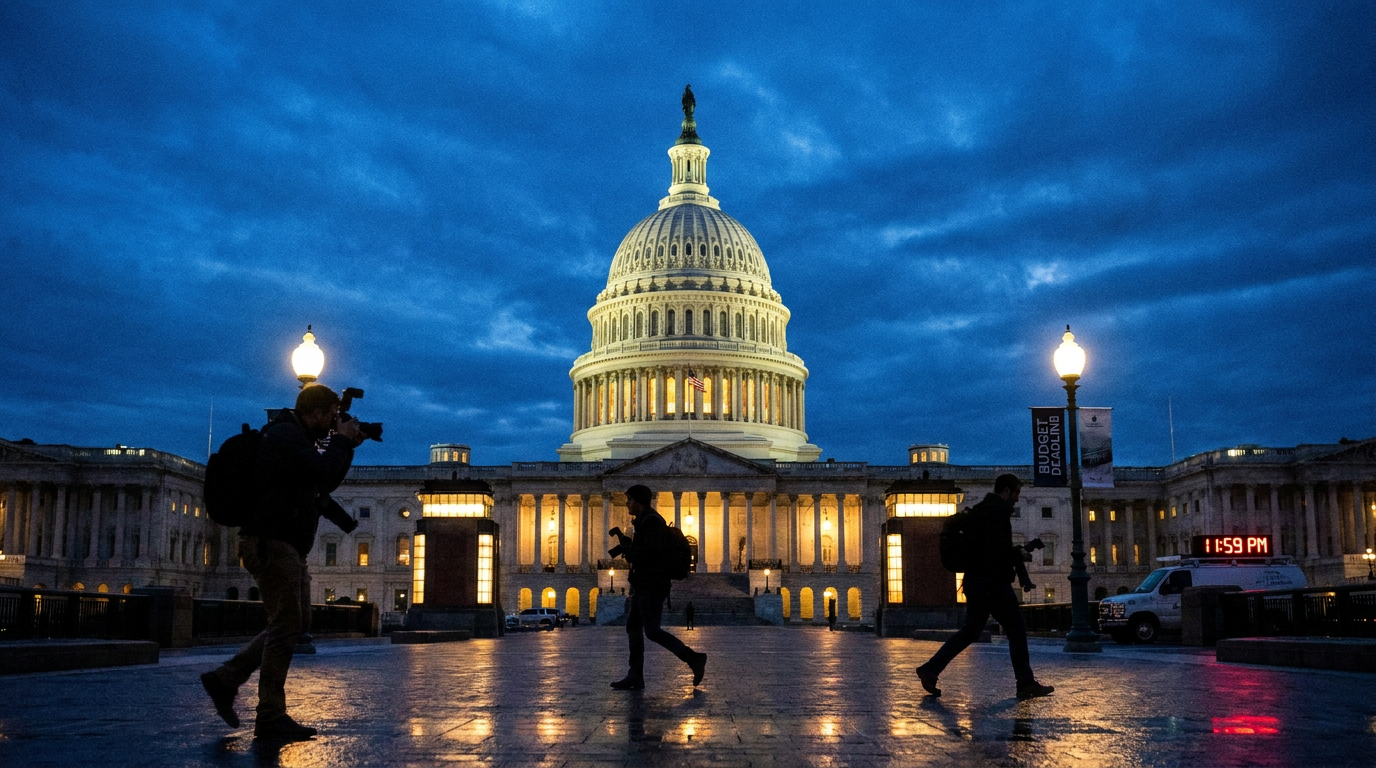
At midnight on Friday, a cornerstone of the United States intelligence-gathering apparatus is set to expire for the first time since its creation in 2008. Section 702 of the Foreign Intelligence Surveillance Act (FISA), a powerful and highly controversial electronic spying tool, will lapse after Congress failed to pass a reauthorization bill. The expiration marks a historic milestone for digital rights advocates, who have spent years fighting to rein in a program they argue operates as an unconstitutional end-run around the Fourth Amendment.[1][2]
The immediate catalyst for the legislative collapse was a fierce partisan gridlock over an executive appointment. The reauthorization process imploded after the administration announced plans to elevate a controversial political loyalist to serve as the acting Director of National Intelligence. The appointment shattered a fragile, previously negotiated bipartisan deal, prompting lawmakers in the House to reject a fast-tracked short-term extension and leave Washington for a planned recess. However, civil liberties experts note that the executive standoff merely ignited a powder keg of underlying, long-simmering frustrations with the surveillance state.[1][3][5]
To understand the magnitude of the expiration, it is necessary to examine how Section 702 functions mechanically. Enacted as an amendment to FISA, the provision grants American spy agencies—including the National Security Agency (NSA) and the Central Intelligence Agency (CIA)—sweeping powers to compel domestic telecommunications companies to hand over the communications of foreign targets located outside the United States. Crucially, the government does not need to obtain an individualized warrant from a judge to initiate this targeted foreign surveillance.[4][6]
The controversy stems from the architecture of modern digital communications. Because the global internet routes traffic across borderless networks, targeting a foreign national inevitably sweeps up the emails, text messages, and phone calls of Americans who happen to be communicating with them. This phenomenon, known as "incidental collection," results in massive databases of intercepted communications that include an untold volume of domestic, constitutionally protected data.[6][7]

Once that data is stored on government servers, domestic law enforcement agencies like the Federal Bureau of Investigation (FBI) can query the databases using the names, email addresses, or phone numbers of United States citizens. Because the data was legally collected under the foreign intelligence mandate, agencies routinely perform these domestic searches without obtaining a warrant. Privacy advocates refer to this practice as the "backdoor search loophole," arguing it allows the government to bypass the judicial oversight required for domestic criminal investigations.[8][9]
The scale of these warrantless searches has repeatedly alarmed oversight groups. Declassified court documents and transparency reports have previously revealed widespread compliance violations, including instances where intelligence databases were improperly used to search for the communications of journalists, political commentators, and civil rights protesters. Recently, a Freedom of Information Act lawsuit filed by the Cato Institute prompted the Department of Justice to identify nearly 40,000 pages of potential noncompliance records generated over a single 14-month period, underscoring the systemic difficulty of policing the database.[6][9]
The scale of these warrantless searches has repeatedly alarmed oversight groups.
Tensions over the law escalated significantly during its last reauthorization in April 2024. At that time, Congress passed a two-year extension that not only preserved the backdoor search loophole but also expanded the definition of an "Electronic Communication Service Provider." The 2024 expansion theoretically allowed the government to compel a much broader range of businesses—potentially anyone with access to basic communications infrastructure like commercial Wi-Fi routers—to assist in surveillance efforts, deeply unsettling privacy watchdogs.[6]

Fast forward to June 2026, and the political landscape has shifted. A unique coalition of progressive Democrats and conservative Republicans finally drew a hard line, refusing to rubber-stamp another clean extension of the authority. Armed with growing public awareness of digital privacy rights, these bipartisan reformers demanded structural changes to the law, insisting that any long-term renewal must include a strict warrant requirement for queries involving United States persons. When leadership attempted to push the extension through without those reforms, the coalition held firm, allowing the clock to run out.[2][5]
The expiration has triggered stark warnings from the intelligence community. National security officials view Section 702 as an indispensable tool that provides critical visibility into international terror networks, state-sponsored espionage, and global ransomware syndicates. Intelligence leaders argue that allowing the statute to lapse creates dangerous blind spots, particularly as the United States prepares to host high-profile international events with elevated security profiles. They maintain that introducing a warrant requirement for database queries would fatally slow down investigations during fast-moving crises.[3]
Despite the dire warnings, the government's surveillance apparatus will not immediately go dark at midnight. The law contains a built-in safety net: Section 702 operates under year-long operational certifications approved by the secretive Foreign Intelligence Surveillance Court (FISC). Because the FISC recertified the program in March 2026, the NSA and other agencies possess the legal authorization to continue their foreign collection programs through March 2027, even without the underlying statutory backing of Congress.[7][8]

However, the statutory expiration introduces severe legal friction into the process. While the government maintains its court-ordered authority, telecommunications and tech companies may become highly reluctant to voluntarily hand over user data without an active law explicitly shielding them from liability. Legal experts anticipate that some service providers will challenge the government's directives in court, forcing a messy and public legal battle over whether a lapsed statute can still compel corporate cooperation.[4][6]
For privacy advocates, the expiration is not a crisis but a long-overdue opportunity for democratic accountability. Organizations like the Electronic Frontier Foundation and the Electronic Privacy Information Center are urging lawmakers to use the lapse as leverage. They argue that the intelligence community's reliance on the March 2027 safety net proves that Congress has ample time to debate and pass comprehensive reforms, rather than rushing through a flawed extension under the threat of an artificial emergency.[7][8]
Ultimately, the expiration of Section 702 forces a public reckoning on the balance between national security and civil liberties. By allowing the law to lapse, Congress has signaled that the era of rubber-stamped mass surveillance may be coming to an end. As negotiations inevitably resume following the legislative recess, the burden now shifts to the intelligence community to prove that it can protect the nation without sacrificing the foundational privacy rights of its citizens.[1][7]
How we got here
2008
Congress enacts Section 702 as an amendment to the Foreign Intelligence Surveillance Act.
April 2024
Congress reauthorizes the law for two years and expands the definition of electronic communication service providers.
March 2026
The Foreign Intelligence Surveillance Court recertifies the program's operational authority through March 2027.
June 2026
A bipartisan coalition blocks a clean extension, allowing the statute to expire for the first time.
Viewpoints in depth
Privacy & Civil Liberties Advocates
Argue the law is an unconstitutional end-run around the Fourth Amendment.
Organizations like the EFF and EPIC view the expiration as a necessary reset. They argue that the 'backdoor search loophole' fundamentally violates the Fourth Amendment by allowing domestic law enforcement to search Americans' communications without a judge's approval. These advocates insist that any future reauthorization must include a strict warrant requirement for queries involving United States persons, dismissing claims that such a requirement would cripple national security.
Intelligence & National Security Officials
View the tool as indispensable for preventing terrorism and cyberattacks.
Leaders within the NSA, CIA, and FBI maintain that Section 702 is the crown jewel of American intelligence gathering. They argue that the agility provided by warrantless queries is critical for connecting the dots during fast-moving crises, such as tracking ransomware syndicates or disrupting terror plots. From their perspective, the statutory expiration creates dangerous legal ambiguities that could cause telecommunications companies to stop cooperating, resulting in severe intelligence blind spots.
Bipartisan Congressional Reformers
A coalition using the expiration as leverage to force structural changes.
A unique alliance of progressive Democrats and conservative Republicans has emerged to challenge the surveillance status quo. Frustrated by years of documented compliance violations and the recent expansion of the law in 2024, these lawmakers refused to pass a clean extension. They view the expiration not as a crisis, but as the only effective mechanism to force the intelligence community to accept meaningful oversight and reforms.
What we don't know
- Whether telecommunications companies will refuse to comply with data requests now that the statute has officially lapsed.
- How long the legislative standoff will last before a compromise bill is introduced.
- Whether the intelligence community will ultimately accept a warrant requirement to secure a long-term reauthorization.
Key terms
- Section 702
- A provision of the Foreign Intelligence Surveillance Act that allows the government to collect communications of targeted foreigners abroad without a warrant.
- Backdoor Search Loophole
- The practice of intelligence agencies searching legally collected foreign intelligence databases for the communications of US citizens without obtaining a warrant.
- Incidental Collection
- The unavoidable gathering of Americans' data when they communicate with a foreign target who is under surveillance.
- FISC
- The Foreign Intelligence Surveillance Court, a specialized federal court that oversees and authorizes government surveillance programs.
Frequently asked
Does the government immediately lose all surveillance capabilities?
No. Because the Foreign Intelligence Surveillance Court recertified the program in March 2026, agencies can technically continue operations through March 2027, though telecom companies may resist compliance.
Why did the law expire now?
A bipartisan coalition of lawmakers refused to pass a clean extension without adding a strict warrant requirement for searching Americans' data, a standoff exacerbated by a controversial executive appointment.
How does this affect my personal data?
If reforms are passed, federal agencies like the FBI would be required to obtain a judge's warrant before searching intelligence databases for your emails, texts, or phone calls.
Sources
Source coverage
9 outlets
3 viewpoints surfaced









[1]TechCrunchBipartisan Reformers
US surveillance law to expire for first time after lawmakers reject Trump’s controversial pick to lead spy agencies
Read on TechCrunch →[2]The GuardianBipartisan Reformers
A powerful US surveillance law is set to expire – what happens now?
Read on The Guardian →[3]AP NewsIntelligence Community
A key US government surveillance program is set to expire. A look at what that means
Read on AP News →[4]ReutersIntelligence Community
What is FISA Section 702, the U.S. surveillance law set to expire June 12?
Read on Reuters →[5]PoliticoBipartisan Reformers
Senate closes in on FISA deal ahead of June 12 deadline
Read on Politico →[6]Brennan Center for JusticePrivacy Advocates
Section 702 of the Foreign Intelligence Surveillance Act, Explained
Read on Brennan Center for Justice →[7]Electronic Privacy Information Center (EPIC)Privacy Advocates
FISA Section 702 Almost Certain to Expire After House Votes Against Extension, EPIC Continues to Urge Reforms
Read on Electronic Privacy Information Center (EPIC) →[8]Electronic Frontier Foundation (EFF)Privacy Advocates
The 702 Ultimatum: Warrant Requirement or Bust
Read on Electronic Frontier Foundation (EFF) →[9]The American ProspectBipartisan Reformers
Pulte or Not, the Surveillance State Won't Stop
Read on The American Prospect →

Every angle. Every day.
Get technology stories with full source coverage and perspective breakdowns delivered to your inbox.