
Global Oil Reserves Drain at Record Pace as U.S. and Iran Weigh Fragile Peace Deal
President Trump announced a tentative peace agreement to end the U.S.-Israeli war against Iran and reopen the Strait of Hormuz, though Tehran denies a final deal is in place. The diplomatic push comes as the global economy faces a historic oil supply shock.
By Factlen Editorial Team
- Global Energy Markets
- Focused on the mathematical reality of the stockpile drain, warning that the buffer is almost gone.
- U.S. Administration
- Emphasizes that a deal is imminent, claiming diplomatic victory and leverage over Iran's oil infrastructure.
- Iranian Leadership
- Denies that a final agreement has been reached, projecting resilience and framing the U.S. pivot as a retreat.
- Affected Economies
- Prioritizes the immediate economic pain, demand destruction, and the urgent need to reopen the Strait of Hormuz.
What's not represented
- · Citizens in Iran facing infrastructure collapse
- · Shipping companies navigating the blockade
Why this matters
The near-total closure of the Strait of Hormuz has forced the world to burn through its emergency oil reserves at an unsustainable pace. If a peace deal is not finalized and shipping lanes remain blocked, the resulting energy shortage is projected to trigger a severe global recession and unprecedented fuel prices.
Key points
- President Trump announced a tentative framework to end the U.S.-Israeli war against Iran, though Tehran denies a final deal is approved.
- The conflict has effectively closed the Strait of Hormuz, forcing the world to drain its emergency oil stockpiles at a record pace of 4.8 million barrels per day.
- Global oil inventories are projected to hit their lowest levels since 2003 by December, stripping the market of its shock absorbers.
- The sustained price shock has caused global oil demand to contract for the first time since the 2020 pandemic, costing U.S. consumers an estimated $37.3 billion.
- Even if a peace treaty is signed immediately, experts warn it will take months to demine waterways and repair damaged energy infrastructure.
After more than three months of a devastating U.S.-Israeli war against Iran that has effectively severed the world's most critical energy artery, the White House abruptly pivoted from military escalation to diplomatic optimism on Thursday. President Donald Trump announced that a framework for a peace agreement had been reached, abruptly canceling a planned wave of U.S. airstrikes. Speaking from the Oval Office, the president claimed that the "final points" of a deal had been approved by all parties and that a formal signing could take place in Europe as early as this weekend.[2][3][8]
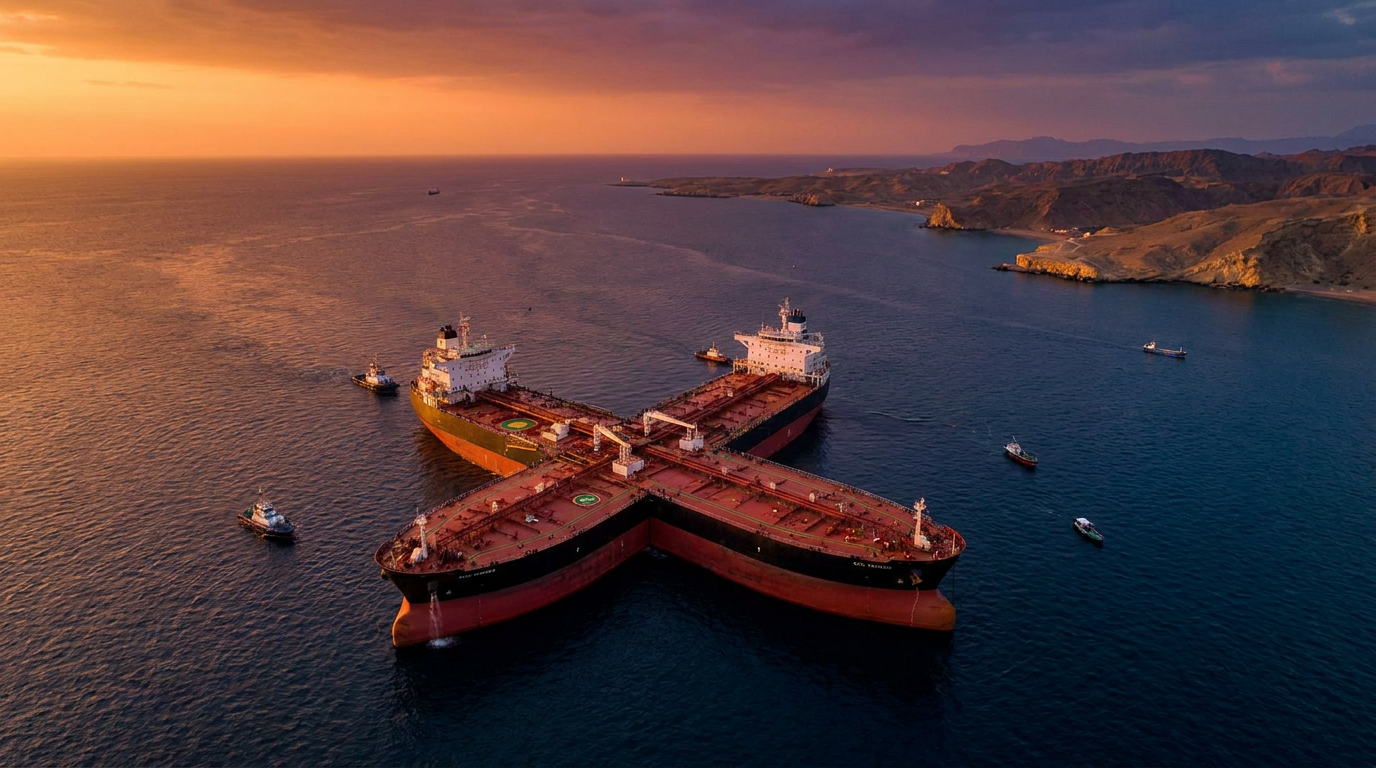
The sudden diplomatic push comes as the global economy buckles under the weight of a historic energy shock. Since the conflict erupted in late February, the near-total closure of the Strait of Hormuz—a maritime chokepoint that normally handles 20% of global oil shipments—has forced the world to drain its emergency petroleum reserves at an unprecedented pace. The amount of crude and refined fuel stored by governments and private industries is collapsing, raising immense pressure on both Washington and Tehran to find an off-ramp before the buffer is entirely exhausted.[1][6]
The sheer scale of the inventory drawdown has alarmed energy analysts and policymakers. According to the U.S. Energy Information Administration (EIA), total oil inventories across the world's largest economies are on track to fall to just under 2.3 billion barrels by December, which would mark the lowest level since the agency began tracking the data in 2003. Market estimates indicate that global stockpiles have been plunging by roughly 4.8 million barrels a day since the war began, far exceeding any previous quarterly drawdown on record.[1][6][7]

The path to Thursday's announcement was marked by extreme geopolitical whiplash. Just hours before declaring a diplomatic breakthrough, the U.S. administration had threatened to launch a severe bombardment against Iranian targets. In a series of statements, President Trump had vowed to seize Kharg Island—the hub that handles roughly 90% of Iran's oil exports—and assume total control of the country's energy infrastructure. The sudden cancellation of those strikes in favor of a negotiated settlement caught global markets off guard, triggering a sharp but cautious rally.[2][3][5]
Despite the optimism radiating from Washington, officials in Tehran quickly moved to temper expectations. Iranian state-affiliated media, including the Fars News Agency, reported that Iran's Supreme Leader had not yet approved any final draft text for a memorandum of understanding. Iranian diplomats characterized the U.S. announcement as a retreat from its earlier military threats rather than a finalized pact, noting that Washington had merely accepted a proposal that Tehran had submitted weeks prior. A spokesperson for Iran's foreign ministry emphasized that until a formal understanding is announced by Tehran, any declarations of a finished deal should be viewed with skepticism.[2][3][4]

Despite the optimism radiating from Washington, officials in Tehran quickly moved to temper expectations.
Financial markets reacted to the conflicting signals with volatile relief. Global benchmark Brent crude, which had been trading well above $90 a barrel and was forecast by some agencies to surge past $105, dropped nearly 2% to settle around $88.80. U.S. West Texas Intermediate (WTI) crude similarly tumbled to a two-month low of $85.13 before paring some of its losses. Traders appear to be betting that the sheer economic attrition of the conflict means both sides ultimately have more to lose from a breakdown in talks than from a compromise.[3][5]
Yet, even with prices cooling slightly on the prospect of peace, the underlying arithmetic of the global oil market remains brutal. International energy monitors warned this week that the loss of supply is depleting global inventories at a record pace, effectively stripping the market of its shock absorbers. Refined products, including diesel and aviation fuel, are draining even faster than raw crude as trapped Gulf exports and refinery output cuts compound the crisis.[1][7]
The sustained price shock is now actively destroying global energy demand. In a rare and alarming reversal, the EIA recently revised its 2026 forecasts, predicting that global oil demand will actually shrink this year by 1.1 million barrels per day. This marks the first outright contraction in global consumption since the pandemic-induced economic collapse of 2020. Just months prior to the war, the agency had forecast robust demand growth.[6]

The economic toll on consumers has been staggering. Academic trackers estimate that American consumers alone have paid more than $37.3 billion in additional energy costs since the war began on February 28. Gasoline prices in the U.S. have surged past $4.50 per gallon, heavily impacting household budgets, transportation logistics, and the broader supply chain.[1][6]
The crisis has hit the Asia-Pacific region with particular severity. Countries heavily reliant on Middle Eastern crude, such as Japan and India, have seen their stockpiles plummet to decadal lows. In response, Tokyo recently authorized the release of 80 million barrels from its strategic reserves—the largest emergency drawdown in the nation's history—while broader international coalitions have coordinated massive releases to keep the global economy afloat.[7]

Even if a peace agreement is formally signed this weekend, energy experts warn that a return to normal market conditions is months away. The proposed deal reportedly includes a 60-day timeline for demining the Strait of Hormuz, during which a U.S. naval blockade would remain partially in place to oversee the transition.[2][5]
Furthermore, the physical damage to the region's energy infrastructure cannot be undone overnight. Shut-in oil fields will require weeks to safely restart, and the extensive damage inflicted by drone and missile strikes on refineries and export terminals must be repaired before full capacity is restored. Until those flows fully resume, the world will continue to burn through its dwindling reserves, leaving the global economy highly vulnerable to any further disruptions.[1][5][6]
How we got here
Feb 28, 2026
The U.S. and Israel launch surprise airstrikes against Iranian targets, sparking the broader conflict.
March 2026
The Strait of Hormuz is effectively closed to commercial shipping, triggering a massive global supply shock.
April 2026
Global oil stockpiles begin draining at a record pace of 4.8 million barrels per day to cover the shortfall.
June 11, 2026
President Trump threatens to seize Iran's Kharg Island oil terminal and launch a new wave of strikes.
June 12, 2026
Trump abruptly cancels the strikes, announcing that a framework peace agreement has been reached, though Iran denies a final deal.
Viewpoints in depth
The U.S. Administration's view
Washington frames the potential deal as a diplomatic victory achieved through maximum military and economic pressure.
The White House argues that its willingness to strike critical Iranian infrastructure—including the explicit threat to seize Kharg Island—forced Tehran to the negotiating table. By canceling the latest round of strikes at the eleventh hour, the administration is attempting to project both strength and magnanimity, claiming that the core U.S. objectives of securing the Strait of Hormuz and degrading Iran's offensive capabilities have been met.
Tehran's view
Iranian officials project resilience, framing the U.S. pivot to diplomacy as a retreat from an unwinnable regional war.
Iranian state media and diplomats are actively downplaying the U.S. narrative, insisting that no final concessions have been made and that the Supreme Leader retains ultimate veto power. Tehran views the severe global economic pain caused by the Strait of Hormuz closure as its primary leverage, believing that Washington's sudden eagerness for a deal stems from domestic political pressure over skyrocketing gas prices rather than military dominance.
Energy Markets' view
Traders and analysts remain highly skeptical, focusing on the mathematical reality of depleted reserves rather than political rhetoric.
For the energy sector, the political maneuvering is secondary to the physical lack of oil. Analysts point out that even if a treaty is signed tomorrow, the logistical hurdles of demining waterways and repairing bombed refineries mean the supply deficit will persist for months. With global inventories approaching 20-year lows, the market views the situation as a ticking clock where any breakdown in the fragile ceasefire could trigger a catastrophic price spike.
What we don't know
- Whether Iran's Supreme Leader will ultimately approve the draft text of the peace agreement.
- Exactly how long it will take to clear naval mines from the Strait of Hormuz and restore safe commercial shipping lanes.
- The full extent of the physical damage to Iran's Kharg Island export terminal and other regional energy infrastructure.
Key terms
- Strait of Hormuz
- A narrow maritime chokepoint between the Persian Gulf and the Gulf of Oman through which roughly 20% of the world's oil supply passes.
- Strategic Petroleum Reserve (SPR)
- An emergency stockpile of petroleum maintained by governments to mitigate severe supply disruptions.
- Brent Crude
- A major global benchmark for crude oil prices, originally sourced from the North Sea.
- Demand Destruction
- A permanent or long-term downward shift in the demand for a commodity, typically caused by a sustained period of high prices.
- Kharg Island
- Iran's primary oil export terminal, located in the Persian Gulf, which handles the vast majority of the country's crude shipments.
Frequently asked
Why are global oil reserves draining so fast?
The U.S.-Israeli war against Iran has effectively closed the Strait of Hormuz, blocking 20% of global oil shipments and forcing countries to rely on emergency stockpiles to meet daily demand.
Is a peace deal officially signed?
Not yet. President Trump announced a framework agreement is close, but Iranian officials state that their Supreme Leader has not approved a final text.
How long will it take for oil prices to drop if a deal is reached?
Experts warn it will take months. Demining the Strait of Hormuz and repairing damaged oil infrastructure will delay the full resumption of normal energy flows.
How is this affecting the global economy?
The price shock has caused global oil demand to shrink for the first time since 2020, costing American consumers tens of billions of dollars and forcing Asian nations to tap emergency reserves.
Sources
Source coverage
8 outlets
4 viewpoints surfaced








[1]The New York TimesGlobal Energy Markets
The World Is Draining Oil Reserves, Raising Pressure for a Peace Deal
Read on The New York Times →[2]The GuardianAffected Economies
Donald Trump claims peace deal with Iran is close after cancelling strikes
Read on The Guardian →[3]CNBCU.S. Administration
Oil prices fall on hopes of U.S.-Iran deal despite Tehran pushback
Read on CNBC →[4]Fars News AgencyIranian Leadership
Tehran has not approved draft text for initial memorandum with Washington
Read on Fars News Agency →[5]The Straits TimesGlobal Energy Markets
Oil prices drop to 2-month low as Trump says deal with Iran is close
Read on The Straits Times →[6]U.S. Energy Information AdministrationGlobal Energy Markets
Short-Term Energy Outlook: Global oil stockpiles collapsing toward lowest levels in two decades
Read on U.S. Energy Information Administration →[7]Global NewsAffected Economies
Global oil supply 'rapidly shrinking' as Iran war drags on
Read on Global News →[8]Fox NewsU.S. Administration
Trump cancels Iran strikes, says peace deal to reopen Strait of Hormuz is close
Read on Fox News →

Every angle. Every day.
Get news politics stories with full source coverage and perspective breakdowns delivered to your inbox.