
Global Motorsport Injury Report: Viñales, Norris, and Jones Cleared for Mid-Summer Returns
Several top-tier competitors across Formula 1, MotoGP, and NASCAR have been medically cleared to return to racing following severe crashes. The wave of successful recoveries highlights major advancements in motorsport safety and trackside medical care.
By Ryder James

- Drivers and Riders
- Focuses on physical rehabilitation, pain tolerance, and the psychological drive to get back into the cockpit as quickly as possible.
- Medical and Safety Officials
- Emphasizes strict clearance protocols, concussion checks, and structural safety improvements that allow drivers to survive massive impacts.
- Team Management
- Prioritizes the long-term health of their athletes while managing backup drivers and championship standings during the recovery period.
Perspectives this story doesn't cover
- Trackside medical staff who perform the initial extractions and evaluations
- Safety engineers who design the energy-absorbing barriers at circuits
The grueling mid-summer stretch of the global motorsport calendar is notorious for testing the physical limits of drivers and riders, but the latest medical updates bring a welcome wave of positive news. Across Formula 1, MotoGP, and NASCAR, several top-tier competitors have been officially cleared to return to action this weekend. Overcoming severe impacts, fractured bones, and complex surgeries, these athletes are stepping back into the cockpit, reshaping their respective championship battles.
In the Formula 1 paddock, the collective breath of the grid was held when McLaren's Lando Norris suffered a violent, high-speed crash during a wet qualifying session at the Belgian Grand Prix. Norris lost control of his car at the treacherous Eau Rouge and Raidillon complex, spinning multiple times across the track and making heavy contact with the tire barriers.
Following the impact, Norris was immediately transported to a local hospital for precautionary X-rays on his elbow and a thorough concussion evaluation. Despite the sheer violence of the crash, the FIA medical delegate and trackside doctors officially cleared the British driver to compete in Sunday's race, with Norris reporting that he felt only minor bruising.
The McLaren driver is not the only F1 star bouncing back from a massive hit. Williams Racing's Franco Colapinto has also been medically cleared to race following a staggering 50g qualifying crash. After tagging the inside wall and being pitched heavily into the outside barriers, Colapinto underwent a thorough follow-up evaluation from the event medical team, who confirmed he was healthy enough to take the starting grid.
On two wheels, the MotoGP paddock is celebrating the return of Maverick Viñales ahead of the Catalan Grand Prix. The Red Bull KTM Tech3 rider has been battling a persistent shoulder injury that was severely aggravated by a high-speed crash during testing at Sepang earlier this year. The lingering pain forced him to sit out recent rounds in Jerez and Le Mans.
On two wheels, the MotoGP paddock is celebrating the return of Maverick Viñales ahead of the Catalan Grand Prix.
To resolve the issue, Viñales underwent a specialized surgical procedure to remove a loose screw from a previous operation, a necessary step to restore his full range of motion. Following a rigorous rehabilitation program, doctors have given him the green light to race at the Circuit de Barcelona-Catalunya, allowing him to compete in front of his home crowd.
Across the Atlantic, the NASCAR Cup Series is welcoming back veteran Erik Jones to the No. 43 Legacy Motor Club Toyota. Jones sustained a compression fracture in a lower vertebra following a vicious multi-car wreck at Talladega Superspeedway. The injury forced him to miss consecutive races while he waited for the bone to stabilize and harden.
Rather than rushing his recovery, Jones used his time on the sidelines to collaborate with his team on critical cockpit safety enhancements. "It's the first time in eight years I've really moved a lot of different things in the car, in how I'm sitting and how I'm positioned there," Jones explained, noting that he adjusted his seat and belt angles to better protect his spine.
The NASCAR garage also received a positive update from Joe Gibbs Racing's Christopher Bell, who is taking a major step in his recovery from a fractured wrist. After slamming his hand into the steering wheel during a crash last month, Bell has been medically cleared to compete and is transitioning from a rigid cast to a more flexible splint, hoping to regain full mobility in the cockpit shortly.[2]
Meanwhile, in the developmental ranks, rising Trackhouse Racing prospect Connor Zilisch provided an uplifting update following a scary paddock fall that resulted in a broken collarbone. Originally feared to be a long-term setback, Zilisch is already back on his feet and consulting with specialists, drawing inspiration from fellow drivers who have successfully raced with plated collarbones just weeks after surgery.[1]
These successful recoveries underscore a broader, highly encouraging trend in global motorsport: the rapid advancement of both vehicular safety structures and trackside medical care. Whether it is the rigid carbon-fiber tubs in open-wheel racing, the reinforced roll cages in stock cars, or the airbag-equipped leathers in MotoGP, competitors are surviving impacts that would have been devastating a decade ago.
As the summer racing schedule heats up, the return of these key figures injects renewed energy into their respective garages. For fans and teams alike, seeing Norris, Viñales, Jones, and Bell back on the grid is a powerful reminder of the physical resilience and unwavering psychological drive required to compete at the absolute pinnacle of motorsport.[2]
Key points
- Lando Norris and Franco Colapinto have been cleared to race in Formula 1 following high-G qualifying crashes.
- MotoGP rider Maverick Viñales returns to the grid after undergoing successful surgery on his shoulder.
- NASCAR veteran Erik Jones is back in the No. 43 car after recovering from a compression fracture in his back.
- Christopher Bell is transitioning from a cast to a splint as his fractured wrist continues to heal.
- The wave of quick recoveries highlights the immense effectiveness of modern motorsport safety engineering.
How we got here
Early 2026
Maverick Viñales aggravates a lingering shoulder injury during a high-speed MotoGP testing crash at Sepang.
April 2026
Erik Jones suffers a compression fracture in his lower back during a multi-car wreck at Talladega Superspeedway.
June 2026
Lando Norris walks away from a massive qualifying crash at the Belgian Grand Prix, requiring precautionary hospital checks.
July 2026
Medical officials officially clear Norris, Viñales, and Jones to return to their respective starting grids.
Sources
Source coverage
2 outlets
3 viewpoints surfaced


- [1]NASCAR.comDrivers and Riders
Connor Zilisch provides positive update following collarbone injury
Read on NASCAR.com → - [2]The ExpressMedical and Safety Officials
Christopher Bell shares positive injury update ahead of NASCAR return
Read on The Express →
Comments
More in Sports
See all →Managerial Shift
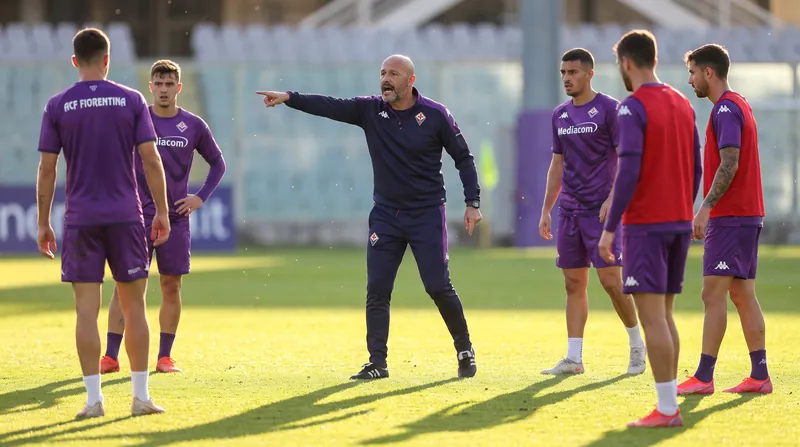
Fiorentina Re-Hire Paolo Vanoli as Head Coach After Sacking Fabio Grosso Three Matches Into Season
6 sources
Revenue Distribution
The €853 Million 'Value Pillar': How UEFA's New Champions League Revenue Engine Actually Works
7 sources

Mount Mizhirgi
Avalanche Kills 11 Climbers and Leaves Six Missing on Russia's Mount Mizhirgi
6 sources

WSL Rules
Crystal Palace Faces Points Deduction After Using Four Substitution Windows in WSL Opener Win
6 sources
Every angle. Every day.
Get Sports stories with full source coverage and perspective breakdowns delivered to your inbox.