
Global Handball Injury Desk: Arnoldsen’s Triumphant Return Inspires as Jørgensen and Blohm Hit Crucial Summer Rehab Milestones
Danish centre back Thomas Arnoldsen's rapid recovery from a fractured tibia is providing a blueprint of hope for stars like Lukas Jørgensen and Linn Blohm as they navigate the grueling six-month mark of their ACL rehabilitations.

- Sports Medicine Professionals
- Advocate for objective biomechanical testing and conservative timelines to prevent the high rate of re-injury.
- Players and Federations
- Focus on the mental resilience required during rehab and the intense drive to return for major international tournaments.
- Club Management
- Must balance the immediate need for their star players' return with the long-term investment in their health.
Perspectives this story doesn't cover
- Youth players navigating early-career injuries without elite medical resources
Key points
- Danish star Thomas Arnoldsen successfully returned from a November 2025 tibia fracture to help Denmark win EHF EURO 2026.
- Lukas Jørgensen is currently six months into rehab after tearing his ACL during the European Championship in January.
- Swedish pivot Linn Blohm is navigating a similar 9-to-12-month recovery following an ACL tear in her first training session of the year.
- Recent sports medicine data shows a 35.3% re-injury rate for elite handball players returning from ACL reconstruction, prompting more conservative recovery protocols.
- 12 weeks
- Arnoldsen's initial tibia fracture prognosis
- 9-12 months
- Standard ACL recovery timeline
- 35.3%
- ACL re-injury rate within 24 months of return
The summer of 2026 brings a wave of optimism to the global handball medical desk. While the grueling 2025/26 season exacted a heavy toll on the sport's elite—headlined by devastating anterior cruciate ligament (ACL) tears to international stars Lukas Jørgensen and Linn Blohm—the narrative heading into the new season has firmly shifted from despair to resilience. Across Europe, top-tier medical staffs are deploying advanced rehabilitation protocols, turning catastrophic setbacks into calculated comeback campaigns.
The ultimate blueprint for a successful recovery has been set by Danish prodigy Thomas Arnoldsen. In November 2025, the Aalborg Håndbold centre back suffered a fractured tibia during a Champions League clash against Industria Kielce. The injury, which occurred when Arnoldsen landed awkwardly after a shot, initially carried a prognosis of up to 12 weeks on the sidelines, seemingly ruling him out of the upcoming EHF EURO 2026.
However, Arnoldsen defied the medical odds. Avoiding surgery for the stable fracture, he engaged in an aggressive but carefully monitored rehabilitation program. His recovery progressed so rapidly that he was called up to the Danish national team midway through the European Championship main round. Providing crucial assists and goals, Arnoldsen helped Denmark secure the gold medal, proving that a major mid-season injury does not have to be a death knell for a player's campaign.
Arnoldsen’s triumphant return is now serving as a beacon of hope for players currently in the trenches of long-term rehab. Among those drawing inspiration is his national teammate, Lukas Jørgensen. The SG Flensburg-Handewitt line player suffered a torn ACL late in Denmark’s preliminary round match against Romania in January.[1]
Now six months post-operation, Jørgensen is navigating the most notoriously difficult phase of ACL recovery—transitioning from basic mobility work to sport-specific loading. Following the injury, the Danish Handball Federation immediately confirmed his season-ending status, allowing Flensburg’s medical staff to implement a conservative, long-term rehabilitation strategy aimed at a late-2026 return.
On the women's side, Swedish icon Linn Blohm is facing a remarkably similar timeline. The 33-year-old pivot suffered her own ACL tear during her very first training session of 2026, abruptly halting her campaign with Ferencvárosi TC. Blohm, who boasts nearly 200 international caps, immediately underwent surgery and began the arduous 9-to-12-month recovery process.[2]
On the women's side, Swedish icon Linn Blohm is facing a remarkably similar timeline.
Blohm has been transparent about the grueling nature of the process, publicly acknowledging the mental toll of the injury and noting the inevitable emotional swings of rehabilitation. As she hits the crucial summer milestone, her focus has shifted to building the neuromuscular strength required to return to the elite level, vowing to come back stronger.[2]
The caution exercised by the medical staffs handling Jørgensen and Blohm is heavily backed by recent sports medicine data. A May 2026 study published in the Journal of Human Sport and Exercise highlighted the persistent neuromuscular deficits elite handball players face even after being cleared to return to play.
The study, which tracked players for 24 months post-ACL reconstruction, revealed a concerning 35.3% re-injury rate. Researchers linked these secondary injuries to incomplete strength recovery and persistent asymmetries in the hamstrings and quadriceps, noting that athletes often return to high-level competition despite incomplete neuromuscular recovery.
This data has prompted top-tier clubs to prioritize objective biomechanical testing over arbitrary calendar timelines, ensuring players are fully shielded before stepping back onto the court. As the 2026/27 season approaches, the global handball community is watching these recoveries closely. Arnoldsen has proven that returning to peak performance is possible, setting the stage for Jørgensen and Blohm to script their own comeback stories in the months to come.
Sources
Source coverage
2 outlets
3 viewpoints surfaced


- [1]Handball PlanetClub Management
Lukas Jorgensen seriously injured
Read on Handball Planet → - [2]Sweden HeraldPlayers and Federations
The nightmare: Swedish star Linn Blohm has torn her cruciate ligament
Read on Sweden Herald →
Comments
More in Sports
See all →Bundesliga History
FC Augsburg Claims First-Ever Bundesliga Top Spot Following 4-1 Comeback Victory Over Eintracht Frankfurt
5 sources
Tactical Evolution
The Tactical Schism: Quantifying the Trade-Offs Between Inverted and Overlapping Fullbacks
6 sources
Football Finance
How the Premier League's Broadcast Revenue Algorithm Distributes £2.8 Billion Annually
5 sources
Managerial Shift
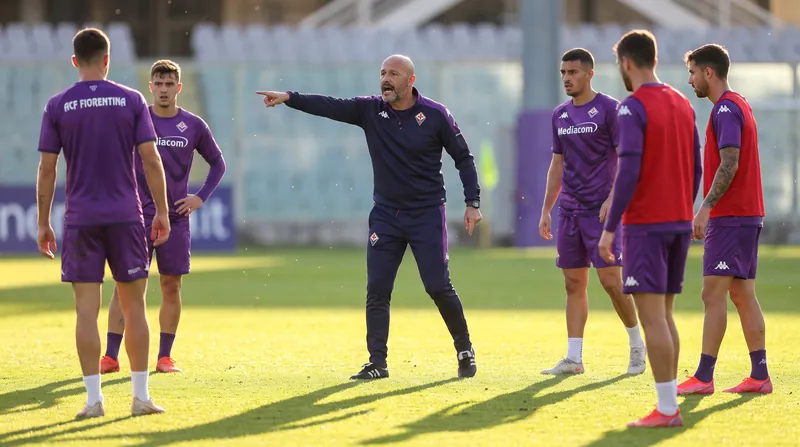
Fiorentina Re-Hire Paolo Vanoli as Head Coach After Sacking Fabio Grosso Three Matches Into Season
6 sources
Every angle. Every day.
Get Sports stories with full source coverage and perspective breakdowns delivered to your inbox.