
Global Figure Skating Power Rankings: Who Rules the Ice Heading into the 2026-2027 Season
Following a dramatic Milano-Cortina Olympics and a record-breaking World Championship, a new generation of stars is driving figure skating's biggest mainstream resurgence in decades.
Share this story
The 2025-2026 figure skating season was a whirlwind of historic firsts, Olympic heartbreak, and ultimate redemption. As the dust settles from the Milano-Cortina Winter Games and the World Championships in Prague, the global hierarchy has been violently reshuffled. With the International Skating Union (ISU) finalizing the 2026-2027 Grand Prix calendar, the sport is riding a wave of mainstream popularity not seen since the late 1990s.
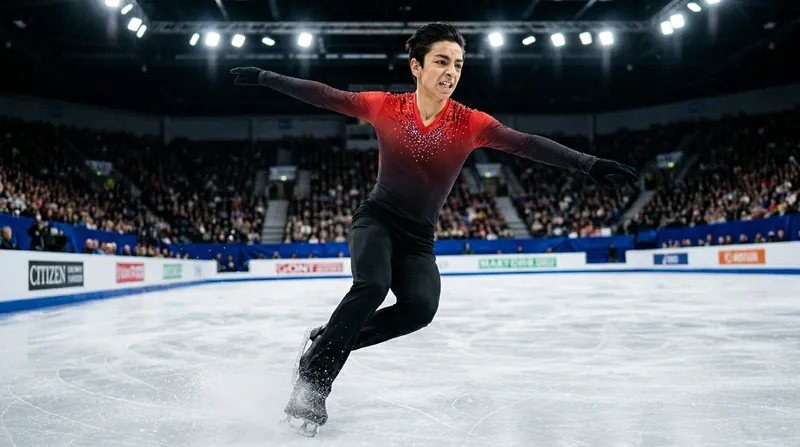
At the absolute pinnacle of the men's power rankings sits American phenom Ilia Malinin. The self-proclaimed "Quad God" retains his status as the sport's ultimate weapon, despite a shocking eighth-place finish in the Olympic individual event. Malinin's technical ceiling is simply unreachable for the rest of the field; he remains the only skater to land a quadruple axel in competition and has successfully executed an unprecedented seven quads in a single free skate.
Malinin's response to his Olympic stumble cemented his number-one status. Just weeks after Milano-Cortina, he arrived at the World Championships in Prague and delivered a breathtakingly flawless short program. Earning massive grades of execution on his quad flip and triple axel, he posted a personal-best score of 111.29 points, securing his third consecutive world title and proving that when he skates clean, he is mathematically unbeatable.[1]
In the women's field, Alysa Liu occupies the top spot in both the ISU Season's World Ranking and the cultural zeitgeist. Liu captured double gold in Milan, winning both the team and individual events, and has become the face of figure skating's commercial renaissance. Her combination of elite technical content and magnetic star quality has driven post-Olympic tour attendance to record highs.[2]
Liu's crossover appeal is unprecedented in the modern era. She recently became the only figure skater signed to a major Nike sponsorship, joining a corporate portfolio for the sport that now includes Coca-Cola and Google. Analysts note that Liu's ability to thrill casual audiences without sacrificing the rigorous technical base required by the judges makes her the most valuable skater in the world right now.[2]
Hot on Liu's heels in the power rankings is Japan's Kaori Sakamoto, the ultimate standard-bearer for pure skating skills. While Liu claimed the Olympic crown, Sakamoto answered back by winning the 2026 World Championship in Prague. Sakamoto's enduring brilliance lies in her unmatched speed, deep edges, and a towering double axel that covers more ice than most skaters' quadruple jumps.
Sakamoto represents the purist ideal of figure skating. In an era dominated by the pursuit of quadruple jumps, her ability to win world titles through pristine execution and mature, powerful choreography proves that artistry and foundational technique still hold immense weight on the judges' scorecards. She currently sits at a massive 2,518 ISU ranking points, keeping her firmly in the elite tier.
The biggest disruptor in the men's rankings is Kazakhstan's Mikhail Shaidorov, who rocketed up the board after winning a historic Olympic gold in Milan. When the immense pressure of the Games caused favorites to falter, Shaidorov delivered the performance of his life. His ability to peak at exactly the right moment makes him the ultimate wildcard heading into the fall Grand Prix circuit.[1]
Meanwhile, Japan's Kagiyama Yuma remains the model of elite consistency, holding the number three spot in the men's form guide. Kagiyama captured his fourth Olympic silver medal across two Games in Milan, combining soft knees, effortless jump landings, and sophisticated musicality. While he may lack Malinin's raw base value, Kagiyama's pristine execution means he is always in position to win if the leaders make a single mistake.[3]
In the Pairs discipline, Germany's Minerva Fabienne Hase and Nikita Volodin have established themselves as the undisputed team to beat. After posting a personal-best 80.01 in their Olympic short program and taking bronze in Milan, the duo surged to capture the 2026 World Championship title. Their seamless unison and ambitious throw jumps have set a new benchmark for the discipline.
The Ice Dance rankings are currently ruled by the French duo of Laurence Fournier Beaudry and Guillaume Cizeron, who delivered an exceptional comeback campaign. They swept the season's major titles, taking gold at both the Milano-Cortina Olympics and the World Championships in Prague. Their refined skating skills and innovative choreography have redefined the boundaries of ice dance.
As the skating world looks toward the opening of the 2026-2027 Grand Prix series in Angers, France, this October, the stakes have never been higher. The sport is faster, more technical, and more commercially viable than it has been in a generation. For the athletes at the top of these power rankings, the challenge is no longer just reaching the summit—it is staying there while the rest of the world attempts the impossible to catch them.
The essentials
- Ilia Malinin retains the top spot in the men's power rankings after rebounding from an Olympic stumble to win the 2026 World Championship.
- Alysa Liu leads the women's field, leveraging her double Olympic gold into major corporate sponsorships and unprecedented mainstream appeal.
- Japan's Kaori Sakamoto and Kagiyama Yuma remain elite contenders by championing pristine skating skills and consistency over raw jump difficulty.
- Germany's Minerva Fabienne Hase and Nikita Volodin have established themselves as the top pairs team after winning the World title in Prague.
- The 2026-2027 ISU Grand Prix season will kick off in October, riding a wave of record-breaking live attendance for the sport.
Timeline
Feb 2026
The Milano-Cortina Winter Olympics reshuffle the global hierarchy, with Alysa Liu and Mikhail Shaidorov claiming individual gold.
Mar 2026
Ilia Malinin and Kaori Sakamoto capture titles at the ISU World Figure Skating Championships in Prague.
Apr 2026
The ISU announces the 2026-2027 Grand Prix calendar, setting the stage for the upcoming season.
Jun 2026
Post-Olympic tours like Stars on Ice report record-breaking attendance, signaling a commercial boom for the sport.
- Technical Revolutionaries
- Argue that the sport's future relies on pushing physical boundaries and maximizing base value through unprecedented jumps.
- Artistry & Skating Skills Purists
- Believe that speed, deep edges, and flawless execution should outweigh raw jump difficulty in the judging system.
- Mainstream Market Makers
- Focus on the commercial resurgence of the sport, valuing athletes who combine elite skills with the star power needed to draw corporate sponsorships.
Perspectives this story doesn't cover
- Grassroots coaching communities
- Small-federation athletes struggling for funding
Sources
Source coverage
3 outlets
3 viewpoints surfaced



- [1]Olympics.comTechnical Revolutionaries
ISU World Figure Skating Championships 2026: Ilia Malinin earns new personal best in short program at Worlds
Read on Olympics.com → - [2]MarketplaceMainstream Market Makers
Figure skating is having its biggest moment in decades. Will it last?
Read on Marketplace → - [3]The Japan TimesArtistry & Skating Skills Purists
Winter Olympics 2026: Kagiyama Yuma, Sato Shun win men's singles silver and bronze for Japan
Read on The Japan Times →
More in Sports
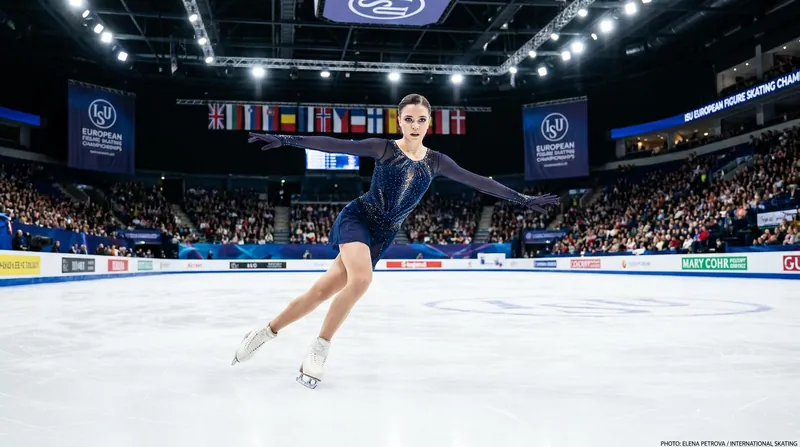
See all →Standings
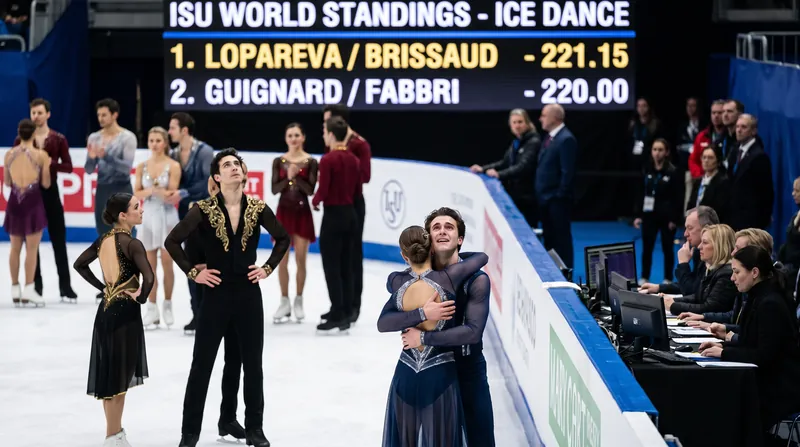
The Post-Hendrickx Era: Pinzarrone, Repond, and Petrõkina Race for Europe's Top Spot in the ISU World Standings
2 sources
Standings
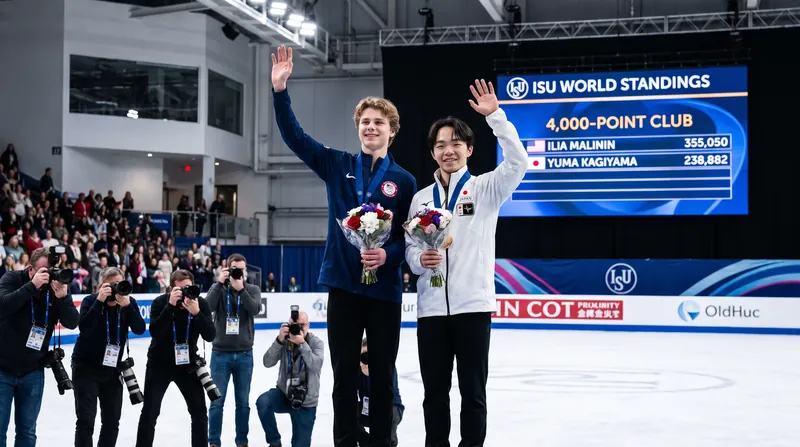
The 4,000-Point Club: Ilia Malinin and Yuma Kagiyama Separate Themselves Atop the ISU Men's World Standings
3 sources
Standings
The Race for Representation: Emerging Federations Surge in the ISU World Standings
4 sources
Injury
Figure Skating Injury Report: Levito and Siao Him Fa Cleared for Action as Miura Conquers Thigh Setbacks
4 sources
Comments
Every angle. Every day.
Get Sports stories with full source coverage and perspective breakdowns, free every day.