
Global Carbon Budget for 1.5°C Will Be Exhausted in Three Years, Major Scientific Report Warns
A comprehensive international climate assessment reveals that human-induced warming reached 1.37°C in 2025, leaving only a three-year carbon budget to prevent surpassing the 1.5°C threshold. The findings arrive as diplomats gather in Bonn for critical UN climate negotiations ahead of COP31.
By Factlen Editorial Team
- Climate Scientists & Researchers
- Researchers emphasize the physical reality of the shrinking carbon budget and the need for immediate, massive decarbonization.
- UN Negotiators & Diplomats
- Diplomats focus on maintaining multilateral momentum, translating targets into national policies, and securing climate finance.
- Economic Pragmatists
- Analysts highlight the challenges of balancing rapid decarbonization with energy security, inflation, and geopolitical stability.
- Local & Regional Governments
- Municipal leaders argue that national pledges are insufficient without empowering cities to implement resilience strategies.
What's not represented
- · Fossil fuel industry representatives facing pressure to accelerate transition plans.
- · Vulnerable frontline communities in the Global South already experiencing the impacts of 1.37°C warming.
Why this matters
The exhaustion of the 1.5°C carbon budget represents a critical tipping point in global climate policy, shifting the reality from prevention to damage control. For policymakers, businesses, and citizens, this accelerates the timeline for extreme weather adaptations, supply chain disruptions, and the economic costs of transitioning away from fossil fuels.
Key points
- Human-induced global warming reached 1.37°C above pre-industrial levels in 2025.
- The remaining carbon budget to stay below 1.5°C has shrunk to 130 gigatonnes.
- At current emission rates, this budget will be completely exhausted by 2029.
- UN diplomats are currently meeting in Bonn to prepare policy frameworks for COP31.
The world has approximately three years left before it exhausts the carbon budget required to keep global warming below the 1.5°C threshold, according to a major international scientific assessment published Thursday.[1][5]
The latest Indicators of Global Climate Change (IGCC) report, authored by over 70 scientists and published in the journal Earth System Science Data, reveals that human-induced warming reached 1.37°C above pre-industrial levels in 2025.[5][6]
The remaining carbon budget—the total amount of carbon dioxide humanity can still emit while maintaining a 50% chance of limiting warming to 1.5°C—has shrunk to just 130 gigatonnes.[1][2]
With global greenhouse gas emissions hitting a record 56.8 billion tonnes of CO2 equivalent annually, researchers warn that this budget will be entirely depleted by 2029 if current trends hold, effectively closing the window on the Paris Agreement's most ambitious goal.[3][6]

"A key indicator is the Earth's energy imbalance, which measures how fast heat is accumulating in the climate system," noted Professor Piers Forster, director of the Priestley Centre for Climate Futures at the University of Leeds and lead author of the study.[5]
This energy imbalance has more than doubled since the 1970s and is now at a record high, driving accelerated sea-level rise and intensifying marine heatwaves that threaten global food production and coastal security.[2][5]
Paradoxically, recent successes in combating global air pollution are contributing to the accelerated warming. Declines in sulfur dioxide emissions—which historically had a cooling effect by reflecting sunlight away from the Earth—are unmasking the full warming potential of accumulated greenhouse gases.[6]

Paradoxically, recent successes in combating global air pollution are contributing to the accelerated warming.
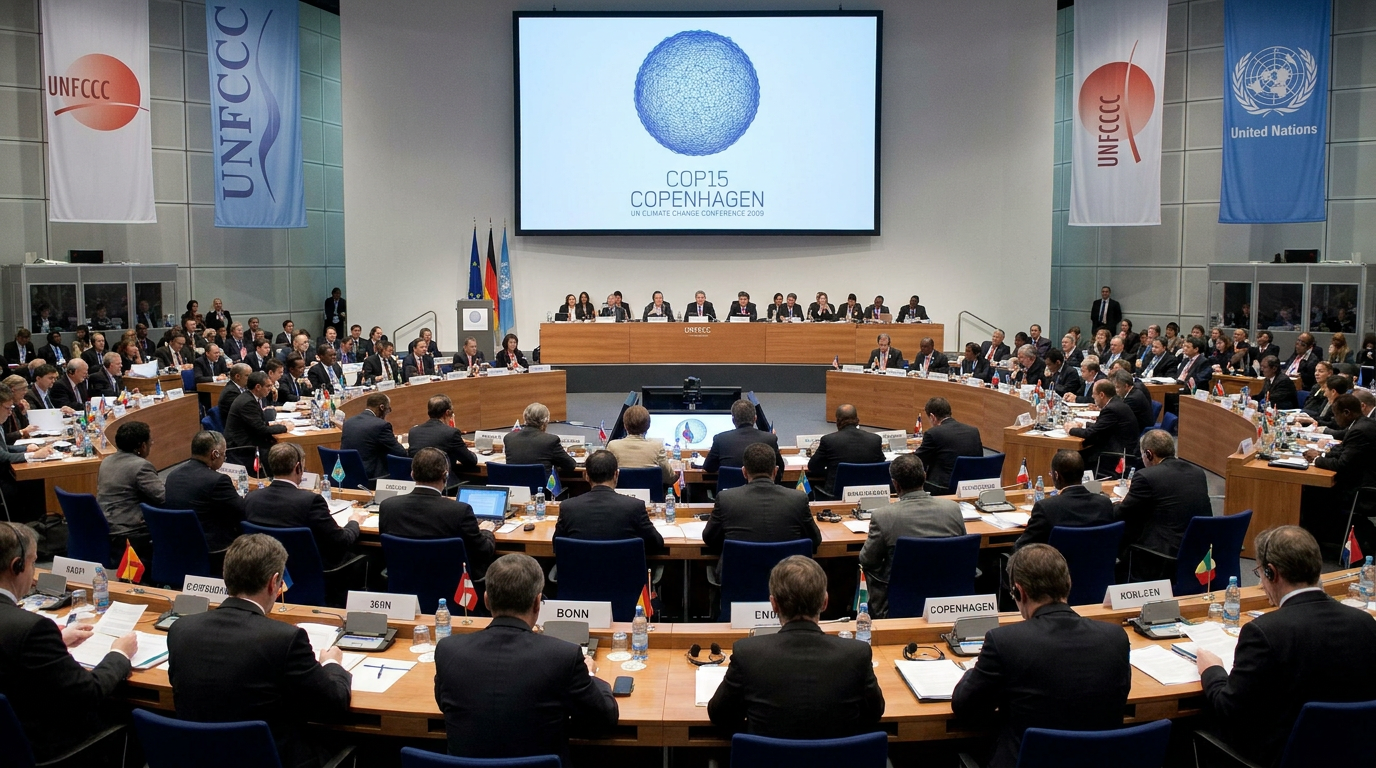
The dire scientific update arrives just as climate diplomats from around the world convene in Bonn, Germany, for the UNFCCC's June Climate Meetings (SB64).[4][7]
The Bonn negotiations serve as a critical stepping stone to prepare the policy packages and frameworks for the COP31 summit, scheduled for November in Antalya, Türkiye.[7]
Negotiators are tasked with fleshing out the "Belém-Antalya Mechanism," a framework designed to facilitate a just transition away from fossil fuels, while also managing the political realities of inflation, high energy costs, and geopolitical instability.[3][4]
As the 1.5°C target slips out of reach, the diplomatic focus is increasingly shifting toward adaptation and the operational delivery of the Fund for Responding to Loss and Damage, which aims to compensate vulnerable nations for irreversible climate impacts.[2][7]

Local and regional leaders are also converging in Bonn for the Daring Cities dialogues, arguing that national climate pledges remain abstract without the funding and authority for municipalities to implement resilience strategies on the ground.[8]
"As we look ahead to COP31... this is a critical moment to strengthen the role of local and regional governments within the global climate architecture," stated ICLEI Secretary General Gino Van Begin, emphasizing the need to translate scientific findings into actionable urban policies.[8]
How we got here
Dec 2015
The Paris Agreement is adopted, establishing the goal of limiting global warming to 1.5°C above pre-industrial levels.
Nov 2025
COP30 in Belém, Brazil, concludes the first Global Stocktake and establishes the foundation for the next round of national climate targets.
June 11, 2026
The Indicators of Global Climate Change report reveals the 1.5°C carbon budget has shrunk to 130 Gt, leaving only three years at current emission rates.
Nov 2026
COP31 is scheduled to take place in Antalya, Türkiye, where countries will submit their updated Nationally Determined Contributions (NDCs 3.0).
Viewpoints in depth
Climate Scientists' view
Researchers emphasize the physical reality of the shrinking carbon budget and the need for immediate, massive decarbonization.
For the scientific community, the data is unequivocal and alarming. Researchers point to the Earth's energy imbalance—which has doubled since the 1970s—as the ultimate arbiter of climate reality, regardless of political rhetoric. They argue that the exhaustion of the 1.5°C carbon budget within three years is not a theoretical model but a physical certainty given current emission rates of nearly 57 billion tonnes annually. Consequently, scientists are urging a shift in communication, warning that society must prepare for the impacts of breaching the threshold while simultaneously executing emergency-level decarbonization to prevent temperatures from climbing even higher.
UN Negotiators' view
Diplomats focus on maintaining multilateral momentum, translating targets into national policies, and securing climate finance.
Within the halls of the UNFCCC, the focus is on process and multilateral consensus. Negotiators view the impending breach of 1.5°C not as a reason to abandon the Paris Agreement, but as a mandate to accelerate the implementation of the 'Belém-Antalya Mechanism' and the next round of Nationally Determined Contributions (NDCs 3.0). Their primary challenge is maintaining diplomatic momentum in a fractured geopolitical landscape. For these officials, the immediate priority is operationalizing the Fund for Responding to Loss and Damage and ensuring that developed nations deliver on their climate finance commitments to keep developing nations engaged in the transition.
Local Governments' view
Municipal leaders argue that national pledges are insufficient without empowering cities to implement resilience strategies.
Mayors and regional leaders, represented by coalitions like ICLEI, argue that they are the ones dealing with the tangible fallout of 1.37°C warming—from urban heat islands to flooded transit systems. They contend that national governments are too slow and that the global climate architecture systematically underfunds local action. Their advocacy centers on 'multilevel governance,' demanding direct access to international climate finance and a formal seat at the negotiating table, arguing that the actual delivery of emission reductions and adaptation infrastructure happens at the municipal level, not in UN plenary halls.
What we don't know
- Whether the imminent breach of the 1.5°C threshold will trigger a fatalistic slowdown in climate policy or catalyze emergency decarbonization efforts.
- How the newly operationalized Fund for Responding to Loss and Damage will be adequately capitalized in an era of high inflation and geopolitical tension.
- The exact degree to which the reduction in aerosol pollution will continue to unmask hidden warming in the coming decade.
Key terms
- Carbon Budget
- The maximum amount of cumulative net global anthropogenic carbon dioxide emissions that would result in limiting global warming to a given level with a specified probability.
- Earth's Energy Imbalance
- The difference between the amount of energy from the sun arriving at the Earth and the amount of energy returning to space, serving as a fundamental metric of climate change.
- Aerosol Unmasking
- The phenomenon where reductions in air pollution, specifically reflective particles like sulfur dioxide, reveal the full warming effect of greenhouse gases that was previously hidden.
- Nationally Determined Contributions (NDCs)
- The individual climate action plans and emission reduction targets submitted by each country under the Paris Agreement.
Frequently asked
What is the 1.5°C carbon budget?
It is the total amount of carbon dioxide humanity can still emit while maintaining a 50% chance of keeping global average temperature rise below 1.5°C compared to pre-industrial levels.
Why is the Earth warming faster now?
Alongside record greenhouse gas emissions, recent successes in reducing air pollution have removed reflective aerosols from the atmosphere, unmasking more of the warming effect.
What happens at the Bonn Climate Meetings?
Diplomats gather to conduct technical negotiations, draft policy frameworks, and prepare the agenda for the major UN climate summit (COP) held later in the year.
Does exceeding 1.5°C mean the Paris Agreement failed?
While it represents a failure to meet the agreement's most ambitious goal, the overarching framework remains critical to prevent even more catastrophic warming levels like 2°C or beyond.
Sources
Source coverage
8 outlets
4 viewpoints surfaced








[1]ReutersEconomic Pragmatists
Global carbon budget for 1.5C to run out in three years, scientists warn
Read on Reuters →[2]The GuardianUN Negotiators & Diplomats
Earth's energy imbalance at record high as 1.5C climate limit nears collapse
Read on The Guardian →[3]BloombergEconomic Pragmatists
Record Greenhouse Gas Emissions Push World Closer to 1.5C Threshold
Read on Bloomberg →[4]Al JazeeraUN Negotiators & Diplomats
UN climate talks in Bonn open under shadow of dire global warming report
Read on Al Jazeera →[5]University of LeedsClimate Scientists & Researchers
Major climate report shows Earth is getting hotter faster
Read on University of Leeds →[6]Imperial College LondonClimate Scientists & Researchers
Earth's climate continues to warm as heat accumulation reaches record levels
Read on Imperial College London →[7]UNFCCCUN Negotiators & Diplomats
June Climate Meetings (SB64) open in Bonn to prepare for COP31
Read on UNFCCC →[8]ICLEILocal & Regional Governments
Seventh annual edition brings together all levels of government to turn climate commitments into delivery
Read on ICLEI →

Every angle. Every day.
Get news politics stories with full source coverage and perspective breakdowns delivered to your inbox.