
French Open Faces Backlash Over Continued Absence of Women's Matches in Night Sessions
Roland Garros organizers are facing renewed criticism from players and the WTA for exclusively scheduling men's matches in the tournament's primetime night sessions, reigniting debates over gender equality in tennis.
By Factlen Editorial Team
- Gender Equality Advocates
- Prioritizes equal platform access and visibility to ensure long-term commercial parity.
- Tournament Logistics
- Focuses on ticket value and the guaranteed duration of best-of-five set matches.
- Commercial Broadcasters
- Driven by immediate prime-time ratings and contractual obligations to advertisers.
Why this matters
The scheduling disparity highlights ongoing structural inequalities in sports broadcasting and commercial visibility. It directly impacts the earning potential and global exposure of female athletes, demonstrating that equal prize money does not automatically equate to equal platform access.
Key points
- Roland Garros is facing renewed criticism for scheduling almost exclusively men's matches during its prime-time night sessions.
- Organizers defend the practice by citing the guaranteed longer duration of men's best-of-five-set matches.
- The WTA and players argue this denies female athletes crucial global visibility and commercial opportunities.
- Other Grand Slams, like the US Open, typically schedule one men's and one women's match during night sessions.
- The disparity highlights ongoing debates about true equality in sports beyond just equal prize money.
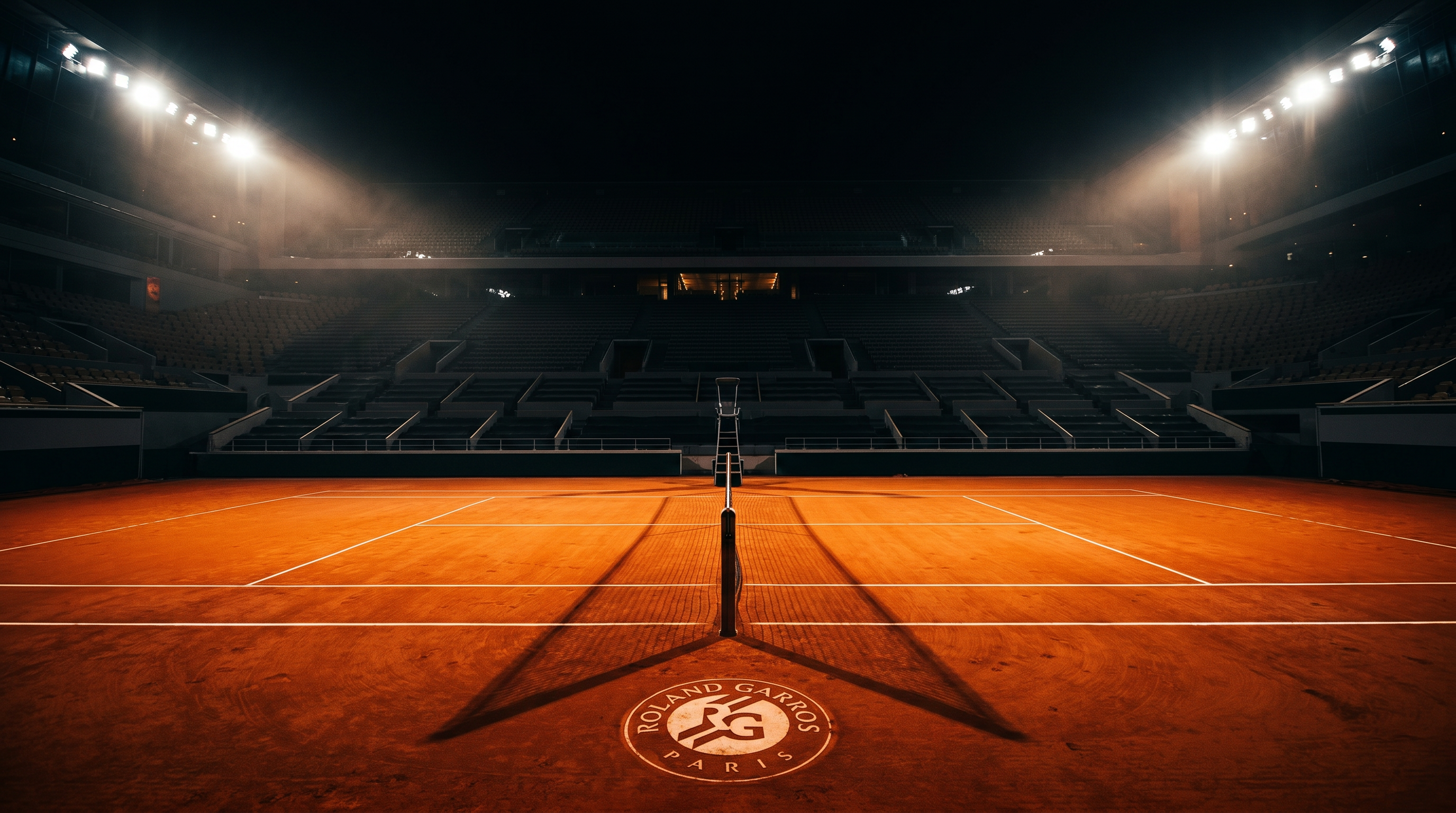
The red clay of Paris is once again the stage for a familiar and increasingly contentious controversy: the glaring absence of women's matches in the tournament's marquee night sessions [1]. As the French Open progresses through its critical middle rounds, organizers at Roland Garros are facing a renewed wave of intense criticism from players, fans, and the Women's Tennis Association (WTA) [2]. Despite ongoing pledges in previous years to evaluate and adjust their scheduling practices, tournament officials have continued to predominantly favor men's singles matches for the highly coveted, prime-time slots on Court Philippe-Chatrier [3]. This persistent scheduling disparity has reignited broader, systemic debates over gender equality, commercial visibility, and the treatment of female athletes at the highest echelons of professional tennis [4]. The backlash highlights a growing frustration among players who feel that the tournament's actions fail to align with its stated commitments to equality, casting a shadow over the sporting achievements on the court [5].[1][2][3][4][5]
The origins of this scheduling friction trace back to the modernization efforts of the French Tennis Federation (FFT). Introduced in 2021, the night sessions were designed to bring Roland Garros in line with the commercial strategies of the US Open and the Australian Open, both of which have long capitalized on evening broadcasts [3]. The move was also heavily tied to a lucrative domestic broadcasting deal with Amazon Prime Video, which secured exclusive rights to these prime-time matches in France [1]. However, the execution of this strategy has been fraught with controversy from the outset. The allocation of these premium slots has heavily skewed male, with women's matches appearing only as rare exceptions rather than a regular feature of the evening lineup [2]. This pattern prompted immediate and sustained backlash from the WTA and top-ranked players, who argue that the tournament is actively choosing to showcase men over women during the hours when television viewership typically peaks [4].[1][2][3][4]
The core of the organizers' defense has consistently revolved around the structural differences in match formats between the men's and women's tours at Grand Slam events. French Tennis Federation officials, including tournament director and former world number one Amélie Mauresmo, have historically pointed to the length of matches as a primary driver for their scheduling decisions [5]. Because men play best-of-five sets at Grand Slams, their matches inherently guarantee a longer duration, often stretching past the three-hour mark. Organizers argue that this longer format provides better perceived value for fans who purchase separate, often expensive, tickets specifically for the single-match evening session [2]. They contend that a swift, straight-sets women's match—which can sometimes conclude in under an hour and a half—might leave night-session ticket holders feeling shortchanged, creating a logistical and public relations challenge for the tournament [3].[2][3][5]

Critics, however, vehemently reject this "value-for-money" argument, viewing it as a thinly veiled justification for systemic bias. Players and equality advocates note that women's matches frequently deliver high drama, intense competition, and compelling narratives that easily captivate prime-time audiences, regardless of the match's total duration [1]. Furthermore, they argue that systematically denying women the prime-time stage creates a damaging self-fulfilling prophecy [4]. Without access to the highest-visibility broadcasting slots, female athletes miss out on crucial global exposure. This lack of visibility subsequently affects their marketability, sponsorship opportunities, and overall commercial appeal, which tournaments then use as an excuse to continue scheduling them on outside courts or during less desirable daytime hours [3]. The WTA has emphasized that true value in sports entertainment is driven by star power and compelling matchups, not merely by the number of hours a match occupies [5].[1][3][4][5]
Critics, however, vehemently reject this "value-for-money" argument, viewing it as a thinly veiled justification for systemic bias.
The scheduling disparity at Roland Garros strikes a particularly sensitive nerve because it contrasts so sharply with the sport's hard-won victories regarding financial compensation. All four Grand Slam tournaments, including the French Open, have offered equal prize money for men's and women's singles competitors for years, a milestone that tennis proudly champions as a marker of its progressive values [4]. However, advocates point out that true equality extends far beyond the winner's check [1]. It encompasses equal access to the platform, the audience, and the lucrative commercial ecosystem that surrounds the sport's biggest stages. When female players are consistently relegated to daytime sessions, they are effectively denied equal participation in the modern, broadcast-driven economy of professional sports, undermining the spirit of the equal pay policies that the tournaments so frequently advertise [5].[1][4][5]
The role of television rights holders and corporate partners cannot be ignored in the complex calculus of tournament scheduling. Broadcasters paying premium rates for exclusive night session rights often exert significant behind-the-scenes pressure on tournaments to schedule matches featuring the most established, globally recognized superstars [3]. Currently, this demographic includes a heavy rotation of top male players, whose rivalries have dominated the sport's narrative for over a decade. Yet, media analysts and sports economists suggest that this approach is incredibly short-sighted [2]. By failing to showcase top female talent in these premium slots, broadcasters and tournaments are actively hindering the growth of the women's game and leaving potential new audiences untapped [1]. Investing in the visibility of female athletes is essential for building the next generation of household names, a process that is short-circuited when they are hidden from prime-time television [4].[1][2][3][4]

The French Open's approach to night sessions is frequently contrasted with the established practices of other major tournaments, highlighting alternative models that successfully balance commercial needs with gender equality. The US Open in New York and the Australian Open in Melbourne both feature highly successful night sessions, but they utilize a double-header format [2]. Typically, these evening sessions include one women's match and one men's match, ensuring that fans in the stadium and viewers at home are exposed to the top talent from both tours [4]. This balanced approach has proven commercially viable and immensely popular with fans, demonstrating that prime-time audiences are more than willing to tune in for women's tennis [3]. Players and the WTA have repeatedly urged Roland Garros to adopt a similar double-header model, or at the very least, to implement a strict alternating schedule that guarantees equal prime-time representation over the course of the two-week event [5].[2][3][4][5]
As the tournament progresses toward its final weekend, the pressure on the French Tennis Federation continues to mount from all sides. Player councils, prominent coaches, and equality advocates are demanding a transparent, equitable scheduling formula rather than relying on the subjective, ad-hoc decisions of tournament officials [5]. The ongoing backlash serves as a critical test for the leadership of Roland Garros, challenging them to align their operational practices with their public commitments to equality [1]. Whether the tournament will adjust its strategy for the remaining rounds, or commit to a comprehensive structural overhaul for future iterations of the event, remains a defining question [2]. Until a permanent solution is implemented, the glaring absence of women under the Paris lights will continue to cast a long shadow over one of tennis's most prestigious and historic events, serving as a stark reminder of the work still required to achieve true parity in sports [4].[1][2][4][5]
How we got here
2007
The French Open achieves equal prize money for men and women across all rounds.
2021
Roland Garros introduces night sessions, broadcasting exclusively on Amazon Prime Video in France.
2022
Tournament Director Amélie Mauresmo sparks controversy by stating men's matches currently have more 'appeal'.
2023-2025
Night sessions continue to heavily favor men's singles matches despite ongoing criticism from the WTA.
June 2026
Renewed backlash erupts from players and equality advocates over the continued scheduling disparity.
Viewpoints in depth
Tournament Organizers (FFT)
Organizers prioritize guaranteed match duration to ensure perceived value for single-session ticket buyers.
The French Tennis Federation argues that the single-match format of their night sessions creates unique logistical constraints. Because men play best-of-five sets, their matches are virtually guaranteed to last over two hours, providing a substantial evening of entertainment for fans who purchased standalone night tickets. Organizers fear that a quick, straight-sets women's match could end in under 90 minutes, leading to demands for refunds or a perception of poor value among attendees.
WTA & Players
Female athletes argue that prime-time exclusion damages their commercial viability and contradicts equal pay principles.
The Women's Tennis Association and top players view the scheduling disparity as a structural barrier to equality. They argue that visibility drives marketability; by keeping women off prime-time television, tournaments suppress their ability to build global fanbases and secure lucrative sponsorships. They reject the 'value' argument, asserting that compelling sports entertainment is based on star power and narrative, not merely the stopwatch.
Commercial Broadcasters
Rights holders seek to maximize immediate viewership by featuring established global superstars.
Broadcasters who pay premium fees for exclusive night session rights are highly motivated by immediate ratings. They often pressure tournaments to schedule matches featuring the most recognizable names in the sport, which currently skews toward the top men's players. However, media analysts warn that this strategy sacrifices the long-term growth of the women's game for short-term viewership gains.
What we don't know
- Whether the French Tennis Federation will adopt a double-header format similar to the US Open in future years.
- The exact financial penalties or incentives tied to viewership metrics in the domestic broadcasting contracts.
- How ticket sales might be impacted if a strict 50/50 gender quota were enforced for single-match night sessions.
Sources
Source coverage
5 outlets
3 viewpoints surfaced





[1]BBC
Mauresmo rejects 'not worthy' claim over night matches
Read on BBC →[2]The Guardian
Sabalenka powers past Osaka in first women's night match at French Open since 2023
Read on The Guardian →[3]Associated Press
French Open director Amélie Mauresmo dismisses questions about a lack of women's night matches
Read on Associated Press →[4]India Today
Roland Garros 2026: Aryna Sabalenka and Naomi Osaka formed a united front at French Open, demanding more prime-time visibility for women's tennis after their historic fourth-round night clash ended a three-year shutout.
Read on India Today →[5]Daily Express
French Open boss Amelie Mauresmo answers sexism claims over night session schedule
Read on Daily Express →

More in sports
See all 13 stories →Olympic Sustainability
How the LA 2028 Olympics Will Run Entirely on Existing Stadiums
0 sources

NBA Finals
New York Knicks Win 2026 NBA Finals, Ending 53-Year Championship Drought
0 sources
NBA Finals
New York Knicks Capture First NBA Championship Since 1973
0 sources

Hockey Strategy
How the PWHL's 'Jailbreak' and 'No Escape' Rules Are Rewriting Hockey Strategy
0 sources
Every angle. Every day.
Get sports stories with full source coverage and perspective breakdowns delivered to your inbox.