
FIVB Overhauls International Calendar: World Championships Go Biannual, Field Expands to 32 Teams
The International Volleyball Federation has introduced a streamlined 2025–2028 calendar that expands the World Championships to 32 teams and shifts the tournament to a biennial schedule. Built on a 'less is more' philosophy, the overhaul eliminates redundant qualifiers to guarantee athletes 11.5 weeks of annual recovery time.
By Ryder James
The International Volleyball Federation (FIVB) has fundamentally rewired the sport's global architecture, implementing a comprehensive 2025–2028 calendar that prioritizes athlete recovery while expanding the game's footprint. After years of grueling, overlapping schedules that pushed players to their physical limits, the governing body has officially adopted a 'less is more' philosophy.[1]
At the heart of this overhaul is the transformation of the FIVB World Championships. Historically a quadrennial event, the tournament has officially shifted to a biennial schedule, ensuring that the sport's premier showcase occurs every two years and aligns perfectly with the pre-Olympic calendar.
Alongside the frequency change, the field has been expanded to 32 teams per gender. This marks a significant increase in global representation, allowing emerging programs from across the five continental confederations to compete on the biggest stage without waiting four years for an opportunity.[1]
To accommodate this expansion without exhausting the players, the FIVB introduced a streamlined competition formula. The 32 teams are divided into eight round-robin groups of four, ensuring that the initial phase is highly competitive but concise.[3]
Following the group stage, the top two teams from each pool advance directly to a knockout phase, beginning with the round of 16 and culminating in the final. Under this new structure, a team will play a maximum of seven matches to win the world title, a sharp reduction from the marathon formats of previous decades.[3]
This structural efficiency is the cornerstone of the FIVB's commitment to athlete welfare. By reducing the total number of major international events by 25 percent compared to the Tokyo 2020 cycle, the federation has carved out unprecedented rest periods for the world's top talent.[1]
Under the 2025–2028 calendar, players are guaranteed 11.5 weeks of dedicated recovery and preparation time each year. During the 2028 Olympic year, this recovery window will extend to a full 13 weeks, ensuring that athletes are not pushed to the brink of physical burnout by overlapping club and national team commitments.[1]
The streamlining effort also involved the elimination of standalone Olympic Qualification Tournaments. Previously, these high-stakes events clogged the calendar and forced teams to peak multiple times in a single year, adding immense travel and physical strain.
Instead, the pathway to the 2028 Los Angeles Olympic Games will rely entirely on existing flagship events. The host nation will be joined by the five Continental Champions, the top three unqualified teams from the 2027 World Championships, and the highest-ranked remaining teams in the FIVB World Rankings.[3]
The financial stakes have also been elevated to match the tournament's new prestige. The FIVB has increased the prize money, awarding $1 million directly to the World Champion team, with the total prize purse reaching $2.2 million per gender.
The inaugural editions of this new format took place in 2025, with Thailand hosting the women's tournament and the Philippines hosting the men's. Both events served as a proof of concept for the 32-team, biennial model, delivering record-breaking engagement metrics and proving that a shorter, punchier tournament resonates with fans.[2]
The 2025 Women's World Championship generated unprecedented viewership, particularly in key markets. Broadcasts in China amassed over 1.1 billion views across traditional and digital platforms, while the gold medal match drew nearly 4 million live viewers in Italy.
The men's tournament in the Philippines mirrored this success, drawing massive crowds to the SM Mall of Asia Arena and driving over 5 million views on Volleyball World's dedicated streaming platform, VBTV. The data confirmed the FIVB's hypothesis: fewer, more meaningful matches drive higher overall engagement.
Looking ahead, the FIVB recently finalized another major branding shift. Starting with the 2027 editions, the World Championship will be officially renamed the 'FIVB Volleyball World Cup,' aligning the sport's terminology with other global sporting juggernauts like FIFA and FIBA.[3]
The 2027 Women's World Cup will break new geographic ground, as the United States and Canada co-host the event for the first time. The final rounds are slated for Anaheim, California, serving as a high-profile test event ahead of the Los Angeles 2028 Olympics.[2]
Meanwhile, the 2027 Men's World Cup will be hosted by volleyball powerhouse Poland, a nation renowned for its passionate fanbase and world-class arena infrastructure.[2]
The geographic expansion will continue into 2029, with Qatar awarded the hosting rights for the men's tournament. This marks the first time the flagship event will be held in the Middle East, reflecting the sport's surging global footprint and the success of the new bidding strategy.[2]
By balancing commercial ambition with a genuine commitment to athlete health, the FIVB has engineered a rare win-win scenario in modern sports administration. The 32-team biennial model ensures that fans receive high-stakes volleyball more frequently, while players are finally granted the rest they need to sustain long, healthy careers.[1]
Key points
- The FIVB World Championships have permanently shifted to a biennial schedule featuring 32 teams.
- A streamlined format caps the maximum number of matches required to win the title at seven.
- The 'less is more' calendar guarantees athletes 11.5 weeks of annual recovery time.
- Standalone Olympic Qualification Tournaments have been eliminated to reduce travel and physical strain.
- Starting in 2027, the tournament will be officially rebranded as the FIVB Volleyball World Cup.
How we got here
October 2022
The FIVB officially announces the expansion of the World Championships to 32 teams.
June 2023
The FIVB Board of Administration approves the 2025–2028 calendar and the shift to a biennial schedule.
September 2025
The inaugural 32-team, biennial World Championships are successfully hosted in Thailand and the Philippines.
March 2026
The FIVB announces the tournament will be renamed the 'World Cup' starting in 2027.
2027
The United States, Canada, and Poland will host the first editions under the new World Cup branding.
- FIVB & Commercial Partners
- Views the biennial 32-team format as a commercial triumph that increases global engagement while streamlining the product.
- Athlete Health Advocates
- Praises the 'less is more' philosophy for finally addressing player burnout by guaranteeing 11.5 weeks of annual recovery.
- Emerging National Federations
- Values the expanded field and biennial frequency, which provides more consistent opportunities to compete on the world stage.
Perspectives this story doesn't cover
- Domestic Club Leagues
Sources
Source coverage
3 outlets
3 viewpoints surfaced



- [1]VolleyTimesAthlete Health Advocates
FIVB launches calendar for 2025/2028
Read on VolleyTimes → - [2]SportsTravel MagazineFIVB & Commercial Partners
U.S., Canada to Co-Host 2027 Women’s Volleyball World Championships
Read on SportsTravel Magazine → - [3]WikipediaEmerging National Federations
FIVB Men's Volleyball World Championship
Read on Wikipedia →
More in Sports
See all →Standings
2026 V-League Collegiate Challenge Finals Set as NU, FEU, Adamson, and UST Advance
3 sources
Preview
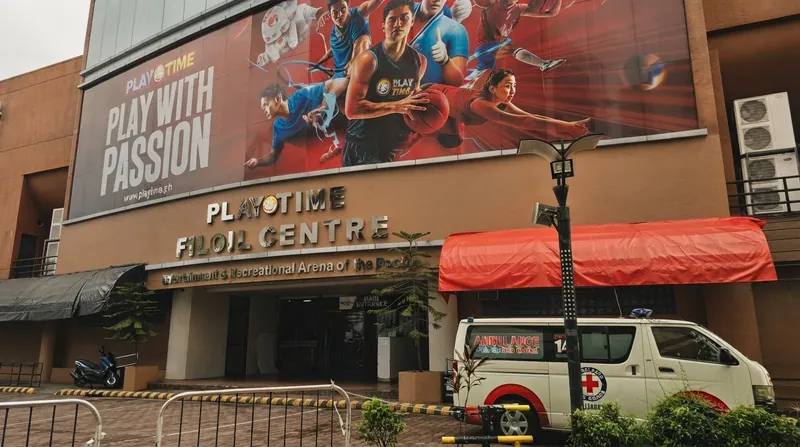
Vodafone Sultanlar Ligi 2026/27 Preview: VakıfBank Opens Title Defense as Turkish Volleyball Returns
6 sources
Injury
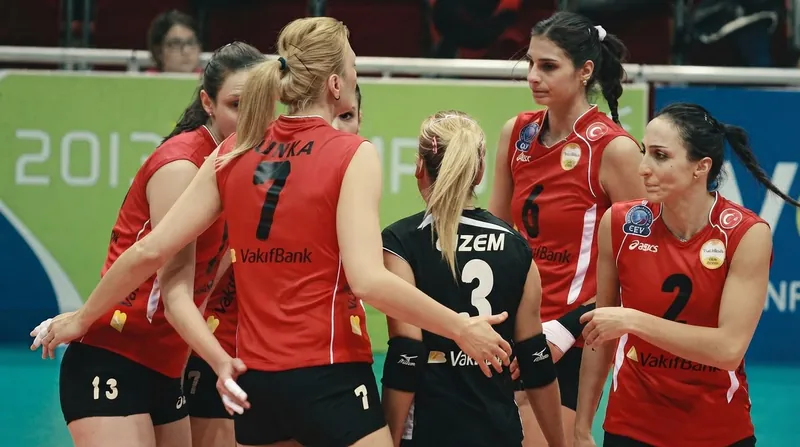
Global Volleyball Injury Report: Wachholz and Vander Wal Suffer Season-Ending Blows as Lavia Returns
6 sources
Injury
Global Volleyball Injury Report: Rowan Faces Surgery as Sigler Escapes Serious Setback
6 sources
Comments
Every angle. Every day.
Get Sports stories with full source coverage and perspective breakdowns, free every day.