
FISA Section 702 is Expiring at Midnight. Here is What Actually Happens to U.S. Surveillance.
The U.S. House has rejected a last-minute extension of a controversial warrantless surveillance law, ensuring it will lapse on Friday night. However, a legal grandfather clause means intelligence gathering will not immediately go dark.
By Factlen Editorial Team
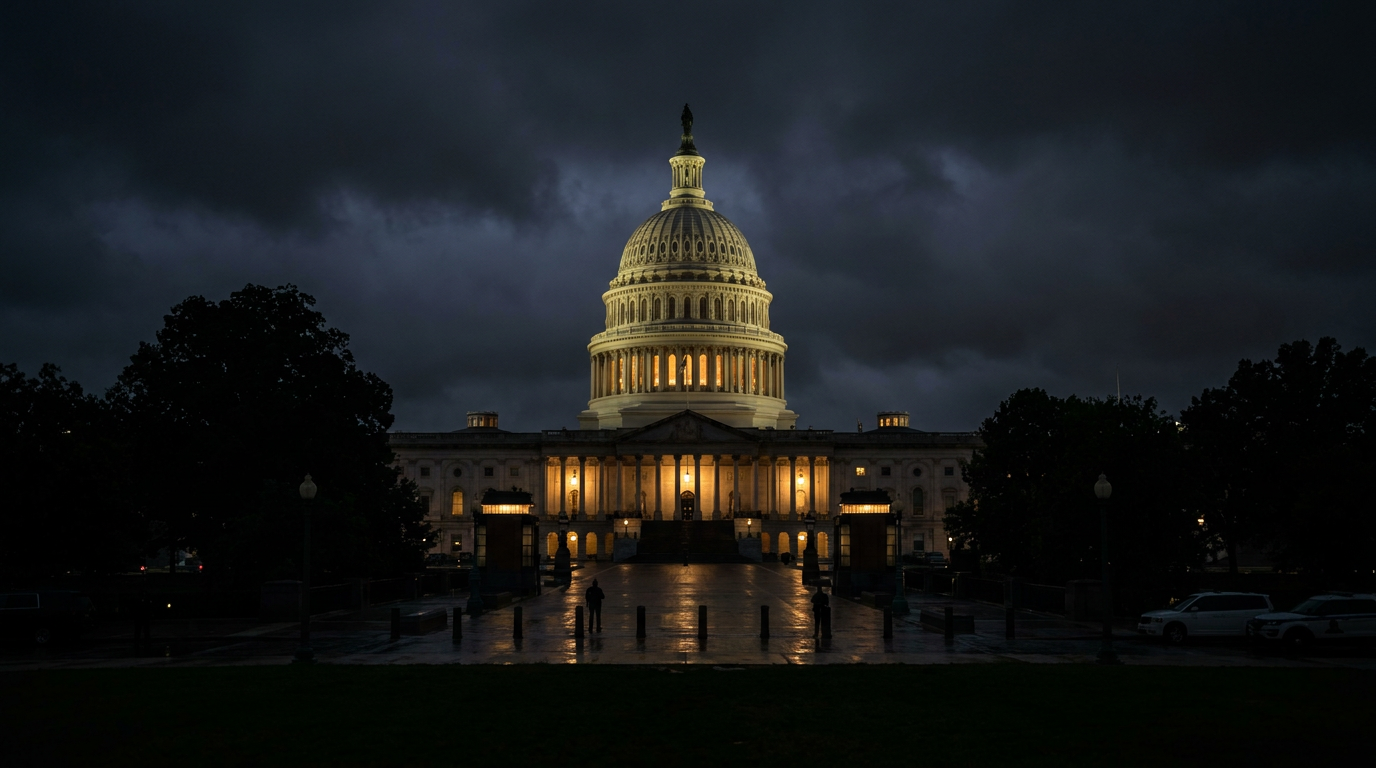
- Civil Liberties Advocates
- Argue that the incidental collection of Americans' data violates the Fourth Amendment and demand strict warrant requirements.
- Bipartisan Reformers
- Acknowledge the program's foreign intelligence value but refuse to reauthorize it without structural reforms and oversight.
- National Security Hawks
- Believe Section 702 is essential for preventing terrorism and oppose any warrant requirements that might slow down intelligence analysts.
What's not represented
- · U.S. Technology Companies
- · Foreign Nationals
Why this matters
Section 702 is the U.S. government's most powerful foreign intelligence tool, but it routinely sweeps up the private communications of American citizens. Its expiration forces a historic showdown over whether the government must obtain a warrant before reading Americans' emails and texts.
Key points
- The U.S. House rejected a short-term extension of FISA Section 702 in a 198–218 vote.
- The law, which allows warrantless surveillance of foreign targets, expires at midnight on Friday.
- A bipartisan coalition blocked the extension to demand a warrant requirement for searching Americans' data.
- Because the FISA court recertified the program in March, existing surveillance directives remain valid until March 2027.
- The government will lose the ability to issue new directives to tech companies for new targets.
For the first time since its inception in 2008, the U.S. government's most sweeping foreign surveillance authority is set to expire. Section 702 of the Foreign Intelligence Surveillance Act (FISA) will officially lapse at midnight on Friday, marking a historic break in the post-9/11 intelligence apparatus.[1][2]
The expiration became inevitable on Thursday morning when the U.S. House of Representatives rejected a last-ditch, short-term extension. In a dramatic 198–218 vote, a coalition of progressive Democrats and conservative Republicans united to block the measure, demanding structural reforms to how the government handles the data of American citizens.[3][4]
The immediate fallout featured stark warnings from defense officials and congressional leadership. Proponents of a clean extension argued that letting the statute lapse would leave the United States dangerously blind to terror plots, cyberattacks, and espionage, particularly as the nation prepares to host the 2026 World Cup and its 250th-anniversary celebrations.[5][7]
To understand the stakes of the midnight deadline, it is necessary to examine how Section 702 actually functions. The law allows U.S. intelligence agencies to compel American technology and telecommunications companies to hand over the electronic communications of non-U.S. citizens located abroad, entirely without a warrant.[1][6]

The scale of this data collection is massive. In 2025 alone, intelligence agencies used the authority to monitor an estimated 350,000 foreign targets, gathering millions of emails, text messages, and phone records that form the backbone of the president's daily intelligence briefings.[2]
The controversy, however, lies in the program's domestic dragnet. Because foreign targets frequently communicate with people inside the United States, Section 702 routinely and legally sweeps up the private, incidental communications of American citizens who are not suspected of any crime.[2][6]
Once that data sits in government servers, agencies like the FBI can query the database using the names, email addresses, or phone numbers of Americans. Privacy advocates refer to this as the "backdoor search loophole," arguing it effectively bypasses the Fourth Amendment's requirement that the government obtain a warrant before searching a citizen's private communications.[2][8]
Outrage over these backdoor searches is what ultimately doomed the reauthorization. Lawmakers from both ends of the political spectrum have spent months demanding an amendment that would force federal agents to secure a warrant before querying the database for U.S. persons—a reform that intelligence agencies strongly oppose.[4][8]

Outrage over these backdoor searches is what ultimately doomed the reauthorization.
The legislative process was further derailed this week by a sudden political shockwave. A fragile bipartisan compromise to renew the statute for three years collapsed after President Trump announced his intention to appoint Bill Pulte, a housing regulator with no national security background, as the acting Director of National Intelligence.[3][4]
The appointment infuriated Democrats, who refused to grant sweeping, warrantless surveillance powers to an intelligence chief they viewed as an unqualified political loyalist. Several Republicans also balked at the move, fracturing the coalition needed to pass the extension.[3][4]
In a last-minute attempt to salvage the vote, the White House pivoted, announcing that federal prosecutor Jay Clayton would be nominated for the permanent intelligence director role instead. However, the concession arrived too late to change the math on the House floor, and the short-term extension failed.[3]
In the wake of the failed vote, a fierce narrative battle has emerged over what "going dark" actually means. While some lawmakers claim the intelligence community will immediately lose its ability to track foreign adversaries, legal experts and privacy advocates point out that the reality is far more nuanced.[1][7]

The statute contains a built-in grandfather clause designed to prevent a sudden intelligence cliff. Section 702 operates under annual programmatic certifications approved by the secretive Foreign Intelligence Surveillance Court (FISC), and the law explicitly states that existing certifications remain valid even if the underlying statute expires.[1][7]
Because the FISC quietly recertified the Section 702 program in March 2026, the National Security Agency and the FBI retain the legal authority to continue their current surveillance operations. The existing directives served to tech companies remain fully operational until March 2027.[2][7]
What actually changes at midnight is the government's ability to expand the program. Without the statutory authority of Title VII, intelligence agencies cannot issue new directives to communication service providers to monitor new foreign targets who were not already covered by the March certifications.[7]

If a genuinely new, urgent threat emerges, the government is not entirely powerless. Agencies can still seek individualized warrants through the traditional FISA court process, or they may attempt to rely on Executive Order 12333—a Reagan-era directive that governs overseas intelligence gathering, though it lacks the legal mechanism to compel compliance from U.S.-based tech companies.[6][7]
The House is not expected to vote again on the issue until late June, leaving the statute in a state of suspended animation. The lapse provides unprecedented leverage to the bipartisan coalition of reformers, who now have the power to withhold reauthorization until a strict warrant requirement is codified into law.[8]
Ultimately, the expiration of Section 702 represents a watershed moment in American law. After decades of routinely renewing sweeping surveillance powers with minimal friction, Congress has signaled that the era of unchecked, warrantless access to data that includes Americans' communications may be coming to an end.[2][6]
How we got here
2008
Congress passes the FISA Amendments Act, creating Section 702 to modernize foreign intelligence gathering.
March 2026
The secretive FISA court quietly recertifies the Section 702 program for another year.
April 2026
Congress passes a series of short-term extensions to keep the law alive while negotiating reforms.
June 11, 2026
The U.S. House rejects a final short-term extension in a 198–218 vote.
June 12, 2026
The statutory authority for Section 702 officially expires at midnight.
Viewpoints in depth
Intelligence & Defense Officials
Argue that Section 702 must be renewed without a warrant requirement to prevent critical delays in tracking foreign threats.
This camp, which includes defense secretaries, intelligence directors, and national security hawks in Congress, views Section 702 as the crown jewel of American intelligence. They argue that forcing analysts to obtain a warrant before querying the database for an American's name would create fatal delays during fast-moving terror plots or cyberattacks. They maintain that the data was legally collected overseas, meaning a secondary warrant for searching it is legally unnecessary and operationally dangerous.
Privacy & Civil Liberties Advocates
Argue that the incidental collection of Americans' data is a backdoor violation of the Fourth Amendment.
Organizations like the EFF, EPIC, and the Brennan Center argue that Section 702 has morphed from a foreign intelligence tool into a domestic surveillance dragnet. They point to documented compliance violations where the FBI improperly searched the database for the names of protesters, journalists, and political donors. This camp insists that if the government wants to read the private communications of an American citizen, it must meet the constitutional standard of probable cause and secure a warrant from a judge.
Congressional Reformers
A bipartisan coalition willing to let the law lapse to force structural changes.
This unique alliance pairs progressive Democrats with conservative Republicans who share a deep distrust of the intelligence apparatus. While they acknowledge the value of monitoring foreign adversaries, they refuse to reauthorize the program without strict guardrails. By voting down the short-term extension, this coalition is using the statutory expiration as maximum leverage to force leadership to accept a warrant requirement for U.S. person queries.
What we don't know
- How long the statutory lapse will last before Congress reaches a compromise on a warrant requirement.
- Whether intelligence agencies will attempt to use Executive Order 12333 to bypass the lapsed statute for new targets.
- How U.S. technology companies will respond if the government attempts to compel data without the explicit statutory backing of Title VII.
Key terms
- FISA Section 702
- A provision of the Foreign Intelligence Surveillance Act that allows the U.S. government to collect the communications of non-Americans located abroad without a warrant.
- Foreign Intelligence Surveillance Court (FISC)
- A secretive federal court established to oversee requests for surveillance warrants against foreign spies inside the United States.
- Incidental Collection
- The sweeping up of an American citizen's private communications because they were interacting with a foreign target who was under surveillance.
- Executive Order 12333
- A 1981 presidential directive that governs how U.S. intelligence agencies conduct surveillance overseas, outside the bounds of FISA.
Frequently asked
Does all U.S. foreign surveillance stop at midnight?
No. Because the Foreign Intelligence Surveillance Court recertified the program in March 2026, existing data collection on current targets will continue legally until March 2027.
What is the backdoor search loophole?
It is a practice where U.S. agencies like the FBI search the Section 702 database—which contains data collected without a warrant—using the names or phone numbers of American citizens.
Why did the House vote fail?
A bipartisan coalition demanded a warrant requirement for searching Americans' data. The vote was further complicated when President Trump appointed a political loyalist with no intelligence background as acting Director of National Intelligence.
Can the government add new targets after the expiration?
No. Without the statutory authority of Section 702, the government cannot issue new directives compelling U.S. tech companies to hand over data for new foreign targets.
Sources
Source coverage
8 outlets
3 viewpoints surfaced








[1]The New York TimesBipartisan Reformers
A Key Spying Power Is Expiring. Will Foreign Surveillance Go Dark?
Read on The New York Times →[2]NPRCivil Liberties Advocates
A key U.S. spy tool is set to lapse on Friday — now what?
Read on NPR →[3]CBS NewsNational Security Hawks
House rejects last-ditch FISA extension ahead of Friday deadline
Read on CBS News →[4]AxiosBipartisan Reformers
House rejects last-ditch FISA extension ahead of Friday deadline
Read on Axios →[5]Fox NewsNational Security Hawks
Womack Slams Democrats for Blocking FISA Extension
Read on Fox News →[6]Electronic Frontier FoundationCivil Liberties Advocates
FISA Section 702 is expiring. Here's why that matters.
Read on Electronic Frontier Foundation →[7]Cato InstituteCivil Liberties Advocates
What Actually Happens if Section 702 Lapses
Read on Cato Institute →[8]EPICCivil Liberties Advocates
FISA Section 702 Almost Certain to Expire After House Votes Against Extension
Read on EPIC →


Every angle. Every day.
Get news politics stories with full source coverage and perspective breakdowns delivered to your inbox.