
FIFA Launches Investigation Into Argentina Players Over Falklands Banner Following World Cup Semi-Final
Football's global governing body has opened disciplinary proceedings against the Argentine national team after players displayed a politically charged banner referencing the Falkland Islands following their semi-final victory over England.
By Ryder James

Share this story
FIFA has officially launched a disciplinary investigation into the Argentine national football team following their 2026 World Cup semi-final victory over England in Atlanta. The probe centers on a banner displayed by players during post-match celebrations that referenced the Falkland Islands, known in Argentina as the Islas Malvinas. The incident immediately drew the attention of tournament officials tasked with maintaining the sport's strict regulations on political neutrality.[1][3]
The display occurred moments after the final whistle confirmed Argentina's progression to Sunday's championship match against Spain. As players celebrated on the pitch at Mercedes-Benz Stadium, a group of squad members unfurled a flag bearing a map of the islands alongside a Spanish-language slogan asserting Argentine sovereignty. Broadcasters captured the moment as the team saluted their traveling supporters behind the goal.[2][5]
FIFA's Disciplinary Committee announced the proceedings on Thursday evening, citing potential violations of Article 11 of the FIFA Disciplinary Code. The governing body maintains comprehensive regulations prohibiting the use of sporting events for demonstrations of a non-sporting nature, particularly those involving political, religious, or personal messages that fall outside the purview of the competition.[3]
The committee has requested formal observations from the Argentinian Football Association (AFA) before determining potential sanctions. "The stadium is a space for sporting excellence and unity, not a platform for geopolitical statements," a FIFA spokesperson noted in the official release, emphasizing the organization's commitment to shielding the tournament from international disputes.
The historical weight of the fixture amplified the banner's impact. England and Argentina share one of international football's most storied rivalries, deeply intertwined with the 1982 conflict over the South Atlantic archipelago. For 44 years, the geopolitical dispute has frequently surfaced in the cultural backdrop of matches between the two nations, adding a layer of historical tension to their on-pitch encounters.[2][7]
In Argentina, the display has been widely defended by domestic media as a cultural expression of national identity rather than a targeted provocation. Outlets in Buenos Aires highlighted that songs and banners referencing the Malvinas are a ubiquitous element of Argentine football culture, sung by fans and players alike across all levels of the sport as a tribute to veterans.[4][7]
Conversely, the English Football Association (FA) has reportedly communicated its disappointment to tournament organizers. British sports media characterized the display as an unnecessary escalation following a tense semi-final, arguing that it directly contravened the tournament's established protocols and detracted from the sporting achievement of reaching the final.[1][6]
The timing of the investigation introduces an administrative hurdle for Argentina as they prepare for the World Cup final against Spain in New York. While individual player suspensions are considered highly unlikely for a first-time team offense of this specific nature, the AFA faces the prospect of substantial financial penalties and formal reprimands.[5][6]
Precedent suggests FIFA typically levies fines against national federations for political displays by players or supporters. During previous World Cups and regional tournaments, similar infractions involving unauthorized geopolitical banners or chants have resulted in fines ranging from 10,000 to 50,000 Swiss francs, alongside warnings regarding future conduct.[3]
As the disciplinary committee expedites its review ahead of the weekend's climax, the incident underscores the ongoing challenge global sports organizations face. Regulators must constantly navigate the friction between deeply ingrained national sentiments and the sanitized, politically neutral environments they attempt to curate for global broadcasts.[2][5]
The essentials
- FIFA has opened a disciplinary investigation into Argentina following their World Cup semi-final win over England.
- The probe focuses on a post-match banner displayed by players referencing the Falkland Islands.
- FIFA's Article 11 strictly prohibits political, religious, or personal messaging during tournament events.
- The Argentinian Football Association (AFA) has been asked to provide formal observations.
- Precedent suggests the AFA may face financial penalties rather than player suspensions ahead of the final.
Timeline
1982
The United Kingdom and Argentina engage in a ten-week conflict over the sovereignty of the Falkland Islands.
July 2026
Argentina defeats England in the World Cup semi-final in Atlanta.
Post-Match
Argentine players display a banner referencing the Islas Malvinas during their on-pitch celebrations.
Thursday Evening
FIFA officially announces the opening of disciplinary proceedings against the Argentinian Football Association.
- Argentine Supporters & Media
- Views the Malvinas references as a deeply ingrained, non-negotiable aspect of national identity and cultural remembrance rather than a direct provocation.
- Tournament Regulators
- Emphasizes the necessity of keeping geopolitical disputes out of sporting venues to maintain global unity and broadcast neutrality.
- British Football Establishment
- Argues that the display was an unnecessary escalation that clearly violated established tournament rules regarding political neutrality.
Perspectives this story doesn't cover
- Falkland Islanders' local government
- Independent free-speech advocates in sports
Sources
Source coverage
7 outlets
3 viewpoints surfaced







- [1]BBC SportBritish Football Establishment
FIFA opens disciplinary proceedings against Argentina over Malvinas banner
Read on BBC Sport → - [2]The GuardianBritish Football Establishment
Argentina face FIFA probe after politically charged celebration follows England defeat
- [3]ReutersTournament Regulators
FIFA investigates Argentina players for political banner after World Cup semi-final
Read on Reuters → - [4]TyC SportsArgentine Supporters & Media
La FIFA investiga a la Selección por la bandera de las Malvinas
Read on TyC Sports → - [5]ESPN
Argentina's World Cup final preparations clouded by FIFA political banner investigation
- [6]Sky SportsBritish Football Establishment
FA awaits FIFA ruling on Argentina's post-match Falklands display
- [7]ClarinArgentine Supporters & Media
El trasfondo de la investigación de la FIFA a la Selección Argentina

More in Sports
See all →Bernabéu Shakeup
José Mourinho Returns to Real Madrid for Shock Second Stint as Head Coach
3 sources

World Cup
World Cup Final Four Set: France Faces Spain, Argentina Clashes with England in Blockbuster Semi-Finals
6 sources
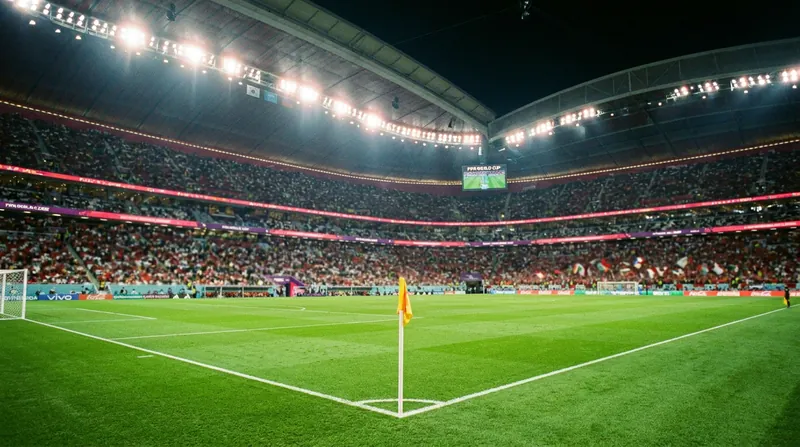
World Cup 2026
Norway Upsets Brazil in World Cup Round of 16 as Neymar Announces International Retirement
4 sources
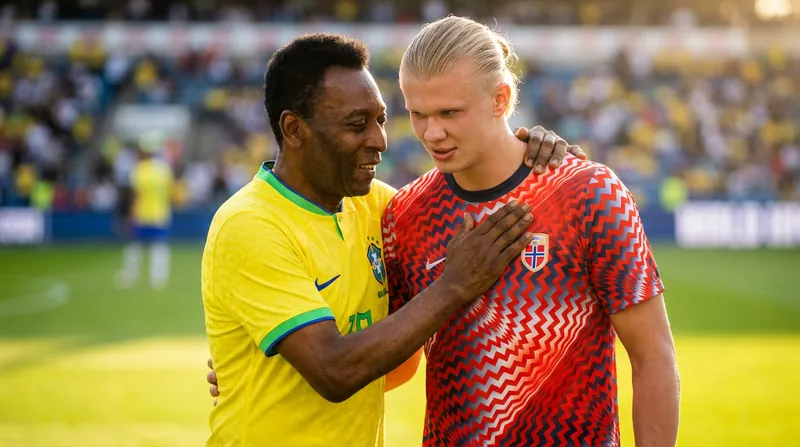
AC Milan Rebuild
AC Milan Announces Record-Breaking Signing of Goncalo Ramos in Blockbuster Transfer Deal
2 sources

Comments
Every angle. Every day.
Get Sports stories with full source coverage and perspective breakdowns, free every day.