
Federal Judge Strikes Down Trump Administration's SNAP Soda Ban
A federal judge has blocked the USDA from allowing states to ban food stamp recipients from purchasing soda and candy, ruling the agency overstepped its congressional authority.
By Hailey Scott

Share this story
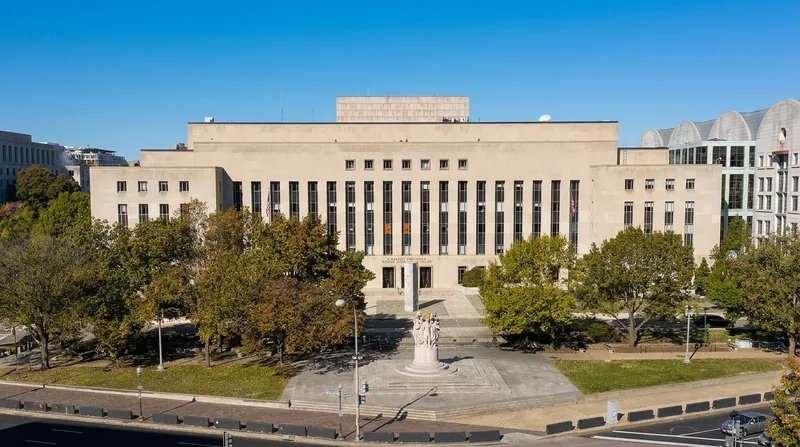
A federal judge in Washington, D.C., has struck down a controversial Trump administration policy that would have allowed states to ban food stamp recipients from purchasing soda, candy, and other sugary items. In a sweeping 68-page decision issued Monday, U.S. District Judge Amy Berman Jackson ruled that the Department of Agriculture (USDA) fundamentally lacked the statutory authority to approve such restrictions.
The ruling effectively halts one of the most visible pillars of the administration's "Make America Healthy Again" (MAHA) initiative, which sought to leverage the massive purchasing power of the federal safety net to combat rising rates of obesity and diet-related chronic diseases. By invalidating the USDA's "food restriction waivers," the court has preserved the status quo for millions of low-income Americans who rely on federal assistance to stock their pantries.[1][2]
The legal dispute centers on the Supplemental Nutrition Assistance Program (SNAP), a $100 billion federal initiative that helps approximately 42 million Americans afford groceries each month. Historically, the program has operated with very few restrictions on what constitutes eligible food. Under the Food and Nutrition Act of 2008, SNAP benefits can be used to purchase almost any food or beverage intended for human consumption, with explicit exceptions carved out only for alcohol, tobacco, and hot foods prepared for immediate consumption.
Judge Jackson's ruling hinged entirely on this statutory language, concluding that Congress had already defined what qualifies as food and did not grant the executive branch the power to rewrite that definition or cut entire categories of products out of the program.[3]
Prior to the ruling, the USDA had aggressively utilized its waiver authority to approve requests from 23 states—including Colorado, Iowa, Nebraska, Tennessee, and West Virginia—allowing them to pilot programs that blocked SNAP electronic benefit transfer (EBT) cards from processing transactions for soft drinks and candy. These waivers represented a historic break from decades of federal reluctance to draw official lines between "good" and "bad" foods within the welfare system.
The administration argued that the waivers were necessary experiments in public health, designed to test whether restricting access to nutrient-poor items could shift purchasing habits and improve health outcomes among vulnerable populations. Judge Jackson, however, determined that the USDA's waiver authority could not be stretched to override the core definitions established by lawmakers.[2]
The push to restrict SNAP purchases has been heavily championed by Health and Human Services Secretary Robert F. Kennedy Jr. and Agriculture Secretary Brooke Rollins. Both officials have argued that the federal government is effectively subsidizing a public health crisis by allowing taxpayer dollars to flow to the beverage and junk food industries.
Kennedy has frequently characterized highly processed, sugar-laden products as "poison," asserting that the government pays twice for these items: first at the grocery store checkout, and second through Medicare and Medicaid when treating the resulting diabetes and heart disease. This dual-pronged economic and health argument formed the ideological backbone of the MAHA initiative's approach to federal food assistance.[3]
Following the ruling, the White House and the USDA signaled their intent to continue the fight, with a USDA spokesperson stating that the idea of preventing taxpayer funds from purchasing junk food "should not be controversial." The administration views the SNAP restrictions as one half of a broader strategy to combat obesity, pairing the checkout-aisle bans with efforts to lower the cost of GLP-1 weight-loss drugs.
Conservative policymakers argue that this two-sided approach—subsidizing medical prevention while refusing to subsidize "disease fuel"—is a necessary evolution in how the United States manages its spiraling healthcare costs. The administration is already exploring alternative legal avenues and preparing for a likely appeal.[1][2]
The lawsuit that triggered Monday's ruling was filed in March by SNAP recipients living in five of the states where waivers had been approved. Represented by anti-hunger advocacy groups, the plaintiffs argued that the restrictions would severely destabilize food access for people already struggling to afford basic necessities.
They contended that the bans were inherently paternalistic, imposing a moral judgment on the grocery carts of low-income families that is not applied to wealthier Americans. Furthermore, the plaintiffs highlighted the practical dangers of the policy, noting that individuals with chronic illnesses, such as diabetes, frequently rely on quick access to sugary drinks like juice or soda to safely manage sudden drops in blood sugar.[3]
Anti-hunger organizations have long maintained that SNAP recipients do not consume significantly more sugary drinks or snack foods than the general population, pointing to research that suggests dietary habits are largely consistent across income brackets.
These advocates argue that the root causes of poor nutrition in low-income communities are systemic—such as the proliferation of food deserts, the high cost of fresh produce, and a lack of time for meal preparation—rather than a simple matter of consumer choice. From their perspective, stripping away the autonomy of SNAP users does nothing to address these underlying structural issues and only serves to further stigmatize participation in a vital anti-poverty program.[3]
The logistical complexities of implementing a soda and candy ban also loomed large over the debate. Grocery retailers and industry groups have historically opposed such restrictions, warning that programming point-of-sale systems to distinguish between thousands of constantly changing SKUs—determining whether a specific granola bar or sweetened iced tea qualifies as "candy" or "soda"—would be a costly and error-prone nightmare.
In 2007, the USDA itself published a paper rejecting similar waiver requests, citing the lack of clear, objective standards to define foods as strictly healthy or unhealthy, and warning that the administrative burden on both the government and private retailers would be immense.[3]
The current legal battle bears a striking resemblance to previous failed attempts to regulate sugary beverages, most notably former New York City Mayor Michael Bloomberg's 2013 effort to cap the portion sizes of sodas sold in restaurants and theaters. In that case, a state judge struck down the so-called "soda ban," ruling that the city's Board of Health had exceeded its regulatory authority and acted arbitrarily.
Just as the New York court determined that the Board of Health could not bypass the City Council to enact sweeping lifestyle regulations, Judge Jackson has now ruled that the USDA cannot bypass Congress to fundamentally alter the nature of federal food assistance.
The ruling places the ball squarely in the court of the legislative branch. Because Judge Jackson's decision rests on statutory interpretation rather than constitutional grounds, Congress possesses the power to change the law and explicitly authorize the restrictions the Trump administration seeks.
Lawmakers are currently gearing up for negotiations over the next Farm Bill, the massive legislative package that authorizes SNAP and agricultural subsidies. The court's decision guarantees that the definition of eligible foods will become a central, highly partisan flashpoint in those upcoming congressional debates, as conservative lawmakers push to amend the Food and Nutrition Act.[1][2][3]
Several Republican lawmakers have already introduced legislation aimed at achieving what the USDA waivers could not. Representative Josh Breechan recently sponsored the Healthy SNAP Act, arguing that while individuals are free to purchase junk food with their own money, they should not expect taxpayers to foot the bill and absorb the resulting healthcare consequences.
However, these legislative efforts face steep opposition from a formidable coalition of anti-hunger advocates, civil rights organizations, and the powerful beverage and grocery lobbying groups, all of whom have vested interests in maintaining the program's current flexibility.[3]
For the 42 million Americans currently enrolled in SNAP, the immediate practical effect of the ruling is that their EBT cards will continue to function exactly as they have for decades. The average recipient, who receives roughly $190 a month in benefits, will not face new checkout-aisle rejections when purchasing a soda or a candy bar for their children.
Yet the psychological and political stakes of the fight remain high. The administration has successfully elevated the debate over diet, poverty, and public health to the national stage, ensuring that the contents of a SNAP recipient's grocery cart will remain a subject of intense scrutiny and political maneuvering for the foreseeable future.[1][2][3]
Key points
- A federal judge blocked the USDA from allowing states to ban SNAP recipients from buying soda and candy.
- The ruling stated the USDA exceeded its authority by attempting to rewrite Congress's definition of eligible food.
- The decision halts a major pillar of the administration's Make America Healthy Again (MAHA) public health initiative.
- Anti-hunger advocates praised the ruling, arguing the proposed bans were paternalistic and stigmatizing.
Unanswered questions
- Whether the Department of Justice will immediately appeal the ruling to a federal appellate court.
- How prominently the SNAP restriction debate will feature in the upcoming congressional negotiations over the Farm Bill.
- Whether grocery retailers would actually have the technological infrastructure to seamlessly implement item-level bans if Congress eventually changes the law.
How we got here
2008
Congress passes the Food and Nutrition Act, defining SNAP-eligible food broadly to include almost anything for human consumption.
2013
A New York state judge strikes down Mayor Michael Bloomberg's attempt to ban large sugary drinks, citing regulatory overreach.
Early 2026
The USDA approves food restriction waivers for 23 states under the Make America Healthy Again initiative.
March 2026
SNAP recipients in five states file a federal lawsuit arguing the USDA exceeded its authority.
June 23, 2026
Judge Amy Berman Jackson strikes down the waivers, ruling the USDA cannot alter Congress's definition of food.
- MAHA Policy Advocates
- Argue that taxpayer funds should not subsidize junk food and the resulting healthcare costs.
- Anti-Hunger Advocates
- Argue the bans are paternalistic, stigmatizing, and destabilize food access for the poor.
- Legal & Institutional Analysts
- Focus on the statutory limits of the USDA and the necessity of congressional action.
Perspectives this story doesn't cover
- Grocery Retailers
- Beverage Industry Lobby
Sources
Source coverage
3 outlets
3 viewpoints surfaced



- [1]Fox NewsMAHA Policy Advocates
Obama-appointed judge torpedoes Trump’s bid to fight obesity as White House warns it won’t be ‘final say’
Read on Fox News → - [2]NewsweekLegal & Institutional Analysts
Trump's SNAP Food Restriction Waivers Halted by Federal Judge
Read on Newsweek → - [3]PBSAnti-Hunger Advocates
Push to ban sugary drinks from SNAP faces legal roadblock
Read on PBS →
More in News & Politics
See all →Immigration Policy
Trump Administration to Open 528-Bed Migrant Staging Center Next to Louisiana Deportation Hub
3 sources

Philippine Politics
Philippine Senate Opens Historic Impeachment Trial of Vice President Sara Duterte
4 sources

NATO Summit
High-Stakes NATO Summit Opens as Trump Pressures Allies on Defense Spending and 'Loyalty'
5 sources
Executive Clemency
Trump Pardons Major Donor and Clean Air Act Violators in Latest Wave of Executive Clemency
4 sources
Comments
Every angle. Every day.
Get News & Politics stories with full source coverage and perspective breakdowns, free every day.