
Federal Judge Orders Trump Administration to Restart Asylum and Immigration Processing
A federal judge has struck down a Trump administration policy that froze immigration and asylum processing for nationals of 39 countries, ordering the government to immediately resume adjudications.
By Anaya Sharma

A federal judge has ordered the Trump administration to immediately resume processing asylum claims and legal immigration benefits for nationals of 39 countries, striking down a sweeping freeze implemented late last year. The ruling marks a significant judicial intervention against one of the administration's most expansive immigration restrictions, forcing U.S. Citizenship and Immigration Services (USCIS) to reopen hundreds of thousands of suspended cases. The decision provides immediate, albeit potentially temporary, relief to immigrants whose applications for green cards, work permits, and naturalization had been indefinitely stalled.[1][3]
The judicial mandate escalated on Thursday when U.S. District Chief Judge John J. McConnell Jr. of Rhode Island issued a stern rebuke to the administration. Frustrated that officials had failed to immediately comply with his initial June 5 ruling, McConnell made his directive absolute.
"There is no excuse this time," the judge wrote, demanding that the government file a status report within 24 hours detailing the exact steps taken to restart the adjudications. By Friday, the administration confirmed it would restart the processing to comply with the court's order, even as the Justice Department formally appealed the decision to the First Circuit Court of Appeals.[1][2]
The origins of the processing freeze date back to late November 2025, following a tragic incident in the nation's capital. An Afghan national, who had entered the United States in 2021 and was granted asylum in 2025, fatally shot a National Guard member and injured another.
In response, the Trump administration enacted a categorical halt on immigration benefits for citizens of 39 countries already listed on the president's travel ban. Administration officials argued the pause was a necessary national security measure, designed to allow the government to implement "extreme vetting" procedures and review previously approved applications for potential threats.[3]
For more than six months, the policy effectively paralyzed the legal immigration system for individuals from the targeted African, Asian, Latin American, and Middle Eastern nations. Even immigrants who had meticulously followed the law—submitting the required paperwork, paying substantial filing fees, passing background checks, and attending in-person interviews—found their lives placed on hold. The freeze barred USCIS from issuing final decisions, leaving countless families, workers, and asylum seekers unable to secure employment authorization, permanent residency, or American citizenship.
In his blistering 135-page decision, Judge McConnell, an Obama appointee, dismantled the administration's legal framework. He ruled that USCIS had exceeded its statutory authority and violated the Administrative Procedure Act. The judge noted that the Immigration and Nationality Act uses mandatory language requiring the government to process applications within specific timeframes, and strictly prohibits nationality-based discrimination in the issuance of visas and green cards. McConnell concluded that the agency provided no reasoned explanation for punishing millions of people based on the violent actions of a single individual.[3][4]
McConnell's ruling emphasized the human cost of the administration's policy, writing that it threw the lives of countless immigrants into "indeterminate legal limbo" solely by the happenstance of their birth.
"The Court is reminded of a line often repeated in discussions around immigration policy: If people wish to immigrate to the United States, they ought to 'follow the law' and 'do things the right way,'" McConnell wrote. "This case serves as a perfect example of immigrants doing just that," only to be met with an agency that refused to adjudicate their requests.
The Department of Homeland Security reacted to the ruling with sharp condemnation, defending the freeze as a vital tool for protecting the homeland. DHS General Counsel James Percival accused immigrant rights groups of weaponizing the judicial system to undermine the executive branch's authority over national security. "It is sabotage dressed in legal clothing," Percival stated in an email following the decision. He argued that critics routinely rely on bad-faith accusations of animus to invalidate any Trump-era immigration policy they politically oppose, regardless of the underlying security rationale.[2]
Legal experts and libertarian analysts, however, viewed the ruling as a necessary defense of statutory law. Scholars at the Cato Institute highlighted that the freeze represented a massive administrative failure, noting that the agency had collected hundreds of millions of dollars in fees for services it subsequently refused to render. By vacating the policy, the court reaffirmed that the executive branch cannot unilaterally rewrite immigration law or ignore congressional mandates under the broad pretext of national security.[4]
While USCIS is now legally obligated to begin working through the massive backlog of frozen applications, the ultimate fate of the policy remains uncertain. Government lawyers are expected to seek an emergency stay from the First Circuit Court of Appeals, which, if granted, would halt processing once again while the broader legal merits are debated.
Should the appellate court deny the stay, the administration may escalate the battle to the Supreme Court's shadow docket, ensuring that the legal status of hundreds of thousands of immigrants remains precarious in the months ahead.[2]
The logistical challenge facing USCIS is now immense. The agency must rapidly pivot from a defensive posture to an operational one, reassigning adjudicators to process the sudden influx of active cases. For the applicants themselves, the resumption of processing means a return to the anxious waiting game of the standard immigration bureaucracy, though with the renewed hope that their cases will finally be judged on individual merit rather than blanket national origin.
As the legal maneuvering continues in the appellate courts, the immediate reality on the ground is a frantic race to clear a six-month bottleneck before any further judicial interventions can alter the landscape.[3]
Key points
- A federal judge ordered the Trump administration to immediately resume processing asylum and immigration applications for 39 countries.
- The policy was implemented in November 2025 following a fatal shooting by an Afghan asylum seeker.
- Judge John McConnell Jr. ruled the freeze was arbitrary and capricious and violated federal immigration laws.
- The freeze left hundreds of thousands of immigrants unable to obtain work permits, green cards, or citizenship.
What we don’t know
- Whether the First Circuit Court of Appeals will grant the Justice Department's request for an emergency stay, which would halt processing once again.
- How quickly USCIS can work through the six-month backlog of frozen applications if the ruling stands.
- Whether the administration will attempt to implement new, narrower vetting rules that could survive judicial scrutiny.
How we got here
November 2025
An Afghan asylum seeker fatally shoots a National Guard member in Washington, D.C.
Late November 2025
The Trump administration indefinitely freezes asylum and immigration processing for nationals of 39 countries.
March 2026
A coalition of immigrant rights groups and labor unions sues the administration over the freeze.
June 5, 2026
A federal judge strikes down the policy as unlawful and orders processing to resume.
June 11, 2026
The judge issues a stern rebuke to the administration for failing to comply with his initial order.
June 12, 2026
The administration agrees to restart processing while simultaneously appealing the decision to the First Circuit.
- Immigrant Rights Advocates
- Argue that the blanket freeze was discriminatory, illegal, and caused immense harm to legal immigrants who followed all rules.
- Trump Administration & DHS
- Maintain that the pause was a necessary national security measure to ensure extreme vetting following a fatal attack by an asylum seeker.
- Legal & Procedural Analysts
- Focus on the statutory requirements of the Immigration and Nationality Act, noting that USCIS lacks the authority to indefinitely suspend adjudications.
Perspectives this story doesn't cover
- USCIS Adjudicators
- Employers of Affected Immigrants
Sources
Source coverage
4 outlets
3 viewpoints surfaced




- [1]The New York TimesLegal & Procedural Analysts
Trump Administration Says It Will Restart Asylum and Immigration Processing
Read on The New York Times → - [2]The Washington PostTrump Administration & DHS
Judge to Trump officials: 'No excuse' for not complying with asylum order
Read on The Washington Post → - [3]CBS NewsLegal & Procedural Analysts
Judge blocks Trump policies that halted legal immigration cases for many immigrants
Read on CBS News → - [4]Cato InstituteLegal & Procedural Analysts
Judge Finds DHS Violated the Law By Freezing Legal Immigration
Read on Cato Institute →
More in News & Politics
See all →Dual Sovereignty
The Dual Sovereignty Doctrine: Why the Double Jeopardy Clause Allows Two Trials for One Crime
6 sources
Climate Liability
Supreme Court Hears Landmark Arguments on Whether Cities Can Sue Big Oil Over Climate Damages
4 sources
Executive Power
Trump Directs $2 Billion From Medicare Fund for $90 Senior Rebates Ahead of Midterms
7 sources
Federal Savings Programs
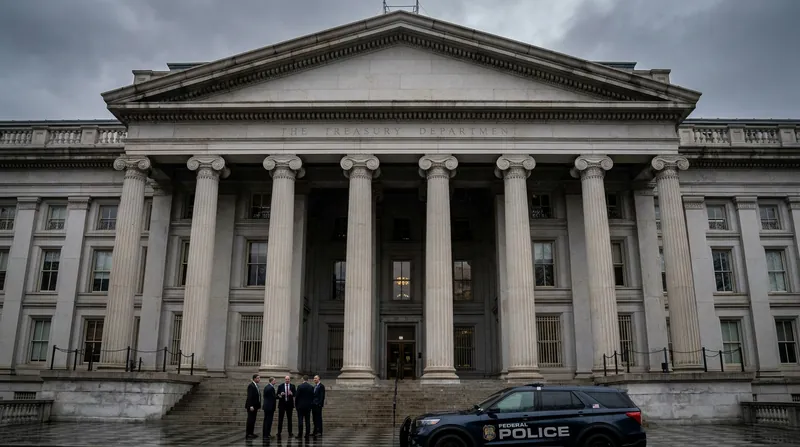
Treasury Department Completes Automatic Enrollment of 60 Million Children in Trump Accounts
8 sources
Comments
Every angle. Every day.
Get News & Politics stories with full source coverage and perspective breakdowns, free every day.