
Fed Minutes Reveal Growing Support for Rate Hikes Amid 'Persistently Elevated' Inflation
Minutes from the Federal Reserve's July meeting show a growing bloc of policymakers favoring interest rate hikes if inflation fails to cool, driven by concerns over tariffs, energy costs, and AI infrastructure spending.

The Federal Reserve is officially holding interest rates steady, but behind closed doors, a growing bloc of policymakers is losing patience with stubborn inflation. The tension at the heart of the U.S. central bank has spilled into public view, revealing a committee divided over whether the current economic medicine is strong enough.
Minutes from the Federal Open Market Committee's (FOMC) July 28-29 meeting, released Wednesday, show that "many" officials believe policy tightening will be necessary if price pressures do not subside. The record paints a picture of a central bank increasingly anxious that the fight against inflation has stalled.[2][4]
While the committee ultimately voted 9-3 to maintain the benchmark federal funds rate at a range of 3.5% to 3.75%, the three dissents marked a significant fracture. Regional Fed presidents Beth Hammack of Cleveland, Lorie Logan of Dallas, and Neel Kashkari of Minneapolis all voted against the pause, arguing for an immediate quarter-point increase.[1][3][4]
The federal funds rate is the primary lever the central bank uses to control the economy. By dictating the interest rate at which banks lend reserve balances to each other overnight, the Fed influences borrowing costs across the entire financial system. Keeping this rate elevated makes mortgages, auto loans, and corporate debt more expensive, which theoretically cools consumer demand and business investment.
The core disagreement within the FOMC centers on whether current financial conditions are restrictive enough to finish the job. According to the minutes, "most" participants expect inflation to step down later this year as the initial shocks of recent tariffs and energy price spikes begin to wane.[2][4]
However, the hawkish wing of the committee pushed back. The minutes noted that "many" participants see a distinct risk of inflation remaining "persistently elevated." These officials warned that waiting too long to raise rates could embed inflation expectations into consumer psychology, requiring much more painful and aggressive rate hikes down the line.[1][4]
Policymakers identified three primary catalysts keeping prices stubbornly high. First, the re-escalation of the conflict with Iran has significantly clouded the outlook, threatening to prolong supply chain disruptions and put upward pressure on global energy markets.[3][4]
Second, officials pointed to the inflationary impact of recent sweeping U.S. tariffs, which have raised the baseline cost of imported goods. Even when stripping out the items most directly affected by these trade barriers, several officials noted that underlying inflation still appeared uncomfortably high.[2][4]
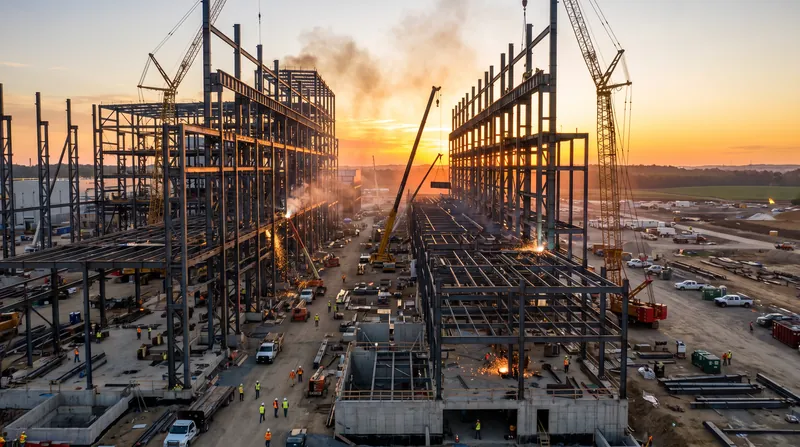
Third, the committee highlighted a novel factor for monetary policy: the massive capital expenditures pouring into artificial intelligence infrastructure. The sheer scale of corporate spending on data centers and advanced microchips is driving up costs for electricity and technology components, creating localized inflation that ripples through the broader economy.[2]
Beyond interest rates, the July meeting featured a major structural proposal from new Fed Chair Kevin Warsh, who took the helm in May. Warsh suggested reducing the FOMC's meeting schedule from eight to six times per year, holding votes roughly every two months.[1][3]
Warsh argued that a less frequent meeting cadence would allow more economic data to accumulate between sessions. This would give policymakers and staff more time to consider strategic monetary policy issues, rather than constantly reacting to short-term market noise. While Warsh asked for input on the idea, the minutes noted that no changes to the calendar would be made this year.[1][3][4]
Despite the hawkish tone of the minutes, there is a growing disconnect between the central bank's July debate and the current expectations of Wall Street investors. The minutes reflect the economic reality of three weeks ago, but the data landscape has shifted rapidly since then.
Recent economic indicators have pointed to a noticeable cooling in the broader economy. Retail sales fell in July by the most in over a year, as consumers pulled back on discretionary purchases. Simultaneously, the labor market showed unexpected weakness, with downward revisions to previous hiring figures and a slight uptick in layoffs.[3][4]
Financial markets have reacted to this softer data by drastically repricing the odds of further tightening. Futures markets now imply only about a 35% chance of a rate increase at the Fed's next meeting in mid-September, a sharp drop from the 70% probability priced in at the end of July.[1][3]
This leaves the central bank in a precarious position, caught between sticky inflation and a slowing economy. The minutes repeatedly described the inflation outlook as "highly uncertain," with risks skewed to the upside, while acknowledging that the risks to employment and economic growth are skewed to the downside.[1][4]
The ultimate path will depend heavily on the next round of inflation data, particularly the Personal Consumption Expenditures (PCE) price index, which is the Fed's preferred gauge. If the data comes in hot, the hawkish bloc could gain the majority it needs to push through a rate hike; if the labor market continues to soften, the Fed may be forced to hold steady to avoid triggering a recession.
Key points
- Minutes from the Fed's July meeting show "many" officials favor rate hikes if inflation does not decline.
- The FOMC voted 9-3 to hold rates at 3.5% to 3.75%, with three regional presidents dissenting in favor of an immediate hike.
- Officials cited the Iran conflict, tariffs, and AI infrastructure spending as key drivers of persistently elevated inflation.
- Fed Chair Kevin Warsh proposed reducing the number of annual policy meetings from eight to six.
Open questions
- Whether the upcoming August inflation data will be hot enough to force the Fed to hike rates in September.
- If Chair Kevin Warsh's proposal to reduce the number of FOMC meetings will be formally adopted next year.
Timeline
May 2026
Kevin Warsh assumes the role of Chairman of the Federal Reserve.
June 2026
The FOMC holds rates steady, with only a 'few' officials supporting tighter policy.
July 28-29, 2026
The FOMC votes 9-3 to hold rates at 3.5%-3.75%, with three dissents favoring a hike.
August 19, 2026
Meeting minutes are released, revealing 'many' officials see rate hikes as likely if inflation persists.
- Hawkish Policymakers
- Officials who believe current interest rates are not restrictive enough to defeat inflation.
- Dovish Policymakers
- Officials who advocate for patience to avoid triggering an unnecessary recession.
- Market Participants
- Investors who are pricing in a hold or future rate cuts based on recent data.
Perspectives this story doesn't cover
- Small business owners facing sustained high borrowing costs
- Prospective homebuyers priced out by elevated mortgage rates
Sources
Source coverage
5 outlets
3 viewpoints surfaced





- [1]ForbesHawkish Policymakers
Fed Minutes Signal Interest Rate Hikes Unless Inflation Improves
Read on Forbes → - [2]PBS NewsDovish Policymakers
'Many' Fed officials think higher rates will be needed if inflation stays high
Read on PBS News → - [3]BloombergMarket Participants
Several Fed officials signal support for higher rates
Read on Bloomberg → - [4]Federal ReserveHawkish Policymakers
Minutes of the Federal Open Market Committee, July 28–29, 2026
Read on Federal Reserve → - [5]AxiosDovish Policymakers
Fed officials warned rate hikes may be needed if inflation stays high
Read on Axios →

More in Business
See all →Corporate Governance
The Business Judgment Rule: How the Presumption of Good Faith Shields Corporate Directors From Liability
8 sources

Corporate Valuation
How a Tobin's Q Ratio Greater Than 1.0 Signals a Company's Incentive to Invest and Grow
8 sources
Portfolio Theory
The Boundary of Diversification: How Systematic and Unsystematic Risk Dictate Portfolio Construction
8 sources

Inventory Management
How the Economic Order Quantity Formula Determines the Optimal Inventory Batch Size
7 sources

Comments
Every angle. Every day.
Get Business stories with full source coverage and perspective breakdowns, free every day.