
FDA Mandates Phase-Out of 'Big Six' Artificial Food Dyes: What It Means for the Food Industry
The FDA has finalized a sweeping rule requiring food manufacturers to phase out six widely used artificial food dyes by the end of 2026, prompting a massive industry-wide shift toward natural colorants.
By Irina Belova

- Public Health Advocates
- View the ban as a long-overdue victory for child safety that aligns U.S. policy with European standards.
- Food & Beverage Industry
- Argue the 2026 timeline is aggressively tight given the massive supply chain and technical hurdles of natural reformulation.
- Natural Ingredient Suppliers
- See the mandate as a historic growth opportunity but warn of short-term agricultural bottlenecks as demand spikes.
Why this matters
This sweeping federal mandate will fundamentally alter the ingredients in thousands of everyday snacks, cereals, and fast-food items, removing chemicals long linked to behavioral issues in children while forcing companies to invest heavily in plant-based agricultural alternatives.
Key points
- The FDA has finalized a rule banning six major synthetic food dyes by December 31, 2026.
- The decision follows mounting scientific evidence linking the dyes to hyperactivity and neurobehavioral issues in children.
- Food manufacturers must now reformulate thousands of products using natural alternatives like beet juice, turmeric, and spirulina.
- The transition poses significant technical challenges, as natural dyes are less heat-stable and more expensive than synthetics.
- The mandate aligns U.S. food safety standards more closely with those of the European Union.
The Food and Drug Administration has officially finalized a sweeping mandate requiring the total phase-out of six widely used synthetic food dyes by December 31, 2026. The regulatory action marks one of the most significant overhauls of the American food supply in decades, fundamentally altering how thousands of consumer packaged goods and fast-food items are manufactured.[1]
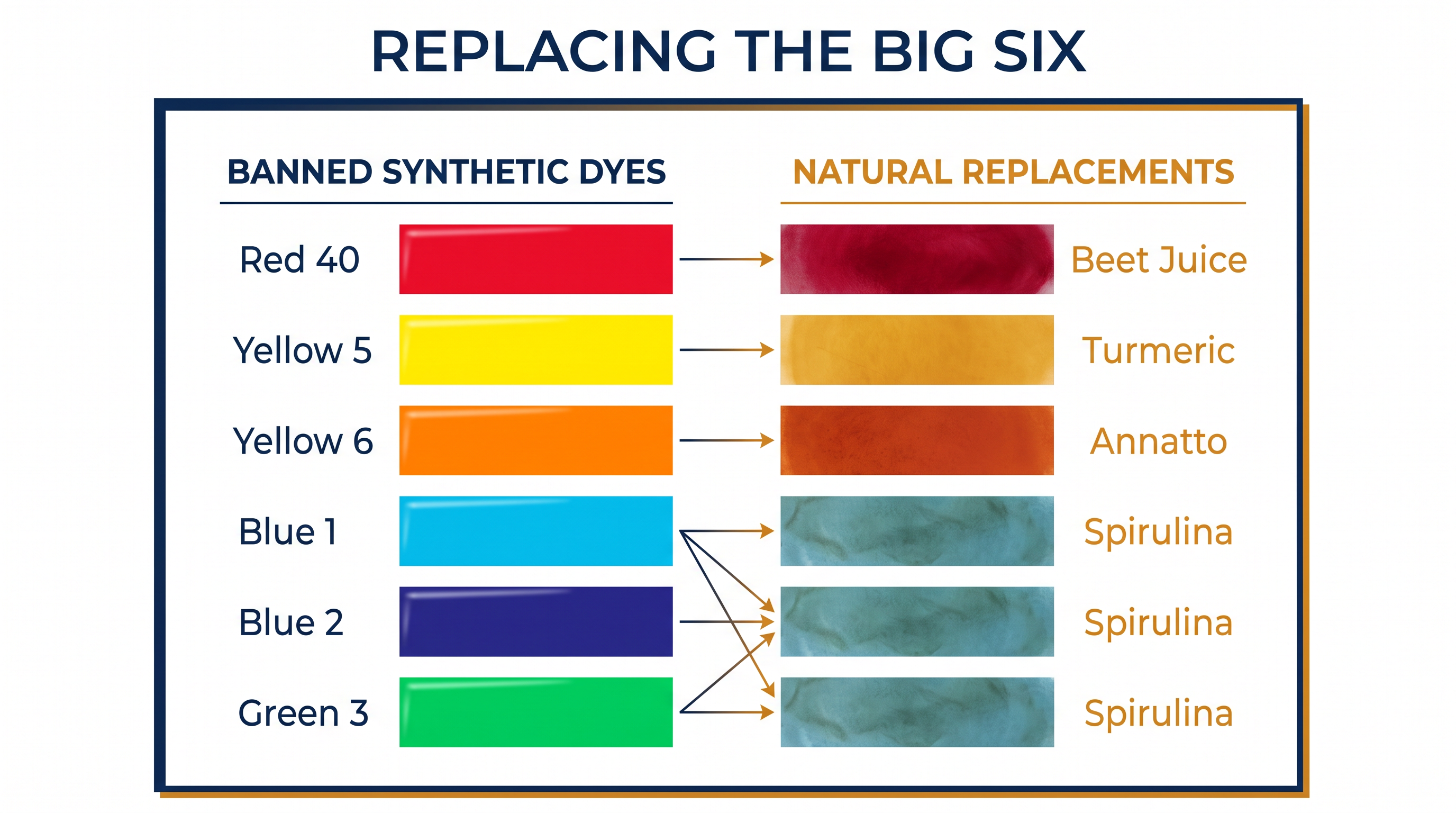
The targeted colorants, colloquially known in the food science industry as the "Big Six," include Red 40, Yellow 5, Yellow 6, Blue 1, Blue 2, and Green 3. For over half a century, these petroleum-derived chemicals have provided the hyper-vibrant, uniform hues found in fast-food dipping sauces, brightly colored sodas, breakfast cereals, and mass-market candies.[2]
The regulatory shift represents the culmination of years of mounting scientific scrutiny regarding the neurobehavioral impacts of synthetic dyes on children. While the FDA had previously maintained that the dyes were safe for the general population, a growing body of peer-reviewed pediatric research has consistently demonstrated a link between synthetic colorants and exacerbated hyperactivity in sensitive populations.[3]
The tipping point arrived following a landmark comprehensive review by the California Office of Environmental Health Hazard Assessment (OEHHA), which concluded that current federal acceptable daily intake levels for synthetic dyes did not adequately protect children. California's subsequent legislative actions, which banned several food additives in state public schools, effectively forced the federal government's hand to avoid a fractured, state-by-state regulatory nightmare.[1][3]
The mechanism of the FDA's new rule officially revokes the approved color additive status for these six specific compounds in human food. Manufacturers are now on a strict 28-month countdown to reformulate their entire product portfolios or pull non-compliant items from store shelves by the end of 2026.[1]
Replacing these synthetic staples is a monumental scientific and logistical challenge for the $2.4 trillion U.S. food industry. Synthetic dyes have long been prized by food scientists for their extreme heat stability, light resistance, neutral taste, and incredibly low cost—qualities that plant-based alternatives struggle to match perfectly in mass production.[2]
Replacing these synthetic staples is a monumental scientific and logistical challenge for the $2.4 trillion U.S.
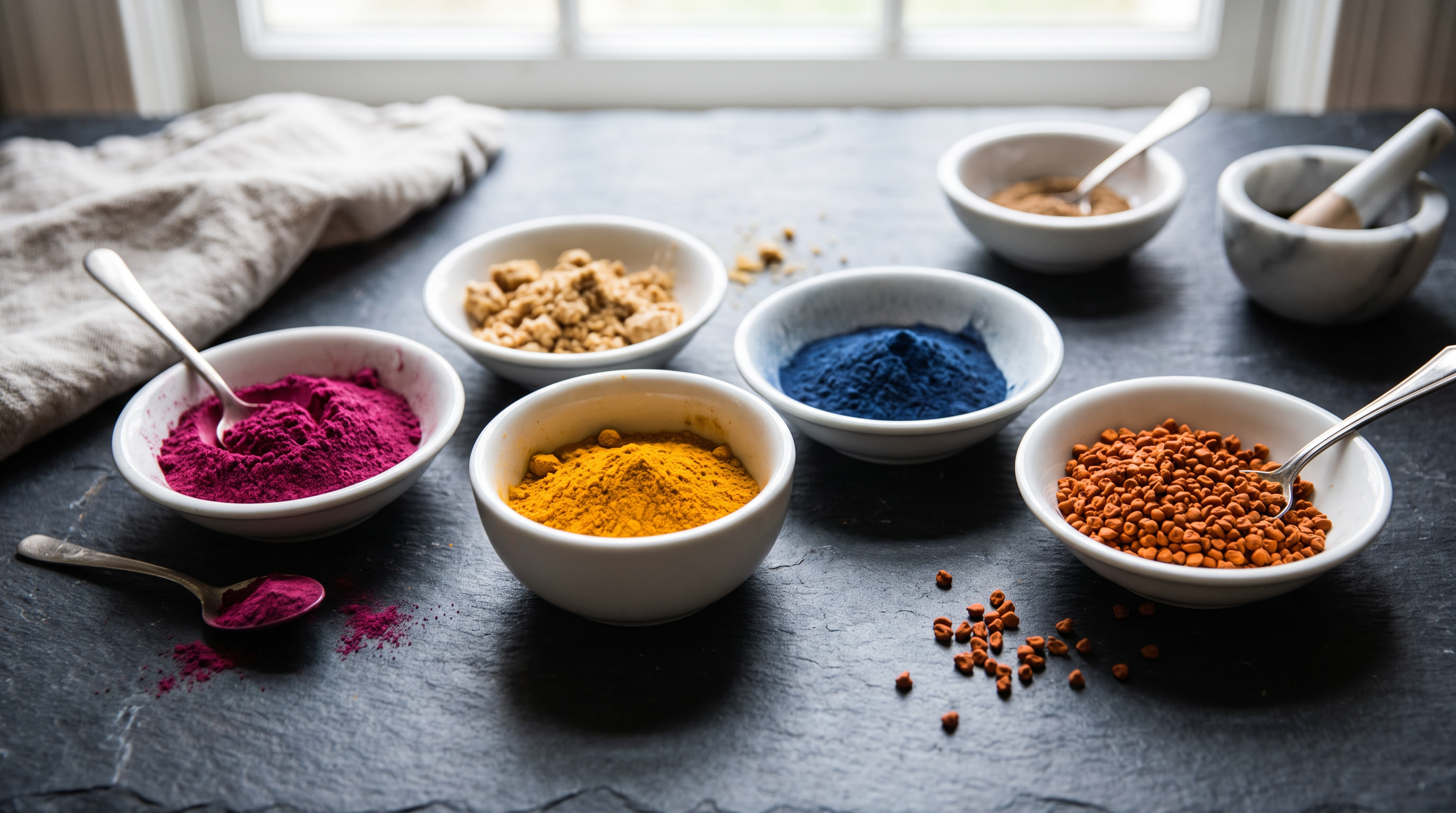
To replace the ubiquitous Red 40, manufacturers are rapidly pivoting to natural sources like beet juice extract, lycopene derived from tomatoes, and anthocyanins from purple sweet potatoes. Carmine, a natural red dye derived from cochineal insects, is also an option, though it faces heavy pushback from vegan and kosher consumers, limiting its broad application.
The vibrant yellows and oranges previously achieved by Yellow 5 and 6 are being substituted with turmeric extract, annatto seed, and beta-carotene. However, these natural spices carry inherent flavor profiles that must be carefully masked or neutralized during the extraction process to prevent a fruit-flavored candy from tasting faintly of curry.[2]
Blue and green hues present the steepest technical hurdle for food chemists. Companies are investing heavily in spirulina extract—a blue-green algae—and butterfly pea flower to replicate the iconic neon colors of sports drinks and gummy candies. Spirulina, while effective, is notoriously sensitive to heat and acidic environments, making it difficult to use in baked goods or carbonated sodas.
Fast-food chains face unique vulnerabilities in this transition. Their signature dipping sauces, seasonal milkshakes, and exclusive beverage partnerships rely heavily on precise, standardized color profiles that consumers expect to look identical whether purchased in New York or Los Angeles. Achieving that level of batch-to-batch consistency with crop-based natural dyes is notoriously difficult.[2]
The transition is also expected to strain the global agricultural supply chain. The sudden, mandated demand for thousands of tons of specialized beets, turmeric, and algae is already outpacing current farming capacity, triggering a rush among ingredient suppliers to secure long-term agricultural contracts.[1]
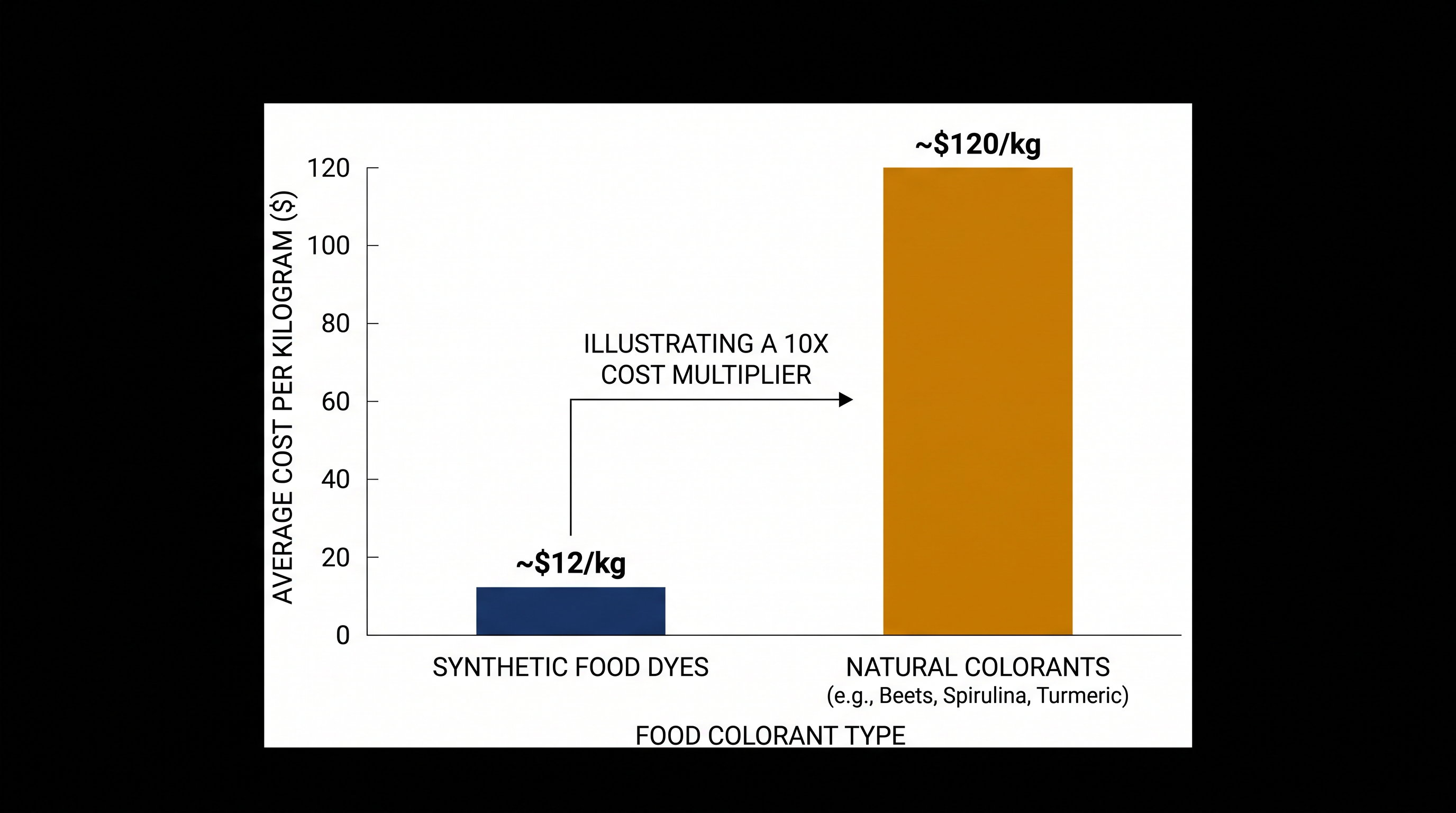
Consequently, industry analysts project a temporary increase in production costs. Natural colorants can cost up to ten times more per kilogram than their synthetic counterparts. It remains unclear how much of the estimated $2.4 billion industry-wide reformulation price tag will be absorbed by corporate margins versus passed on to consumers at the checkout counter.[1][2]
For multinational corporations, the FDA's move actually simplifies global operations in the long run. The European Union has required warning labels on foods containing the "Southampton Six" synthetic dyes since 2010, prompting most major brands to use natural colors in Europe while continuing to use cheaper synthetics in the United States. The new FDA mandate forces a harmonization of these recipes.
Ultimately, American consumers should prepare for a subtle visual shift in the grocery aisles and drive-thrus by late 2026. The hyper-neon hues of the late 20th century will gradually give way to the slightly more muted, earth-toned reality of naturally derived foods, marking a permanent evolution in the aesthetics of the American diet.[2]
How we got here
2010
The European Union begins requiring warning labels on foods containing synthetic dyes, prompting a shift to natural colors in Europe.
2021
California's OEHHA releases a landmark report linking synthetic food dyes to neurobehavioral issues in children.
2023
California passes the Food Safety Act, banning Red 3 and other additives, setting a precedent for state-level food regulation.
2024-2025
Additional state-level legislation targets the 'Big Six' dyes in public schools, fracturing the U.S. regulatory landscape.
August 2026
The FDA finalizes a federal rule phasing out the remaining six major synthetic dyes to unify national standards.
December 2026
The hard deadline for all U.S. food manufacturers to remove the banned dyes from their products.
Viewpoints in depth
Public Health Advocates
View the ban as a long-overdue victory for child safety that aligns U.S. policy with European standards.
Consumer protection groups and pediatricians have lobbied for this outcome for over a decade. They point to numerous studies demonstrating that synthetic dyes act as neurobehavioral triggers for a subset of children, exacerbating ADHD symptoms and general hyperactivity. For these advocates, the FDA's mandate is a necessary correction that finally prioritizes long-term public health over corporate manufacturing convenience, noting that European children have enjoyed dye-free versions of the exact same American snacks for years.
Food & Beverage Industry
Argue the 2026 timeline is aggressively tight given the massive supply chain and technical hurdles of natural reformulation.
While major food conglomerates publicly support the transition to natural ingredients, industry trade groups argue the 28-month compliance window is dangerously narrow. Food scientists emphasize that swapping a synthetic chemical for a plant extract is not a 1-to-1 exchange; it requires months of stability testing to ensure the new natural colors don't fade under grocery store lighting or alter the product's pH balance. Furthermore, they warn that the sudden, mandated shift will cause severe bottlenecks in the agricultural supply chain, driving up costs that will inevitably reach the consumer.
Natural Ingredient Suppliers
See the mandate as a historic growth opportunity but warn of short-term agricultural bottlenecks as demand spikes.
Companies that specialize in extracting colors from fruits, vegetables, and algae are experiencing a massive surge in demand. However, these suppliers caution that scaling up production involves literal farming—you cannot simply manufacture more beets or turmeric overnight; you have to plant, grow, and harvest them. While they are rapidly expanding their agricultural footprint and investing in advanced extraction technologies, they acknowledge that fulfilling the entire U.S. food industry's needs by late 2026 will stretch their operational capacities to the absolute limit.
What we don't know
- Exactly how much of the $2.4 billion reformulation cost will be passed on to consumers in the form of higher grocery prices.
- Whether the global agricultural supply chain can scale up production of specialized crops like spirulina and turmeric fast enough to meet the 2026 deadline.
- How consumers will react to the slightly muted or altered visual appearance of nostalgic, brightly colored snacks and beverages.
Key terms
- The Big Six
- The six synthetic food dyes targeted by the FDA ban: Red 40, Yellow 5, Yellow 6, Blue 1, Blue 2, and Green 3.
- Spirulina
- A type of blue-green algae increasingly used by the food industry as a natural alternative to synthetic blue and green dyes.
- Reformulation
- The complex scientific process of changing a food product's recipe to remove banned ingredients while attempting to maintain its original taste, texture, and appearance.
- Color Additive Status
- The official FDA designation that legally allows a specific chemical or natural extract to be used to color food, drugs, or cosmetics in the United States.
Frequently asked
Will my favorite snacks taste different?
They shouldn't. Food scientists are working to extract the color from natural sources like turmeric and beets while stripping away their inherent flavors, ensuring the final product tastes exactly as it did before.
Are natural food dyes completely safe?
Yes, natural colorants derived from fruits, vegetables, and spices are generally recognized as safe by the FDA and do not carry the neurobehavioral risks associated with petroleum-based synthetic dyes.
Why did the FDA wait until now to ban them?
The FDA previously maintained that the dyes were safe for the general population. However, mounting pediatric research and recent state-level bans in California forced a federal reevaluation of the acceptable daily intake for children.
Will food prices go up because of this?
It is possible. Natural dyes are significantly more expensive to produce than synthetic ones, and the industry faces an estimated $2.4 billion reformulation cost, some of which may be passed to consumers.
Sources
Source coverage
3 outlets
3 viewpoints surfaced



[1]ReutersFood & Beverage Industry
US FDA bans 'Big Six' food dyes, forcing massive industry reformulation
Read on Reuters →[2]The Wall Street JournalFood & Beverage Industry
Fast-Food Giants Scramble to Replace Artificial Colors Ahead of FDA Deadline
Read on The Wall Street Journal →[3]PediatricsPublic Health Advocates
Synthetic Food Dyes and Neurobehavioral Outcomes in Children: A Review
Read on Pediatrics →
Every angle. Every day.
Get food drink stories with full source coverage and perspective breakdowns delivered to your inbox.