
EPA Proposes Limiting Federal Water Protections to Year-Round Flowing Sources
A supplemental rule from the EPA and Army Corps of Engineers would redefine 'relatively permanent' waters as those flowing every day of the year, significantly narrowing federal jurisdiction over wetlands and seasonal streams.

Share this story
When the Supreme Court issued its 2023 ruling in Sackett v. EPA, it restricted federal oversight to "relatively permanent" bodies of water and wetlands with a continuous surface connection to them, but left the exact hydrological thresholds undefined.
Now, the Environmental Protection Agency and the U.S. Army Corps of Engineers have proposed a supplemental rule that establishes a rigid temporal boundary: to qualify for federal protection, a water body must flow every day of the year. The shift marks a significant departure from previous interpretations of the Clean Water Act, effectively removing federal jurisdiction from millions of acres of seasonal streams and isolated wetlands across the country.[1][2]
The supplemental notice, released on September 4, 2026, builds upon a November 2025 proposal that originally defined relatively permanent waters as those flowing year-round or at least during the wet season. Following significant pushback during the initial 45-day comment period, the agencies have tightened the standard. The new regulatory text limits jurisdiction to "perennial" waters, explicitly excluding seasonal or intermittent streams that only flow after heavy rainfall or snowmelt. The agencies noted that the revised definitions are intended to provide a legally defensible framework that can withstand future court challenges.[1][2]
"The EPA's goal is a durable WOTUS definition that follows the law and ends burdensome regulatory uncertainty," EPA Administrator Lee Zeldin stated in the release. The agency noted that the revised framework is designed to cut bureaucratic red tape and align strictly with the Supreme Court's directive. By narrowing the scope of the Clean Water Act, the administration is acknowledging that states and Native American tribes are better positioned to manage and regulate their own local water resources without federal interference.[1]
Under the supplemental proposal, a wetland must possess a "continuous surface connection" to a protected water body to fall under federal jurisdiction. The agencies define this as perennial surface water in a wetland that is continuously connected to a jurisdictional water, making it difficult to determine where the water ends and the wetland begins. The EPA anticipates that the majority of wetlands currently regulated as adjacent would lose federal protection under this standard, as most do not contain perennial surface water year-round.[2]
The rule does include specific exemptions for temporary interruptions in water flow to account for natural hydrological variations. A water body would not lose its relatively permanent status if it dries up due to anomalous events, such as a severe, documented drought. Additionally, the proposal establishes a 30-day "bright-line interruption" standard.
This provision allows for non-anomalous temporary dry spells—such as low tides or regularly occurring dry periods—provided they do not exceed 30 consecutive days in any given year. The agencies are actively seeking public comment on whether drought should be treated as a special exception when determining a water body's permanent status.[1][2]
For the agricultural sector, the narrowed definitions represent a significant victory following decades of regulatory whiplash across successive presidential administrations. American Farm Bureau Federation President Zippy Duvall expressed strong support for the measure, noting that a clear understanding of federal jurisdiction is critical for farmers who face severe financial penalties or even jail time for unknowingly violating the Clean Water Act. Industry groups argue that the previous inclusion of seasonal features forced landowners to undergo costly and time-consuming federal permitting processes for routine land management.[2]
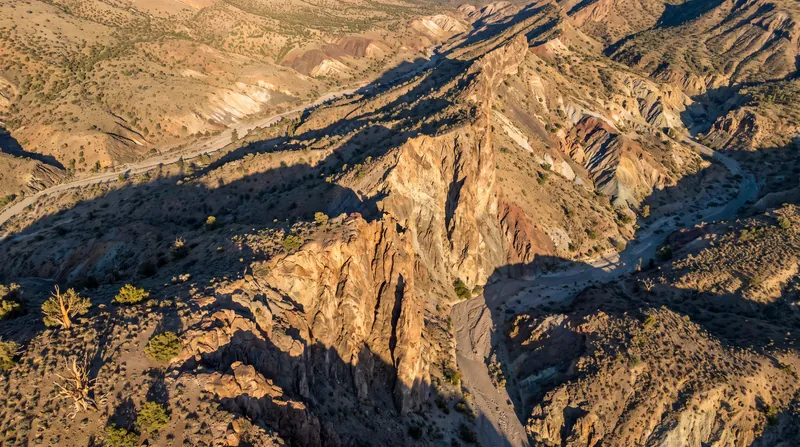
Conversely, the removal of the "wet season" provision means that ephemeral streams—which make up a substantial portion of the waterways in the arid American West—would fall entirely outside the purview of the Clean Water Act. The Trump administration's push to cut protections for more bodies of water shifts the regulatory burden entirely to individual states. Analysts note that stripping federal oversight from these networks could accelerate pollution and habitat loss, leaving protection dependent on a patchwork of state-level regulations that vary widely in enforcement capacity and funding.[3][4]
The EPA and the Army Corps will accept public comments on the supplemental regulatory alternatives for 30 days following their publication in the Federal Register. The agencies stated they will evaluate these new options alongside the 220,000 comments received on the 2025 proposal to finalize a rule that provides predictability for landowners, energy producers, and developers while maintaining water quality standards. Until a final rule is issued, the regulatory landscape remains fragmented, with 24 states operating under a 2023 amended rule and 26 states relying on pre-2015 frameworks.[1][4]
Key points
- The EPA and Army Corps issued a supplemental rule to refine the definition of 'Waters of the United States'.
- The proposal limits 'relatively permanent' waters to perennial bodies that flow every day of the year.
- Wetlands would only be federally protected if they have a continuous, indistinguishable surface connection to a jurisdictional water.
- Temporary interruptions in flow up to 30 days, or anomalies like droughts, would not strip a water body of its protected status.
How we got here
May 2023
The Supreme Court issues its Sackett v. EPA decision, limiting federal jurisdiction over wetlands.
Nov 2025
The EPA proposes an updated WOTUS rule defining relatively permanent waters as flowing year-round or during the wet season.
Jan 2026
The public comment period for the initial proposal closes after receiving over 220,000 submissions.
Sep 4, 2026
The EPA and Army Corps issue a supplemental proposal limiting protection to perennial, year-round waters.
- Agricultural and Industrial Landowners
- Argue that a narrower, clearer definition of federal waters protects property rights and ends decades of regulatory uncertainty.
- Federal Regulators
- Focus on aligning agency rules strictly with the Supreme Court's Sackett decision to create a legally durable framework.
- Environmental Advocates
- Warn that removing federal protections from seasonal streams and adjacent wetlands will degrade water quality and leave habitats vulnerable.
Perspectives this story doesn't cover
- State Water Quality Agencies
- Municipal Water Utilities
Sources
Source coverage
4 outlets
3 viewpoints surfaced




- [1]Environmental Protection AgencyFederal Regulators
EPA and Army Seek Additional Input on Proposed Waters of the U.S. Definition While Advancing Toward Durable Final Rule
Read on Environmental Protection Agency → - [2]DTNAgricultural and Industrial Landowners
EPA Supplemental WOTUS Would Tighten Definitions of Protected Waters, Wetlands
Read on DTN → - [3]NOTUSEnvironmental Advocates
Trump Is Proposing Cutting Protections for More Bodies of Water
Read on NOTUS → - [4]Factlen Editorial TeamEnvironmental Advocates
Synthesis by Factlen editorial team
Read on Factlen Editorial Team →
More in Environment
See all →Seismic Event
Magnitude 6.4 Earthquake Strikes Papua New Guinea's Eastern Highlands
4 sources
Infrastructure Stress
Torrential Rainfall Triggers Flash Flooding and Highway Mudslides Across Southern Minnesota
4 sources
Vietnam Floods
Record 52 Inches of Rain Triggers Deadly Vietnam Floods, Submerging 16,300 Homes
4 sources
Earthquake Mechanics
The Stored Elastic Strain Energy That Causes Earthquakes
8 sources
Comments
Every angle. Every day.
Get Environment stories with full source coverage and perspective breakdowns, free every day.