
EHF Injury Desk: Madsen's Conservative Rehab and Tollbring's Recovery Shape 2026–27 Preparations
As the European handball calendar intensifies, clubs are prioritizing sustainable rehabilitation for stars like Emil Madsen and Jerry Tollbring, while young talents step up to fill the void.

- Club Medical Staffs
- Prioritizing long-term joint health and sustainable recovery over immediate tactical needs.
- National Team Management
- Balancing the loss of veteran stars with the integration of emerging youth talent.
- Sports Physiotherapists
- Advocating for time-based biological healing alongside traditional strength metrics.
Perspectives this story doesn't cover
- Youth Academy Directors
- Players' Union Representatives
Summary
- THW Kiel star Emil Madsen is undergoing conservative, non-surgical rehabilitation for cartilage damage in his right knee.
- Jerry Tollbring's season-ending ligament tear opened the door for 18-year-old Jan Gruner at Füchse Berlin and 20-year-old Felix Montebovi for Sweden.
- Recent sports medicine reviews emphasize that waiting at least nine months to return from knee injuries cuts reinjury risk by seven-fold.
- French right wing Benoit Kounkoud successfully completed his rehab, returning to the national squad in time for major competition.
- Serbian left back Miloš Kos is working through an off-season conditioning program to overcome a persistent ankle injury.
The grueling European handball calendar demands a heavy physical toll, but the 2026 off-season has highlighted a maturing approach to player welfare. Across the EHF Champions League and national team camps, medical staffs are increasingly prioritizing sustainable, long-term rehabilitation over rushed returns. As clubs prepare for the 2026–27 campaign, the recovery trajectories of several high-profile stars—and the young talents who have stepped up in their absence—are shaping the competitive landscape.
One of the most closely monitored recoveries is that of THW Kiel and Danish national team right back Emil Madsen. Madsen suffered cartilage damage in his right knee, a late consequence of an issue sustained during international duty. The injury sidelined the prolific scorer for the latter half of 2025 and forced him to miss the EHF EURO 2026.[1]
Rather than opting for an immediate surgical intervention, THW Kiel's medical team, led by Dr. Philip Lübke, collaborated with Danish national team doctors to design a conservative rehabilitation plan. "We want to make sure Emil's knee recovers in the most sustainable way possible so his long career won't be affected," Lübke noted. This patient approach reflects a broader shift in handball sports medicine, focusing on joint longevity rather than immediate tactical needs, and Kiel remains optimistic about his full integration back into the squad.[1]
The cautious approach taken with Madsen aligns with recent sports medicine findings specifically targeting pivoting sports like handball. A landmark 2026 clinical review highlighted that returning to knee-strenuous sports before nine months increases the risk of reinjury by seven-fold, regardless of whether the athlete passes standard strength tests. By prioritizing time and biological healing over accelerated timelines, clubs are actively working to mitigate the sport's high reinjury rates.
A similarly devastating setback struck Füchse Berlin and Swedish left wing Jerry Tollbring, who suffered torn ligaments just minutes into a Champions League clash against Paris Saint-Germain following a duel with Elohim Prandi. The injury ruled Tollbring out for the remainder of the season and forced his withdrawal from the Swedish national team.[2]
The injury ruled Tollbring out for the remainder of the season and forced his withdrawal from the Swedish national team.
However, Tollbring's absence catalyzed crucial opportunities for the next generation of European talent. At the club level, Füchse Berlin general manager Bob Hanning immediately promoted 18-year-old Jan Gruner from the youth academy to the first team. Gruner, a German U19 champion, was thrust into elite European competition, accelerating his development in a high-stakes environment.[2]
On the international stage, Tollbring's injury paved the way for 20-year-old Felix Montebovi to make his championship debut for Sweden. Stepping into the squad alongside veteran Hampus Wanne, Montebovi gained invaluable experience against top-tier European competition.
Wanne publicly supported the young winger, noting that while Tollbring's injury was unfortunate, it provided Montebovi with a vital platform to prove himself at the highest level. The veteran emphasized that managing the physical load across a deep roster is essential for navigating modern tournament structures.
Elsewhere, perseverance through rehabilitation is yielding positive results. French right wing Benoit Kounkoud successfully navigated his own recovery timeline, making it back to full fitness in time to be nominated for the French national squad. His return provides a significant boost to the team's depth and serves as a testament to the effectiveness of modern, structured return-to-play protocols.
Meanwhile, Serbian left back Miloš Kos is working to re-establish his rhythm after a persistent ankle injury disrupted his season with HC Erlangen and forced him out of the EHF EURO 2026. As he progresses through his off-season conditioning, his return is highly anticipated by a Serbian national team looking to solidify its backcourt options under head coach Raul Gonzalez.[3]
Ultimately, the current wave of handball injury management underscores a vital evolution in the sport. By embracing conservative treatment plans, fostering open communication between club and national team medical staffs, and trusting youth academies to fill the gaps, the handball community is building a more resilient ecosystem. For players like Madsen and Tollbring, the focus remains firmly on returning not just quickly, but stronger than before.[1][2]
Chronology
October 2025
Emil Madsen is diagnosed with cartilage damage in his right knee, prompting a conservative rehab plan.
Late 2025
Jerry Tollbring suffers torn ligaments in a Champions League match, ruling him out for the season.
January 2026
Felix Montebovi makes his championship debut for Sweden, stepping in for the injured Tollbring.
January 2026
Benoit Kounkoud successfully returns from injury to join the French national squad.
May 2026
New clinical reviews emphasize the necessity of 9+ month recovery timelines for knee injuries in handball.
Significance
The grueling physical toll of professional handball frequently derails careers, but a growing embrace of conservative, patience-first rehabilitation is reshaping the sport. By prioritizing long-term joint health over rushed returns, clubs are extending the careers of their stars while simultaneously accelerating the development of youth academy players forced to step up in their absence.
Sources
Source coverage
3 outlets
3 viewpoints surfaced

- [1]Handball PlanetClub Medical Staffs
THW Kiel suffer major blow: Emil Madsen out until the end of the year
Read on Handball Planet → - [2]Handball PlanetClub Medical Staffs
The end of season for Jerry Tollbring
Read on Handball Planet → - [3]Handball PlanetClub Medical Staffs
Milos Kos to miss EHF EURO 2026
Read on Handball Planet →
Comments
More in Sports
See all →Bundesliga History
FC Augsburg Claims First-Ever Bundesliga Top Spot Following 4-1 Comeback Victory Over Eintracht Frankfurt
5 sources
Tactical Evolution
The Tactical Schism: Quantifying the Trade-Offs Between Inverted and Overlapping Fullbacks
6 sources
Football Finance
How the Premier League's Broadcast Revenue Algorithm Distributes £2.8 Billion Annually
5 sources
Managerial Shift
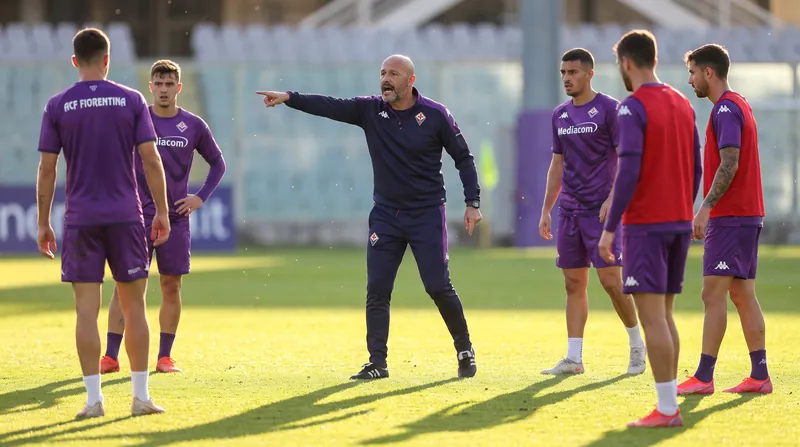
Fiorentina Re-Hire Paolo Vanoli as Head Coach After Sacking Fabio Grosso Three Matches Into Season
6 sources
Every angle. Every day.
Get Sports stories with full source coverage and perspective breakdowns delivered to your inbox.