
Education Department Eliminates 'Disparate Impact' Standard, Altering Civil Rights Enforcement for School Policies and EdTech
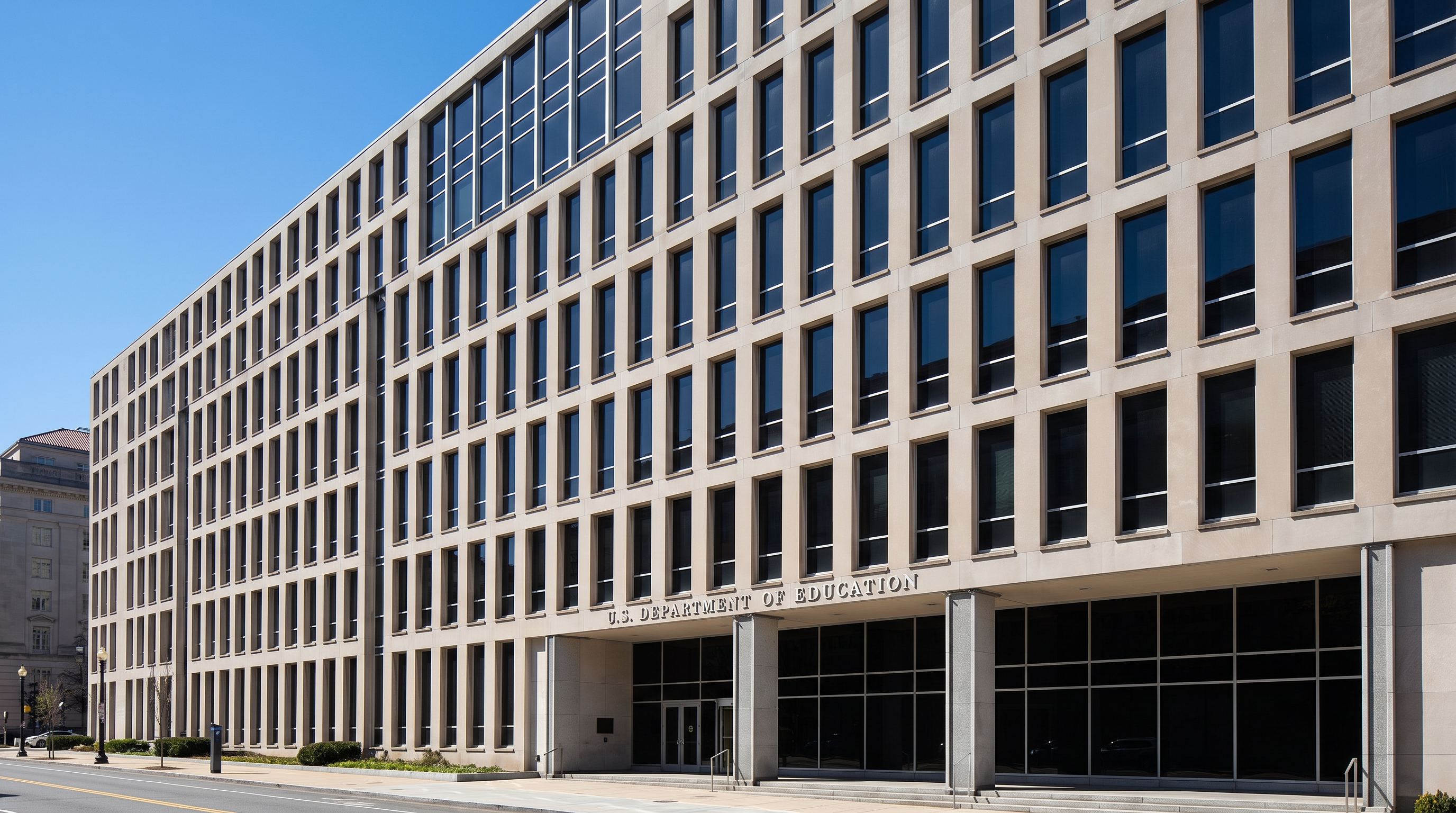
The U.S. Department of Education has rescinded a decades-old civil rights provision, meaning schools and educational technology tools can no longer be penalized under Title VI solely because their policies or algorithms disproportionately affect specific demographic groups.
By Factlen Editorial Team
- Civil Rights Advocates
- Argues that removing the standard strips essential protections against systemic and algorithmic biases.
- Federal Administration
- Argues that disparate impact forces illegal racial balancing and weaponizes civil rights laws.
- Legal & Compliance Analysts
- Focuses on the procedural mechanisms and the shift toward requiring proof of intentional discrimination.
- EdTech & Data Privacy Watchdogs
- Highlights the danger of unchecked algorithmic bias now that statistical outcomes alone cannot trigger federal liability.
What's not represented
- · State-level education administrators
- · EdTech software engineers
Why this matters
By requiring proof of intentional discrimination rather than just statistical disparities, this policy shift fundamentally changes how systemic bias and algorithmic fairness are regulated in American schools. Edtech companies and districts face a new legal landscape where unintentional but disproportionate harm is no longer a federal civil rights violation.
Key points
- The Department of Education has rescinded the 'disparate impact' standard under Title VI of the Civil Rights Act.
- Plaintiffs must now prove intentional discrimination to establish a federal civil rights violation in education.
- The change aligns with a broader administration effort to eliminate disparate-impact liability across federal agencies.
- Edtech algorithms that unintentionally produce racially skewed outcomes are largely shielded from federal Title VI liability under the new rule.
- Civil rights groups argue the move strips crucial protections against systemic bias and plan to challenge the procedural rollout in court.
On July 23, 2026, the U.S. Department of Education announced the elimination of a decades-old civil rights standard, fundamentally altering how discrimination is investigated in American schools. The rescission of the "disparate impact" regulations under Title VI of the Civil Rights Act means that educational institutions and the technology vendors they rely on will no longer face federal liability solely because their policies or algorithms produce statistically unequal outcomes across demographic groups.[1][2]
For more than half a century, federal civil rights enforcement recognized two distinct forms of discrimination. The first, "disparate treatment," involves intentional bias—explicitly treating a student differently because of their race, color, or national origin. The second, "disparate impact," focused entirely on outcomes. Under the now-rescinded standard, a facially neutral policy that disproportionately harmed a protected class could be deemed a civil rights violation, even if the school or software developer harbored no discriminatory intent.[5]
The Department of Education's decision to abandon the disparate impact standard aligns with a broader administration effort to reshape federal civil rights enforcement. Following Executive Order 14281, signed in April 2025, federal agencies were directed to deprioritize and eliminate disparate-impact liability across the government. The Department of Justice took similar steps in late 2025, setting the stage for the education sector's regulatory overhaul.[4][5]
Administration officials argue that the disparate impact standard had strayed from the original text of the 1964 Civil Rights Act, which they maintain only prohibits intentional discrimination. Assistant Secretary for Civil Rights Kimberly Richey stated that the old framework effectively forced schools to engage in "racial balancing" to avoid federal investigations. By removing the standard, the department asserts that schools will be empowered to manage their classrooms and implement neutral policies without fearing that statistical anomalies will trigger federal intervention.[1][3]

Historically, the disparate impact standard was most visibly applied to school discipline. During previous administrations, the Office for Civil Rights frequently investigated school districts where data showed Black or Latino students were suspended or expelled at significantly higher rates than their white peers under "zero tolerance" policies. Without the need to prove a racist motive, civil rights advocates used statistical disparities to force districts to overhaul their disciplinary frameworks.[3][4]
However, the elimination of this standard carries profound and immediate implications for the rapidly expanding educational technology sector. As schools increasingly integrate AI-driven tools, predictive analytics, and automated grading systems into their daily operations, the legal definition of discrimination dictates how these tools are audited and regulated.[6]
However, the elimination of this standard carries profound and immediate implications for the rapidly expanding educational technology sector.
Educational algorithms often produce racially skewed outcomes. This rarely happens because a developer intentionally programmed the software to discriminate. Instead, machine learning models are trained on historical data—such as past grading trends, attendance records, and disciplinary actions—that already contain embedded societal biases. When an algorithm uses this data to predict which students are "at-risk" of dropping out, it can inadvertently flag minority students at disproportionately high rates.[6]
Under the previous Title VI framework, an edtech vendor's algorithm that consistently produced a disparate impact could trigger a federal civil rights investigation based on the statistical output alone. Schools using the software could be held liable for the discriminatory effects of the technology, forcing vendors to rigorously audit their models for demographic fairness to maintain their contracts.[5][6]

With the disparate impact standard removed, the legal vulnerability for "black box" algorithms shrinks dramatically. Civil rights advocates warn that challenging algorithmic bias will now be nearly impossible at the federal level. To trigger an investigation, plaintiffs must prove disparate treatment—meaning they would have to uncover evidence that the developers intentionally designed the software to disadvantage a specific demographic group, a hurdle that legal experts consider insurmountable in the context of machine learning.[4][6]
The procedural method used to enact this change has also sparked significant controversy. Typically, major regulatory shifts require a lengthy public notice-and-comment period under the Administrative Procedure Act (APA). However, the Department of Education bypassed this process, publishing the final rule immediately by invoking an APA exception for regulations relating to agency management, grants, and contracts.[2][3]
Civil rights organizations, including the Lawyers' Committee for Civil Rights Under Law and the NAACP Legal Defense Fund, swiftly condemned the move. Former civil rights officials argue that the rescission strips marginalized students of their most effective tool for dismantling systemic barriers. They contend that intentional discrimination is notoriously difficult to prove, and that closing the door on disparate impact leaves students vulnerable to benignly-motivated policies that nonetheless restrict access to advanced courses or fair grading.[2][4]
Despite the federal rollback, the legal landscape for schools and edtech companies remains fragmented. The Department of Education's rule change dictates how the federal government will enforce Title VI, but it does not preempt state laws or local school board policies. Several states maintain their own civil rights statutes that still recognize disparate impact, meaning that national edtech vendors cannot entirely abandon demographic auditing without risking state-level litigation.[3]

The immediate future of civil rights enforcement in education will likely be decided in the courts. Legal challenges are expected to target the Department of Education's use of the APA exception to bypass public comment, potentially delaying the rule's implementation. In the meantime, the burden of proof has definitively shifted, requiring students and advocates to find new ways to challenge the invisible biases embedded in both administrative policies and the algorithms that increasingly govern modern education.[2][5]
How we got here
1964
The Civil Rights Act is passed, including Title VI which prohibits discrimination in federally funded programs.
1971
The Supreme Court recognizes disparate-impact liability in Griggs v. Duke Power Co.
2001
The Supreme Court rules in Alexander v. Sandoval that private individuals cannot sue over disparate impact under Title VI, leaving enforcement to federal agencies.
April 2025
President Trump signs Executive Order 14281, directing federal agencies to eliminate disparate-impact liability.
December 2025
The Department of Justice updates its Title VI regulations to eliminate disparate-impact liability.
July 23, 2026
The Department of Education officially rescinds its disparate-impact regulations.
Viewpoints in depth
Federal Administration's View
The standard forced schools into illegal racial balancing and weaponized civil rights laws.
Administration officials, including Assistant Secretary for Civil Rights Kimberly Richey, argue that the disparate impact standard strayed from the original intent of the 1964 Civil Rights Act, which they maintain only prohibits intentional discrimination. They contend that the threat of federal investigation forced schools to adopt racial quotas in discipline and grading to ensure statistical parity, rather than addressing individual student behavior or merit. By removing this liability, they believe teachers and administrators are empowered to implement safe, neutral classroom policies without fear of federal overreach.
Civil Rights Advocates' View
Removing the standard strips essential protections against systemic and algorithmic biases.
Organizations like the NAACP Legal Defense Fund and former Office for Civil Rights officials argue that intentional discrimination is notoriously difficult to prove in the modern era. They emphasize that many discriminatory practices—such as predictive algorithms trained on biased historical data or zero-tolerance discipline policies—are benignly motivated but devastating in their effects on marginalized students. Without the ability to challenge statistical disparities, advocates warn that students of color will face unjustified barriers to advanced coursework and fair treatment.
Legal & Compliance Analysts' View
The procedural bypass of public comment sets up immediate legal vulnerabilities.
Legal experts point out that the Department of Education's decision to bypass the standard Administrative Procedure Act (APA) notice-and-comment period is highly unusual for a rule of this magnitude. By invoking an exception for rules relating to agency management and grants, the department expedited the rescission but opened the door to procedural lawsuits. Analysts expect that civil rights groups will immediately challenge the rule in federal court on these procedural grounds, creating a period of legal uncertainty for schools trying to understand their compliance obligations.
EdTech & Data Privacy Watchdogs' View
Unchecked algorithmic bias poses a new threat in the absence of disparate impact liability.
Technology watchdogs highlight that the modern classroom is increasingly governed by machine learning models that predict student success, flag at-risk behavior, and automate grading. Because these systems learn from historical data, they often replicate past biases, resulting in disparate impacts without any human intent to discriminate. Watchdogs warn that without federal Title VI liability for these statistical outcomes, edtech vendors have far less legal incentive to rigorously audit their algorithms for demographic fairness, potentially embedding systemic bias into the digital infrastructure of education.
What we don't know
- Whether federal courts will uphold the Department of Education's use of an Administrative Procedure Act exception to bypass public comment.
- How state-level civil rights agencies will enforce their own disparate impact laws against national edtech vendors.
- Whether the Office for Civil Rights will introduce new guidelines for auditing algorithmic bias under the stricter 'disparate treatment' standard.
Key terms
- Disparate Impact
- A legal doctrine holding that a facially neutral policy violates civil rights laws if it disproportionately harms a protected group, regardless of intent.
- Disparate Treatment
- Intentional discrimination where an individual or group is treated differently specifically because of a protected characteristic like race or national origin.
- Title VI
- A provision of the Civil Rights Act of 1964 that prohibits discrimination on the basis of race, color, or national origin in any program receiving federal financial assistance.
- Administrative Procedure Act (APA)
- The federal law that governs the process by which administrative agencies develop and issue regulations, typically requiring a public notice-and-comment period.
- Algorithmic Bias
- Systematic and repeatable errors in a computer system that create unfair outcomes, often by encoding historical inequalities into predictive models.
Frequently asked
What is disparate impact?
Disparate impact is a legal doctrine where a facially neutral policy is considered discriminatory if it disproportionately harms a specific demographic group, even without intentional bias.
Why did the Department of Education eliminate this standard?
The department stated that the standard forced schools into "racial balancing" and argued that Title VI of the Civil Rights Act only prohibits intentional discrimination.
How does this affect educational technology?
Edtech tools that use algorithms to grade or monitor students can no longer trigger federal civil rights investigations solely because their data outputs show racial disparities; plaintiffs must now prove the software was intentionally designed to discriminate.
Can schools still be sued for discrimination?
Yes, but plaintiffs must now prove "disparate treatment"—meaning they must show concrete evidence of intentional discrimination based on race, color, or national origin.
Sources
Source coverage
6 outlets
4 viewpoints surfaced






[1]U.S. Department of EducationFederal Administration
OCR Announces Deregulatory Actions to Ensure Equal Educational Opportunities
Read on U.S. Department of Education →[2]Education WeekCivil Rights Advocates
Education Department Eliminates 'Disparate Impact' Regulations
Read on Education Week →[3]Higher Ed DiveLegal & Compliance Analysts
Education Department rescinds disparate impact regulations under Title VI
Read on Higher Ed Dive →[4]Associated PressEdTech & Data Privacy Watchdogs
Education Department rescinds disparate impact rule, a key tool used to assess school discrimination
Read on Associated Press →[5]Thompson CoburnLegal & Compliance Analysts
DOJ Eliminates Disparate-Impact Liability Under Title VI
Read on Thompson Coburn →[6]The Leadership Conference on Civil and Human RightsCivil Rights Advocates
Disparate Impact as Uniquely Relevant in the Age of AI
Read on The Leadership Conference on Civil and Human Rights →

Every angle. Every day.
Get education stories with full source coverage and perspective breakdowns delivered to your inbox.