
Darts Injury Report: Van Duijvenbode's Triumphant Return and Part's Comeback Bid Highlight Resilience on the Oche
Dirk van Duijvenbode has successfully returned to elite form following a career-threatening shoulder injury, while veteran John Part is eyeing a PDC comeback after overcoming a frozen shoulder.
- Active Tour Professionals
- Focus on the immediate impact of injuries on rankings, prize money, and the pressure to play through pain.
- Veteran Players
- View injuries as an inevitable hurdle, emphasizing mental resilience and the desire to compete regardless of setbacks.
- Sports Medicine Professionals
- Emphasize the biomechanical strain of the throwing motion and the necessity of structured rest and physiotherapy.
Perspectives this story doesn't cover
- Physical Therapists specializing in throwing sports
- PDC Scheduling Officials
The repetitive motion of throwing thousands of darts a week places immense strain on the shoulder, elbow, and wrist joints. While darts is rarely viewed by the general public as a physically demanding contact sport, the biomechanical reality of competing at the elite level tells a very different story. The sheer volume of practice hours required to maintain pinpoint accuracy means that career-threatening injuries are an ever-present danger for players on the professional circuit. As the calendar expands, the physical toll has never been more apparent.[6]
For 32-year-old Dutch star Dirk van Duijvenbode, that danger recently became a grim reality. A debilitating shoulder injury derailed his competitive momentum just as he was firmly established inside the world's top ten rankings. The severe joint issue caused him to drop out of the elite top 16, severely impacting his confidence on the oche and forcing him to reevaluate his entire approach to the sport. The injury stripped away his natural rhythm, turning what was once a fluid, aggressive throwing action into a painful and hesitant mechanical process.[1][5]
The road to recovery was fraught with misdiagnoses and immense frustration. Van Duijvenbode revealed that he spent thousands of euros on various private treatments, losing crucial months to specialists who failed to accurately identify the root cause of his shoulder pain. At one point, a supposed specialist told him he didn't even have the injury he suspected, leading to wasted rehabilitation time and mounting anxiety about his professional future. He spent days traveling from early morning until late at night just trying to find a definitive medical answer.[1]
The mental toll of the injury was just as heavy as the physical one. The Dutchman admitted that the insecurity of potentially losing his Tour Card weighed heavily on his mind during his darkest months. This financial and professional pressure forced him to play through agonizing pain to secure starting money at major tournaments, even when his body pleaded for rest. He openly discussed the fear that he might not be able to compete at a high level for the next two years.[1]
However, the 2025 and 2026 seasons have marked a triumphant and uplifting return to form for the player known as 'Aubergenius.' Now playing completely pain-free, Van Duijvenbode has surged back into major quarter-finals and reestablished his formidable presence on the televised stage. He recently averaged near 99 at the World Darts Championship, executing a sensational 170 checkout under immense pressure and proving to the darting world that his signature explosive scoring power has fully returned. He refused to fold under pressure, showcasing a renewed mental resilience.[1][5]
Reflecting on his arduous rehabilitation journey, Van Duijvenbode noted that while his overall confidence is still gradually rebuilding, his actual throwing mechanics have significantly improved. He boldly declared that his current game is 'ten percent better than it was at my peak,' a testament to his grueling physical therapy regimen and his newfound dedication to body maintenance. The injury, while devastating, ultimately forced him to become a fitter, more focused athlete capable of practicing longer without breaking down.[1]
Van Duijvenbode is not the only player proving that major physical setbacks can be successfully overcome. Three-time world champion John Part is currently mounting an inspiring comeback bid at the age of 59, refusing to let a bizarre off-stage injury dictate the end of his storied career. The legendary Canadian has maintained a deep love for the sport, and his recent physical recovery has reignited his competitive fire on the oche, proving that age is merely a number.[2]
Van Duijvenbode is not the only player proving that major physical setbacks can be successfully overcome.
During the global pandemic, the Canadian icon suffered a severe rotator cuff injury and a frozen shoulder while simply walking his dog. The debilitating joint issue forced him to stop throwing entirely for six months, a massive blow for a veteran player who had already lost his PDC Tour Card in 2019. The inability to even hold a dart cast serious doubt over whether he would ever compete professionally again, leaving him to wonder if his playing days were permanently behind him.[2]
Rather than quietly retiring to the television commentary booth, Part has spent the last few years meticulously rebuilding his throw from the ground up. Currently competing with mixed success on the World Seniors tour, he is now openly targeting a return to the grueling PDC Q-School in 2026. Driven by an enduring love for competition and a desire to test his physical limits, Part's journey highlights the sheer willpower required to return from a frozen shoulder and compete against players half his age.[2]
The resilience shown by Van Duijvenbode and Part is mirrored across the broader PDC circuit, where top players routinely battle and overcome severe physical ailments. Three-time world champion Michael van Gerwen recently returned to the stage following a 'nightmare' recovery from major jaw and dental surgery, proving that physical adversity takes many forms in professional sports. His commitment to competing at the highest level despite undergoing a massive structural operation has inspired fans and fellow players alike.[3]
Surgeons had to physically break and reset both of Van Gerwen's upper and lower jaws to correct a severe underbite that was restricting his breathing and severely affecting his sleep quality. Despite wearing corrective braces and facing at least two more years of ongoing orthodontic treatment, the Dutchman has successfully adapted his game. He refuses to use his painful dental recovery as an excuse, maintaining his status as one of the sport's most dominant forces and continuing to challenge for world titles.[3]
Similarly, former UK Open champion Nathan Aspinall is successfully navigating his own physical gauntlet. After a persistent and painful wrist injury ruined his 2024 campaign and forced a lengthy break from the sport, Aspinall is now managing a severe case of bursitis—an infection of the elbow—that recently required hospital treatment. Despite the swelling and discomfort, he continues to average over 100 in televised matches, showcasing incredible grit and a determination to not let joint issues derail his prime years.[4]
These chronic injury battles are forcing a necessary paradigm shift in how darts professionals approach their craft. The days of endless, unmonitored practice sessions are rapidly fading, replaced by structured training regimens that prioritize biomechanical health and long-term longevity. Players are finally recognizing that the throwing arm is a finite resource that must be carefully managed over a decades-long career, prompting a wave of professionalism that mirrors traditional athletic disciplines.[6]
Sports science experts and coaches now actively advocate for mandatory rest days, targeted stretching routines, and regular physiotherapy to prevent the overuse injuries that plague the modern game. For players throwing thousands of darts a week under immense pressure, physical maintenance is now just as critical to their success as treble-twenty accuracy. The integration of sports medicine is extending careers, improving the overall quality of play, and ensuring that minor aches do not develop into surgical emergencies.[6]
Ultimately, the triumphant returns of players like Van Duijvenbode and the stubborn, inspiring persistence of veterans like Part highlight a new era of physical resilience on the oche. With modern rehabilitation techniques, dedicated physical therapy, and sheer willpower, a severe injury in professional darts is no longer a guaranteed career death sentence. These athletes are proving that the human body can rebuild and return stronger than ever, offering hope to any player currently battling through the pain barrier.[1][2]
The essentials
- Dirk van Duijvenbode has returned to peak form after a debilitating shoulder injury threatened his career.
- Veteran John Part is eyeing a return to PDC Q-School in 2026 after recovering from a frozen shoulder.
- Michael van Gerwen continues to compete at the highest level despite undergoing major jaw realignment surgery.
- Sports science and physiotherapy are becoming essential components of a modern darts professional's routine.
Timeline
Mid 2020
John Part suffers a rotator cuff injury and frozen shoulder while walking his dog.
Late 2023
Dirk van Duijvenbode's shoulder injury worsens, causing a drop in form and confidence.
Mid 2024
Michael van Gerwen undergoes major jaw surgery to correct a severe underbite.
Late 2025
Van Duijvenbode returns to peak form, hitting near-100 averages at the World Championship.
Early 2026
John Part targets a return to PDC Q-School to reclaim his Tour Card.
- 6 months
- Time John Part stopped throwing
- 170
- Van Duijvenbode clutch checkout
- €3,000+
- Spent on shoulder treatments
Glossary
- PDC Tour Card
- The professional credential required to compete full-time on the Professional Darts Corporation circuit.
- Q-School
- The annual qualifying tournament where players compete to win a PDC Tour Card for the upcoming season.
- Rotator Cuff
- A group of muscles and their tendons that act to stabilize the shoulder, frequently strained by the repetitive dart throwing motion.
- Bursitis
- Inflammation of the fluid-filled sacs that cushion the joints, often occurring in the elbow for darts players.
Sources
Source coverage
6 outlets
3 viewpoints surfaced





- [1]DartsNewsActive Tour Professionals
Dirk van Duijvenbode opens up on injury troubles and return to form
Read on DartsNews → - [2]ExpressVeteran Players
Darts icon John Part eyeing PDC Tour comeback after overcoming dog-walking injury
Read on Express → - [3]MirrorVeteran Players
Michael van Gerwen battled through a 'nightmare' dental recovery
Read on Mirror → - [4]Darts Planet TVSports Medicine Professionals
Nathan Aspinall endures challenging season plagued by persistent injuries
Read on Darts Planet TV → - [5]Live DartsActive Tour Professionals
A resurgent Dirk van Duijvenbode marks his second major quarter-final
Read on Live Darts → - [6]GoDartsProSports Medicine Professionals
The Importance of Rest and Recovery for Darts Players
Read on GoDartsPro →
Comments
More in Sports
See all →NFL Contracts
Patriots Make Christian Gonzalez the Highest-Paid Cornerback in NFL History
7 sources
Kansas City Current
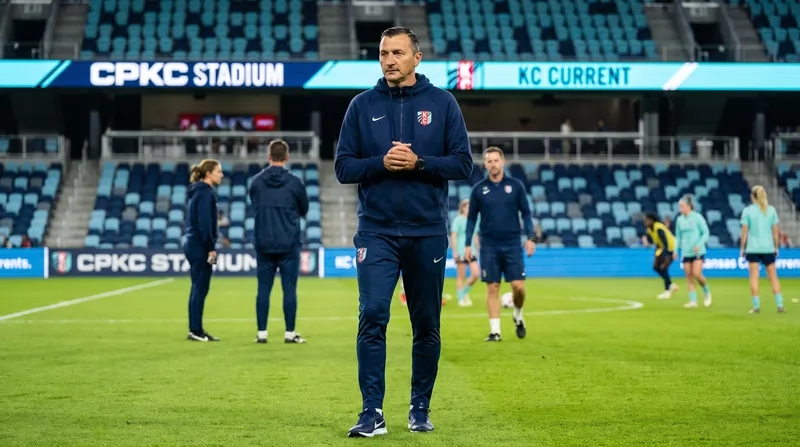
Kansas City Current Part Ways With Sporting Director Vlatko Andonovski
6 sources
Power ranking
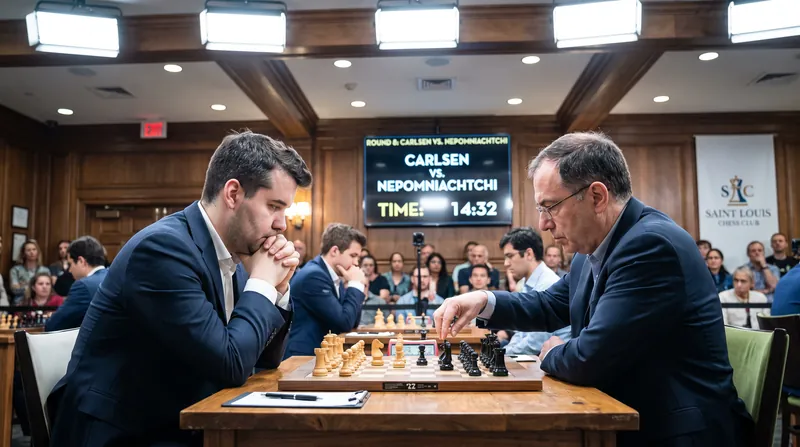
Global Chess Power Rankings: Praggnanandhaa and So Surge Heading Into the Samarkand Olympiad
4 sources
Preview
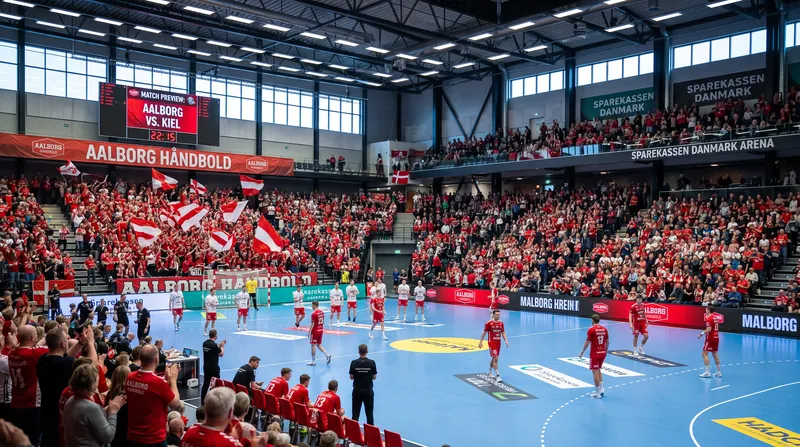
PSG Head Coach Stefan Madsen Returns to Aalborg as EHF Champions League Enters 24-Team Era
7 sources
Every angle. Every day.
Get Sports stories with full source coverage and perspective breakdowns delivered to your inbox.