
China Approves Mprosevir, the First Class 1 Innovative Drug Developed With AI Assistance
China's National Medical Products Administration has granted conditional approval to Mprosevir, a COVID-19 antiviral developed in just three and a half years. The milestone marks the first time a drug discovered and optimized using artificial intelligence has cleared the country's highest regulatory bar for novel therapeutics.
By Mateo Ramos

Share this story
China's National Medical Products Administration (NMPA) has granted conditional marketing approval to Mprosevir, a small-molecule antiviral designed to treat mild to moderate COVID-19 infections in adult patients. The regulatory decision marks a historic milestone for the pharmaceutical industry, as it represents the first time a "Class 1" drug has reached the Chinese market after being developed primarily through artificial intelligence.
In China's regulatory framework, the Class 1 designation is the highest tier of innovation, reserved strictly for entirely novel chemical structures with unique mechanisms of action that have never been marketed anywhere in the world.[4][5][6]
The approval validates a highly anticipated promise of the generative AI boom: the ability to radically compress pharmaceutical timelines. Developed jointly by Westlake University, Westlake Laboratory, and Westlake Pharmaceuticals in Hangzhou, Mprosevir advanced from initial candidate discovery to the completion of clinical trials in just three and a half years.
Traditional drug development pipelines typically require 10 to 15 years to achieve the same regulatory milestone, burdened by years of manual trial-and-error testing in physical laboratories. By successfully bringing the drug through the NMPA's rigorous approval process, the Westlake team has established a regulatory precedent for AI-generated molecules.[3][4][5]
To achieve that unprecedented speed, the research team designed a dual-screening strategy that combined artificial intelligence with DNA-encoded library (DEL) technology. The initial screening phase involved a massive database containing approximately 49 billion molecular compounds.
DEL technology allows researchers to tag millions of chemical compounds with unique DNA barcodes, enabling them to test vast libraries simultaneously against a specific biological target. In this case, the target was the virus responsible for COVID-19. The initial DEL screening physically identified more than 100 promising candidates that demonstrated an ability to bind to the target.[4][5][6]
While identifying 100 potential candidates is a success in traditional chemistry, testing each of those molecules individually in a laboratory to determine their viability would have required months of manual assays and substantial resources. Instead of proceeding to the physical bench, researchers deployed an AI model to evaluate the pool virtually. Within a matter of days, the algorithm analyzed the molecular structures, filtered out false positives, and narrowed the candidate list down to just nine highly promising molecules.[3][4][5][6]
Subsequent physical testing confirmed the algorithm's accuracy, revealing that six of those nine compounds exhibited strong antiviral activity. Following further assessments for toxicity, metabolic stability, and overall drug-like properties, the research team selected a specific molecule, designated internally as WLU6937, as their primary lead candidate. The selection of WLU6937 marked the transition from the discovery phase into the optimization and clinical testing phases, which would consume the remainder of the three-and-a-half-year timeline.[4][5][6]
Over the next two years, AI algorithms continued to play a central role in guiding the optimization of WLU6937. The computational models helped researchers refine the molecule's chemical properties to enhance its antiviral efficacy and reduce potential side effects as it moved from in vitro cell experiments and mouse models into human clinical trials. The drug functions by inhibiting a critical viral enzyme, preventing the SARS-CoV-2 virus from successfully replicating within human host cells.[3][4][5]
The successful clinical trials demonstrated that the AI-optimized molecule was both safe and effective for human use, meeting the exact same rigorous safety thresholds required of conventionally developed therapeutics. "According to the R&D team, Mprosevir has demonstrated that genuine AI-assisted drug development is currently both efficient and feasible," noted the initial report on the breakthrough. The NMPA's conditional approval confirms that AI-generated drugs do not require lowered regulatory standards to reach the market.[3][5]
The approval of Mprosevir not only provides a new therapeutic option for COVID-19 patients but also signals a structural shift in how novel therapeutics will be discovered and refined in the coming decade.
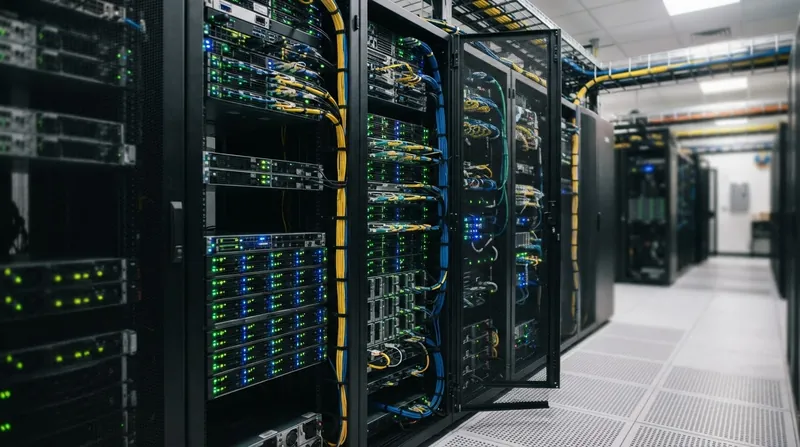
By shifting the bulk of the initial trial-and-error process from the physical laboratory to the server rack, the pharmaceutical industry can drastically reduce the time and capital required to identify viable lead molecules for emerging diseases. As more AI-assisted drugs enter the clinical pipeline globally, the 42-month timeline achieved by the Westlake team may soon become the new benchmark for rapid pharmaceutical response.[3][5][6]
Key points
- China's NMPA approved Mprosevir, the first Class 1 innovative drug developed using AI.
- The COVID-19 antiviral took just 3.5 years to advance from discovery to clinical trial completion.
- Researchers used AI to screen a database of 49 billion molecular compounds.
- The AI model narrowed over 100 potential candidates down to nine within days.
- AI Integration Advocates
- Proponents who view AI as a necessary tool to modernize the slow and expensive pharmaceutical pipeline.
- Regulatory Traditionalists
- Voices emphasizing that regardless of how a drug is discovered, it must pass standard clinical safety trials.
Perspectives this story doesn't cover
- Patient Advocacy Groups
- Global Pharmaceutical Competitors
Sources
Source coverage
6 outlets
2 viewpoints surfaced






- [1]Global TimesAI Integration Advocates
China's first AI-assisted innovative drug approved for marketing: media
Read on Global Times → - [2]KursivRegulatory Traditionalists
China marks tech breakthrough with first AI-assisted drug
Read on Kursiv → - [3]Tengrinews.kzAI Integration Advocates
China approves first AI-developed drug
Read on Tengrinews.kz → - [4]Anadolu AjansıAI Integration Advocates
China approves first AI-assisted 'Class 1' innovative drug: Report
Read on Anadolu Ajansı → - [5]Independent PressRegulatory Traditionalists
CHINA ENTERS AI DRUG ERA WITH FIRST CLASS 1 INNOVATIVE DRUG APPROVAL
Read on Independent Press → - [6]FirstWord PharmaRegulatory Traditionalists
China's first AI-assisted innovative drug approved for marketing: media
Read on FirstWord Pharma →
More in Artificial Intelligence
See all →AI Policy
Trump Appoints Intelligence Director Nominee Jay Clayton to Lead White House AI Task Force
5 sources
Decoding Algorithms
The Trade-Offs Between Greedy Search, Beam Search, and Nucleus Sampling for Large Language Model Decoding
8 sources

Transformer Architecture
How Sinusoidal Functions Inject Sequence Order into the Permutation-Invariant Transformer
4 sources
Diffusion Architecture
Why Generative AI Uses U-Net Architecture to Predict Noise in Reverse Diffusion
9 sources

Comments
Every angle. Every day.
Get Artificial Intelligence stories with full source coverage and perspective breakdowns, free every day.