
Cargo Ships Are Returning to Wind Power to Slash Global Emissions
The maritime industry is retrofitting massive commercial vessels with high-tech rotor and wing sails, cutting fuel consumption by up to 30%.
By Hunter Cole

For thousands of years, global trade relied entirely on the wind. Then came coal, diesel, and the era of the combustion engine, which relegated sails to recreational yachts and historical reenactments. But in 2026, the maritime industry is returning to its roots with a high-tech twist, retrofitting massive cargo ships with towering mechanical sails to slash fuel consumption and greenhouse gas emissions.[1]
The stakes for decarbonization are immense. Maritime shipping transports roughly 90% of world trade but accounts for nearly 3% of global carbon dioxide emissions—more than the entire aviation sector. While the industry is heavily investing in alternative green fuels like methanol and ammonia, those fuels remain expensive, scarce, and require entirely new global bunkering infrastructure.[1]
Enter Wind-Assisted Ship Propulsion (WASP). Unlike alternative marine fuels, wind is free, abundant, and requires no onboard storage tanks. By installing automated wind-catching devices on the decks of bulk carriers and oil tankers, ship operators can throttle down their main engines while maintaining cruising speed, directly cutting both fuel costs and tailpipe emissions.[3]
The most visually striking of these technologies are rigid wing sails, which resemble oversized airplane wings mounted vertically on a ship's deck. In late 2023, the agricultural commodities giant Cargill chartered the Pyxis Ocean, an 80,000-ton bulk carrier retrofitted with two 123-foot-tall steel and composite glass "WindWings" developed by BAR Technologies.[1]
The results from the Pyxis Ocean's first six months at sea provided the industry with hard, verified data. The vessel achieved an average savings of 3 tonnes of heavy fuel per day, which translates to a reduction of 11.2 tons of carbon dioxide equivalent daily. A traffic light system on the bridge tells the crew when to deploy the wings; once raised, onboard sensors constantly measure the wind and automatically adjust the sails to the optimal aerodynamic angle.
Another leading technology is the rotor sail, which looks like a giant spinning smokestack. These towering cylinders rely on the Magnus effect—a principle of fluid dynamics where a spinning object drags air with it, creating a pressure differential that generates forward thrust. It is the exact same physical phenomenon that causes a curveball to swerve in baseball or a tennis ball to dip when hit with topspin.[3]
Rotor sails are proving highly effective across various vessel types. Finland's Norsepower, a leading manufacturer, estimates that its spinning cylinders can reduce fuel consumption by 5% to 25%, depending on the route and weather conditions. In January 2026, the Stena Connecta ferry arrived in Belfast equipped to harness Norsepower's rotor sails, projecting fuel savings of up to 9% on its regular, highly trafficked Irish Sea crossings.[3]
The economics of wind propulsion are becoming increasingly attractive to fleet operators. While installing a rotor or wing sail system requires an upfront capital investment of $1 million to $3 million per unit, the payback period is shrinking to just three to five years. This rapid return on investment is driven by persistently high bunker fuel prices and the looming rollout of international carbon taxes and strict International Maritime Organization (IMO) carbon intensity regulations.[3][4]
To maximize these financial and environmental returns, operators are pairing mechanical sails with artificial intelligence and voyage optimization software. Instead of sailing the absolute shortest straight-line distance between two ports, ships are now being dynamically routed to chase favorable weather systems. According to Anemoi Marine Technologies, combining rotor sails with weather routing on a voyage between Brazil and Singapore can boost emission reductions from a baseline of 10% up to an impressive 25%.[2]
Despite the momentum, wind propulsion is not a universal silver bullet for the entire global fleet. The technology is highly dependent on global weather patterns; ships operating in the equatorial doldrums will see far less benefit than those traversing the notoriously windy North Sea or North Atlantic. Furthermore, the massive sails require significant deck space, making them ideal for flat-decked bulk carriers and oil tankers, but highly impractical for container ships stacked high with cargo boxes.[3]
There are also logistical hurdles at port. Because the sails can tower over 120 feet high, they must be engineered to fold down or tilt horizontally so the vessels can safely pass under bridges and avoid interfering with massive port cranes during loading and unloading.
Nevertheless, the trajectory of the technology is clear. The International Windship Association (IWSA) reported that the global fleet surpassed 100 large wind-assisted cargo ships in mid-2024, and the organization projects exponential growth through 2026 as early pilot programs transition into standard fleet-wide rollouts.[2][4]
As the maritime industry races to meet the IMO's mandate for net-zero emissions by or around 2050, wind power has shifted from a nostalgic novelty to a critical pillar of green shipping. With forecasts suggesting that up to 30% of the world's commercial fleet could be equipped with wind propulsion by mid-century, the future of global trade is looking increasingly to the sky.
Key points
- The maritime industry is retrofitting cargo ships with high-tech mechanical sails to reduce fuel consumption and emissions.
- Technologies like rigid wing sails and spinning rotor sails can cut a vessel's fuel use by 5% to 30%.
- Cargill's Pyxis Ocean trial demonstrated an average savings of 3 tonnes of heavy fuel per day.
- Over 100 large commercial vessels are currently equipped with wind-assist technology, with exponential growth forecast.
What we don’t know
- How the composite materials used in rigid wing sails will hold up to decades of exposure to extreme hurricanes and corrosive saltwater.
- The exact return on investment for smaller coastal vessels operating on highly variable, short-distance routes.
How we got here
1924
German engineer Anton Flettner launches the Buckau, the first ship powered by spinning rotor sails.
2018
Maersk Tankers installs rotor sails on a commercial product tanker, kicking off the modern revival.
August 2023
Cargill's Pyxis Ocean sets sail equipped with 123-foot rigid WindWings for a six-month trial.
Mid-2024
The global maritime industry surpasses the milestone of 100 large cargo ships fitted with wind propulsion.
January 2026
Stena Connecta deploys rotor sails on the Irish Sea, marking mainstream adoption in short-sea ferry routes.
- Shipowners & Charterers
- Focuses on the immediate fuel savings, return on investment, and compliance with tightening global emissions regulations.
- Wind Technology Providers
- Focuses on aerodynamic innovation, scaling manufacturing, and proving the real-world efficiency of mechanical sails.
- Maritime Regulators & Analysts
- Focuses on establishing baseline standards, verifying emissions data, and mapping the industry's long-term path to net-zero.
Perspectives this story doesn't cover
- Port authorities managing crane clearances
- Seafarers operating the new automated systems
Sources
Source coverage
4 outlets
3 viewpoints surfaced




- [1]ReutersShipowners & Charterers
Cargo giant Cargill turns to wind to cut carbon
Read on Reuters → - [2]The MotorshipWind Technology Providers
Wind propulsion gathers momentum for 2026
Read on The Motorship → - [3]Riviera Maritime MediaWind Technology Providers
Wind-assisted propulsion gains traction as savings are quantified
Read on Riviera Maritime Media → - [4]International Windship AssociationMaritime Regulators & Analysts
Market Intelligence: Wind Propulsion Installations
Read on International Windship Association →

More in Transportation
See all →Maritime Security
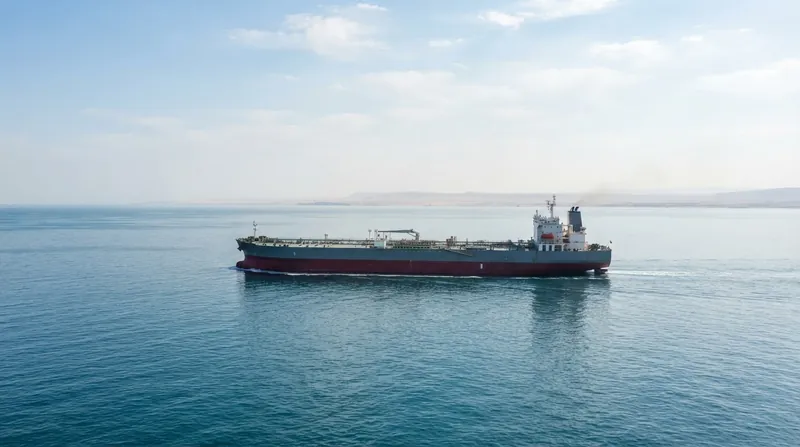
Supertanker Gem No. 2 Struck Off UAE Coast as Iran Expands Shipping Attacks Across Gulf
7 sources
Parametric Resonance
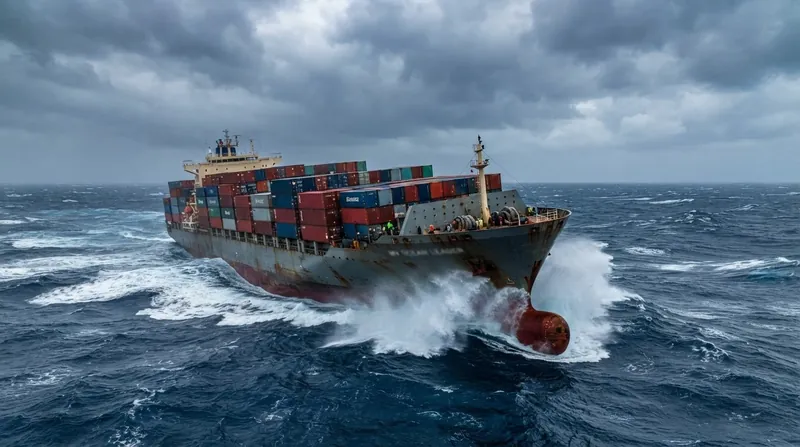
Waterplane Area Fluctuations at Twice the Natural Roll Frequency: Why Head Seas Trigger Violent Parametric Rolling in Container Ships
3 sources
Hydrodynamics
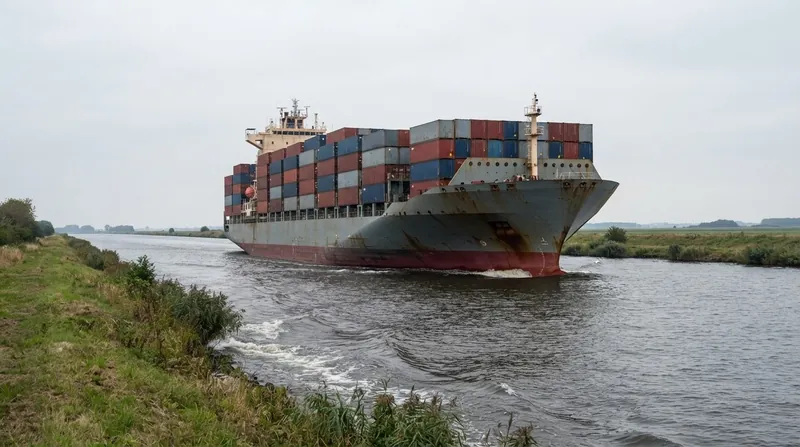
Under-Keel Water Acceleration Drops Hydrodynamic Pressure: Why Moving Ships Squat Toward the Seabed in Shallow Channels
6 sources
Maritime Safety
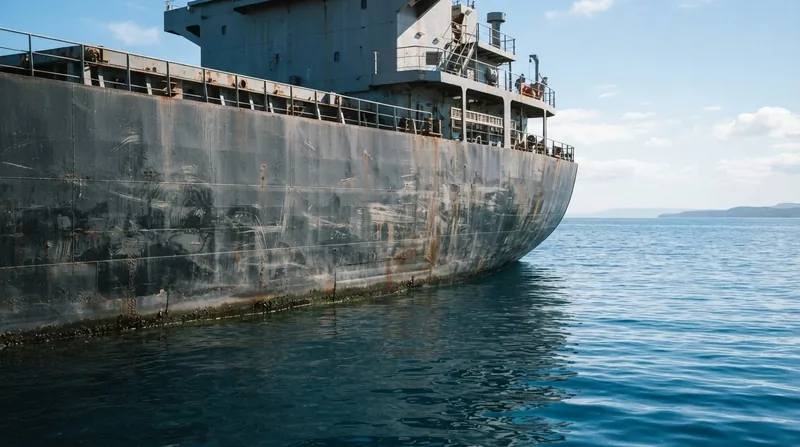
Water Density Differentials and a 1/48th Draft Margin: How the 1966 Load Line Convention Calculates Plimsoll Freeboard Marks
9 sources
Comments
Every angle. Every day.
Get Transportation stories with full source coverage and perspective breakdowns, free every day.