
California City Becomes First in U.S. to Permanently Ban Data Centers by Public Vote
Voters in Monterey Park, California, overwhelmingly passed Measure NDC, permanently banning the construction of data centers within city limits. The landmark 86% vote sets a national precedent as communities increasingly push back against the massive energy and water demands of AI infrastructure.

Voters in Monterey Park, California, have overwhelmingly passed a ballot measure to permanently ban the construction of data centers within city limits. With over 86 percent of the vote in favor, Measure NDC marks the first time a United States municipality has used a public vote to permanently block the massive computing warehouses. The decisive victory in the San Gabriel Valley suburb represents a major escalation in the growing nationwide pushback against the physical infrastructure required to power the artificial intelligence boom.[1][2][4]
While dozens of local governments across the country have enacted temporary pauses on server farm construction, Monterey Park's approach is uniquely binding. Because the ban was approved directly by voters as an amendment to the city's land use element, it cannot be quietly reversed or modified by a future city council. The prohibition will remain in effect indefinitely unless a future ballot measure is drafted and approved by the city's electorate.[2][4]
The landmark vote was catalyzed by a proposal from HMC StratCap, an Australian investment firm, to construct a 247,000-square-foot data center on a largely vacant business park at Saturn Street. The proposed facility would have sat less than 500 feet from residential homes valued at over $1 million, and it directly bordered a local park heavily used for youth softball games.[3][4]
As details of the project emerged, city officials and residents quickly realized the staggering scale of the facility's resource demands. Estimates indicated that the single data center would consume three times the amount of electricity used by the entire 60,000-person city of Monterey Park. This revelation sparked immediate fears of rolling blackouts, strained water resources for cooling systems, and skyrocketing utility rates for local homeowners.[1][2][4]
In response, a grassroots coalition dubbed "No Data Center in Monterey Park" began organizing aggressively. Residents flooded city council meetings, speaking past midnight to voice their opposition, while bilingual yard signs in English and Chinese proliferated across the predominantly Asian American and Latino working-class community. Councilmember Jose Sanchez noted that many residents felt the city was being targeted by developers specifically because it is an ethnic minority community.[1][4]
Facing intense public anger and a temporary 45-day moratorium passed by the city council earlier in the year, HMC StratCap ultimately withdrew its application before the June election. The developer had previously threatened legal action, calling the ballot language biased, but later indicated it would not pursue a lawsuit. Despite the withdrawal, local organizers and the city council pushed forward with the ballot measure to ensure permanent, legally robust protection against future proposals.[2][3][4]
The decisive ban has sent ripples through the technology sector, which is racing to build the infrastructure necessary to support increasingly complex AI models. The Data Center Coalition, an industry trade association, warned that the Monterey Park vote sends a chilling signal that the area is "closed for business." Industry representatives argue that data centers are critical modern infrastructure and that developers are continually working to improve energy and water efficiency.[1][4]
Proponents of the facility had also highlighted the substantial economic benefits it would have brought to the municipality. The project was projected to generate between $3 million and $7 million in annual tax revenue, which could have been used to fund local services and anchor a business park that has sat vacant for years. During early council meetings, some union workers also expressed support for the project, citing the creation of high-paying construction jobs, though they were vastly outnumbered by opposed residents.[1][4]
Monterey Park's permanent ban is the sharpest edge of a broader national trend. According to industry trackers, at least 67 other communities across the United States have passed temporary moratoriums on data centers, often lasting between 12 and 18 months while local governments study their impacts. These pauses have been enacted in tech hubs and suburbs from Denver to Minneapolis, reflecting widespread anxiety over the industry's environmental footprint.[1][4]
The resistance is also moving to the state level. The New York legislature recently passed a one-year statewide moratorium on large data centers, which would be the first of its kind if signed by the governor. A similar statewide ban was passed by Maine lawmakers in April, though it was ultimately vetoed by the state's governor.[1]
For grassroots organizers in Monterey Park, the vote is being celebrated as a triumph of civic engagement over corporate interests. Mayor Elizabeth Yang stated that the city hopes to serve as an example for other communities facing similar development pressures, proving that organized residents can successfully push back against well-funded tech initiatives.[1][3]
As the energy demands of the tech sector are projected to double in the coming years, the clash between Silicon Valley's physical expansion and local zoning boards is only expected to intensify. With Monterey Park providing a successful blueprint for permanent citizen-led bans, developers may find it increasingly difficult to secure the land and power required to sustain the artificial intelligence revolution.[1]
Key points
- Monterey Park voters passed Measure NDC with over 86% support, permanently banning data centers.
- The measure can only be overturned by a future public vote, not by the city council.
- The vote was sparked by a proposed 247,000-square-foot facility that would have used three times the city's electricity.
- At least 67 other U.S. communities have enacted temporary moratoriums on data center construction.
What we don’t know
- Whether the developer, HMC StratCap, will attempt any further legal challenges despite withdrawing their initial application.
- If other cities with temporary moratoriums will follow Monterey Park's lead and pursue permanent ballot bans.
- How the tech industry will adapt its infrastructure rollout if permanent bans become common in suburban areas.
How we got here
January 2026
Monterey Park City Council passes a 45-day temporary moratorium on data centers following public outcry.
March 2026
The City Council extends the moratorium and votes to place Measure NDC on the June ballot.
Spring 2026
Developer HMC StratCap withdraws its application for the 247,000-square-foot facility.
June 2, 2026
Voters overwhelmingly approve Measure NDC, enacting a permanent citywide ban.
- Local Residents & Activists
- Prioritize protecting local resources, grid stability, and neighborhood character over industrial tech development.
- Tech Industry & Developers
- View data centers as critical infrastructure for the AI economy that provide substantial local tax revenue.
- Municipal Officials
- Balance the need for economic development and tax revenue against intense constituent pressure and resource constraints.
Perspectives this story doesn't cover
- State-level grid operators managing California's overall power supply.
- Major AI companies that ultimately lease the server space from developers.
Sources
Source coverage
4 outlets
3 viewpoints surfaced




- [1]The Washington PostTech Industry & Developers
Voters back first-in-nation permanent data center ban in city near L.A.
Read on The Washington Post → - [2]The GuardianLocal Residents & Activists
First Thing: Judge thwarts Trump administration attempt to overthrow LA ‘sanctuary city’ policy
Read on The Guardian → - [3]SFGATELocal Residents & Activists
Monterey Park voters make history with permanent ban on data centers
Read on SFGATE → - [4]Broadband BreakfastTech Industry & Developers
Monterey Park Votes to Permanently Ban Data Centers
Read on Broadband Breakfast →
More in News & Politics
See all →Public Records
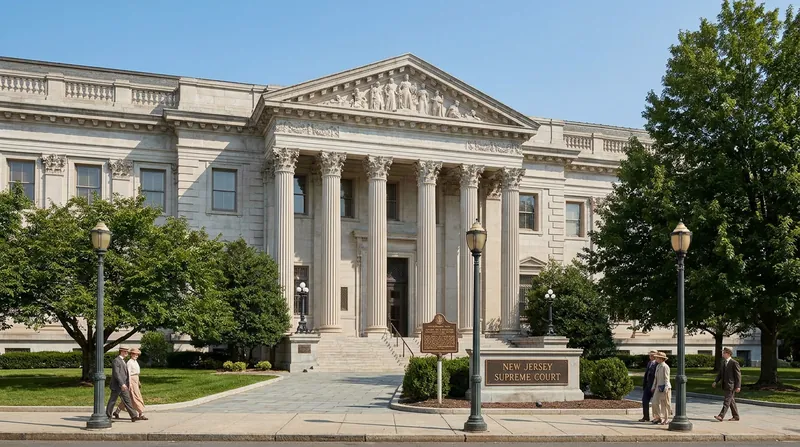
New Jersey Supreme Court Rules Private Email Logs of Public Officials Are Subject to Public Records Law
2 sources
Voting Access
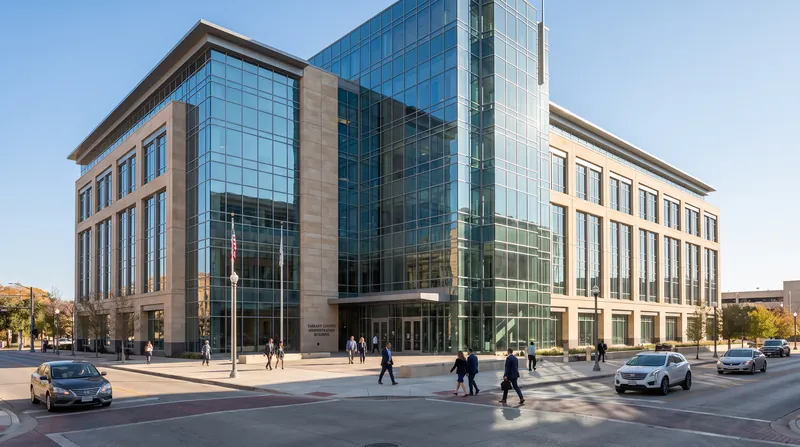
Tarrant County Commissioners Eliminate 92 Polling Locations Ahead of November Midterms
6 sources
Michigan Senate
Michigan State Senator Mallory McMorrow Suspends U.S. Senate Campaign
5 sources

Democratic Primaries
Democratic Socialists Sweep New York Primaries, Unseating Key Incumbents
5 sources

Comments
Every angle. Every day.
Get News & Politics stories with full source coverage and perspective breakdowns, free every day.