
Béla Károlyi, Polarizing Gymnastics Coach Who Built a US Dynasty, Dies at 82
Béla Károlyi, the legendary coach who engineered historic Olympic triumphs but faced intense criticism for his authoritarian methods, has died at 82. His passing highlights how modern gymnastics has evolved away from his harsh centralized system toward a healthier, athlete-first approach.
By Ryder James

Béla Károlyi, the charismatic and fiercely polarizing coach who transformed the United States into a global gymnastics superpower, has died at the age of 82. His death, announced by USA Gymnastics, marks the definitive end of an era that fundamentally reshaped the sport's technical boundaries and global power dynamics. Károlyi leaves behind a legacy defined by a staggering duality: he engineered some of the most iconic moments in Olympic history, yet his authoritarian methods ultimately forced a painful, necessary reckoning regarding athlete welfare.[1][2]
To understand Károlyi’s impact is to look at the sheer volume of his success. Alongside his wife and coaching partner, Márta, he is credited with producing 28 Olympians, 15 world champions, and nine Olympic gold medalists. The Károlyis did not just participate in elite gymnastics; they dictated its trajectory for more than three decades, introducing acrobatic contortions and a level of aggressive discipline that the sport had never seen.[1]
The mechanism of the Károlyi empire began in their native Romania. Operating outside the traditional Soviet-dominated system, the couple began recruiting children as young as six or seven, using old mattresses to teach somersaults. This was a radical shift in an era when gymnasts typically began serious training in their early teens. By targeting younger, more flexible athletes, Károlyi sought to build champions who peaked before fear or physical maturity could inhibit their acrobatics.[1]
The ultimate proof of concept arrived at the 1976 Montreal Olympics. Nadia Comaneci, a 14-year-old prodigy recruited by Károlyi at age six, executed a routine so flawless that the scoreboard, unequipped for a perfect 10, flashed "1.00." Comaneci’s performance shattered the sport's ceiling, earning her five Olympic gold medals and cementing Károlyi’s reputation as a master architect of champions.[1]
However, Károlyi’s ambition frequently clashed with Romanian officials. Following the 1980 Moscow Games, where he loudly accused judges of favoring Soviet athletes, the political friction became untenable. In 1981, while on an exhibition tour in New York, the Károlyis defected to the United States. They arrived in a country whose gymnastics program was an international afterthought, ripe for a structural revolution.[1]
Establishing a private club in Houston, Texas, Károlyi quickly applied his rigid blueprint to American athletes. The results were immediate. At the 1984 Los Angeles Games, he guided 16-year-old Mary Lou Retton to the Olympic all-around title, a historic first for an American woman. Retton’s explosive power and infectious enthusiasm masked the grueling, relentless repetition that defined her training behind closed doors.[3]
Károlyi’s influence reached its zenith in 1999 when he was named the national team coordinator for USA Gymnastics. He implemented a "semi-centralized system"—a hybrid model where athletes trained at their home gyms but traveled monthly to the isolated Karolyi Ranch in Texas for intense, multi-day national team camps. This system allowed Károlyi to exert total control over the national roster, dictating training regimens, diet, and competition readiness.
The semi-centralized model turned the United States into the sport's gold standard, but the psychological and physical costs were immense. The Ranch became a crucible of fear and extreme pressure. Athletes were subjected to harsh public critiques, weigh-ins, and a culture that demanded absolute submissiveness. Károlyi’s philosophy was blunt: "The man who can teach discipline, who can teach aggressiveness, this is the man who wins."[1]
The defining image of the Károlyi ethos occurred at the 1996 Atlanta Olympics. When 18-year-old Kerri Strug tore ligaments in her ankle on her first vault, Károlyi famously shouted from the sidelines, "You can do it!" Strug vaulted again on a severely injured leg, securing team gold before collapsing in agony. Károlyi carrying Strug to the podium became an enduring symbol of American grit, though modern audiences increasingly view it as a chilling display of an adult pushing a teenager past the limits of physical safety.[1][3]
Following his death, former pupils articulated the complex reality of surviving his system. Dominique Moceanu, a member of the 1996 "Magnificent Seven," described Károlyi as a man whose "harsh words and critical demeanor often weighed heavily on me." While acknowledging his undeniable impact on her career, Moceanu noted that her journey under his guidance came with "immense challenges" that ultimately forced her to forge her own path.[2][3]
The darkest consequence of the Károlyi system was the culture of silence it fostered. During the late 2010s, as the Larry Nassar sexual abuse scandal broke, over a dozen former gymnasts testified that the oppressive, fear-based environment at the Karolyi Ranch allowed the disgraced team doctor to operate unchecked for years. While the Károlyis were never charged with criminal wrongdoing, the revelation that their pursuit of medals had created a blind spot for systemic abuse shattered their legacy.[1]
USA Gymnastics officially cut ties with the Karolyi Ranch in 2018, abandoning the facility that had served as the sport's nerve center. This marked the beginning of a profound and uplifting evolution in elite gymnastics. Forced to confront the toxic elements of its past, the sport began a painful but necessary transition toward a model that prioritizes athlete welfare over absolute obedience.[1]
Today, the landscape of American gymnastics stands in stark contrast to the Károlyi era. The semi-centralized system has been replaced by a more transparent, athlete-centric approach. National team camps are now held in open, modern facilities with strict safeguarding protocols, mental health resources, and a focus on collaborative coaching rather than dictatorial control.
Perhaps the most striking evidence of this evolution is the shifting demographics of the sport. Under Károlyi, gymnasts were expected to peak at 16 and retire shortly after, their bodies broken by extreme early specialization. Today, athletes like Simone Biles are winning Olympic all-around titles in their mid-to-late 20s. The modern emphasis on pacing, sports science, and recovery has extended careers by a decade, proving that longevity and excellence are not mutually exclusive.
Furthermore, the rise of NCAA gymnastics has provided a joyful, team-oriented pathway that counterbalances the elite grind. Athletes no longer view the Olympics as the sole, high-stakes endpoint of their careers; they can transition into collegiate programs where the focus shifts to performance, camaraderie, and education, entirely free from the isolation of the old centralized camps.
Furthermore, the rise of NCAA gymnastics has provided a joyful, team-oriented pathway that counterbalances the elite grind.
Béla Károlyi’s death closes the book on a complicated chapter of sports history. He was a visionary who proved that the limits of human acrobatics were far higher than anyone imagined, but his methods exacted a toll that the sport ultimately refused to keep paying. His most enduring legacy may not be the medals he won, but the healthier, more resilient version of gymnastics that emerged in the aftermath of his reign.[1]
The essentials
- Legendary gymnastics coach Béla Károlyi has died at the age of 82.
- Károlyi engineered unparalleled success, producing 28 Olympians and nine Olympic gold medalists.
- His semi-centralized training model transformed the U.S. into a gymnastics superpower but exacted a heavy physical and psychological toll.
- The oppressive culture of his system eventually led to a reckoning, forcing modern gymnastics to adopt healthier, athlete-first protocols.
Timeline
1976
Nadia Comaneci scores the first Perfect 10 in Olympic history under Károlyi's guidance in Montreal.
1981
Béla and Márta Károlyi defect from Romania to the United States during an exhibition tour.
1984
Mary Lou Retton becomes the first American woman to win the Olympic all-around gold medal.
1999
Károlyi is named national team coordinator and implements the semi-centralized training system.
2018
USA Gymnastics officially cuts ties with the Karolyi Ranch amidst the fallout of the Larry Nassar abuse scandal.
- Athlete Welfare Advocates
- Argue that the human cost of the centralized system was too high and prioritize modern safeguarding.
- Gymnastics Historians
- Focus on the tactical and structural revolution Károlyi brought to the sport, shifting global dominance.
- Former Pupils & Defenders
- Acknowledge his harshness but credit his methods for forging their resilience and historic success.
Perspectives this story doesn't cover
- Current junior elite gymnasts training under the modern system
- International coaches who adapted Károlyi's methods in other countries
Sources
Source coverage
3 outlets
3 viewpoints surfaced



- [1]The Washington PostAthlete Welfare Advocates
Bela Karolyi, uncompromising gymnastics coach who led US to gold, dies at 82
Read on The Washington Post → - [2]CBS NewsGymnastics Historians
Bela Karolyi, polarizing U.S. gymnastics coach, dies at 82
Read on CBS News → - [3]Gymnastics NowAthlete Welfare Advocates
Former Romanian and U.S. gymnastics coach Bela Karolyi dies at 82
Read on Gymnastics Now →

More in Sports
See all →Recap
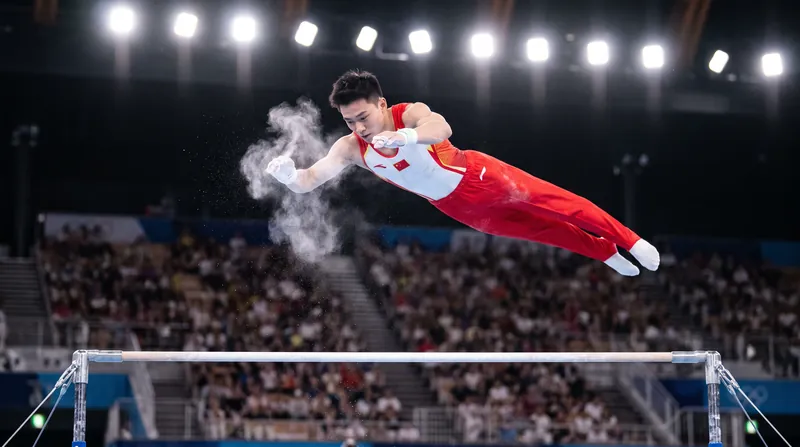
China Edges Japan in Dramatic Horizontal Bar Finale to Retain Asian Games Men's Gymnastics Team Gold
5 sources
Standings
Asian Games Gymnastics Standings: Yeo Seojeong Tops Vault Qualifications as Medal Race Heats Up in Nagoya
5 sources
Injury
World Championships Watch: Wong Prioritizes Health as Global Gymnasts Race the Clock for Rotterdam
4 sources
Storyline
Rebeca Andrade Headlines Star-Studded Registration List for 2026 Rotterdam World Championships
6 sources
Comments
Every angle. Every day.
Get Sports stories with full source coverage and perspective breakdowns, free every day.