
Everton's Aurora Galli Completes 20-Month ACL Comeback as Global Leagues Tackle Injury Crisis
Following a grueling 20-month rehabilitation, Everton midfielder Aurora Galli has made a triumphant return to the pitch just as the WSL and NWSL launch a groundbreaking cross-league initiative to combat the epidemic of ACL injuries in women's soccer.

- Recovering Athletes
- Focuses on the immense psychological and physical toll of long-term rehabilitation and the triumph of returning to the pitch.
- Sports Scientists & FIFPRO
- Argues that the ACL crisis is an environmental issue caused by fixture congestion, poor pitch standards, and a lack of female-specific sports science.
- League Administrators
- Focused on implementing data-driven scheduling, workload monitoring, and rule changes to protect their investments and improve player welfare.
Summary
- Everton's Aurora Galli has returned to the pitch after a grueling 20-month ACL rehabilitation.
- Female soccer players are two to six times more likely to suffer ACL tears than male players.
- The NWSL and WSL have launched 'Project ACL' to study the environmental causes of the injury epidemic.
- The three-year study tracks player workloads, travel burdens, and 'critical zone' match appearances.
- Only 8 percent of global sports science research currently focuses exclusively on female athletes.
- Leagues are proactively introducing off-field treatment rules and mandated recovery breaks to protect players.
For Everton midfielder Aurora Galli, the nightmare began 83 minutes into the opening match of the 2024-25 Women's Super League season. Attempting to salvage a loose ball against Brighton, her standing leg buckled beneath her. The Italian international immediately signaled for medical staff, her agonizing screams echoing through Broadfield Stadium. The diagnosis confirmed her worst fears: a ruptured anterior cruciate ligament (ACL), an injury that would steal nearly two years of her prime.[1][2]
The rehabilitation process was a grueling test of endurance. Galli spent 20 months confined to the gym at Everton's Finch Farm training base, battling the profound psychological isolation that accompanies long-term injuries. She later admitted that the mental toll of accepting she could no longer play the sport that defined her life was just as painful as the physical recovery. The night before the injury, she had even dreamt about her ACL tearing—a haunting premonition of the arduous road ahead.[1]
But in May 2026, the darkness finally lifted. On the final day of the WSL season, Galli made a triumphant four-minute cameo against Tottenham. Though brief, stepping back onto the pitch was a monumental victory that fully cleared her for the summer international window. Reintegrated into the Italy national team setup, Galli's return is a testament to individual resilience, but it also casts a spotlight on a systemic crisis that women's soccer is finally attempting to solve.[1]
Galli's story is far from unique. The women's game has been ravaged by an epidemic of knee injuries, claiming high-profile victims like Chelsea's Sam Kerr, Arsenal's Leah Williamson, and the USWNT's Catarina Macario. Statistically, female soccer players are between two and six times more likely to suffer an ACL tear than their male counterparts. For decades, the sports medicine establishment shrugged this off as a biological misfortune, pointing to wider hips and hormonal fluctuations as unavoidable culprits.
That narrative is finally being dismantled. Researchers and players' unions are increasingly pointing to environmental factors—often rooted in systemic inequality—as the true drivers of the crisis. Poor pitch standards, congested fixture schedules, a lack of access to elite weight-training facilities, and soccer boots designed exclusively for male feet have all been identified as critical risk factors. As advocates in the space have bluntly summarized: sexism, not just biology, is the risk factor.
Researchers and players' unions are increasingly pointing to environmental factors—often rooted in systemic inequality—as the true drivers of the crisis.
To address this, the global soccer community has launched "Project ACL," a pioneering three-year research initiative. Originally spearheaded by the WSL, FIFPRO, Nike, and Leeds Beckett University, the project expanded across the Atlantic in April 2026 when the National Women's Soccer League (NWSL) and its players' association officially signed on. The partnership marks the first time two of the world's top professional leagues have coordinated a cross-league study to combat the injury epidemic.
The data collection phase for the NWSL began in June 2026, adding 16 clubs and an entirely new set of environmental variables to the research pool. Unlike the geographically compact WSL, the NWSL requires grueling cross-country travel across multiple time zones. By comparing the two systems, researchers hope to isolate exactly how different travel burdens, training cultures, and commercial pressures impact joint health.
A major focus of Project ACL is tracking "critical zone" appearances—matches played with fewer than five days of recovery time. Using FIFPRO's Player Workload Monitoring tool, the study is building an evidence-based link between scheduling demands, chronic fatigue, and catastrophic ligament failures. The goal is to force competition organizers to treat adequate rest as a non-negotiable piece of league infrastructure rather than an afterthought.
The initiative is also working to correct a glaring blind spot in sports medicine. Currently, a staggering 92 percent of global sports science research focuses on male or mixed-gender cohorts, leaving just 8 percent dedicated exclusively to female athletes. Project ACL is conducting extensive interviews with players to build a massive, female-centric database that will inform everything from bespoke cleat manufacturing to menstrual-cycle-aware training regimens.
Leagues are not waiting for the final study results to implement protective measures. The NWSL recently introduced an Off-Field Treatment Rule to improve match flow while ensuring injured players receive immediate, unpressured medical attention. Furthermore, the league's new CBA-mandated summer break is providing a crucial recovery window, allowing players managing minor knocks to rehabilitate without the pressure of missing competitive fixtures.
For players like Aurora Galli, the systemic changes come too late to prevent the initial trauma, but they offer hope for the remainder of her career. As she builds her match fitness ahead of the 2026-27 WSL campaign, she does so in an ecosystem that is finally taking her physical safety seriously. The era of accepting catastrophic knee injuries as the cost of doing business in women's soccer is coming to an end.[1]
Ultimately, the expansion of Project ACL represents a maturation of the women's game. By treating player welfare as a foundational pillar rather than a luxury, global leagues are protecting their most valuable assets. Triumphant returns like Galli's will always be celebrated for their grit, but the true victory will be a future where such grueling comebacks are the rare exception, not the rule.
- 20 months
- Aurora Galli's recovery timeline
- 2 to 6x
- Higher ACL risk for female athletes
- 8%
- Sports science research focused on women
Chronology
September 2024
Aurora Galli ruptures her ACL during Everton's WSL season opener against Brighton.
April 2026
The NWSL and NWSLPA officially join the WSL in 'Project ACL' to combat the injury epidemic.
May 2026
Galli makes her triumphant return to the pitch on the final day of the WSL season.
June 2026
Project ACL begins its cross-league data collection, tracking NWSL player workloads and travel burdens.
Questions & answers
Why are ACL injuries more common in women's soccer?
While historically blamed on biology, researchers now point to environmental factors like poor pitch conditions, ill-fitting boots, and congested schedules with inadequate recovery time.
What is Project ACL?
It is a three-year cross-league research initiative between the WSL, NWSL, FIFPRO, and Nike to study and reduce the environmental causes of ACL injuries in women's soccer.
How long was Aurora Galli out with her injury?
The Everton midfielder spent 20 months rehabilitating her knee after rupturing her ACL in September 2024 before returning to the pitch in May 2026.
Sources
Source coverage
2 outlets
3 viewpoints surfaced


- [1]The GuardianRecovering Athletes
‘The night before I dreamt about my ACL’: Everton’s Aurora Galli on the long way back from injury | Moving the Goalposts
Read on The Guardian → - [2]Dg SportRecovering Athletes
Everton midfielder Aurora Galli suffers ACL injury
Read on Dg Sport →
Comments

More in sports
See all →Transfer Market
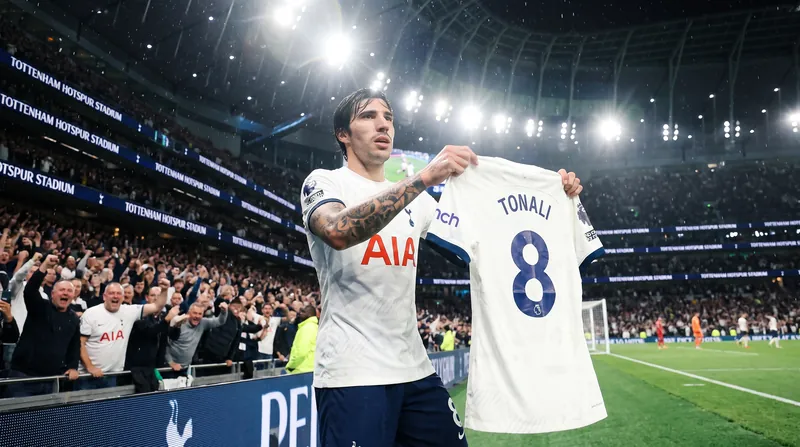
Tottenham Finalizes £92.5 Million Blockbuster Signing of Midfielder Sandro Tonali from Newcastle
4 sources
Preview
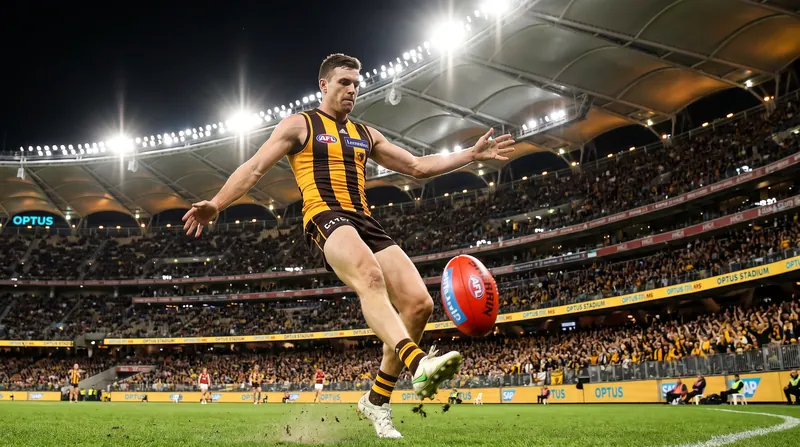
Hawthorn Chases Top-Four Finish and Percentage Boost in High-Stakes Clash Against West Coast
7 sources
Preview
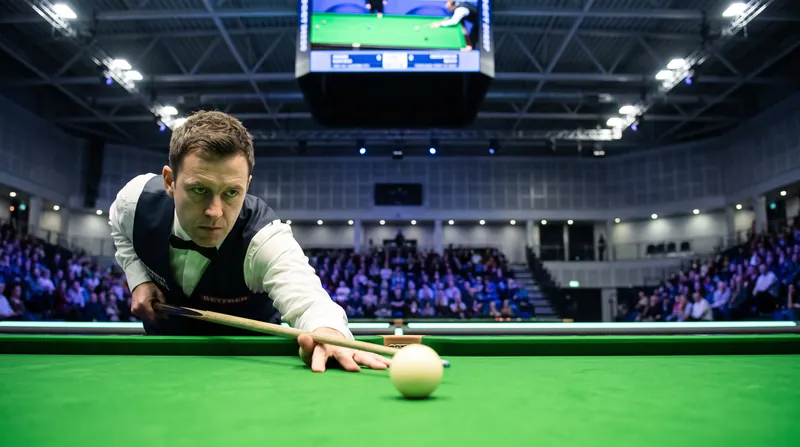
2026 Wuhan Open Preview: Xiao Guodong Chases Hat-Trick as World No. 1 Race Heats Up
6 sources
Recap
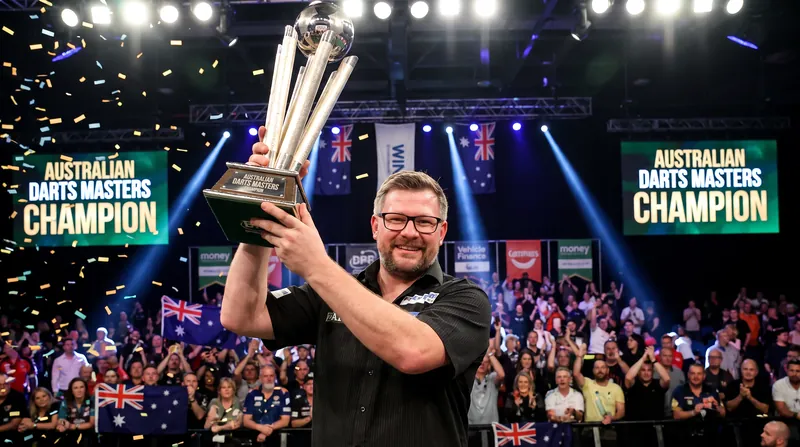
James Wade Ends Five-Year Televised Title Drought with Australian Darts Masters Victory
2 sources
Every angle. Every day.
Get sports stories with full source coverage and perspective breakdowns delivered to your inbox.