
Austria, Portugal, and Kyrgyzstan Among Five Elected to UN Security Council as Germany Loses Bid
The UN General Assembly elected Austria, Portugal, Kyrgyzstan, Zimbabwe, and Trinidad and Tobago to the Security Council for the 2027-2028 term, marking a historic first for Kyrgyzstan and a rare diplomatic defeat for Germany.
By Adel Khoury
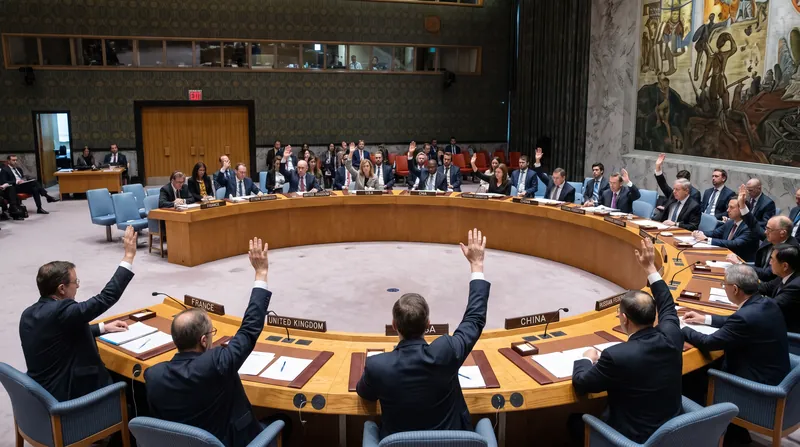
The United Nations General Assembly has officially elected Austria, Portugal, Kyrgyzstan, Zimbabwe, and Trinidad and Tobago to serve as non-permanent members of the UN Security Council for the upcoming 2027-2028 term. The high-stakes secret-ballot vote, conducted at the UN headquarters in New York, finalized the incoming roster for the international body's most powerful organ, which is uniquely tasked with maintaining international peace, authorizing military action, and establishing peacekeeping operations.
While the elections of Zimbabwe and Trinidad and Tobago proceeded largely as expected within their respective regional consensus frameworks, the outcomes in the Western European and Others Group (WEOG) and the Asia-Pacific Group delivered significant diplomatic surprises that will reshape the council's dynamics.[1][2][3][4]
The most striking and widely discussed result of the session was the unexpected diplomatic defeat of Germany, which lost its highly publicized bid for one of the two available WEOG seats to Austria and Portugal. Germany, which serves as one of the largest financial contributors to the UN system and has been a frequent, influential presence on the Security Council in past decades, had mounted a robust, multi-year campaign emphasizing its steadfast commitment to multilateralism, climate security, and international law.
The loss represents a rare and stinging setback for Berlin on the global stage. It suggests that the broader General Assembly ultimately favored the diplomatic pitches of Vienna and Lisbon, potentially reflecting a collective desire for different European perspectives or a subtle reaction against larger economic powers dominating the rotating regional seats.[1][2][3][4]
In stark contrast to Germany's disappointment, the election marked a historic and celebrated milestone for Kyrgyzstan, which successfully secured a seat on the Security Council for the very first time since its independence. Competing fiercely for the Asia-Pacific group's open slot, the Central Asian nation successfully rallied crucial support from across the diverse General Assembly membership.
Kyrgyzstan's elevation brings a fresh, previously unheard regional voice to the council's horseshoe table. This victory highlights the growing diplomatic engagement and strategic importance of Central Asian republics in global governance, particularly as they navigate complex geopolitical positions between major neighboring powers like the Russian Federation and the People's Republic of China.[1][2][3][4]
Zimbabwe's successful election to the African group's designated seat comes at a time of highly complex regional security dynamics and shifting alliances on the continent. African nations have increasingly coordinated their UN voting strategies to ensure unified, powerful representation, and Zimbabwe's bid reflects the African Union's intricate internal endorsement processes.
Once seated on the Security Council, Zimbabwe will be expected to weigh in heavily on numerous critical peacekeeping operations and security crises across Africa—ranging from the volatile Sahel region to the Horn of Africa and the Democratic Republic of the Congo. Harare will face the challenge of balancing its own national sovereign interests with the broader consensus and demands of the African bloc.[1][2][3][4]
Trinidad and Tobago secured the highly contested seat allocated to the Latin American and Caribbean Group (GRULAC), ensuring that the unique vulnerabilities of small island developing states (SIDS) maintain a crucial, amplified voice on the council. The Caribbean nation is widely expected to use its prominent new platform to highlight existential issues that disproportionately affect island and coastal nations.
These include the severe security implications of climate change, the necessity of robust maritime security, and the ongoing fight against transnational organized crime and illicit arms trafficking. Their presence underscores the UN's ongoing, structural effort to ensure that the Security Council's composition accurately reflects the diverse challenges of its broader 193-nation membership.[1][2][3][4]
The underlying mechanics of the Security Council elections require all candidate nations to secure a two-thirds majority of the 193-member General Assembly—amounting to 129 votes if all member states are present and voting—even if they are running unopposed within their specific regional groups. This exceptionally high threshold almost always necessitates years of intense, costly diplomatic campaigning.
Candidate nations routinely host lavish receptions, distribute promotional materials, and make targeted bilateral pledges regarding development aid or diplomatic support to secure individual votes. Because the ballot is strictly secret, public promises of support do not always translate into actual votes on the floor, making the final tally a true, unvarnished test of a nation's behind-the-scenes diplomatic capital and global popularity.[1][2][3][4]
For both Austria and Portugal, their successful campaigns serve to validate their distinct, long-cultivated brands of international diplomacy. Austria frequently emphasizes its vital role as a neutral host for major international organizations in Vienna, alongside its historical commitment to nuclear disarmament, human rights, and the rule of law.
Portugal, meanwhile, effectively leverages its extensive linguistic, cultural, and historical ties across both Africa and South America. Lisbon often positions itself as a natural, empathetic bridge-builder between the wealthy Global North and the developing Global South. Both nations will now begin intensive preparations to assume their seats in January 2027, taking on significant responsibilities that include drafting binding resolutions and chairing various complex sanctions committees.[1][2][3][4]
The incoming class of 2027-2028 will join the Security Council during a period of profound, often paralyzing geopolitical polarization. The five permanent, veto-wielding members—the United States, Russia, China, France, and the United Kingdom—are frequently deadlocked over major global conflicts. In this fractured environment, the ten elected members (collectively known as the 'E10') have increasingly sought to band together to drive the council's agenda forward, particularly focusing on humanitarian access, working methods, and thematic security issues.
The highly diverse composition of this new cohort—featuring a mix of European middle powers, a Central Asian republic, a southern African nation, and a Caribbean island state—will severely test the E10's collective ability to forge meaningful consensus and exert moral or procedural influence over the permanent members.[1][2][3][4]
Key points
- Austria, Portugal, Kyrgyzstan, Zimbabwe, and Trinidad and Tobago were elected to the UN Security Council for the 2027-2028 term.
- Germany suffered a rare diplomatic defeat, losing its bid for a Western European and Others Group (WEOG) seat to Austria and Portugal.
- Kyrgyzstan secured a seat on the Security Council for the first time in its history, representing the Asia-Pacific group.
- The newly elected members will navigate a deeply polarized council currently deadlocked by tensions among the permanent five members.
What we don’t know
- Because the UN General Assembly vote is conducted via secret ballot, it is unknown exactly which member states defected from promising Germany their vote.
- It remains to be seen how this specific combination of elected members will align on highly contentious resolutions regarding ongoing conflicts in Eastern Europe and the Middle East.
How we got here
June 2026
The UN General Assembly holds its secret-ballot elections to fill five non-permanent Security Council seats.
January 1, 2027
Austria, Portugal, Kyrgyzstan, Zimbabwe, and Trinidad and Tobago will officially take their seats on the Security Council.
December 31, 2028
The two-year term for the five newly elected nations concludes.
- European Bridge-Builders
- Austria and Portugal argue that their smaller size allows them to mediate conflicts more effectively than dominant powers.
- Global South Advocates
- Developing nations emphasize the need for the council to focus on climate, development, and regional African security.
- P5 Pragmatists
- Permanent members view the new E10 through the lens of how their votes can be whipped for crucial resolutions.
Sources
Source coverage
4 outlets
3 viewpoints surfaced




- [1]The Times Of Central Asia
Kyrgyzstan Elected to UN Security Council
Read on The Times Of Central Asia → - [2]Trend News Agency
Kyrgyzstan secures seat on UN Security Council for 2027–2028 term
Read on Trend News Agency → - [3]Brussels Signal
Germany suffers humiliating defeat in bid for UN Security Council seat
Read on Brussels Signal → - [4]Premium Times
Germany loses vote for UN Security Council seat for the first time
Read on Premium Times →
More in News & Politics
See all →Maritime Law
Submarines May Transit Submerged and Aircraft Fly Freely: How UNCLOS Article 38 Strips Coastal Vetoes Over International Straits
4 sources
Defense Tech
Ukraine Deploys Domestically Built FP-7 Ballistic Missile in Combat for First Time
6 sources

Border Conflict
Pakistan Launches Second Wave of Airstrikes on Afghan Drone Sites as Taliban Vows Retaliation
5 sources
UN General Assembly
Netanyahu Attacks Enemies and Allies in Fiery UN Speech, Sparking Mass Envoy Walkout
8 sources
Comments
Every angle. Every day.
Get News & Politics stories with full source coverage and perspective breakdowns, free every day.