
Are At-Home Gut Microbiome Tests and Probiotics Worth the Money?
The wellness industry heavily markets at-home microbiome tests and probiotic supplements to improve gut health, but medical experts and researchers debate their clinical usefulness and accuracy for the average person.
By Factlen Editorial Team
- Evidence-Based Medicine
- Relies on proven clinical trials, advocating for fiber over supplements.
- Holistic Nutrition
- Focuses on whole-diet diversity and naturally fermented foods for gut health.
- Consumer Health Tech
- Believes early access to personal biological data empowers healthier choices.
What's not represented
- · Low-income consumers who cannot afford expensive testing kits or boutique supplements, but who could benefit from public health messaging about affordable fiber sources like beans and lentils.
- · Regulatory bodies, such as the FDA, which face challenges in categorizing and regulating microbiome tests that straddle the line between general wellness products and diagnostic medical devices.
Why this matters
Consumers are spending billions on gut health products, but understanding the gap between marketing claims and current science can save individuals hundreds of dollars. Focusing on proven, accessible dietary habits offers a cheaper and more effective path to digestive wellness.
Key points
- At-home microbiome tests cannot yet accurately prescribe personalized diets for healthy individuals.
- A single stool sample provides only a temporary snapshot of rapidly changing gut flora.
- Probiotic supplements are useful for specific conditions but generally unnecessary for healthy adults.
- Eating 30 diverse plant foods a week is highly correlated with optimal gut microbiome diversity.
- Naturally fermented foods like kimchi and kefir are highly effective at improving gut health.
Gut health has become a dominant force in modern wellness, transforming from a niche medical concern into a ubiquitous lifestyle trend [3]. From social media influencers to pharmacy aisles, the promise of optimizing the trillions of bacteria in our digestive tract has spawned a massive, multi-billion-dollar industry [4]. At the center of this boom are at-home microbiome testing kits and daily probiotic supplements, heavily marketed as personalized keys to better digestion, enhanced immunity, and even improved mental clarity [1]. Consumers are increasingly seeking data-driven approaches to their health, hoping to unlock the secrets of their own biology.[1][3][4]
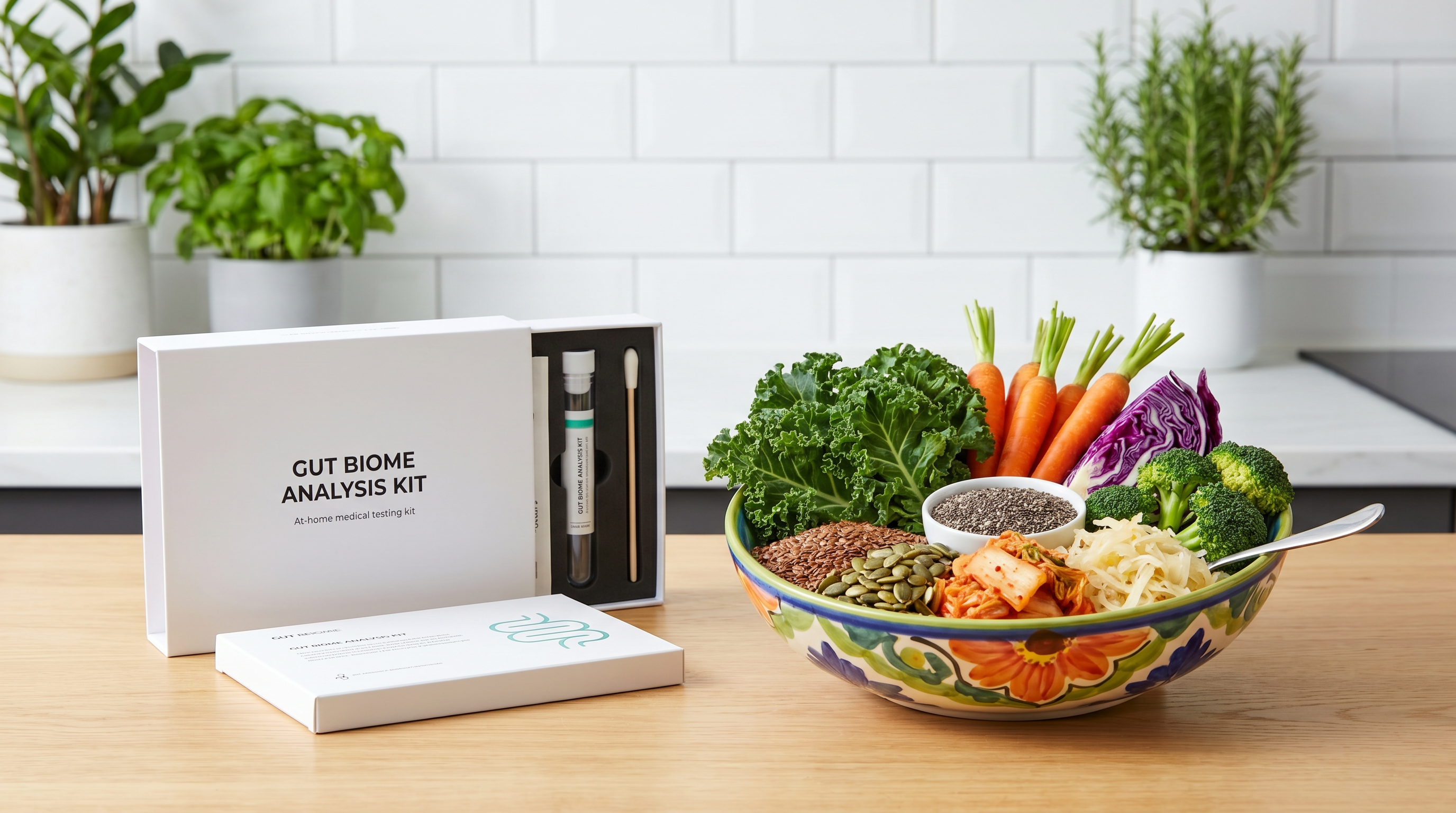
The mechanics of at-home microbiome testing are designed for consumer convenience. Customers pay anywhere from $100 to $400 for a kit, mail a small stool sample to a proprietary laboratory, and receive a highly detailed digital breakdown of their gut flora [1]. These reports often come with personalized dietary recommendations, listing specific foods to eat or avoid, and frequently include a strong push to purchase the company's own custom-blended probiotic supplements [3]. The appeal is undeniable, offering the promise of replacing frustrating trial-and-error dieting with hard, personalized scientific data [5].[1][3][5]
However, leading gastroenterologists and clinical microbiologists caution that the commercial application of this technology has vastly outpaced the actual clinical evidence [2]. While modern sequencing machines can accurately identify the DNA of the bacteria present in a stool sample, scientists do not yet know what an objectively ideal or perfect microbiome looks like [6]. A healthy gut profile for one individual might look entirely different from a healthy profile for another, making broad diagnostic claims and strict dietary rules highly premature [1]. Without a universal baseline for optimal gut health, the personalized advice generated by these algorithms often relies on broad generalizations rather than definitive, individualized medical science.[1][2][6]
Furthermore, experts point out the inherent snapshot problem of these consumer tests. A single stool sample provides only a transient, localized look at the lower intestine at one specific moment in time [5]. The human microbiome is highly dynamic, fluctuating daily based on recent meals, stress levels, sleep quality, hydration, and even the time of day [4]. Adjusting one's entire long-term diet based on a single, isolated reading is akin to judging a city's year-round climate based on one afternoon of weather [2]. This variability makes one-off testing an unreliable foundation for major lifestyle overhauls.[2][4][5]

The second major pillar of the gut-health industry, daily probiotic supplements, faces similar clinical scrutiny from the medical community [3]. These capsules, gummies, and powders promise to deliver millions or billions of live bacteria directly to the gut to optimize digestion [1]. For specific, targeted medical situations—such as preventing diarrhea during a heavy course of antibiotics, managing certain symptoms of Irritable Bowel Syndrome (IBS), or treating pouchitis—specific probiotic strains have proven, documented clinical efficacy [6]. In these clinical contexts, targeted probiotics function much like specialized medications.[1][3][6]
The second major pillar of the gut-health industry, daily probiotic supplements, faces similar clinical scrutiny from the medical community [3].
But for the average, healthy adult looking for a general wellness boost, daily probiotic supplements are largely considered an unnecessary expense [4]. Most commercial strains do not permanently colonize the digestive tract; they simply pass through the system and are excreted [2]. Furthermore, because probiotics are regulated as dietary supplements rather than strict pharmaceuticals in many regions, independent testing frequently reveals that commercial products contain far fewer live cultures than advertised on the bottle, or sometimes entirely different strains [5]. Consumers are often paying premium prices for products that offer little to no measurable physiological benefit.[2][4][5]
The highly encouraging and uplifting news from the scientific community is that optimizing gut health does not require expensive mail-in tests or boutique supplement subscriptions [6]. The most robust, evidence-based intervention is remarkably accessible and affordable: increasing the daily intake and variety of dietary fiber [1]. Fiber acts as a prebiotic, providing the essential, indigestible fuel that the beneficial bacteria already present in your gut need to thrive, multiply, and outcompete harmful microbes [2]. By feeding the good bacteria you already possess, you naturally cultivate a more resilient and effective microbiome without needing external microbial inputs.[1][2][6]
Large-scale observational research, most notably the American Gut Project, has provided clear, actionable targets for consumers. The project found that individuals who consume 30 or more different types of plant foods a week have significantly more diverse and resilient microbiomes than those who consume 10 or fewer [5]. This 30-plant goal includes not just standard vegetables and fruits, but also a wide variety of nuts, seeds, whole grains, legumes, spices, and herbs [4]. This approach champions dietary abundance and variety rather than the restriction often promoted by fad diets, making it a highly sustainable and positive lifestyle shift.[4][5]

In addition to increasing dietary fiber, incorporating naturally fermented foods into one's daily routine has been shown to yield profound benefits. Clinical trials demonstrate that a diet rich in fermented foods steadily increases microbiome diversity and lowers systemic markers of inflammation [3]. Foods like kefir, kimchi, sauerkraut, plain yogurt, and kombucha introduce a steady, natural stream of beneficial microbes and postbiotics into the digestive system [6]. Unlike isolated supplement pills, these whole foods provide complex nutritional matrices that help bacteria survive the harsh, acidic journey through the stomach, ensuring they reach the lower intestine intact [1].[1][3][6]
While current at-home tests may be premature for the general consumer market, the underlying science of the microbiome remains one of the most exciting and promising frontiers in modern medicine [2]. Researchers are actively developing sophisticated microbiome-based therapeutics for complex conditions ranging from inflammatory bowel disease to certain types of cancers [4]. As machine learning models process increasingly massive datasets of human microbiomes, the ability to offer genuinely actionable, personalized dietary advice will eventually catch up to today's marketing claims [5]. Until that day arrives, experts universally agree that the best, most reliable investment in your gut health is found in the produce aisle and the farmer's market, not the pharmacy [6].[2][4][5][6]
How we got here
2007
The National Institutes of Health launches the Human Microbiome Project to map the microbes living in and on the human body.
2012
The American Gut Project is founded, eventually revealing the strong link between eating 30 or more plants a week and microbial diversity.
2015-2018
A massive surge of direct-to-consumer microbiome testing startups enter the wellness market, backed by heavy venture capital investment.
2022
Major gastroenterology associations update their clinical guidelines, clarifying that probiotics are not recommended for general digestive health in otherwise healthy individuals.
2024-2026
Scientific research increasingly shifts focus toward 'postbiotics'—the beneficial compounds bacteria produce—as the next major frontier in gut health therapies.
Viewpoints in depth
Clinical Researchers
Scientists emphasize that microbiome research is still in its infancy and consumer tests lack diagnostic validity.
From a clinical perspective, the human microbiome is incredibly complex and highly individualized. Researchers argue that because we do not yet have a baseline for a 'perfect' microbiome, grading a consumer's gut health based on a single stool sample is scientifically unsound. They advocate for rigorous, peer-reviewed clinical trials before making personalized dietary recommendations based on microbial sequencing.
Wellness Industry Startups
Companies argue that empowering consumers with their own biological data encourages healthier lifestyle choices.
Founders of microbiome testing companies maintain that even if the science is still evolving, providing consumers with a window into their gut flora drives engagement with their personal health. They argue that their actionable recommendations—which generally promote eating more vegetables and taking probiotics—are inherently safe and often lead to subjective improvements in digestion and energy levels, pushing the public toward better habits.
Gastroenterologists
Medical doctors focus on practical, proven dietary interventions rather than expensive tests or daily supplements.
Practicing gastroenterologists generally advise patients to save their money on at-home tests and general probiotic supplements. Instead, they focus on the undeniable clinical evidence supporting dietary fiber and fermented foods. They reserve the recommendation of specific, clinically tested probiotic strains strictly for patients dealing with targeted issues like antibiotic-associated diarrhea or specific irritable bowel syndrome (IBS) symptoms.
What we don't know
- What the exact microbial composition of an 'ideal' or 'perfect' human gut actually looks like.
- How long it will take for machine learning to accurately translate microbiome sequencing into clinically valid, personalized dietary advice.
- The long-term physiological effects of taking high-dose, multi-strain probiotic supplements daily over several decades.
Key terms
- Microbiome
- The vast community of trillions of microorganisms, including bacteria, fungi, and viruses, living in a specific environment like the human digestive tract.
- Probiotics
- Live microorganisms that, when administered in adequate amounts, are intended to confer a specific health benefit on the host.
- Prebiotics
- Types of dietary fiber that the human body cannot digest, which serve as the primary food source for beneficial gut bacteria.
- Postbiotics
- The beneficial metabolic byproducts and chemicals produced when gut bacteria feed on prebiotics.
- Gut Flora
- A common, informal term used to describe the complex community of microorganisms living in the intestines.
Frequently asked
Should I take a daily probiotic if I feel fine?
No, experts generally agree that healthy individuals do not need daily probiotic supplements, as most commercial strains simply pass through the system without colonizing the gut.
Are at-home microbiome tests covered by health insurance?
Generally, no. Direct-to-consumer microbiome tests are classified as wellness products rather than diagnostic medical tests, meaning they must be paid for out-of-pocket.
What is the cheapest way to improve my gut health?
Increasing your daily intake of diverse, high-fiber plant foods like beans, lentils, oats, and seasonal vegetables is the most cost-effective and scientifically proven method.
Do naturally fermented foods actually work?
Yes, clinical studies show that consuming a diet high in naturally fermented foods like plain yogurt, kimchi, and kefir steadily increases microbiome diversity and lowers inflammation.
Sources
Source coverage
6 outlets
3 viewpoints surfaced






[1]The Guardian
Are at-home gut microbiome testing kits a scam?
Read on The Guardian →[2]Science News
Can you trust the results from gut microbiome tests? Maybe not
Read on Science News →[3]The Columbian
Are microbiome tests worth it?
Read on The Columbian →[4]TIME
Here's Everything You Need to Know About Gut Health
Read on TIME →[5]Women's Health
Are Prescription Probiotics Worth the Money?
Read on Women's Health →[6]MDEdge
Are Direct-to-Consumer Microbiome Tests Clinically Useful?
Read on MDEdge →

More in health
See all 6 stories →Metabolic Health
Muscle as an Organ of Longevity: The Science of Myokines and Metabolic Health
0 sources

Clinical Evidence
The Evidence for Exercise as a First-Line Mental Health Treatment
0 sources

Diabetes Research
FDA Approves First Disease-Modifying Therapy for Newly Diagnosed Stage 3 Type 1 Diabetes in Youth
0 sources

Longevity Science
The Science of 'Exercise Snacks': How 1-Minute Bursts of Movement Can Transform Longevity
0 sources

Every angle. Every day.
Get health stories with full source coverage and perspective breakdowns delivered to your inbox.