
Apple Finally Fixes Siri: Inside the AI Rebuild That Transforms the iPhone
After 15 years of frustration, Apple has completely rebuilt its voice assistant with advanced AI models, giving Siri the ability to understand context, see your screen, and chain complex tasks across apps.
By Factlen Editorial Team
- Everyday Users
- Focused on the practical utility of a voice assistant that finally works.
- Industry Analysts
- Viewing the Google partnership as a necessary, pragmatic concession.
- Privacy Advocates
- Focused on Apple's on-device processing and data security architecture.
- European Consumers
- Frustrated by regional feature locks stemming from regulatory battles.
What's not represented
- · Android Users
- · Third-Party App Developers
Why this matters
For over a decade, Siri has been a punchline limited to setting timers and checking the weather. The new Siri AI transforms the iPhone into a genuinely capable digital assistant that can manage your schedule, parse your messages, and execute multi-step workflows, fundamentally changing how you interact with your devices.
Key points
- Apple introduced 'Siri AI' at WWDC 2026, a complete rebuild of its 15-year-old voice assistant.
- The new system uses Apple Foundation Models for on-device tasks and partners with Google Gemini for complex cloud processing.
- Siri can now understand on-screen context, search through years of personal messages, and execute multi-step workflows.
- The update requires newer hardware like the iPhone 17 Pro or M-series Macs, and will not launch in the EU due to regulatory disputes.
For a decade and a half, Apple's voice assistant has existed in a frustrating purgatory between "sort of useful for setting a timer" and "utterly disastrous." [1] But at the 2026 Worldwide Developers Conference (WWDC), the punchline finally expired. Apple has unveiled "Siri AI," a top-to-bottom rebuild that transforms the notoriously rigid assistant into a genuinely capable, context-aware digital agent. [2][1][2]
The overhaul arrives as part of iOS 27 and macOS 27 "Golden Gate," marking the most significant leap in Apple's software ecosystem in years. [3] Early hands-on tests from the developer beta reveal a system that is head and shoulders above its predecessor, successfully executing complex, multi-step requests that would have previously resulted in a generic web search. [1, 8][1][3][8]
To achieve this, Apple abandoned its legacy architecture entirely. Siri AI is powered by a new suite of five "Apple Foundation Models" (AFM), ranging from lightweight on-device processors to robust cloud-based engines. [6] But the most striking revelation was Apple's pragmatic admission of its own limits: for the most complex, "agentic" tasks, Siri AI is deeply integrated with Google's Gemini models. [5, 7][5][6][7]

This hybrid approach allows Siri to handle highly personal requests securely on the device, while routing heavy computational workflows to Google's infrastructure. [7] Industry analysts note that while Apple is delivering the conversational AI it promised years ago, the reliance on Google highlights how far behind the company had fallen in the cloud-based large language model race. [5][5][7]
In practice, the new Siri AI excels at contextual awareness. Users no longer need to speak in rigid, robotic commands. The assistant remembers the thread of a conversation, allowing users to ask follow-up questions without repeating the original subject. [4][4]
The system also features deep cross-app integration, acting as a universal search engine for a user's personal life. In one beta test, a reviewer simply asked Siri to find a "BBQ marinade recipe I was sent by Mum." Siri successfully scoured years of iMessage history, summarized the conversation, and surfaced the exact photo of the recipe sent in 2023. [8][8]
Siri AI can also cross-reference schedules and execute actions. A user can ask the assistant to check their calendar for free dates in July and immediately instruct it to block out every Friday evening for a recurring event, which Siri handles seamlessly without requiring the user to open the Calendar app. [8][8]
Siri AI can also cross-reference schedules and execute actions.
Beyond text and voice, Apple introduced "Visual Intelligence." By activating the camera, users can ask Siri questions about the physical world in real-time. [3] Pointing the lens at a restaurant can pull up its menu and reviews, while pointing it at a receipt allows Siri to automatically calculate tips and split the bill among friends using Apple Cash. [3, 7][3][7]

The assistant's interface has also received a massive overhaul. Siri now has its own dedicated app, which acts as a searchable repository of past conversations and queries. [4] Because the system syncs via iCloud, a complex workflow initiated on an iPhone can be picked up seamlessly on a Mac or an Apple Watch. [7][4][7]
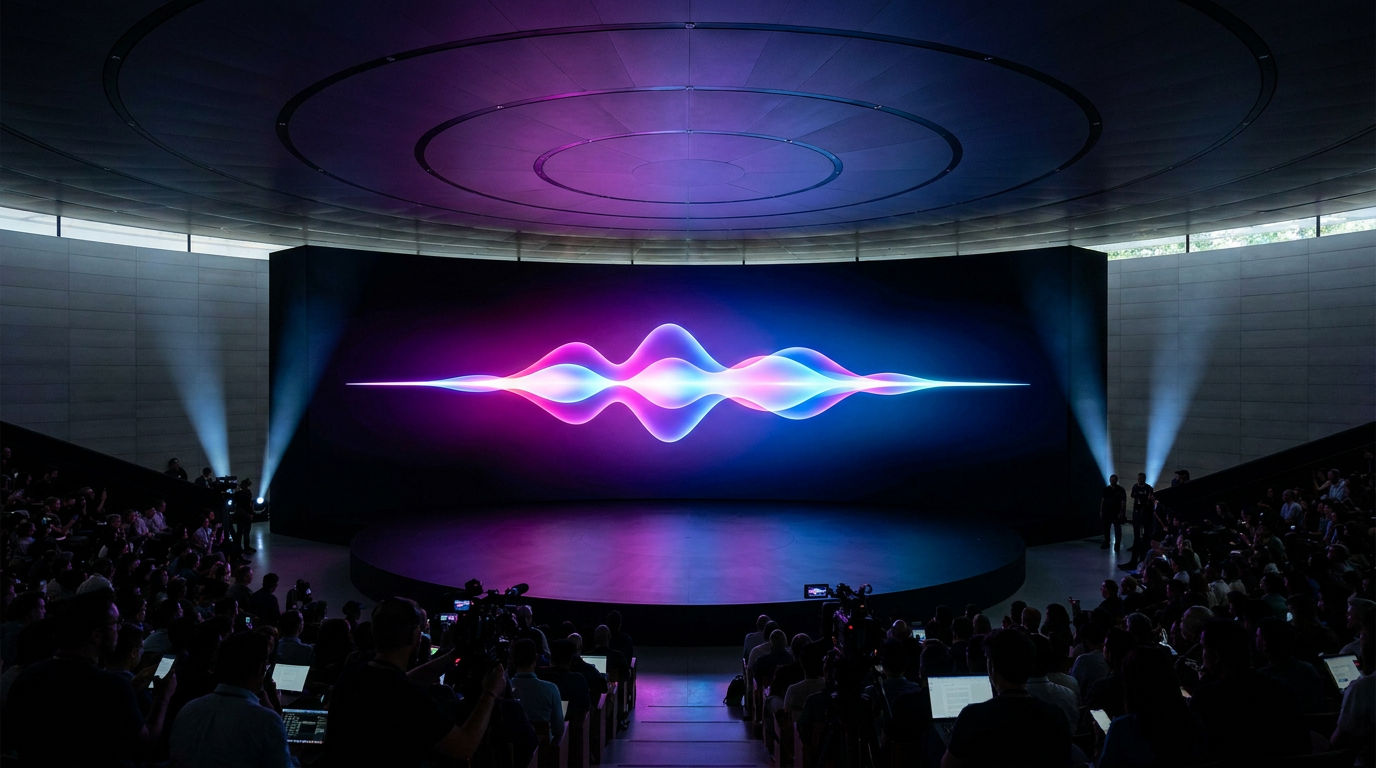
Apple has also completely re-recorded Siri's voice to sound vastly more expressive and human, with customizable pacing options available on the highest-tier devices. [7] The visual feedback has shifted as well; on the Mac, Siri now lives dynamically in Spotlight, while on the Vision Pro, it appears as a 3D visualization placed directly in the user's spatial environment. [7][7]
Privacy remains a central pillar of Apple's pitch. The AFM Core model processes the vast majority of personal data—like reading emails and messages—entirely on the device. [6] When a request requires the AFM Cloud Pro tier, Apple routes the data through its proprietary Private Cloud Compute architecture, ensuring that user information is never stored or accessible to Apple or Google. [2, 6][2][6]
The catch to this on-device processing is a steep hardware requirement. Siri AI will not run on older iPhones. It requires the neural processing power of the iPhone 17 Pro, the iPhone 17 Pro Max, the newly announced iPhone Air, or iPads and Macs equipped with M-series chips. [6, 7][6][7]

Furthermore, millions of users will be locked out at launch due to regulatory battles. Apple confirmed that Siri AI will not be available on iPhones and iPads in the European Union this fall, citing compliance complexities related to the bloc's Digital Markets Act (DMA). [7] Mac users in the EU, however, will receive the update, as macOS falls under different regulatory guidelines. [7][7]
The WWDC 2026 keynote carried a distinct sense of finality. It marked the final product launch for outgoing CEO Tim Cook, who introduced the original Siri in 2011. [3] As Cook prepares to pass the leadership baton to John Ternus, the debut of a fully actualized, highly capable Siri serves as a fitting bookend to his tenure. [3][3]
After years of lagging behind nimble AI startups, Apple has finally weaponized its greatest advantage: deep, system-level integration. Siri AI doesn't just answer questions; it transforms the iPhone from a static grid of apps into a proactive, context-aware digital assistant, finally delivering on the promise Apple made 15 years ago. [1, 5][1][5]
How we got here
October 2011
Apple introduces the original Siri voice assistant alongside the iPhone 4S.
June 2024
Apple announces initial 'Apple Intelligence' features, but delays a full Siri rebuild.
June 8, 2026
Apple unveils 'Siri AI' at WWDC 2026, powered by new Foundation Models and Google Gemini.
Fall 2026
Siri AI is scheduled to launch in beta for iOS 27 and macOS 27.
Viewpoints in depth
Everyday Users
Focused on the practical utility of a voice assistant that finally works.
For the average iPhone user, the technical architecture matters far less than the end result: Siri no longer feels broken. Reviewers who tested the iOS 27 beta expressed genuine relief that they could ask complex, multi-part questions without the assistant defaulting to a useless web search. The ability to find specific photos, cross-reference calendars, and extract information from years-old text messages transforms the iPhone's daily utility.
Industry Analysts
Viewing the Google partnership as a necessary, pragmatic concession.
Tech analysts see the Siri AI rebuild as a massive leap forward, but one that comes with a quiet admission of defeat in the foundational AI race. By partnering with Google to integrate Gemini for complex 'agentic' tasks, Apple acknowledged that it could not catch up to OpenAI and Google on its own. However, analysts praise the move as a pragmatic choice that prioritizes user experience over corporate pride, instantly making Apple a formidable player in the AI assistant space.
European Consumers
Frustrated by regional feature locks stemming from regulatory battles.
For users in the European Union, the WWDC announcement was bittersweet. Because of ongoing friction with EU regulators over the Digital Markets Act (DMA), Apple is withholding the Siri AI rollout for iPhones and iPads in the region. European tech advocates view this as Apple weaponizing its newest features to punish regulators, leaving millions of consumers with premium hardware but a distinctly second-tier software experience.
What we don't know
- How seamlessly the handoff between Apple's on-device models and Google's Gemini cloud models will actually feel in daily use.
- When, or if, Apple and EU regulators will reach an agreement to bring Siri AI to iPhones in Europe.
- How third-party app developers will integrate with Siri's new agentic capabilities, and whether it will cannibalize their own app usage.
Key terms
- Apple Foundation Models (AFM)
- Apple's proprietary suite of artificial intelligence models that process requests either directly on the device or in a secure cloud environment.
- Agentic AI
- Artificial intelligence that can autonomously plan and execute multi-step workflows across different applications, rather than just answering single questions.
- Visual Intelligence
- A new feature allowing Siri to analyze the contents of your screen or live camera feed to provide context-aware answers and actions.
Frequently asked
Will the new Siri work on my current iPhone?
Siri AI requires significant on-device processing power. It will only be available on the iPhone 17 Pro, iPhone 17 Pro Max, the new iPhone Air, and M-series iPads and Macs.
Do I need to download a separate app for Siri AI?
No, it replaces the existing Siri voice assistant built into the operating system, though it now includes a dedicated app interface to view your conversation history.
Why isn't Siri AI launching in Europe?
Apple has delayed the rollout for iPhone and iPad users in the EU, citing regulatory complexities and compliance issues related to the Digital Markets Act (DMA).
Sources
Source coverage
8 outlets
4 viewpoints surfaced








[1]The VergeEveryday Users
Siri is good now??
Read on The Verge →[2]ApplePrivacy Advocates
Apple Intelligence brings powerful AI capabilities into everyday experiences
Read on Apple →[3]ZDNETIndustry Analysts
Tim Cook's last WWDC and final 'good morning': An all-new Siri
Read on ZDNET →[4]EngadgetEveryday Users
How does Siri AI perform? A quick preview of what's to come this fall
Read on Engadget →[5]AxiosIndustry Analysts
Apple's Siri AI is both cool and 2 years too late
Read on Axios →[6]PCMagPrivacy Advocates
Inside Siri's Guts: How Apple's New AI Actually Works
Read on PCMag →[7]The GadgeteerEuropean Consumers
Siri AI is a complete rebuild, and Apple built it with Google
Read on The Gadgeteer →[8]T3Everyday Users
Siri AI actually does what I want: Hands-on with iOS 27
Read on T3 →
More in technology
See all 83 stories →Infrastructure Defense
How Autonomous AI Agents Are Becoming the Primary Defense for EV Charging Networks
7 sources
AI Metacognition
Google Researchers Propose 'Faithful Uncertainty' to Solve AI Hallucinations
6 sources
Space Economy
SpaceX Completes Historic $75 Billion IPO: How the Space Economy Just Changed
8 sources

AI Reliability
How Google’s 'Faithful Uncertainty' Research Aims to Fix AI Hallucinations
6 sources

Every angle. Every day.
Get technology stories with full source coverage and perspective breakdowns delivered to your inbox.