
Apple Cracks Down on Low-Quality, AI-Generated Apps in App Store Policy Overhaul
Apple has updated its App Store Review Guidelines to aggressively remove low-effort, AI-generated apps and clones that clutter the marketplace.
By Sergei Orlov

- Independent Developers
- Legitimate app creators view the crackdown as a necessary step to fix a broken discovery system.
- No-Code Advocates
- Proponents of rapid AI app-building argue Apple is stifling accessibility and protecting its monopoly.
- Platform Operator
- Apple is attempting to balance an open ecosystem with baseline quality standards.
Why this matters
The barrier to creating software has collapsed, leading to a flood of AI-generated junk that makes finding genuinely useful apps harder. Apple's policy shift forces developers to build actual products rather than just wrapping an AI prompt in an iOS interface, promising a cleaner, more reliable App Store for users.
Key points
- Apple updated App Store Review Guidelines to explicitly target low-effort, AI-generated applications.
- Apps in saturated categories that lack updates or fail to attract users face active removal.
- The policy enforces Rule 2.5.2, blocking apps that dynamically generate other apps on the fly.
- App submissions jumped 24% last year, flooding the store with what developers call 'AI spam.'
- Apple continues to support AI development tools but requires the final product to offer unique utility.
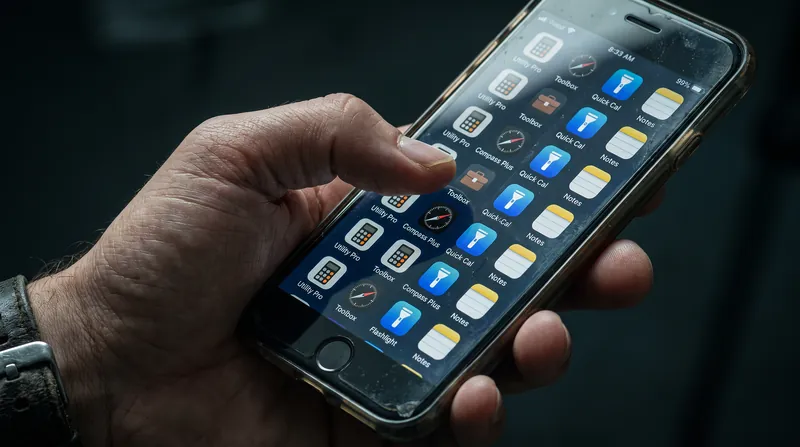
The short version is this: Apple is actively purging the App Store of low-effort, AI-generated clone apps. The company has formally updated its App Store Review Guidelines to explicitly target "vibe-coded" software that clutters the marketplace without offering real utility to the end user. Under the newly revised Section 4.3(b), Apple now claims the explicit right to actively remove applications in saturated categories—such as flashlights, simple timers, drinking games, and fortune-telling tools—if they fail to attract users, lack meaningful updates, or are functionally indistinguishable from existing products. This marks a significant shift from merely rejecting new submissions to actively cleaning up the existing catalog.[1][3]
Apple is pitching this policy shift as a necessary quality-control measure, but it is also a defensive maneuver against a tsunami of automated submissions. AI coding assistants have entirely collapsed the traditional barrier to entry for software development, allowing anyone to generate code with a simple text prompt. Last year, developers submitted more than 557,000 new apps to the App Store, representing a massive 24 percent jump that independent developers have dubbed "peak AI spam." The sheer volume of weekend-project apps generated by prompts rather than thoughtful programming has severely strained Apple's review infrastructure, prompting the company to draw a much harder line to maintain the store's reputation.[2]
To be clear, Apple is not banning artificial intelligence from its ecosystem. The company is perfectly happy to sell developers on its own Xcode AI tools and the newly announced Apple Intelligence frameworks. What it is banning is laziness and a lack of original product design. The new guidelines specifically target apps that are essentially thin wrappers around a web view or a generic ChatGPT prompt. If an application does not meaningfully improve the store experience, provide a unique function, or offer a high-quality user interface, Apple will no longer let it sit passively on its servers collecting dust and confusing search results.[1][5]
The crackdown extends well beyond just simple clones and copycats. Apple has also begun strictly enforcing its long-standing Rule 2.5.2 against dynamic code execution to block apps that allow users to generate secondary software on the fly. Platforms that enable "vibe coding"—where users type a natural language prompt and the app generates a functional mini-app within its own interface—have recently found their App Store updates blocked. Apple views these embedded web views as a direct violation of its rule against apps altering their own core functionality after passing the initial safety and security review.[4]
The crackdown extends well beyond just simple clones and copycats.
This strict enforcement is a double-edged sword for the broader tech industry. While it effectively protects the App Store from becoming a noisy wasteland of digital trash, it also conveniently protects Apple's lucrative 30 percent commission ecosystem from platforms that might otherwise bypass the traditional app distribution model. By forcing all generated software to open in external web browsers rather than running natively inside a host application, Apple ensures that no third-party tool can become a shadow App Store of its own, maintaining its tight grip on iOS software distribution.[4]
For legitimate, established developers, the policy overhaul is largely a welcome relief. A cleaner storefront means significantly less competition from automated spam, improving discoverability for studios that actually invest time and resources in user experience and native architecture. The new rules explicitly state that opportunistically creating variants of popular apps "degrades App Store discovery, reduces overall app quality, and harms both users and developers." By clearing out the noise, Apple is attempting to restore a marketplace where high-quality software can actually be found by the consumers who need it.[1][6]
The primary challenge moving forward will be consistent and fair enforcement. Apple claims that 90 percent of app submissions are still processed within 48 hours, but the company admits it is increasingly relying on its own internal AI tools to assist human reviewers in filtering out the junk before it ever reaches a live person. As the new guidelines take full effect, the App Store is expected to undergo a rolling, continuous purge rather than a single massive deletion event, quietly sweeping away the abandoned, the unoriginal, and the purely automated applications over the coming months.[1][3]
Ultimately, the era of treating the App Store as a passive income lottery ticket for AI-generated templates is rapidly closing. Apple's message to the developer community is unambiguous: artificial intelligence can speed up the development process, but it cannot replace actual product design, user testing, and ongoing maintenance. If an app exists only to chase search traffic, capitalize on a fleeting trend, or duplicate existing functionality without offering genuine, ongoing value to the user, its days on the iOS platform are officially numbered. The App Store is maturing, and the cost of entry is returning to a standard of quality rather than just the ability to write a prompt.[5][6]
Viewpoints in depth
Independent Developers
Legitimate app creators view the crackdown as a necessary step to fix a broken discovery system.
For developers who spend months building native, high-quality applications, the recent flood of AI-generated spam has been a nightmare for visibility. They argue that when the App Store is choked with thousands of identical, low-effort clones generated over a weekend, genuine innovation gets buried. This camp largely applauds Apple's stricter enforcement, viewing the removal of stale and indistinguishable apps as the only way to restore a functioning marketplace where quality software can actually be found by users.
No-Code Advocates
Proponents of rapid AI app-building argue Apple is stifling accessibility and protecting its monopoly.
Advocates for vibe coding and prompt-based app generation see Apple's enforcement of Rule 2.5.2 as overly broad and protective. They argue that AI tools have finally democratized software creation, allowing anyone with an idea to build a functional tool without needing to learn Swift or Objective-C. From their perspective, Apple's refusal to allow dynamic, AI-generated mini-apps to run within host platforms is less about quality control and more about ensuring Apple maintains absolute authority—and its 30 percent cut—over every piece of software that reaches an iPhone.
Apple's Review Team
The platform operator is attempting to balance an open ecosystem with baseline quality standards.
Apple's stance is that the App Store is a curated boutique, not an open web directory. The company maintains that while AI is a valid tool to assist in writing code, it does not exempt developers from the requirement to build something useful. By formalizing the right to delete apps that fail to attract users or receive updates, Apple is giving its review team the explicit authority to act as editors rather than just security screeners, prioritizing the end-user's experience over a developer's right to publish.
Sources
Source coverage
6 outlets
3 viewpoints surfaced






[1]9to5MacIndependent Developers
Apple tightens App Review Guidelines against apps that 'do not add value to the App Store'
Read on 9to5Mac →[2]ForbesPlatform Operator
Apple's App Store Review Delays Highlight The AI Spam Problem
Read on Forbes →[3]MacRumorsIndependent Developers
Apple Updates App Store Review Guidelines With Stricter Rules for Low-Quality Apps
Read on MacRumors →[4]AppleInsiderNo-Code Advocates
Apple clamps down on apps with AI vibe coding capabilities
Read on AppleInsider →[5]PYMNTSPlatform Operator
Apple Formalizes Right to Remove Apps in Saturated Categories
Read on PYMNTS →[6]AppleMagazinePlatform Operator
Apple Tightens App Store Rules on Low-Quality Apps
Read on AppleMagazine →
Comments

Every angle. Every day.
Get technology stories with full source coverage and perspective breakdowns delivered to your inbox.