
Anthropic Signs $35 Billion Compute Deal with Lambda to Secure Nvidia Capacity
Anthropic has committed $35 billion to cloud provider Lambda for AI compute capacity at a Texas data center where Nvidia holds the underlying real estate lease.
By Ishani Patel

Share this story
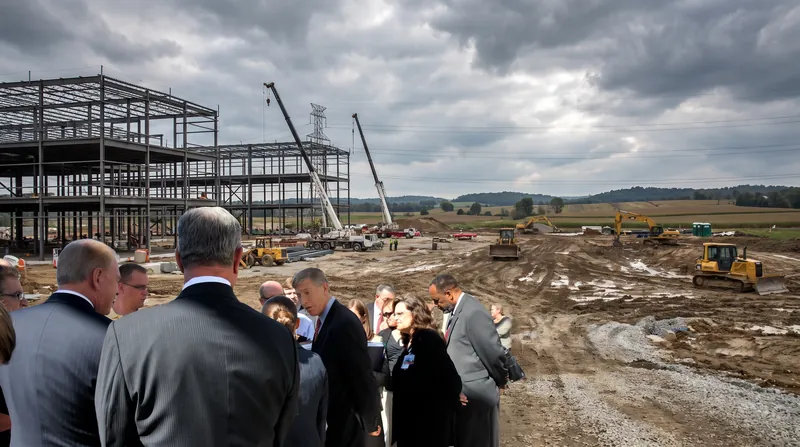
Inside a 350-megawatt data center campus under development in Nueces County, Texas, the physical infrastructure of the artificial intelligence industry is being locked down in a highly unusual four-way financial stack. Anthropic has agreed to spend $35 billion on cloud-computing capacity from Lambda, a neocloud provider preparing to go public.
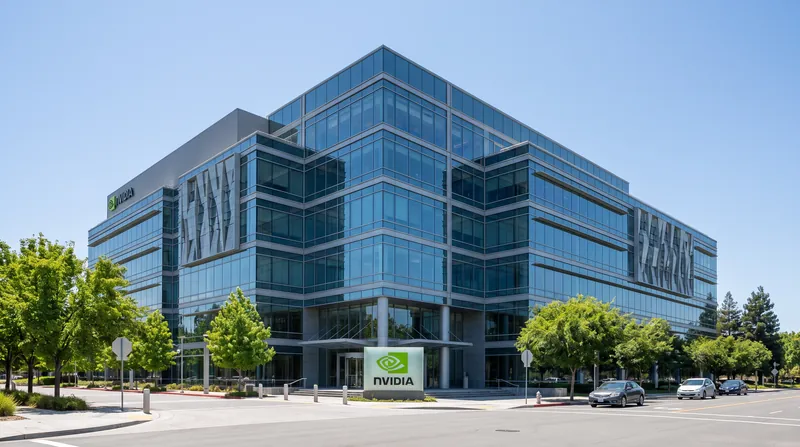
Lambda will fill the Texas facility with processors purchased from Nvidia to power Anthropic's Claude AI models. But the underlying real estate arrangement reveals a deeper shift in how AI compute is financed: Nvidia itself holds the 15-year lease on the buildings, effectively underwriting the demand for its own hardware and acting as the anchor tenant for the entire operation.[1][4]
The mechanics of the agreement separate the cloud provider, the site leaseholder, and the facility developer, creating a complex web of dependencies. Hut 8, a former cryptocurrency mining company that recently pivoted to AI data centers, owns the land and is developing the site.
In July 2026, Hut 8 disclosed that an unnamed high-investment-grade tenant had signed two 15-year leases covering 704 megawatts across its Texas campus, carrying a combined base-term contract value of $19.6 billion. Financial disclosures and industry reports now identify Nvidia as that anchor tenant, securing the physical footprint weeks before the compute capacity was sold to Anthropic.[1][4]
By signing the lease on the physical building where its chips will operate, Nvidia is guaranteeing the real estate revenue regardless of downstream cloud sales. This structure makes the massive construction project financeable for Hut 8 while allowing Lambda to secure a $35 billion contract with Anthropic without having to independently source, capitalize, or lease the underlying data center space.
Lambda simply installs Nvidia's hardware into a facility Nvidia already controls, and Anthropic rents the resulting compute. Hut 8's involvement illustrates the broader pivot of cryptocurrency infrastructure toward artificial intelligence, as the company repurposes its power agreements to serve the much more lucrative AI market.[1][2]
The transaction highlights a severe supply crunch for frontier AI developers, where having a powerful model architecture is no longer the primary bottleneck. The true constraint is securing enough chips, data centers, and electricity to run those models at scale.
Energized, leased data center capacity has become the scarcest asset in the technology sector, prompting model developers to make unprecedented long-term financial commitments to ensure they do not run out of processing power. The Nueces County site alone will draw roughly 350 megawatts of electricity—enough to power hundreds of thousands of homes—highlighting the immense energy requirements of modern AI training clusters.[1][3]
Anthropic's recent spending reflects this industry-wide urgency to secure hardware. The $35 billion Lambda agreement is part of a broader infrastructure sprint in which the company has committed roughly $180 billion to capacity in recent months.
That total includes a reported $45 billion agreement for computing capacity at an Nscale data center in West Virginia, a $50 billion commitment with neocloud Fluidstack, and another $45 billion deal with SpaceX. These figures reflect the scale at which the AI industry is now contracting for computing capacity, moving from short-term cloud rentals to multi-decade infrastructure investments.[1][4]
The interconnected nature of these investments has drawn scrutiny from industry analysts, who note the circular flow of capital defining the current AI boom. Nvidia invests in Lambda, Lambda buys chips from Nvidia, Nvidia leases the data center from Hut 8, and Anthropic pays Lambda to use the entire stack.
While no executives from Anthropic, Nvidia, Lambda, or Hut 8 provided direct public statements or quotations in the initial financial disclosures, the structure of the deal speaks volumes about Nvidia's evolving role. The company is no longer just a semiconductor vendor; it is acting as a central financier and real estate guarantor for the entire AI ecosystem.[1][4]
For Anthropic, the Texas facility will provide a massive pool of computing resources necessary to train subsequent generations of its Claude models and operate enterprise tools like Claude Code. The arrangement ensures that as the company scales its operations through the end of 2026 and beyond, it will have a dedicated pipeline of Nvidia hardware ready to absorb the workload. This capacity is critical as Anthropic competes directly with OpenAI and Google, both of which are executing their own multi-billion-dollar infrastructure buildouts to secure future compute.[1][2]
The broader market consequence is the rapid consolidation of AI infrastructure into a few highly capitalized alliances. As the cost of training frontier models pushes into the tens of billions of dollars, only companies capable of orchestrating multi-decade real estate leases, securing gigawatts of power, and financing massive hardware deployments can compete at the highest level. The Nueces County campus represents the new baseline for entry into the next era of artificial intelligence, where physical infrastructure and energy access dictate who can build the most capable models.[1][5]
Key points
- Anthropic has agreed to a $35 billion cloud-computing contract with Lambda to secure Nvidia hardware.
- The compute capacity will be housed in a 350-megawatt data center being developed by Hut 8 in Nueces County, Texas.
- Nvidia holds the 15-year lease on the physical data center, effectively underwriting the demand for its own chips.
- The agreement is part of a broader $180 billion infrastructure sprint by Anthropic to secure energized data center capacity.
How we got here
July 2026
Hut 8 announces two 15-year leases for 704 megawatts of capacity at its Texas campus, without naming the tenant.
August 2026
Anthropic signs a $45 billion agreement for computing capacity at an Nscale data center in West Virginia.
September 2026
Financial disclosures reveal Nvidia as the anchor tenant for the Hut 8 facility, underpinning Anthropic's $35 billion cloud deal with Lambda.
- AI Infrastructure Providers
- Focuses on securing long-term leases and capitalizing on the surging demand for energized data centers.
- Frontier Model Developers
- Prioritizes locking down massive pools of compute capacity to ensure uninterrupted model training and deployment.
- Financial & Market Analysts
- Examines the circular flow of capital and the unprecedented scale of vendor financing in the AI sector.
Perspectives this story doesn't cover
- Environmental advocates monitoring the power grid impact of 350-megawatt facilities
- Traditional hyperscalers losing specialized compute contracts to neoclouds
Sources
Source coverage
5 outlets
3 viewpoints surfaced





- [1]ForbesFinancial & Market Analysts
Anthropic Books $35 Billion To Nvidia-Backed Lambda For Cloud Capacity
Read on Forbes → - [2]BetaNewsAI Infrastructure Providers
Anthropic signs $35 billion Lambda deal for Nvidia-backed Texas site
Read on BetaNews → - [3]Anadolu AjansıFinancial & Market Analysts
Anthropic signs $35B cloud deal with Nvidia-backed provider
Read on Anadolu Ajansı → - [4]TechRepublicFrontier Model Developers
Anthropic's Reported $35B Lambda Deal Puts Nvidia at the Center
Read on TechRepublic → - [5]W.MediaAI Infrastructure Providers
Anthropic strikes US$ 35 billion cloud deal with Lambda: Report
Read on W.Media →
More in Artificial Intelligence
See all →AI Infrastructure
AI Inference Spending to Surpass Training Spending in 2026 as AI Moves to Mass Production
8 sources
AI Infrastructure
US National Security Officials Warn Against Frontier AI Compute Moving Overseas
4 sources
AI Infrastructure
Amazon Completes $50 Billion Investment for 5% Stake in OpenAI, Securing AWS as Exclusive Cloud Partner
9 sources
AI Safety
Nvidia Launches Hardware-Backed Open Agent Safety Platform With 100 Partners
8 sources
Comments
Every angle. Every day.
Get Artificial Intelligence stories with full source coverage and perspective breakdowns, free every day.