
Amazon Commits $2 Billion to Prime Video Content and Sports in Latin America Through 2030
Amazon announced a massive $2 billion investment in its Latin American streaming operations, aiming to double local original productions and expand live sports coverage across the region by the end of the decade.
By Tara Reddy

Amazon is dropping $2 billion into Latin America’s streaming ecosystem between 2027 and 2030. That is the short version of the announcement made Thursday in Mexico City, a massive capital injection that signals the region has officially graduated from a secondary expansion market to the central battleground of the global streaming wars. The multi-year initiative represents the platform's largest strategic capital allocation in the region to date, aimed at accelerating regional growth by scaling original productions and securing live sports rights.[1][2][6]
The commitment targets the continent's heavyweights: Mexico, Brazil, Argentina, Colombia, and Chile. It is designed to more than double the platform's local output by the end of the decade relative to 2026 levels.
Executed through Amazon MGM Studios, the strategy targets a broad spectrum of scripted series, films, and unscripted formats intended to drive regional subscriber retention while offering global crossover potential. For a company that already operates in over 240 countries, the sheer scale of this localized spending underscores a major shift in how the entertainment giant views its international audience.[2][4]
For years, Hollywood treated Latin America primarily as a dumping ground for dubbed syndication or a secondary market for global blockbusters. Now, the math has fundamentally changed. With domestic subscriber growth stalling across the industry, streamers are hunting for fresh cultural veins to tap, and Latin America—with its deep storytelling traditions, massive population, and rapidly digitizing middle class—is suddenly the prettiest girl at the dance. Industry executives are openly acknowledging the "extraordinary" momentum in the region, noting that the talent, stories, and audiences are demanding a higher caliber of investment.[1]
The creative strategy is aggressively local. Prime Video plans to roll out 25 new regional titles in 2027 alone, with another 25 to follow in 2028.
The slate includes "La Oficina" (a Mexican translation of the beloved Dunder Mifflin workplace misery), "Menem" (a drama chronicling the flamboyant former Argentine president Carlos Menem), and an adaptation of Camila Sosa Villada’s acclaimed novel "Las Malas," which centers on a community of trans sex workers in Argentina. These are not generic, algorithm-friendly global soups; they are highly specific narratives designed to resonate deeply with domestic viewers.[3][5]
Javiera Balmaceda, Amazon MGM Studios’ head of international originals for the region, articulated the mandate clearly: the job is to find stories that are undeniably local and make them undeniably universal. It is a tacit admission that you cannot win Buenos Aires or Bogotá simply by exporting Los Angeles. When you trust Latin American storytellers with ambition and resources, the world pays attention. The philosophy is that hyper-local storytelling doesn't limit an audience—it builds one, creating a foundation of authenticity that can eventually travel across borders.[1][2]
But prestige television is only half the playbook. The other half is sweaty, live, and highly lucrative. Live sports have become Prime Video's fastest-growing draw in the region, pulling in more than 20 million Latin American households so far in 2026. That audience footprint already eclipses the platform's entire sports viewership for all of 2025, reaching an estimated 60 million fans. In the streaming business, a critically acclaimed drama might win awards, but live athletic competition is the ultimate churn-killer, preventing subscribers from hitting the cancel button during the off-season.[2][4]
Amazon is wielding its checkbook to lock down the rights that actually matter to local fans. An 11-year global NBA deal is bringing more than 200 games a season to Brazil and Mexico, while expanding the league's presence into Chile, Colombia, and Argentina for the first time. More crucially for the local palate, Prime Video just secured 38 home matches for the Mexico National Team over the next four years, beginning in September. Adding domestic soccer turns the platform into an indispensable utility for millions of households.[1][4]
The infrastructure of how people watch is also shifting alongside the content. Amazon is expanding its commercial reach by introducing standalone video rentals, purchases, and third-party channel subscriptions into six additional Latin American territories, including Costa Rica, Guatemala, and Peru. By decoupling premium entertainment access from the traditional Prime shipping membership, Amazon is acknowledging the logistical and economic realities of the region. This broadens their addressable market and creates new transactional revenue streams from consumers who just want to watch a movie without signing up for a broader retail ecosystem.[4]
Of course, Amazon is not throwing $2 billion into a vacuum. Netflix has been aggressively fortifying its own Latin American fortress, banking on massive, culturally resonant swings. Their upcoming adaptation of Gabriel García Márquez’s masterpiece "One Hundred Years of Solitude" in Colombia and the Argentine science-fiction epic "El Eternauta" prove that the competition for premium local IP is fiercer than ever.
Amazon's massive capital injection is a direct response to this arms race, an attempt to outspend and out-localize its biggest rival in a market that neither can afford to lose.[3]
The next four years will test whether Amazon’s war chest can buy the cultural cachet required to unseat entrenched viewing habits. To support the elevated output, the company is also directing resources toward regional production infrastructure and technical talent development through targeted programs across Brazil and Mexico. For the writers, directors, and production crews from Mexico City to Santiago, the immediate forecast is clear: the streaming giants are opening their wallets, and the local entertainment economy is about to get very, very busy.[1][4]
Key points
- Amazon is investing $2 billion in Prime Video across Latin America between 2027 and 2030.
- The initiative aims to double the number of local original titles produced in the region.
- Prime Video will release 25 new regional titles in 2027, including adaptations of popular local novels.
- The platform is heavily expanding its live sports footprint, securing rights for the Mexico National Team.
- Amazon Executives
- Focused on capturing the Latin American market through aggressive local investment.
- Financial Analysts
- Viewing the investment as a necessary strategic move to counter Netflix and drive transactional revenue.
- Industry Observers
- Highlighting the cultural shift toward hyper-local storytelling and the disruption of traditional sports broadcasting.
Perspectives this story doesn't cover
- Traditional Latin American cable broadcasters
- Independent local theater operators
Sources
Source coverage
6 outlets
3 viewpoints surfaced






- [1]ForbesAmazon Executives
Prime Video To Invest $2 Billion In Latin America Originals, Live Sports
Read on Forbes → - [2]AmazonAmazon Executives
Prime Video to invest $2 billion in Latin America between 2027 and 2030
Read on Amazon → - [3]The Economic TimesFinancial Analysts
Amazon to invest $2 billion in Latin American Prime Video through 2030
Read on The Economic Times → - [4]Investing.comFinancial Analysts
Amazon commits $2 billion to expand Prime Video across Latin America through 2030
Read on Investing.com → - [5]Malay MailIndustry Observers
Amazon to invest US$2b to expand Latin American originals and licensed content, including Mexican version of 'The Office'
Read on Malay Mail → - [6]Breaking The NewsIndustry Observers
Prime Video to invest $2B in Latin America through 2030
Read on Breaking The News →

More in Entertainment
See all →Streaming Wars
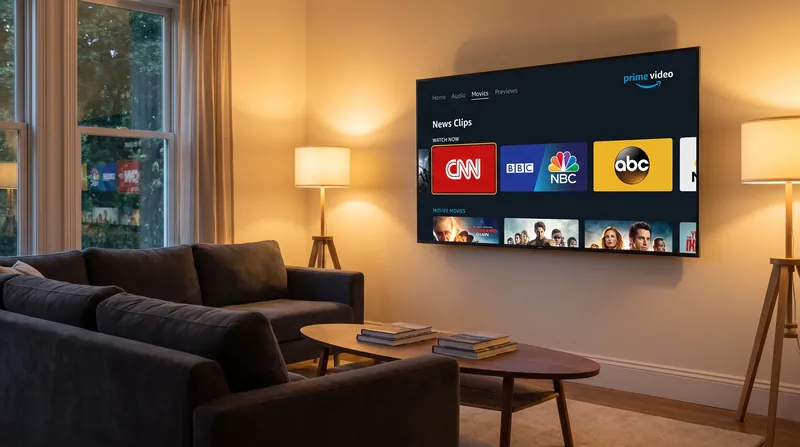
Prime Video Launches Free, Ad-Supported News Section for All Amazon Customers
4 sources
Video Engineering
Perceptual Quantizer (PQ) and Hybrid Log-Gamma (HLG): How HDR Standards Encode Brightness and Color Volume
7 sources

Documentary Film
Ashley St. Clair Claims She Rejected $40 Million Offer to Exit Elon Musk Documentary
5 sources

Streaming Disputes
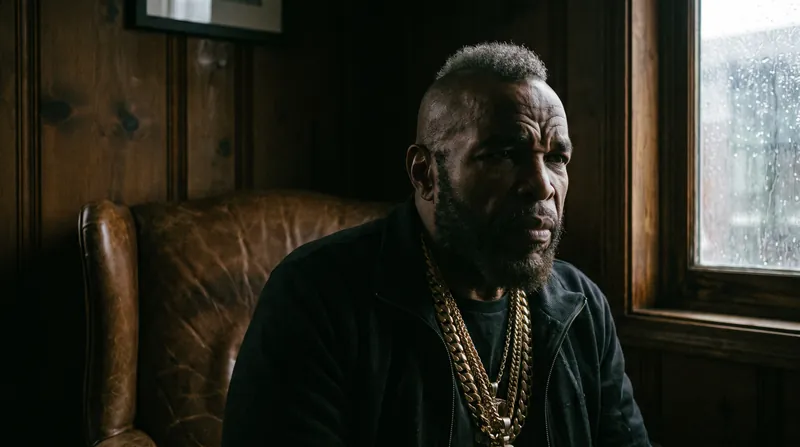
Mr. T Calls Netflix Biographical Documentary 'Garbage' Over Final Cut
6 sources
Comments
Every angle. Every day.
Get Entertainment stories with full source coverage and perspective breakdowns, free every day.