
Xbox CEO Questions Value of $68.7B Activision Blizzard Merger, Citing Pre-AI Context
In a candid interview, Xbox CEO Asha Sharma expressed uncertainty about whether Microsoft's record-breaking acquisition of Activision Blizzard is paying off, pointing to shifting industry realities and surging AI-driven component costs.

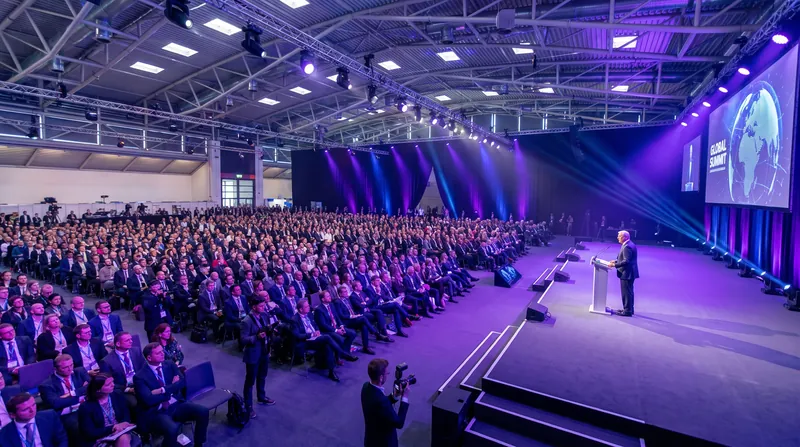
Microsoft's $68.7 billion acquisition of Activision Blizzard was supposed to be the ultimate trump card in the console wars, securing a dominant future for the Xbox ecosystem. But two and a half years after the ink dried, the executive who inherited the deal is openly questioning its value. Speaking at the Bloomberg Tech 2026 conference, newly appointed Xbox CEO Asha Sharma delivered a surprisingly candid assessment of the historic merger.
When pressed on whether the record-breaking purchase is paying off, Sharma admitted it is "hard to say" how to evaluate the decision in a landscape fundamentally altered by artificial intelligence. The remarks represent a stark departure from standard corporate optimism, signaling a profound shift in how Microsoft views its gaming division.[1][2][3]
Sharma, who took over the Xbox division from long-time head Phil Spencer earlier this year, was quick to praise the underlying assets Microsoft acquired. She noted that heavyweight franchises like Call of Duty now gross more revenue than the entire Marvel Cinematic Universe, while mobile juggernaut Candy Crush and PC staple World of Warcraft remain undisputed industry titans.
"I love Activision Blizzard King," Sharma told the conference audience, acknowledging the sheer cultural weight of the studios. However, she immediately pivoted to the macroeconomic reality that has shifted beneath Microsoft's feet since the deal was first announced in early 2022, painting a picture of a company grappling with unforeseen technological disruptions.[1][2]
"Look, it was bought at a time before ChatGPT," Sharma explained to the Bloomberg Tech crowd. "It was bought at a time when our strategy was predominantly on the core consoles. It was a time when we were right in the middle of COVID."
The admission marks a rare moment of executive transparency, acknowledging that a nearly $70 billion bet was placed under market conditions that simply no longer exist. The explosion of generative AI has rapidly redirected Microsoft's broader corporate focus, leaving the gaming division to navigate a post-pandemic entertainment slump while competing for internal resources against the company's massive enterprise AI initiatives.[2][3]
The context surrounding Sharma's remarks is a gaming division undergoing a painful and highly public restructuring process. Since the Activision Blizzard merger officially closed, Microsoft has executed multiple rounds of devastating layoffs, eliminating thousands of roles across Xbox Game Studios, Bethesda, and the newly acquired Activision teams.
High-profile development houses like Arkane Austin and Tango Gameworks were abruptly shuttered, sending shockwaves through the development community. Concurrently, Xbox hardware sales have continued a steady decline, failing to see the massive consumer boost that analysts initially predicted would follow the integration of Call of Duty into the Xbox ecosystem.[1][2][8]
Behind the scenes, the meteoric rise of generative AI is directly squeezing the traditional gaming business in ways consumers rarely see. In a stark internal memo sent to staff shortly after the Bloomberg interview, Sharma and Xbox Chief Content Officer Matt Booty outlined a comprehensive "reset" for the division.
The memo revealed that the cost of console storage and memory components has surged to more than double what Microsoft paid just last fall. This hardware crisis is being driven almost entirely by the tech industry's rampant, insatiable investment in AI infrastructure, which is monopolizing the global semiconductor supply chain.[1][5]
"These costs have since doubled again," the internal memo stated, projecting that by the 2027 holiday season, component prices could be five times higher than they were only two years ago. Microsoft's own massive investments in AI data centers are inadvertently driving up the cost of manufacturing Xbox consoles, creating an intense internal friction between the company's enterprise ambitions and its consumer gaming hardware.
The financial strain has forced Xbox leadership to reconsider how they subsidize hardware and whether the traditional console lifecycle remains viable in an era where silicon is being hoarded for large language models.[1][5]
Despite the severe financial headwinds and her background as president of Microsoft's CoreAI product line, Sharma's tenure is being framed internally as a return to Xbox's roots rather than a pivot away from traditional gaming.
Industry insiders initially feared that her appointment would force generative AI integration into every facet of the Xbox ecosystem, potentially alienating a core audience that remains highly skeptical of machine-generated content. Instead, Sharma has actively pushed back against that narrative, drawing a firm line between Microsoft's enterprise AI goals and the creative output of its game studios.[4][5]
In a company-wide address earlier this year, Sharma vowed to avoid flooding the platform with what she termed "soulless AI slop," promising to protect the creative integrity of the studios Microsoft now owns.
To reinforce this cultural shift, the company has also killed the sterile "Microsoft Gaming" corporate branding introduced during the acquisition phase, returning simply to "Xbox" in an effort to restore the brand's original renegade identity. The move is designed to reassure both players and developers that human-led game design remains the division's primary focus, even as the broader corporation chases the AI revolution.[4]
The strategic reset also involves unwinding some of the previous administration's most aggressive—and costly—subscription tactics. Reports indicate that Xbox is reversing the decision to put future Call of Duty titles on Game Pass on day one, a strategy that analysts noted was leaving substantial premium sales revenue on the table without driving the expected surge in console adoption.
By stepping back from the "everything on Game Pass" model for its biggest blockbusters, Xbox is attempting to balance the books and prove that the $68.7 billion acquisition can generate sustainable, direct revenue rather than just serving as a loss-leader for subscription growth.[5][6][7]
For the broader gaming community, Sharma's blunt assessment is being received as a refreshing, if sobering, departure from standard corporate spin. By openly acknowledging the friction between pre-AI acquisitions and the current hardware reality, Xbox leadership is setting the stage for a leaner, more focused strategy. While the ongoing layoffs and studio closures remain a bitter pill for the industry to swallow, the commitment to transparency and the rejection of AI-generated filler suggest that Xbox is prioritizing sustainable, high-quality game development over the endless pursuit of consolidation and infinite growth.[3][4][5]
Key points
- Xbox CEO Asha Sharma publicly questioned the value of the $68.7 billion Activision Blizzard merger during a Bloomberg Tech interview.
- Sharma noted the deal was negotiated before the generative AI boom fundamentally altered the tech industry's economic landscape.
- Rampant AI investments have driven console component costs up significantly, squeezing Xbox's hardware margins.
- Microsoft has executed multiple rounds of layoffs and studio closures to offset the financial weight of the acquisition.
How we got here
Jan 2022
Microsoft announces its intent to acquire Activision Blizzard for $68.7 billion.
Oct 2023
The acquisition officially closes after a lengthy global regulatory battle.
Feb 2026
Asha Sharma replaces Phil Spencer as CEO of Xbox during a major leadership transition.
Jun 2026
Sharma publicly questions the merger's value at the Bloomberg Tech conference, citing the rise of ChatGPT and AI.
- Xbox Leadership
- Navigating a massive acquisition in a fundamentally changed macroeconomic environment.
- Industry Analysts
- Evaluating the long-term viability of the Game Pass model and console hardware.
- The Gaming Community
- Balancing relief over creative protections with anxiety over industry consolidation.
Perspectives this story doesn't cover
- Independent game developers
- Hardware component suppliers
Sources
Source coverage
8 outlets
3 viewpoints surfaced








- [1]Game DeveloperXbox Leadership
Xbox CEO unsure whether Activision Blizzard merger is paying off
Read on Game Developer → - [2]Pure XboxXbox Leadership
"It's Hard To Say" - Xbox Boss Isn't Sure The Activision Blizzard Deal Has Paid Off
Read on Pure Xbox → - [3]Rock Paper ShotgunXbox Leadership
Xbox boss Asha Sharma says it's "hard to say how to think about those decisions"
Read on Rock Paper Shotgun → - [4]HypebeastThe Gaming Community
Microsoft New Era of Xbox Under CEO Asha Sharma
Read on Hypebeast → - [5]UBOS TechIndustry Analysts
Xbox leadership change analysis
Read on UBOS Tech → - [6]Apple InsiderIndustry Analysts
Software giant Microsoft has agreed to purchase Activision Blizzard
Read on Apple Insider → - [7]Trending TopicsThe Gaming Community
Mega deal: Microsoft buys "World of Warcraft" creators for $68.7B
Read on Trending Topics → - [8]GeekWireIndustry Analysts
Microsoft's $68.7 billion deal to acquire Activision Blizzard will create a new gaming behemoth
Read on GeekWire →
More in Gaming & Esports
See all →Labor Rights
Blizzard Workers Ratify Historic Union Contract Securing AI Protections and 14-Month Layoff Recall Rights
7 sources
Studio Restructuring
Star Stable Entertainment Cuts 20% of Workforce in Restructuring Move
5 sources
Esports Economics
Team Falcons Exits Dota 2, Citing Lack of Operational Sustainability
6 sources
Gamescom 2026
Gamescom Congress 2026 Sets Attendance Record Amid Historic Visit From German President
5 sources
Comments
Every angle. Every day.
Get Gaming & Esports stories with full source coverage and perspective breakdowns, free every day.