
Virginia Decouples Benefits From Employment With New Portable System for Contractors
A landmark Virginia law creates a 'safe harbor' for companies to contribute to freelancers' health and retirement accounts without triggering worker misclassification lawsuits.

Share this story
In short
- Virginia has passed a law creating a voluntary portable benefits system for independent contractors.
- The law establishes a 'safe harbor' so companies can contribute to benefits without risking worker misclassification lawsuits.
- Portable benefits accounts are worker-owned and follow the contractor from client to client.
The American workforce has fundamentally shifted toward independence, but the nation's social safety net remains stubbornly tethered to the 1950s. For decades, millions of freelancers, consultants, and gig workers have faced a stark ultimatum: maintain the flexibility of self-employment, or surrender it for the health insurance and retirement benefits of a traditional W-2 job.[3][4]
Virginia has just fundamentally altered that equation. A landmark law passed by the state legislature creates a voluntary "portable benefits" system for independent contractors, effectively decoupling the social safety net from traditional employment status. The legislation provides a legal framework for hiring entities to contribute to a worker's benefits without triggering catastrophic labor liabilities.[1][2]
To understand why this law is necessary, one must understand the "Catch-22" of modern labor law. Under traditional federal and state regulations, if a company provides benefits—like a 401(k) match or a health insurance stipend—to a 1099 independent contractor, courts and labor agencies view that as evidence of "employer control."[4]
That control can trigger a worker misclassification lawsuit. If a company is found to have misclassified an employee as a contractor, they face massive penalties, back taxes, and retroactive overtime pay. Faced with this legal minefield, companies take the only safe route: they offer independent contractors absolutely nothing.
Virginia's new law cuts this Gordian knot by establishing a "safe harbor." It explicitly states that a company's voluntary contribution to a worker's portable benefits account cannot be used as evidence to reclassify that worker as an employee. The legal penalty for generosity has been removed.[1][2]
The mechanism centers on the "portable benefits account." Unlike a traditional corporate health plan, this account is entirely worker-owned. It is administered by a third-party financial institution or technology provider, and it follows the worker from client to client, gig to gig, and year to year.[2][3]
Distributions from these accounts can be used to fund a wide array of safety-net essentials. Workers can use the capital to pay for health insurance premiums on the individual market, direct funds into an IRA for retirement, or purchase life and income-replacement insurance to cover them if they fall ill.[2]
Funding for these accounts is highly flexible. Contributions can come directly from the hiring party's own funds as a perk of the contract. Alternatively, the independent contractor can opt-in to have a percentage of their compensation automatically withheld and deposited into the account, mimicking the frictionless experience of W-2 payroll deductions.[2]
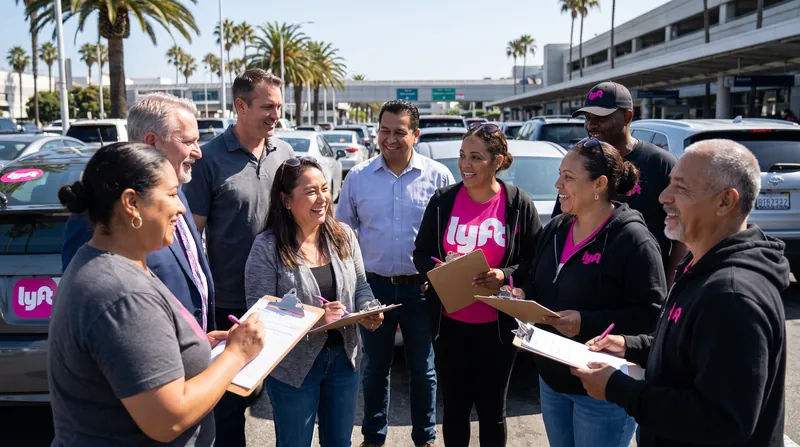
The implications span the entire spectrum of the independent workforce. For gig economy platforms like Uber or Upwork, the safe harbor allows them to offer benefit stipends to attract and retain top earners without destroying their decentralized business models.[1][4]
But the impact extends far beyond app-based gig work. High-earning knowledge workers—fractional executives, freelance software developers, and independent graphic designers—can now negotiate benefit contributions directly into their client contracts, bridging the gap between corporate security and freelance autonomy.[3][4]
Despite the bipartisan appeal of expanding benefits, the framework faces fierce opposition from traditional labor rights organizations. Groups like the National Employment Law Project (NELP) argue that "voluntary" portable benefits are a Trojan horse designed by corporations to permanently lock workers out of true employment protections.[4]
Labor advocates argue that these individual accounts are merely "paltry savings accounts" that fail to pool risk the way traditional employer-sponsored insurance or state unemployment systems do. They warn that by normalizing 1099 status with marginal perks, states are allowing companies to permanently evade minimum wage, overtime, and workers' compensation obligations.
Proponents counter that labor groups are fighting a losing battle against worker preferences. Bureau of Labor Statistics data and independent surveys consistently show that roughly 80% of independent workers prefer to remain self-employed. They do not want to be forced into W-2 employment; they simply want a legal mechanism to build a safety net.[3]
Virginia is not acting in isolation. The portable benefits movement has accelerated rapidly in 2026, with states like West Virginia, Georgia, Idaho, and Wyoming passing similar safe-harbor frameworks. The model, originally pioneered by Utah, is quickly becoming the standard state-level response to the modern gig economy.[4]
The ultimate success of Virginia's law now rests on market adoption. Because the system is entirely voluntary, the law itself does not guarantee a single worker will receive a dime. The coming years will test whether companies will actually open their wallets to fund these accounts now that the legal barrier has been cleared, or if the freelance safety net will remain largely self-funded.[4]
Definitions
- Portable Benefits
- Benefits that are attached to the individual worker rather than a specific employer, allowing the worker to take the benefits from job to job.
- Worker Misclassification
- The illegal practice of labeling a true employee as an independent contractor to avoid paying taxes, minimum wage, and benefits.
- Safe Harbor
- A legal provision that protects a party from liability or penalty under the law, provided that certain conditions are met.
- W-2 Employee
- A traditional worker whose employer dictates their schedule, withholds payroll taxes, and is legally required to provide certain protections and benefits.
- 1099 Contractor
- A self-employed individual or sole proprietor who provides services to clients and is responsible for their own taxes and benefits.
Questions & answers
Does this law force companies to provide benefits to freelancers?
No. The system is entirely voluntary. It simply removes the legal penalty for companies that choose to contribute to a contractor's benefits.
Who owns the portable benefits account?
The independent contractor owns the account. The funds follow the worker, even if they stop working for the client who contributed to it.
What can the funds in the account be used for?
Distributions can be used for health insurance premiums, retirement savings (like an IRA), paid time off, life insurance, and income replacement during emergencies.
Does this change a worker's tax status?
No. The worker remains an independent contractor (1099) for tax and labor purposes, preserving their self-employed status.
Analysis by camp
Independent Workers & Advocates
A necessary modernization of the safety net that preserves the autonomy of self-employment.
Advocates for the freelance economy argue that the traditional labor system forces a false dichotomy: you can either have flexibility or security, but not both. By creating a safe harbor, this perspective argues that states are finally acknowledging the reality of the modern workforce. Surveys consistently show that the vast majority of independent contractors do not want to become W-2 employees; they simply want a legal mechanism to build a safety net. Proponents view this law as a crucial step in empowering workers to take control of their own benefits while allowing the market to innovate.
Labor Rights Organizations
A corporate carve-out that undermines traditional employment protections and leaves workers vulnerable.
Labor unions and worker advocacy groups view voluntary portable benefits with deep suspicion, often characterizing them as a Trojan horse for gig economy platforms. They argue that by creating a special category of 'benefits' for 1099 workers, states are giving corporations a legal pass to permanently evade their responsibilities to pay minimum wage, overtime, and workers' compensation. Furthermore, critics point out that individual savings accounts do not pool risk the way traditional insurance does, leaving workers exposed if they suffer a catastrophic injury or illness that depletes their account.
Hiring Entities & Platforms
A vital legal protection that allows companies to compete for talent by offering perks without risking lawsuits.
For businesses that rely on independent contractors—from tech platforms to traditional consulting firms—the safe harbor is a massive relief. Previously, companies that wanted to offer a health stipend or retirement match to a valuable freelancer were advised by their legal counsel not to, as doing so could trigger a devastating misclassification audit. This perspective emphasizes that the new law removes the penalty for generosity, allowing companies to attract and retain top independent talent in a competitive market without fundamentally altering their business models.
- Independent Workers & Advocates
- Value the flexibility of self-employment but desperately need a legal mechanism to build a safety net without being forced into W-2 status.
- Labor Rights Organizations
- View voluntary portable benefits as a corporate loophole designed to deny gig workers full employment rights and mandatory employer-funded insurance.
- Hiring Entities & Platforms
- Support the safe harbor because it allows them to offer competitive perks to attract freelance talent without triggering catastrophic misclassification lawsuits.
Perspectives this story doesn't cover
- Traditional health insurance providers who must adapt their products to accept fragmented payments from these new accounts.
- Tax professionals who will have to navigate the accounting complexities of multi-source benefit contributions for sole proprietors.
Sources
Source coverage
4 outlets
3 viewpoints surfaced




- [1]Bloomberg LawHiring Entities & Platforms
Virginia Enacts Voluntary Portable Benefits Framework for Independent Contractors
Read on Bloomberg Law → - [2]Virginia General Assembly
Portable benefit accounts; independent contractors
Read on Virginia General Assembly → - [3]Mercatus CenterIndependent Workers & Advocates
Expanding Security for Independent Workers Through Portable Benefits
Read on Mercatus Center → - [4]Factlen Editorial Team
Synthesis by Factlen editorial team
Read on Factlen Editorial Team →
More in Careers & Work
See all →Freelance Economy
The Rise of the AI Micro-Agency: How Solopreneurs Are Scaling Without Employees in 2026
6 sources

Contract Law
Why Conditioning Copyright Transfer on Payment Protects Freelancers From Unsecured Debt
8 sources

Gig Economy Law
Multi-State Laws Decouple Benefits from Employment Status, Creating Legal Path for Portable Gig Worker Plans
7 sources

Gig Economy
ILO Adopts First Binding Global Standard for Platform Worker Rights and Social Protection
2 sources
Comments
Every angle. Every day.
Get Careers & Work stories with full source coverage and perspective breakdowns, free every day.