
UN Adopts Global Pandemic Prevention Declaration as US, Israel, and Argentina Vote Against
The UN General Assembly has passed a non-binding political declaration to strengthen global pandemic preparedness, despite formal opposition from the United States, Israel, and Argentina. The resolution highlights a $15 billion annual financing gap and calls for equitable access to vaccines, though disagreements over pathogen data sharing remain unresolved.
By Maya Khalil

The United Nations General Assembly has formally adopted a political declaration aimed at preventing and responding to future global health emergencies, securing 153 votes in favor. The non-binding resolution passed on Monday despite formal opposition from the United States, Israel, and Argentina, who voted against the measure over disputes concerning intellectual property and data sharing.[1]
The 64-clause declaration establishes a framework for international cooperation, urging countries to strengthen early warning systems and expand equitable access to vaccines, therapeutics, and diagnostics. It also formally welcomes the World Health Organization's ongoing work on a broader, legally binding Pandemic Agreement.[1][2]
While the text was originally scheduled for unanimous approval at a high-level meeting on September 25, objections from the US and a few other nations blocked the consensus. That impasse forced the document back to the General Assembly for a formal floor vote, where New Zealand and Paraguay ultimately abstained.[1][4]
New Zealand's decision to abstain highlighted domestic political dynamics regarding international health treaties. Foreign Affairs Minister Winston Peters reportedly overrode other government ministers to direct the abstention, reflecting the current coalition government's cautious approach to UN mandates and sovereignty concerns.[3]
The internal debate in Wellington underscored the tension between global health cooperation and national sovereignty. Peters' directive to abstain reportedly surprised several domestic health officials, signaling a shift in how the country approaches multilateral agreements that touch on domestic policy boundaries.[3]
The $15 Billion Financing Gap
At the core of the declaration is a stark acknowledgment that the world remains insufficiently prepared for another pathogen outbreak on the scale of the 2019 COVID-19 crisis. The text identifies an estimated $15 billion annual shortfall in pandemic preparedness financing across the globe.[4]
Existing funding mechanisms are described as fragmented, underfunded, and overly reliant on traditional development aid rather than dedicated health security budgets. The resolution calls for more coordinated financial structures to ensure that lower-income nations can maintain resilient health services and primary care networks during a crisis.[4]
The text of the declaration explicitly addresses the importance of prioritizing equity and promoting rapid access to medical countermeasures. It calls for vaccines, diagnostic tests, and targeted treatments to be made available globally within the first 100 days of a recognized pandemic threat.[4]
"The world has come a long way since COVID-19," WHO Director-General Dr. Tedros Adhanom Ghebreyesus said following the vote. He urged member states to translate the political commitments outlined in the declaration into concrete action and binding international law.[2]
Disputes Over Pathogen Sharing
The primary source of friction driving the dissenting votes centers on the Pathogen Access and Benefit-Sharing (PABS) system. This proposed mechanism would require countries to rapidly share virus samples and genomic data during an outbreak in exchange for guaranteed, equitable access to the resulting medical products.[4]
Developing nations across Africa, Latin America, and Asia have argued that they freely shared viral data during the COVID-19 pandemic but were subsequently shut out of the vaccine distribution pipeline. They view the PABS framework as a necessary safeguard against a repeat of that inequity.[4]
Coalitions representing these lower-income countries pointed out that pharmaceutical companies generated billions of dollars from vaccines during the last crisis. They argued that the richest countries bought most of the available doses first, leaving the nations that helped develop the science waiting for access.[4]
Conversely, the United States and several high-income European nations with large pharmaceutical sectors have expressed deep reservations about the language. The US delegation stated that linking pathogen access to mandatory benefit-sharing could actively impede the rapid scientific cooperation required during an active outbreak.[4]
The US also voiced strong concerns over the declaration's repeated emphasis on "equity" and its references to technology transfers. American representatives argued that the text attempts to commit member states to incomplete international processes and overlooks sovereign national policy boundaries regarding intellectual property.
The US delegation further criticized the declaration's references to the International Health Regulations, which serve as the only binding legal requirements during a public health emergency. American officials stated they could not support a text that endorses processes that remain fundamentally incomplete.
European Union Stance
While European Union member states ultimately voted in favor of the overall declaration, several individual countries distanced themselves from specific clauses. Nations including Italy and France registered formal concerns regarding the text's approach to World Trade Organization intellectual property rights during health crises.
These European nations argued that compulsory sharing of vaccines and therapeutics could stifle private-sector innovation. They maintain that such mandates reduce the financial incentives necessary for pharmaceutical companies to rapidly develop new treatments when novel pathogens emerge.[4]
Despite these reservations, the overwhelming majority of the General Assembly backed the resolution. Chile's representative captured the prevailing sentiment on the floor, noting that no single nation possesses the capacity to unilaterally defeat a biological threat that ignores borders.[1]
Next Steps for the WHO
The political declaration serves as a precursor to the more consequential WHO Pandemic Agreement, which remains under intense negotiation. The World Health Assembly, comprising 194 member states, is scheduled to reconvene next May to finalize the contentious PABS annex and resolve the remaining intellectual property disputes.[2][4]
Without an agreed-upon PABS annex, the broader Pandemic Agreement cannot be opened for formal signature or enter into force as international law. Health officials warn that the current diplomatic standoff must be resolved quickly to maintain momentum and ensure global readiness.[4]
In the interim, the newly adopted UN declaration commits all participating countries to report on their domestic progress in implementing these preparedness goals. Member states will present their initial findings and capacity improvements at the 2028 General Assembly.
Civil society groups, including the Friends of the High-Level Meeting on pandemic preparedness, praised the vote as an important marker of multilateral commitment. However, they cautioned that the text currently contains few measurable, time-bound obligations for member states to follow.
The ultimate effectiveness of Monday's vote will depend entirely on whether the 153 approving nations are willing to fund the $15 billion gap. The true test remains whether they can compromise on intellectual property before the WHO's May deadline.[4]
Key points
- The UN General Assembly adopted a pandemic preparedness declaration with 153 votes in favor, while the US, Israel, and Argentina voted against it.
- The non-binding resolution identifies a $15 billion annual shortfall in global funding required to adequately prepare for future biological threats.
- Dissenting nations objected to language regarding mandatory pathogen data sharing and the potential waiver of intellectual property rights during health crises.
- The declaration serves as a precursor to the legally binding WHO Pandemic Agreement, which remains stalled over technology transfer disputes.
Open questions
- It remains unclear how the $15 billion annual financing gap for pandemic preparedness will actually be funded by member states.
- Whether developing nations and high-income countries can reach a compromise on the Pathogen Access and Benefit-Sharing annex before the May deadline is still unknown.
Timeline
2021
The World Health Organization begins drafting a global Pandemic Agreement following the COVID-19 crisis.
September 25, 2026
A high-level UN meeting fails to adopt the political declaration by consensus due to US objections.
October 12, 2026
The UN General Assembly formally adopts the declaration with 153 votes in favor.
May 2027
The World Health Assembly is scheduled to finalize the binding Pathogen Access and Benefit-Sharing annex.
- Global Health Multilateralists
- Argues that pandemic threats require coordinated, borderless responses and equitable resource distribution.
- National Sovereignty Advocates
- Prioritizes national policy boundaries and intellectual property protections over binding international health mandates.
- Developing Economy Coalitions
- Demands guaranteed access to vaccines and therapeutics in exchange for sharing domestic pathogen data.
Perspectives this story doesn't cover
- Private pharmaceutical manufacturers
- Frontline healthcare workers in underfunded systems
Sources
Source coverage
4 outlets
3 viewpoints surfaced



- [1]UN NewsGlobal Health Multilateralists
General Assembly adopts pandemic declaration, but not by consensus
Read on UN News → - [2]World Health OrganizationGlobal Health Multilateralists
WHO welcomes adoption of United Nations political declaration on pandemic prevention, preparedness and response
Read on World Health Organization → - [3]NewsroomNational Sovereignty Advocates
Peters overrides Govt ministers on UN pandemic vote
Read on Newsroom → - [4]The BMJDeveloping Economy Coalitions
UN adopts political declaration on pandemic preparedness—but without crucial consensus
Read on The BMJ →
More in Health
See all →Global Health Funding
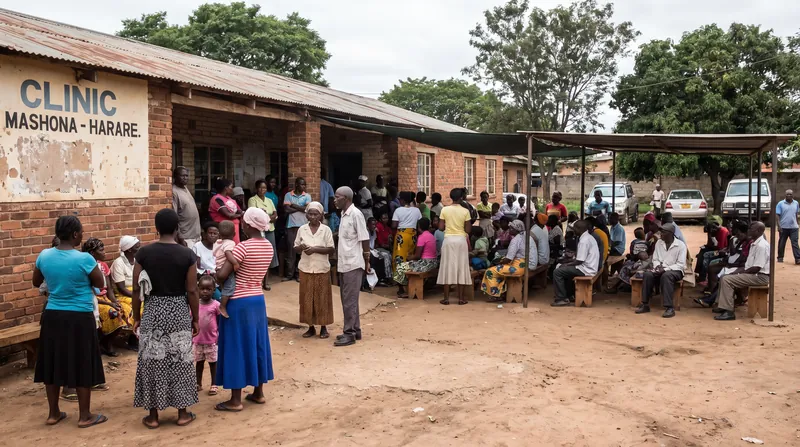
US Ends Health Funding to Zimbabwe Over Data-Sharing Dispute, Threatening HIV and Malaria Programs
3 sources
Calcium Bioavailability
Why Oxalate Binding Caps Spinach Calcium Bioavailability at Five Percent
4 sources

Dietary Science
How Whey Separation and Bacterial Ripening Eliminate Lactose in Aged Hard Cheeses
5 sources

Vitamin B12
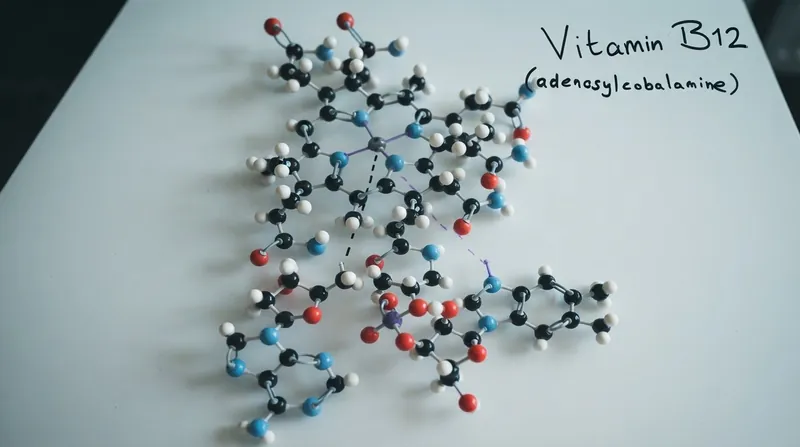
Intrinsic Factor Caps Active Vitamin B12 Absorption at Two Micrograms, Forcing Oral Megadoses to Rely on One-Percent Passive Diffusion
6 sources
Comments
Every angle. Every day.
Get Health stories with full source coverage and perspective breakdowns, free every day.