
Saudi Aramco Headquarters in Dhahran Hit by Houthi Missile, Sparking Limited Fire
A Houthi ballistic missile struck an administrative building at Saudi Aramco's Dhahran headquarters on Tuesday, causing a limited fire but no casualties. The attack marks a significant escalation in the targeting of Saudi Arabia's core energy infrastructure amid intensifying regional conflict.
By Anaya Sharma

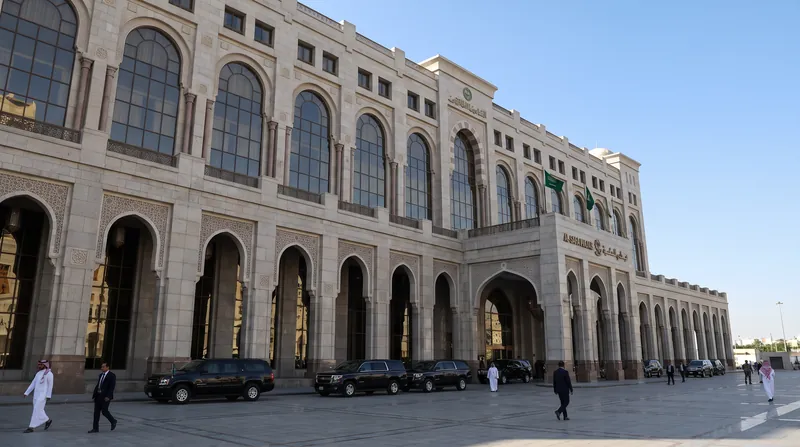
On Tuesday evening, a ballistic missile struck an administrative tower at Saudi Aramco's headquarters in Dhahran, damaging the top three floors and igniting a fire. The strike on the nerve center of the world's largest oil company triggered immediate evacuation orders for the building and sent visible plumes of smoke over the eastern Saudi complex.[3]
The Saudi Ministry of Energy confirmed the October 13 attack, stating that emergency responders quickly contained the limited blaze and that no casualties were recorded. The official confirmation followed widespread reports of loud booms echoing across the city, which had prompted the Saudi Civil Defense to issue early warnings to residents in the Eastern Province.[2][3][4]
The Saudi-led coalition reported intercepting a total of three ballistic missiles and two drones directed at Dhahran and the capital, Riyadh. Coalition spokesman Maj. Gen. Turki Al-Maliki noted that while air defenses successfully engaged the incoming projectiles, shrapnel and intercepted debris fell across residential neighborhoods near the Aramco facility.[3]
A company source indicated that the missile directly hit an office tower within the sprawling Aramco complex, though the energy ministry has not specified whether the fire resulted from a direct impact or falling debris. The targeted facility houses the primary operations center that oversees Saudi Arabia's vast network of onshore and offshore oil rigs, pipelines, and export terminals.[3][4]
A Widening Target List
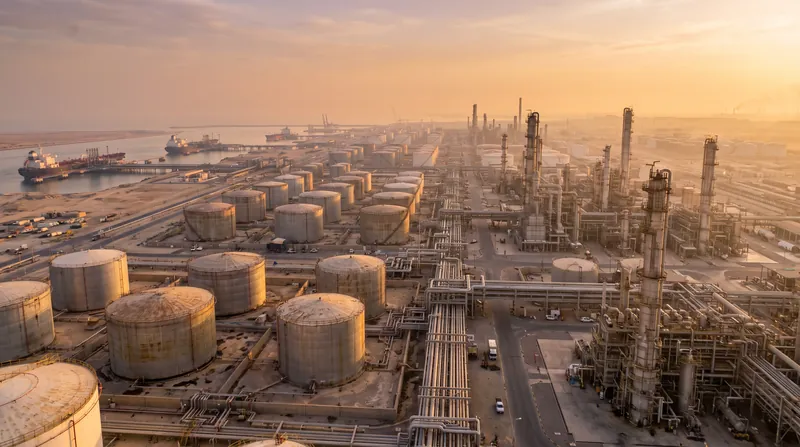
The Dhahran strike represents a significant geographic and strategic escalation in the ongoing conflict between Saudi Arabia and Yemen's Iran-backed Houthi militants. Dhahran sits at the absolute core of the kingdom's petroleum economy, surrounded by the critical Abqaiq processing complex and the Ras Tanura export terminal.[3]
Targeting this specific eastern cluster carries a fundamentally different weight for global energy markets than routine skirmishes along the southern Saudi-Yemeni border. It directly threatens the administrative and logistical infrastructure that manages the daily flow of millions of barrels of Saudi crude to international buyers.
Tuesday's attack follows a severe intensification of Houthi cross-border operations over the past week, which included a deadly weekend missile strike on a Riyadh airport. That earlier attack killed at least 13 people, wounded hundreds, and forced widespread flight cancellations across the country just as Saudi Arabia hosted a major energy conference.[3][4]
Prior to the Dhahran strike, Houthi military spokesman Yahya Saree had explicitly threatened to target Aramco's headquarters and Riyadh refineries. The militant group framed the campaign as a "harsh and painful" retaliation for the Saudi coalition's continued military support of government forces in Yemen's reignited civil war.[3][4]
The kingdom's broader energy infrastructure has faced a sustained campaign of disruption during the escalating hostilities. A refinery in Jazan in the country's west remains shut down following a previous attack, while a key oil export port on the Red Sea coast has also been repeatedly targeted by Houthi forces.
Furthermore, a cross-country pipeline essential for moving Aramco's oil to world markets was temporarily closed last month after an attack launched from Iraq. The convergence of threats from multiple borders underscores the complex security environment surrounding Saudi Arabia's most vital economic assets.
Market Calculus and Retaliation
Global crude markets immediately registered the supply-risk premium following the confirmation of the Dhahran fire. While successful interceptions historically produce only brief, shallow fluctuations in Brent crude prices, confirmed impacts on processing or administrative hubs alter the baseline assumptions for freight and insurance costs.
The established pattern in these episodes involves a Houthi volley, a Saudi interception claim, and subsequent market repricing based on verified damage. Traders and analysts are now attempting to separate the noise of the interceptions from the signal of a confirmed strike on Aramco's operational command center.[3]
The Saudi-led coalition has signaled an imminent military response, warning civilians to evacuate areas near an oil facility in the Houthi-held Yemeni capital of Sanaa. The coalition stated it is preparing a precision operation to neutralize the launch sites and supply depots enabling the missile campaign.[3]
This retaliatory posture mirrors previous cycles of escalation, where strikes on Saudi infrastructure prompt heavy coalition bombardment of Houthi military assets. However, the increasing sophistication and range of the Houthi missile arsenal demonstrate a persistent capacity to bypass regional defense systems and strike deep into Saudi territory.[3][4]
Strategic Implications
The ability of Houthi forces to simultaneously coordinate drone and missile strikes on Riyadh and Dhahran underscores the vulnerability of Saudi Arabia's most critical economic centers. Despite billions invested in Patriot missile batteries and advanced radar systems, the sheer volume of projectiles continues to strain the kingdom's air defenses.[3][4]
The attacks also complicate Saudi Arabia's broader economic and diplomatic initiatives, undermining efforts to project domestic stability to foreign investors. The disruption of airspace and the visible targeting of the state oil champion directly challenge the secure environment required for the kingdom's long-term diversification plans.[3]
International observers are closely monitoring the tempo of subsequent launches to determine if the Houthis intend to sustain this elevated operational pace. Any further damage to the eastern province's energy nodes could force a broader reassessment of spare-capacity assumptions in the global oil supply chain.[4]
For now, the immediate crisis at the Dhahran headquarters appears contained, with the fire extinguished and operations continuing. Yet the strike stands as a stark demonstration that the conflict in Yemen remains capable of reaching the very heart of the global energy market.[3]
Key points
- A Houthi ballistic missile struck an administrative tower at Saudi Aramco's Dhahran headquarters, igniting a fire that was quickly contained.
- The Saudi Ministry of Energy confirmed the attack resulted in no casualties, though the top three floors of the building sustained damage.
- The Dhahran strike follows a deadly weekend attack on a Riyadh airport and explicit Houthi threats against Saudi energy infrastructure.
- The Saudi-led coalition has ordered civilian evacuations near oil facilities in Yemen's capital, signaling an imminent military retaliation.
What we don’t know
- Whether the fire at the Aramco administrative building was caused by a direct missile impact or by falling debris from a coalition interception.
- The exact extent of the structural damage to the top three floors of the targeted office tower.
- How the Saudi-led coalition will execute its planned 'precision operation' retaliation in Sanaa, and whether it will deter further Houthi launches.
How we got here
Last month
A cross-country pipeline essential for moving Aramco's oil was temporarily closed following an attack launched from Iraq.
Saturday, Oct 10
A Houthi ballistic missile struck a Riyadh airport, killing at least 13 people and grounding flights nationwide.
Tuesday, Oct 13 (Early)
Houthi military spokesman Yahya Saree threatened a 'harsh and painful' response targeting Aramco's headquarters and Riyadh refineries.
Tuesday, Oct 13 (Evening)
A ballistic missile struck an administrative tower at Aramco's Dhahran headquarters, causing a limited fire.
- Saudi Coalition & State Media
- Focuses on the successful interceptions, the containment of the fire, and the preparation for retaliatory strikes to protect national security.
- Houthi Militants & Regional Observers
- Frames the escalating missile campaign as a direct and justified response to the Saudi coalition's military operations in Yemen.
- Global Energy Markets
- Analyzes the strikes purely through the lens of supply-risk premiums, freight costs, and the vulnerability of the world's largest oil exporter.
Perspectives this story doesn't cover
- Dhahran civilian residents
- Insurance underwriters for Gulf shipping
Sources
Source coverage
4 outlets
3 viewpoints surfaced




- [1]Times NowSaudi Coalition & State Media
Saudi Oil Giant Aramco's HQ in Dhahran Hit in Latest Houthi Attack
Read on Times Now → - [2]Al-MonitorSaudi Coalition & State Media
Saudi Aramco administrative building attacked, limited fire reported
Read on Al-Monitor → - [3]ReutersGlobal Energy Markets
Loud booms heard near Saudi Aramco headquarters in Dhahran, sources say
Read on Reuters → - [4]AP NewsHouthi Militants & Regional Observers
Saudi Ministry of Energy says limited fire broke out in Aramco administrative building
Read on AP News →
More in World
See all →Mecca Pact
Why Pakistan Declined to Invoke the Mecca Pact After Houthi Strikes on Saudi Arabia
3 sources
Security Architecture
How a New Secretariat Could Let the Mecca Joint Defense Agreement Replace the US Security Umbrella
6 sources

Hormuz Standoff
Iran Rejects US Response to Seven Conditions for Reopening Strait of Hormuz
3 sources

Algiers Agreement
The 1975 Algiers Agreement: Trading the Shatt al-Arab for the Collapse of a Kurdish Rebellion
4 sources
Comments
Every angle. Every day.
Get World stories with full source coverage and perspective breakdowns, free every day.