
U.S. and Iran Sign Memorandum of Understanding to End War and Reopen Strait of Hormuz
President Trump and Iranian leaders have signed a 14-point agreement to halt a three-month conflict, lift the U.S. naval blockade, and begin a 60-day negotiation period for a permanent nuclear deal.
By Factlen Editorial Team
- U.S. Administration
- The U.S. government views the MOU as a decisive victory that ends a costly war and sets the stage for a stronger nuclear framework.
- Iranian Leadership
- Iran's leaders see the agreement as a necessary step to secure economic survival while maintaining their nuclear leverage.
- Israeli Government
- Israel views the agreement with deep alarm, fearing it provides Iran with a smokescreen to achieve nuclear weapons capability.
- International Mediators
- Regional partners and analysts view the MOU as a critical ceasefire to stabilize global markets, though they acknowledge the immense difficulty of reaching a final deal.
What's not represented
- · Lebanese Government
- · European Union Negotiators
- · Global Shipping Companies
Why this matters
This agreement pauses a major Middle Eastern war that had choked off 20% of the world's oil supply. However, the tight 60-day window to negotiate a final nuclear deal—coupled with fierce opposition from Israel—means the region remains on a knife's edge.
Key points
- The U.S. and Iran signed a 14-point Memorandum of Understanding to end a three-and-a-half-month conflict.
- The agreement immediately lifts the U.S. naval blockade and reopens the Strait of Hormuz to global shipping.
- A 60-day negotiation window has begun to finalize a permanent deal regarding Iran's nuclear program and sanctions relief.
- The MOU requires Iran to downblend its 60% enriched uranium under IAEA supervision.
- Israel has strongly opposed the deal, fearing it allows Iran to accelerate its nuclear timeline while constraining Israeli military operations in Lebanon.
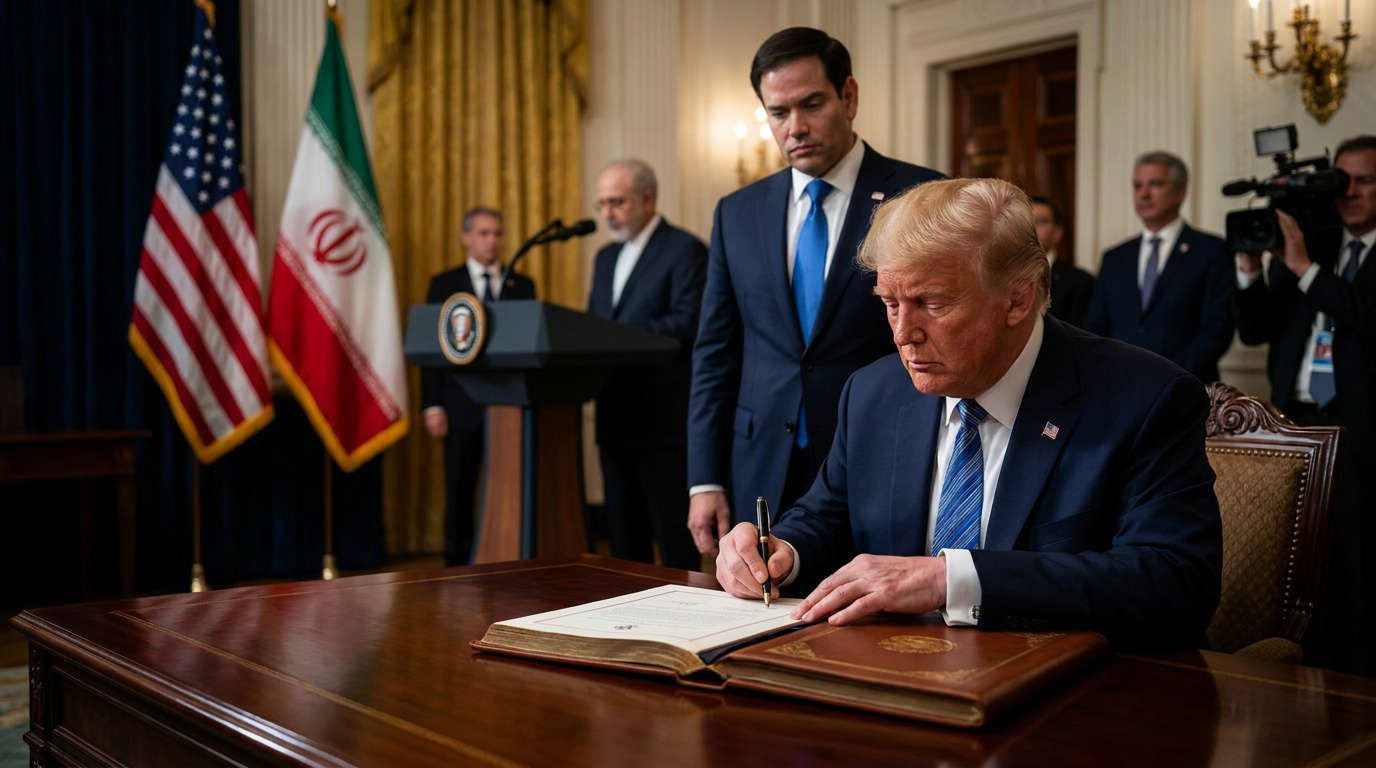
The United States and Iran have officially signed a 14-point Memorandum of Understanding (MOU), effectively halting a three-and-a-half-month war that had choked global energy supplies and destabilized the Middle East. The agreement, signed remotely by U.S. President Donald Trump and Iranian President Masoud Pezeshkian, implements an immediate ceasefire across all fronts and sets the stage for a permanent resolution.[3][6]
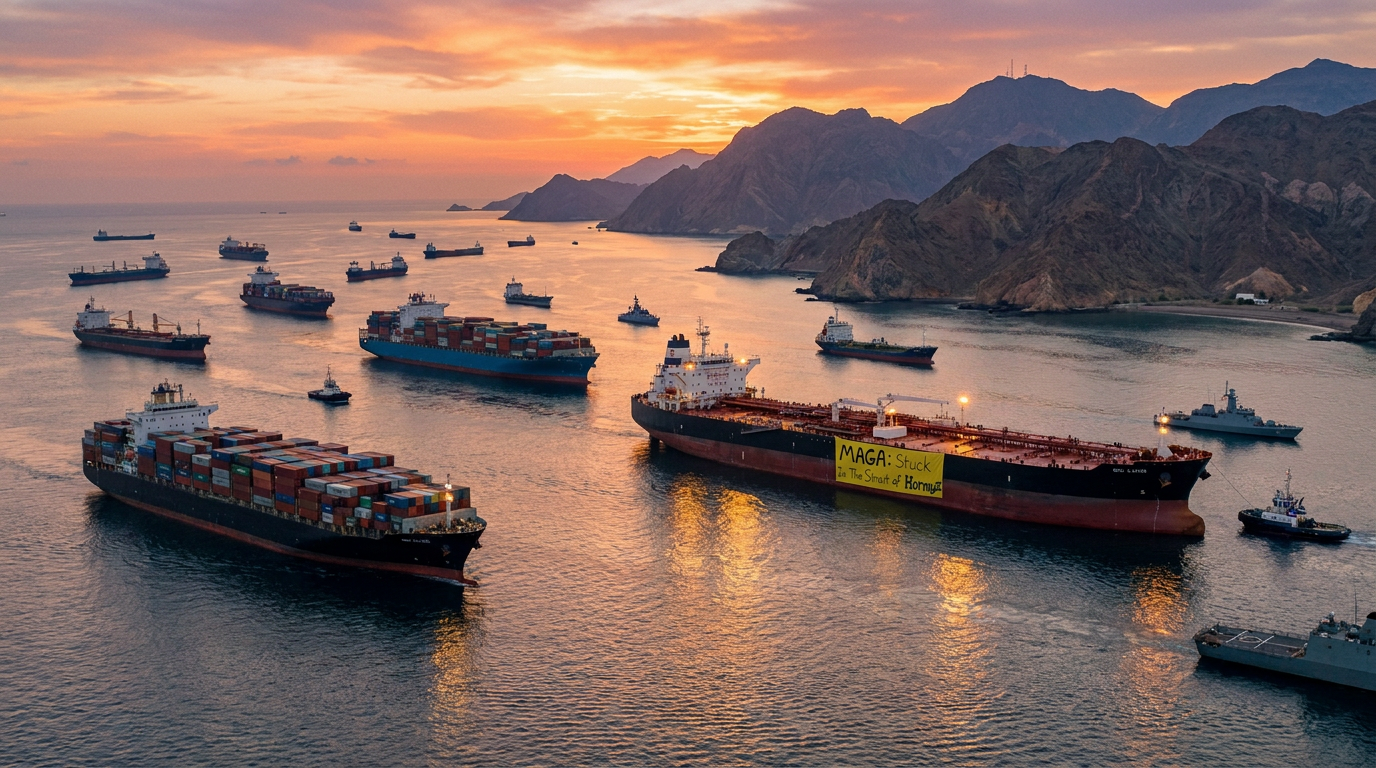
The most immediate global impact of the MOU is the reopening of the Strait of Hormuz, a critical maritime chokepoint that handles nearly one-fifth of the world's oil supply. Following the signing, the U.S. Central Command (CENTCOM) lifted its naval blockade on Iranian ports. U.S. Vice President JD Vance confirmed that the blockade enforcement had ceased, allowing over a dozen ships carrying an estimated 12.5 million barrels of oil to pass through the strait within the first 24 hours.[2][5][6]
While the MOU brings an end to active hostilities, it is not a final peace treaty. Instead, it triggers a 60-day negotiation window during which Washington and Tehran must hammer out the complex details of a permanent agreement. This sprint will cover Iran's nuclear ambitions, the lifting of international sanctions, and regional security architectures.[3][5]

A central pillar of the upcoming negotiations will be the disposition of Iran's nuclear material. Unlike the landscape during the 2015 Joint Comprehensive Plan of Action (JCPOA), Iran now possesses a stockpile of uranium enriched to 60% purity—a short technical step away from weapons-grade material. The MOU establishes a baseline requirement for Iran to "downblend" this highly enriched uranium on-site under the supervision of the International Atomic Energy Agency (IAEA), though the exact mechanics remain to be finalized.[3][5]
The Trump administration has aggressively contrasted this new framework with the Obama-era JCPOA, which Trump abandoned in 2018. U.S. officials emphasize that the new agreement will not feature the "sunset clauses" that allowed certain nuclear restrictions to expire over time. However, foreign policy analysts note the immense difficulty of resolving decades of entrenched hostility and complex nuclear technicalities in just two months, pointing out that the JCPOA required 20 months of multilateral negotiations.[3][5]
In exchange for nuclear concessions and a cessation of hostilities, the MOU outlines significant economic relief for Tehran. The framework reportedly includes the unfreezing of Iranian assets and the development of a mutually agreed plan to establish a $300 billion fund for the reconstruction and economic development of Iran. U.S. officials have stressed that American taxpayer dollars will not fund this initiative, and that all sanctions relief is strictly contingent on Iranian compliance.[3][4][5]

In exchange for nuclear concessions and a cessation of hostilities, the MOU outlines significant economic relief for Tehran.
Inside Iran, the agreement has been met with cautious authorization from the highest levels of government. Supreme Leader Mojtaba Khamenei issued a statement confirming he authorized the direct talks with the United States, though he explicitly warned that the negotiations "do not signify acceptance of the enemy's views."[1]
Iranian hardliners have echoed this skepticism, demanding tangible economic benefits before fully committing to the final terms. Mohammad Bagher Ghalibaf, Iran's conservative parliament speaker and a key figure in the negotiations, publicly warned that Tehran would not honor its commitments if Washington fails to deliver on sanctions relief and the unfreezing of assets.[2]
The diplomatic breakthrough was heavily facilitated by regional partners, with Pakistan playing a central role. Pakistani Prime Minister Shehbaz Sharif acted as a key mediator and signed the document as a guarantor, announcing that the agreement would instantly restore peace to the region. Qatar is also expected to host the next phase of detailed technical talks in Switzerland.[6]

Despite the relief in global markets, the MOU has triggered a severe diplomatic crisis between the United States and Israel. The agreement mandates a "permanent termination of military operations on all fronts," which implicitly includes Lebanon. Israel has been engaged in a parallel conflict with the Iran-backed militant group Hezbollah in southern Lebanon and views the required withdrawal of its forces as a violation of its security needs.[3][4][5]
Israeli defense officials have expressed deep alarm over the 60-day negotiation window, warning that Tehran will use the period to drag out talks while shortening its timeline to a nuclear breakout. Prime Minister Benjamin Netanyahu reiterated his government's red line, declaring that Israel will never allow Iran to acquire nuclear weapons, regardless of the diplomatic frameworks signed in Washington or Tehran.[2][4]
The friction between the U.S. and Israel spilled into public view when Vice President Vance issued a blunt warning to the Israeli cabinet. Addressing criticisms of the deal from Israeli officials, Vance stated that it would be unwise for Israel to attack "the only powerful ally that I have anywhere left in the entire world," urging the Israeli government to accept the reality of the diplomatic situation.[3][7]
As the 60-day clock begins ticking, the international community watches closely. Negotiators face the monumental task of translating a 14-point ceasefire framework into a binding, verifiable treaty that satisfies American security demands, Iranian economic needs, and Israeli survival concerns. Failure to reach a final deal could quickly plunge the region back into the devastating conflict that the MOU just paused.[3][5][6]
How we got here
March 2026
Conflict escalates, leading to a U.S. naval blockade of the Strait of Hormuz.
June 14, 2026
An initial agreement is reached to settle the three-and-a-half-month conflict.
June 17, 2026
President Trump and Iranian President Pezeshkian remotely sign the 14-point Memorandum of Understanding.
June 18, 2026
The U.S. lifts the naval blockade and the 60-day negotiation window officially begins.
Viewpoints in depth
U.S. Administration
The U.S. government views the MOU as a decisive victory that ends a costly war and sets the stage for a stronger nuclear framework.
President Trump and Vice President Vance argue that the 14-point framework is vastly superior to the 2015 JCPOA because it lacks sunset clauses and forces Iran to the table under immense economic pressure. They emphasize that the immediate reopening of the Strait of Hormuz is a massive win for the global economy, and they maintain that the U.S. retains the military option if Iran fails to comply during the 60-day negotiation window.
Iranian Leadership
Iran's leaders see the agreement as a necessary step to secure economic survival while maintaining their nuclear leverage.
Supreme Leader Mojtaba Khamenei authorized the talks to alleviate crippling sanctions and unfreeze assets, but he remains deeply distrustful of Washington. Hardline factions within Iran emphasize that they have not surrendered their nuclear capabilities and will only proceed with downblending their 60% enriched uranium if the U.S. fully delivers on the promised $300 billion reconstruction fund and permanent sanctions relief.
Israeli Government
Israel views the agreement with deep alarm, fearing it provides Iran with a smokescreen to achieve nuclear weapons capability.
Prime Minister Benjamin Netanyahu and Israeli defense officials are highly critical of the 60-day negotiation window, arguing that Iran will use the time to drag out talks while secretly shortening its nuclear breakout timeline. Furthermore, Israel strongly objects to the MOU's requirement to end military operations in Lebanon, viewing it as an unacceptable constraint on their ongoing campaign against Hezbollah.
What we don't know
- How the $300 billion reconstruction fund for Iran will be financed and administered without U.S. taxpayer dollars.
- Whether Iran will actually allow comprehensive IAEA inspections of its nuclear facilities during the 60-day window.
- How Israel will respond to the MOU's demand to cease all military operations in Lebanon.
Key terms
- Memorandum of Understanding (MOU)
- A formal agreement outlining the broad terms of a deal before a final, detailed contract is negotiated.
- Strait of Hormuz
- A critical maritime chokepoint between the Persian Gulf and the Gulf of Oman, through which nearly one-fifth of the world's oil passes.
- Uranium Downblending
- The process of reducing the concentration of highly enriched uranium to a lower, non-weapons-grade purity.
- JCPOA
- The Joint Comprehensive Plan of Action, the 2015 nuclear deal between Iran and world powers that the U.S. exited in 2018.
Frequently asked
Does this agreement mean Iran is giving up its nuclear program?
Not entirely. The MOU requires Iran to downblend its highly enriched uranium, but the specific long-term limits on its nuclear program will be negotiated over the next 60 days.
How does this affect global oil prices?
The agreement reopens the Strait of Hormuz and lifts the U.S. naval blockade, allowing millions of barrels of oil to resume flowing, which is expected to stabilize global energy markets.
Why is Israel opposed to the deal?
Israeli officials fear the 60-day negotiation window gives Iran time to accelerate its nuclear capabilities, and they object to the deal's requirement to end military operations in Lebanon.
Sources
Source coverage
7 outlets
4 viewpoints surfaced






[1]AxiosIranian Leadership
Iran's supreme leader says he authorized deal, direct talks with U.S.
Read on Axios →[2]Fox NewsU.S. Administration
VP Vance starts 60-day clock on final Iran deal
Read on Fox News →[3]CBS NewsU.S. Administration
Here's how Trump's memo of understanding with Iran compares to the Obama nuclear deal
Read on CBS News →[4]The Times of IsraelIsraeli Government
Reported terms of the MOU US-Iran deal said set to halt regional hostilities
Read on The Times of Israel →[5]Council on Foreign RelationsInternational Mediators
Where the U.S.-Iran Deal Lands on Core Issues
Read on Council on Foreign Relations →[6]The HinduInternational Mediators
Mediator Pakistan signs U.S.-Iran peace memorandum
Read on The Hindu →Vance warns Israel: Don't fight 'only ally' Trump on Iran deal
Read on Axios Politics →

More in news politics
See all 6 stories →US-Iran Deal
U.S. and Iran Sign 'Islamabad Memorandum' to End War and Reopen Strait of Hormuz
7 sources

U.S.-Iran Deal
The U.S.-Iran Ceasefire Deal: What the 14-Point Memorandum Actually Does
9 sources
Labor Law
House Passes Faster Labor Contracts Act, Mandating Timelines and Binding Arbitration for First Union Deals
8 sources
Border Funding
Trump Signs $70 Billion 'Secure America Act,' Securing Funds for Mass Deportations Through 2029
6 sources
Every angle. Every day.
Get news politics stories with full source coverage and perspective breakdowns delivered to your inbox.